Origin of the name
‘Abrolhos’ comes from the expression used by sailors to warn of dangerous coral formations and shoals — ‘open your eyes’ — which eventually gave the archipelago its name.
Structure of the archipelago
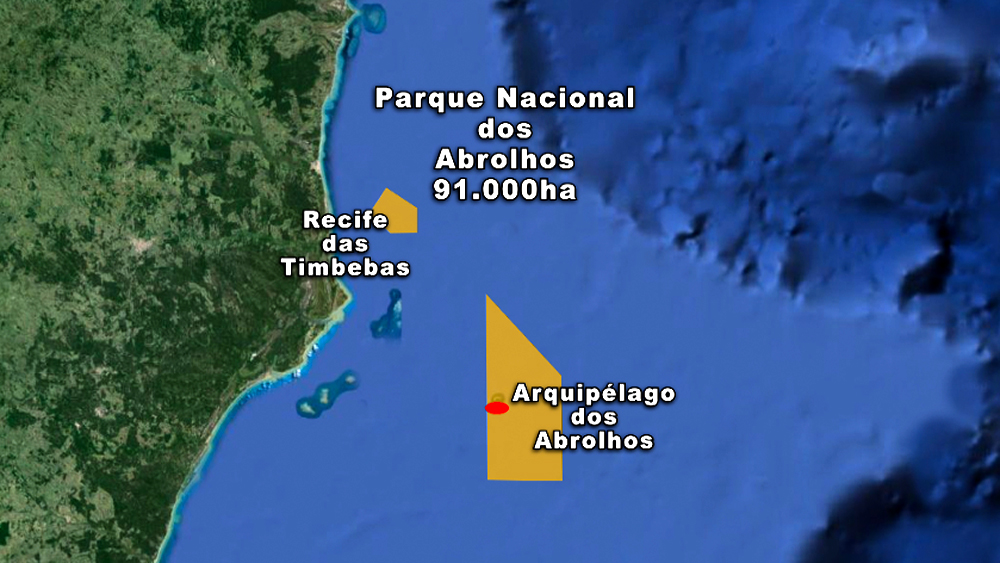
The archipelago consists of five islands: Santa Bárbara, Siriba, Redonda, Sueste and Guarita. Visitors mainly disembark on Siriba Island; access to the other islands is restricted for environmental protection.

Videos about the Abrolhos Archipelago

Fundo do mar do Arquipélago de Abrolhos

Arquipelago de Abrolhos - Globo Reporter10:47
Arquipélago de Abrolhos - Reportagem Completa49:17
Arquipélago de Abrolhos - Mar de Abrolhos10:23
Activities and attractions
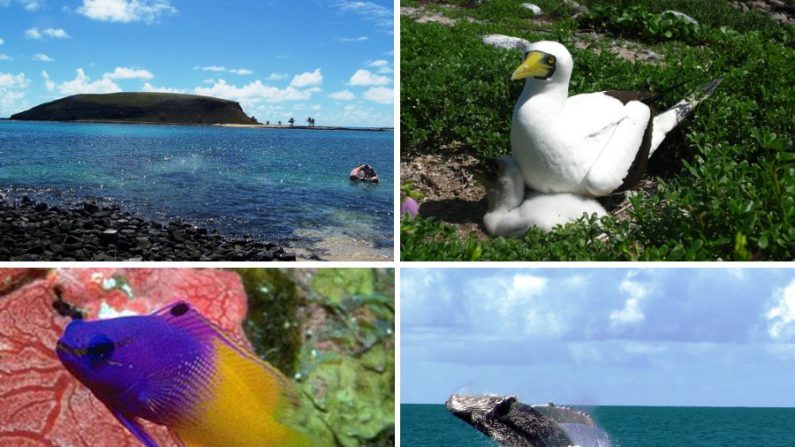
- Humpback whale watching on boat trips during the season.
- Diving and snorkelling on reefs and flat-topped rocks with a wide variety of marine life.
- Seabird watching on the islands and a guided trail on Siriba Island.
Ecological importance
Abrolhos is a vital area for the reproduction and rest of humpback whales and is home to reefs with diverse species, including communities of fish, invertebrates and seabirds. Conservation of the area is vital for these ecosystems.
See the map of the Whale Coast
Characteristics, geography and tourism
The islands form an arc and are home to colonies of birds such as frigatebirds and boobies. The ‘chapeirões’ — coral pillars with broad tops — are a hallmark of the region and offer diving with exceptional visibility on calm days.


The 5 islands
Santa Bárbara
The only one with continuous occupation (lighthouse/controlled jurisdiction). Restricted public access.
Siriba Island
Island open to regulated disembarkation. A trail of ~1,600 m circles the island and features natural pools, shells and birds’ nests; the walk must be undertaken with an authorised guide.
Guarita Island
Less visited, rocky and home to a large number of seabirds.
Redonda Island
High cliffs where frigatebirds nest; at certain times of year, turtles may lay their eggs nearby.
Sueste Island
More remote and unspoilt, with difficult access and a large number of bird nests.
Diving in the Abrolhos Archipelago
- Rosalina Shipwreck — submerged sections and shallow areas; ideal for snorkelling and free diving; watch out for currents.
- Santa Bárbara Cove — a classic spot for whiting and other fish.
- Siriba-Redonda Reef — a shallow area with coral heads and schools of fish.
- Siriba Caves — a haven for fish and a variety of marine life.
- Timbebas Reef — a remote reef visible at low tide and a good spot for free diving.
Siriba Island Trail
The 1,600-metre trail circles the island; the route is led by an authorised guide and access to the interior is prohibited to protect nests and ecosystems.

How to get there
Access is exclusively by boat. The most common departures are from Caravelas (BA). The crossing usually takes between 2h30 and 5h, depending on the boat and sea conditions. Book with an authorised operator and follow the Park’s regulations.
Frequently Asked Questions (FAQ)
When is the best time to see humpback whales?
The main season is between June and November, with sightings peaking in July–October.
Can I go ashore on all the islands?
No. Visitors are only permitted to go ashore on Siriba Island; access to other islands is restricted.
Do I need a guide to visit Siriba?
Yes. You must be accompanied by a guide or leader authorised by the managing body when disembarking and walking the trail.
What equipment should I take for diving or snorkelling?
A mask, snorkel, flippers, biodegradable sun cream, a wetsuit or lightweight neoprene clothing (depending on the season) and an underwater camera, always in accordance with the park’s rules.
How do I book a tour?
Look for authorised tour operators in Caravelas or local agencies offering trips to the Abrolhos Marine National Park.

Publicações Relacionadas
Things to Do in Piatã, Bahia: The Highest Town in the North-East
Humpback whales in Brazil — characteristics, migration and sanctuaries (Abrolhos)
South Coast of Bahia: Discover Stunning Beaches
History of the Convent and Church of Nossa Senhora da Piedade in Ilhéus
Tinharé Archipelago: Discover Hidden Island Gems
Todos-os-Santos Bay (Bahia) — History, geography and conservation
Prado (BA) — Beaches, Cliffs and Whale Watching | Whale Coast
Lacerda Elevator — history, construction and visits
Torrinha Cave: A Speleological Marvel in Brazil
Paragliding at Pitinga Beach in Arraial d'Ajuda
Picos das Almas, Itobira and Barbado Trekking Guide
Mangue Seco: The Last Beach on the North Coast of Bahia
Valença: The Gateway to Morro de São Paulo
History of the settlement of Chapada Diamantina
Cathedral Basilica of Salvador — History, Sacred Art and Collection
Birds Found in Chapada Diamantina: A Guide
Beaches and Waterfalls of Itacaré: A Hidden Gem
Campo Formoso: Explore Caves and Emerald Trade
Chocolate Road and trails of the Cocoa Coast - video
A History of the Forts and Lighthouses of Salvador (Bahia)
Mucugê: Discover the local history and culture
Tourist Attractions on the Discovery Coast in Bahia
Todos os Santos Bay — Nature, History and Water-based Tourism
Rafting in Taboquinhas: The Ultimate Adventure Guide
Places to visit on the south coast of Bahia
Ponta de Corumbau — an unspoilt paradise on the southern coast of Bahia
How to get to Fumaça Waterfall in Chapada Diamantina
Guarajuba Beach: A Paradise on the North Coast of Bahia
Ibicoara: An Unmissable Tourist Destination
Wine Tourism in the São Francisco Valley Guide
Things to Do in Rio de Contas (Bahia): A Complete Guide
Rio Vermelho is Salvador’s trendiest and most bohemian neighbourhood
Church of São Pedro dos Clérigos — History, architecture and religious art
Lapão Cave: The Ultimate Adventure Experience
Palaces in Salvador to visit and learn about Brazil's history
Church and Convent of Santa Clara do Desterro and its History in Salvador
This post is also on:
 Português
  English
  Deutsch
  Español
  Français