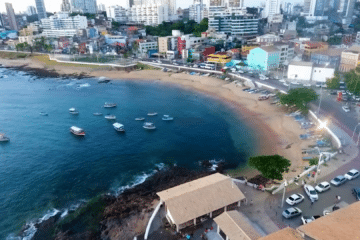
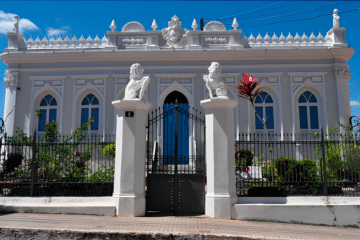
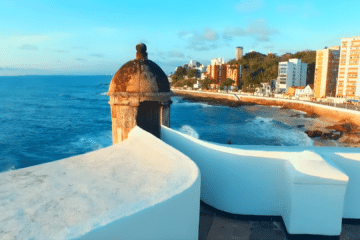
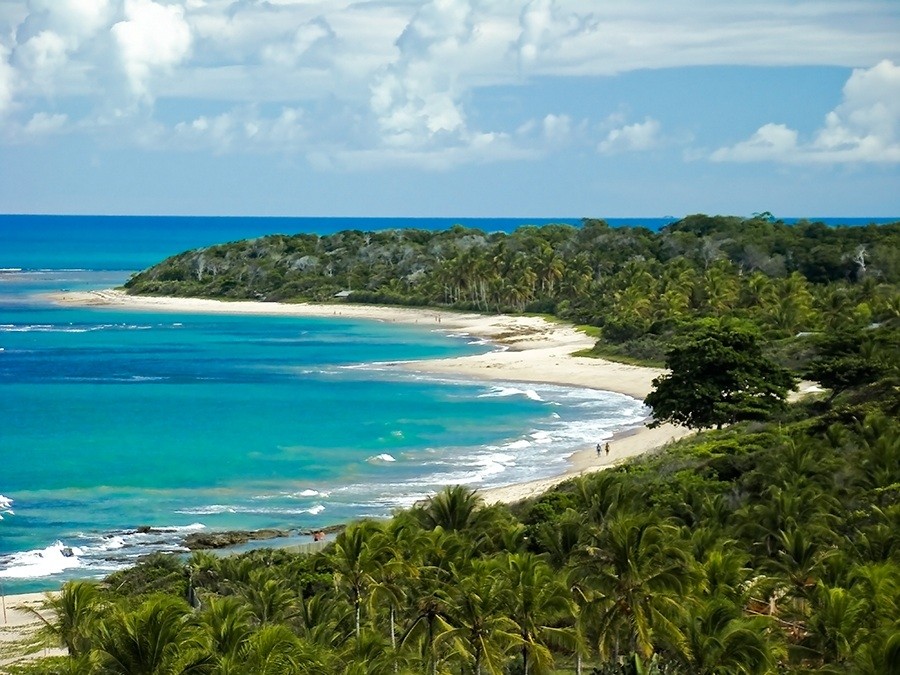
Considered the cradle of Brazilian history, the Coast of Discovery is a region in the south of Bahia that includes cities such as Porto Seguro, Santa Cruz Cabrália, Arraial d’Ajuda, Trancoso and the Island of Comandatuba.
In 1999, the region was declared a World Natural Heritage Site by UNESCO, highlighting its historical importance and natural wealth.

Videos of The Discovery Coast
Porto Seguro, Cabrália, Arraial D’ajuda and Trancoso
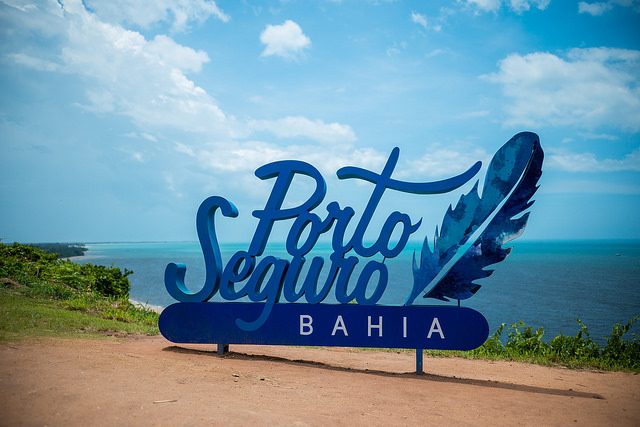
Porto Seguro na Bahia09:54

Santa Cruz Cabrália14:58

Trancoso na Bahia02:47

Drone - Santa Cruz Cabrália03:50
Arraial D'ajuda na Bahia07:20
Main Tourist Attractions of the Discovery Coast
- Porto Seguro: Living history and vibrant beaches
- Santa Cruz Cabrália: Tradition and enchanting landscapes
- Arraial d’Ajuda: Charm and fun by the sea
- Trancoso: tradition and sophistication in harmony
- Comandatuba Island: Isolated paradise
- Discovery National Park: Biodiversity and Tradition
- Coral reefs of Santa Cruz Cabrália: Diving and Nature
1. Porto Seguro: Living history and vibrant beaches
Porto Seguro is a popular tourist destination, known for its beaches and colonial architecture. The city is crossed by the Buranhém River, and to the south is Monte Pascoal.

The historic centre of Porto Seguro, located in the Cidade Alta, is one of the most important sites in Brazilian history and was declared a Historical, Cultural and Landscape Heritage Site by IPHAN in 1981.
The city also offers a variety of leisure activities, from nautical activities to a vibrant nightlife, with the famous “Passarela do Álcool” and the lively “Reggae Night”.

2. Santa Cruz Cabrália: Tradition and enchanting landscapes
About 23 kilometres from Porto Seguro, Santa Cruz Cabrália offers quiet beaches and crystal-clear waters protected by reefs. The town is marked by the first mass celebrated in Brazil, in 1500, on Coroa Vermelha beach, where a symbolic cross marks the spot.

The historic centre is home to 17th and 18th century buildings, and the Descobrimento National Park is one of the natural highlights, with trails that allow visitors to explore the rich local biodiversity, including rare species of Atlantic rainforest.
3. Arraial d’Ajuda: Charm and fun by the sea
Arraial d’Ajuda is a charming village with paradisiacal beaches and a unique atmosphere.

Rua do Mucugê is the commercial centre of the village, full of bars, restaurants and craft shops. In the evenings, the nightlife is lively with several bars offering live music.
The destination is perfect for those who want to relax as well as those who are looking for a lively atmosphere at night.
4. Trancoso: tradition and sophistication in harmony
Trancoso is a quiet village known for its Quadrado, a central square surrounded by colourful houses and a historic church.

Founded by the Jesuits at the beginning of Portuguese colonisation as an indigenous settlement for catechesis, Trancoso retains its rustic charm with elegant inns, sophisticated restaurants and designer boutiques.

Praia do Espelho, considered one of the most beautiful beaches in Brazil, is only 30 kilometres away and is a must for visitors.
5. Comandatuba Island: Isolated paradise
Comandatuba Island offers a secluded haven for those seeking tranquillity, with luxury resorts, beautiful beaches and lush nature.

The island is ideal for those who want to relax and enjoy activities such as kitesurfing and fishing, all in a paradisiacal setting. In addition, the proximity of the Costa do Descobrimento and the transport facilities make it easy for visitors to get there, whether by boat or by plane.
6. Descobrimento National Park: Biodiversity and Tradition
The Descobrimento National Park, located in Porto Seguro and Santa Cruz Cabrália, is a protected area of great ecological and tourist importance.
The park has trails that allow visitors to explore the region’s rich biodiversity, including rare species of Atlantic rainforest.
It is also an excellent opportunity for those who enjoy ecotourism and want to learn more about the local fauna and flora.
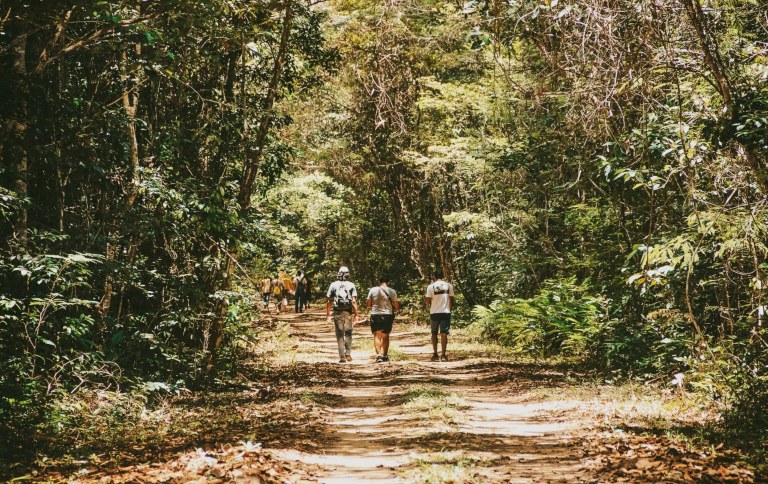
The park is one of the greatest natural attractions of the Costa do Descobrimento, offering a direct link with the environment and the history of the region.
7. Coral reefs of Santa Cruz Cabrália: Diving and Nature
Santa Cruz Cabrália is also an excellent destination for divers and snorkellers, with coral reefs such as those found in the Coroa Alta Marine Park.

The crystal clear waters provide perfect visibility for exploring marine life, making it a popular destination for those seeking underwater activities.
Bottom line
The Discovery Coast combines natural beauty with a rich historical heritage, offering visitors a unique experience that combines culture, history and leisure in one of Brazil’s most enchanting destinations.
Whether exploring ecotourism in Discovery National Park, diving the reefs of Santa Cruz Cabrália, relaxing on the paradisiacal beaches of Trancoso or enjoying the sophistication of Arraial d’Ajuda, each city offers something special for every type of traveller.
Bahia.ws is the largest tourist guide in Bahia and the Brazilian Northeast.

Publicações Relacionadas
Arembepe: beaches (Piruí, Praia do Canto), Hippie Village and the Tamar Project

Paranaguá Palace — History, architecture and visiting information | Ilhéus (BA)

São Jorge Parish Church in Ilhéus — history, architecture and religious art

History of the Convent and Church of Nossa Senhora da Piedade in Ilhéus

São Sebastião Cathedral (Ilhéus) — History, architecture and tourism
The 15 Most Visited and Well-Known Beaches in Bahia
The 3 most paradisiacal beaches in Bahia

Skydiving, Paragliding and Ballooning in Bahia

Historic Towns in Bahia: A Journey Through Time
Places to visit on the south coast of Bahia

História da Arte - Caracteristicas, Aspectos e Periodos
Tourist Attractions in Bahia: main attractions, beaches and cities

Subaúma, Bahia: where it is, things to do and where to stay
Massarandupió Naturist Beach, Bahia: Rules and Access
Beaches on the South Coast of Bahia: 10 Best and Tips
Towns and the Abrolhos Archipelago — The southernmost tip of Bahia

Baixio: Between lagoons, dunes and the charm of a village surrounded by nature
Best Beaches in Bahia: Your Guide to Paradise
Salinas da Margarida (BA) — Beaches, Attractions and a Complete Guide

Guarajuba Beach, Bahia: Natural Pools and Tips

Barra do Cahy: Brazil's first beach - history and nature

Garcez Beach: Discover Paradise in Jaguaripe

Barreiras: An Ecological Paradise in Bahia
Catabrigas Waterfall — A natural haven in Ibirajá, Itanhém (BA)

Serra Grande: Your Guide to Bahia's Paradise
Corumbau, Bahia: Ponta de Corumbau, beaches, map, how to go

Taipu de Fora: Discovering Natural Pools

Iguaí: A Guide to Waterfalls and Relaxation
Morro de São Paulo: Map, Beaches & How to Get There (2026)
Tourism in São Francisco do Conde (BA) — Tips and Attractions
Todos-os-Santos Bay (Bahia) — History, geography and conservation
Todos os Santos Bay — Nature, History and Water-based Tourism
Bay of Todos os Santos: nature, history and cultur

Rafting in Taboquinhas: The Ultimate Adventure Guide
Abseiling Sites in Bahia: Top Locations to Explore

Diving Spots in Bahia: Discover Underwater Treasures
This post is also on:
 Português
  English
  Deutsch
  Español
  Français