Published on · Updated on
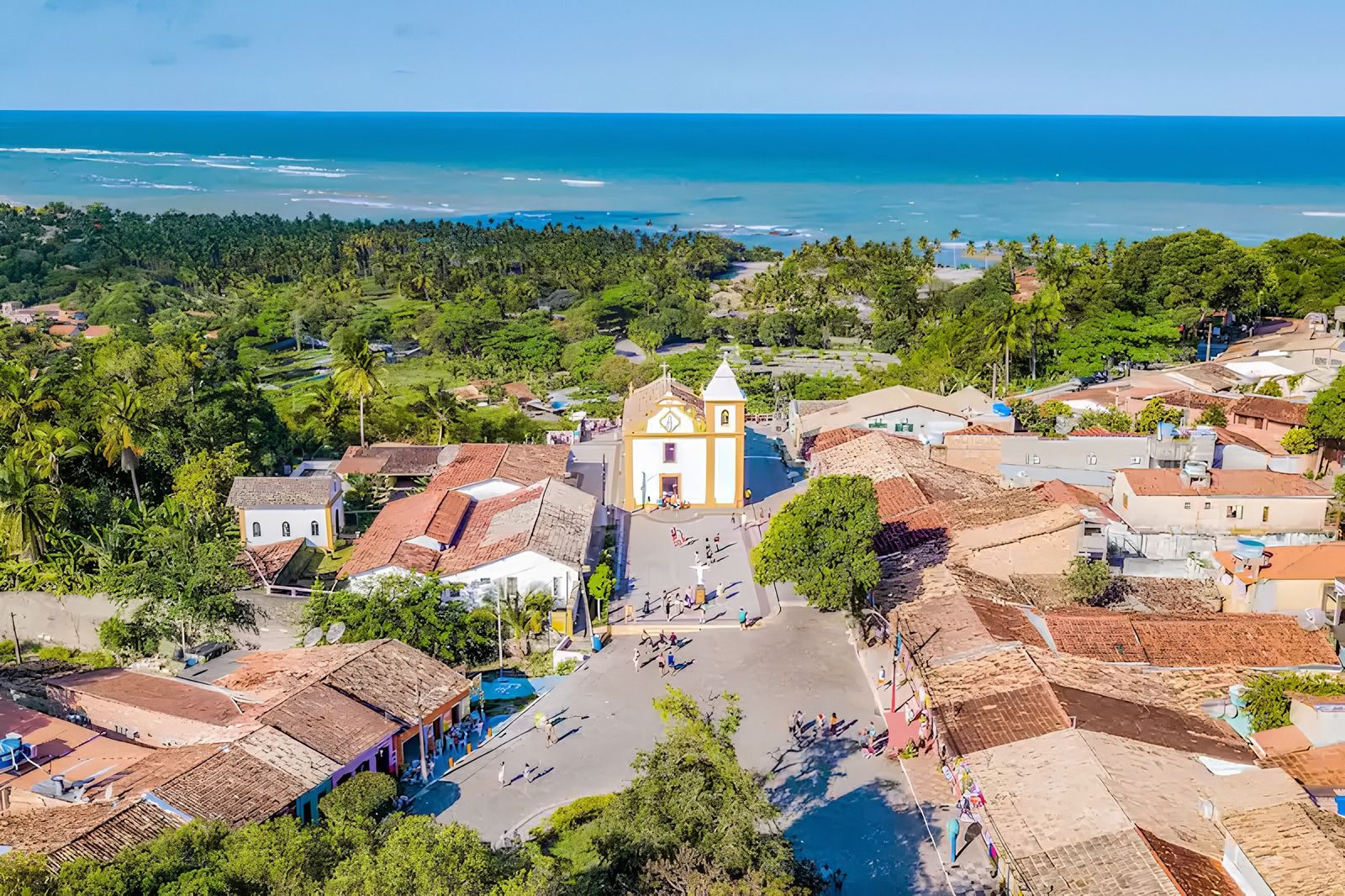
Arraial d’Ajuda is a historic village in the municipality of Porto Seguro, in Bahia, on the other side of the Buranhém River. It has beaches with cliffs and natural pools, a colonial historic center and the famous Rua do Mucugê. So, in this guide, you will find the map of Arraial d’Ajuda, the best beaches, the main sights and how to get there.
- Where it is: in the municipality of Porto Seguro, on the Costa do Descobrimento, south of the Buranhém River.
- Is it an island? No; it is on the mainland, but the ferry across the river is the most common route.
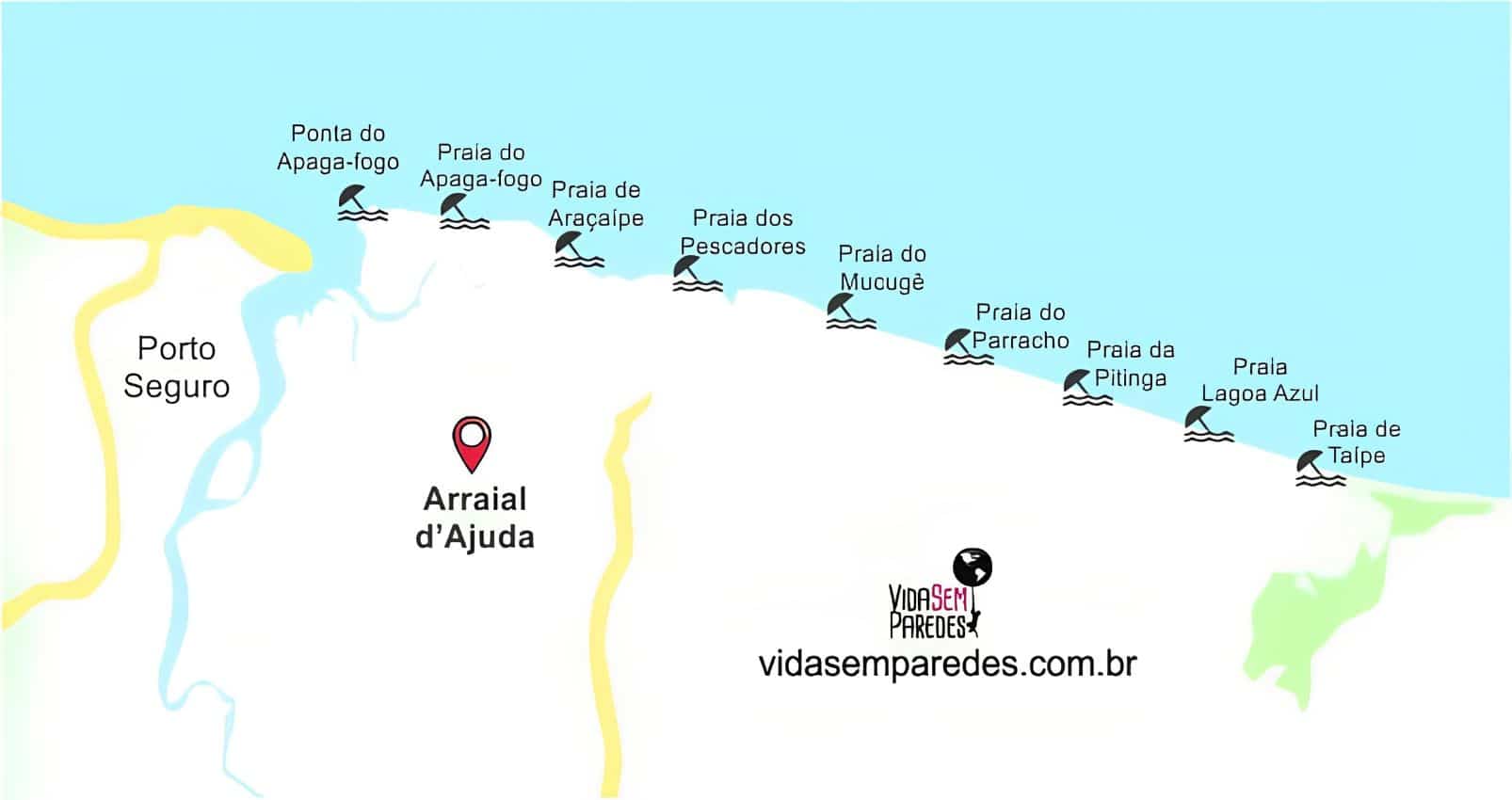
- Beaches: Apaga-Fogo, Araçaípe, Mucugê, Parracho, Pitinga, Lagoa Azul and Taípe.
- History: the chapel of Nossa Senhora d’Ajuda dates back to 1549, with the Jesuits.
- Highlights: the historic center, Rua do Mucugê, Mirante das Fitas and the cliffs of Taípe.
Where is Arraial d’Ajuda (map)
First of all, Arraial d’Ajuda is a district of Porto Seguro, on the Costa do Descobrimento. For example, it lies on the south bank of the mouth of the Buranhém River, opposite downtown Porto Seguro. Further south, in turn, lies Trancoso.
Even though many people ask, Arraial d’Ajuda is not an island. However, since almost everyone arrives by ferry, the crossing gives that impression.
See the map of Porto Seguro and Arraial d’Ajuda
See the map of the Costa do Descobrimento
Map of the beaches of Arraial d’Ajuda
From north to south, the beaches run from the Buranhém River to the cliffs of Taípe: Apaga-Fogo, Araçaípe, Mucugê, Parracho, Pitinga, Lagoa Azul and Taípe. Thus, the further south you go, the quieter and more deserted they become.
Video about Arraial d’Ajuda

Arraial d'Ajuda00:42

Arraial d'Ajuda - Reportagem03:51

Arraial d'Ajuda - Drone04:02

Arraial d´Ajuda - Dicas13:47

Arraial D'ajuda na Bahia - Dicas de Viagem14:00

Praia do Mucugê em Arraial d'Ajuda04:03

Praia de Pitinga em Arraial d'Ajuda01:48

Praia de Taipé em Arraial d'Ajuda03:10
Praia de Araçaipe00:48
Drone Arraial d´Ajuda05:45
Best beaches in Arraial d’Ajuda
Apaga-Fogo Beach
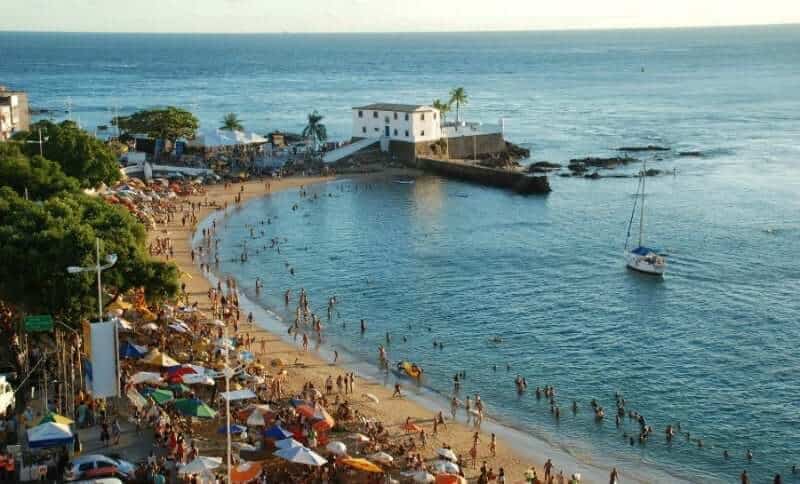
Without a doubt, it is the first beach after the ferry, next to the mouth of the Buranhém River. It has fine white sand, and the reefs keep the water calm, with natural pools at low tide. In general, it is mostly used by guests of the beachfront hotels.

Araçaípe Beach
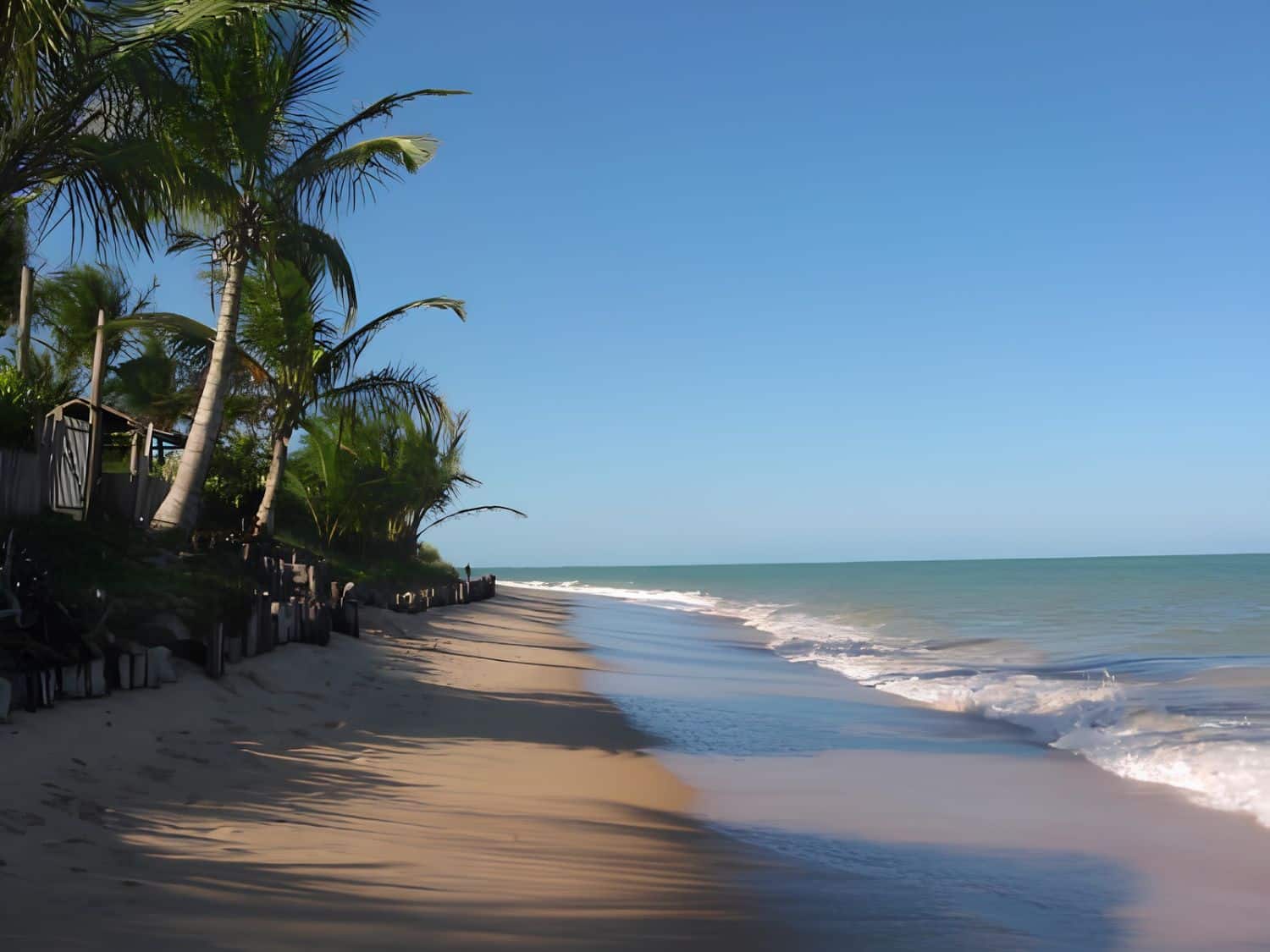
Right next door, Araçaípe is straight, with weak waves, reefs and natural pools at low tide. It also has guesthouses and bars.
Praia da Ajuda (or dos Coqueiros)
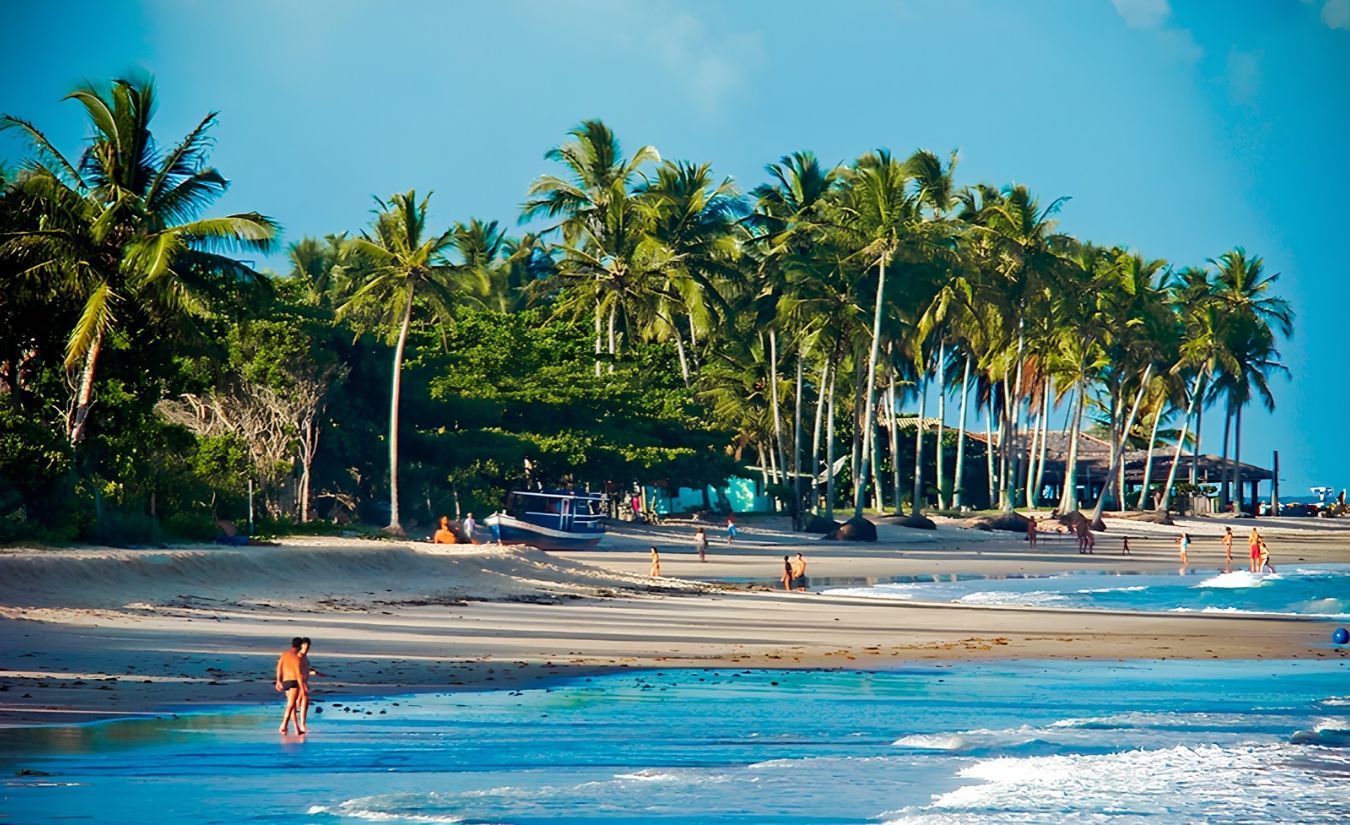
Below the village, Praia da Ajuda has fine sand, gentle waves and coconut palms. Therefore, it is good for families.
Mucugê Beach
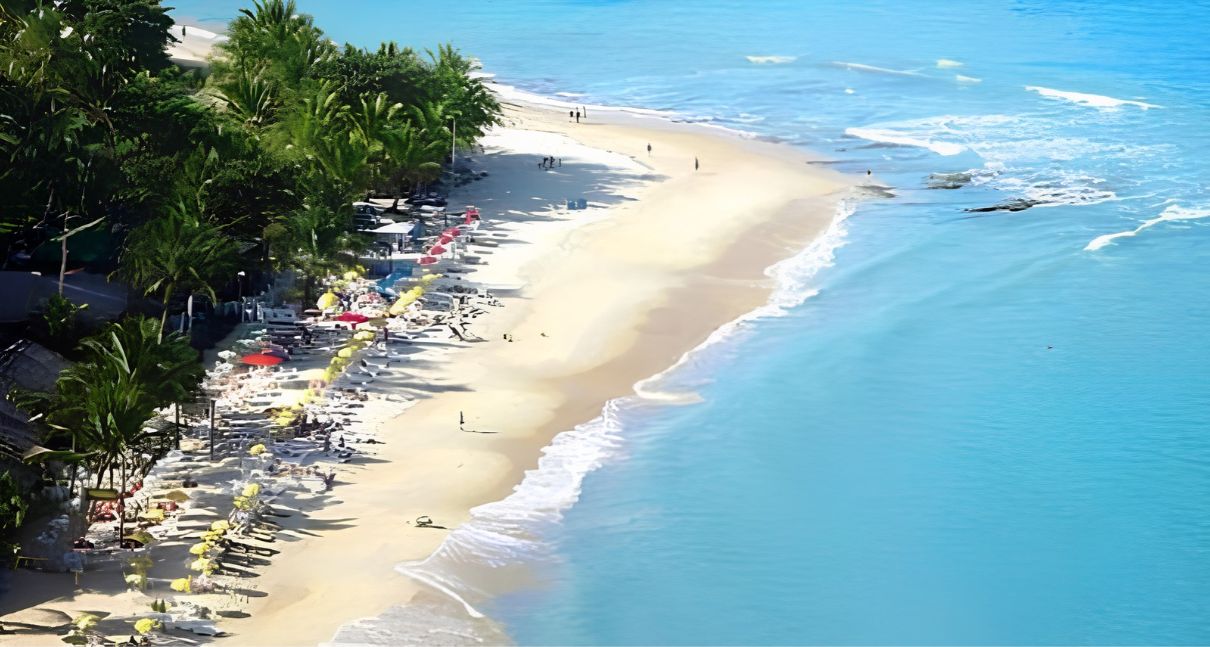
It is the main beach and the closest to the center: just walk down Rua do Mucugê. In addition, it has natural pools formed by reefs and the largest choice of guesthouses and beach huts. Incidentally, the Arraial d’Ajuda Eco Parque, a water park, is located there.
Parracho Beach

Just after Mucugê, Parracho attracts a younger crowd, especially at Réveillon (New Year’s Eve) and Carnival. Kayak rental is also available.
Pitinga Beach
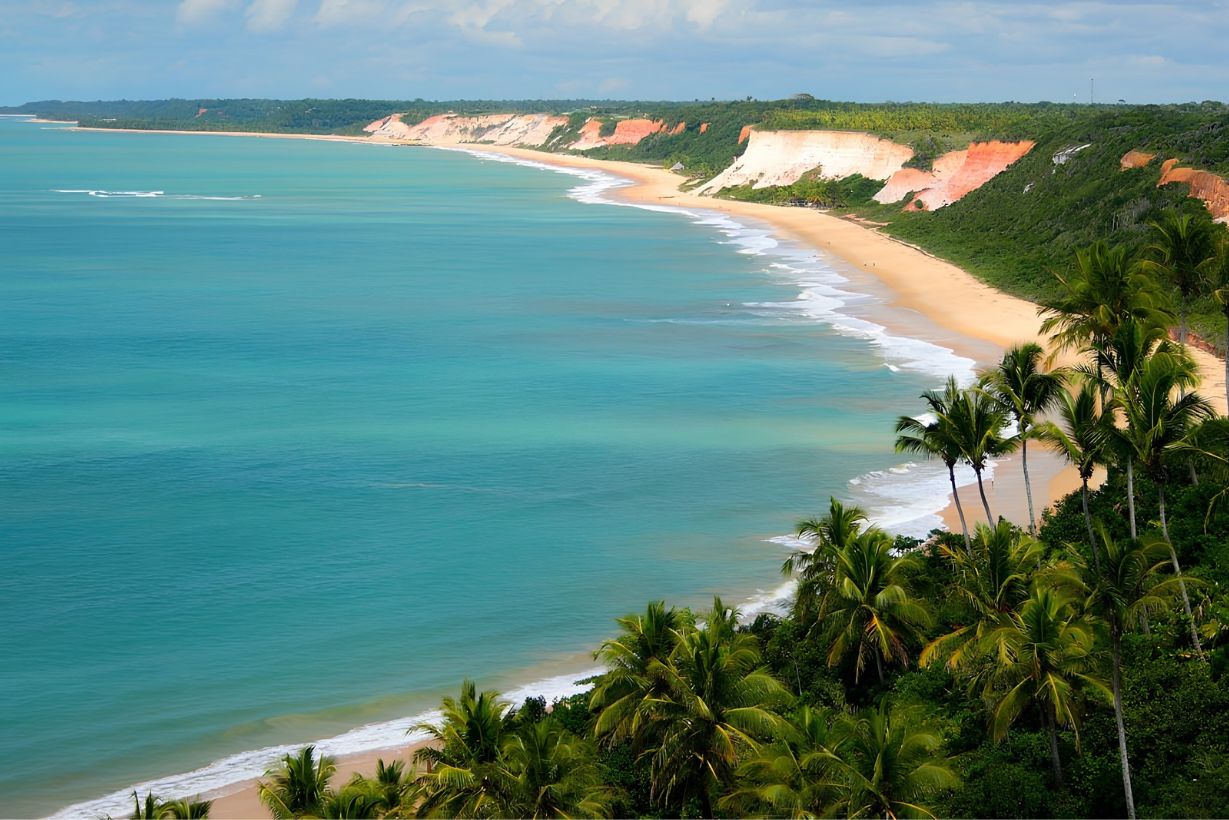
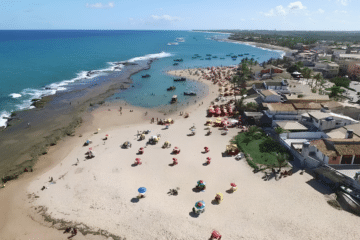
About 30 minutes on foot from Mucugê, Pitinga has cliffs, soft sand and natural pools at low tide. Generally, it has a few well-equipped beach huts.
Lagoa Azul Beach and Taípe Beach
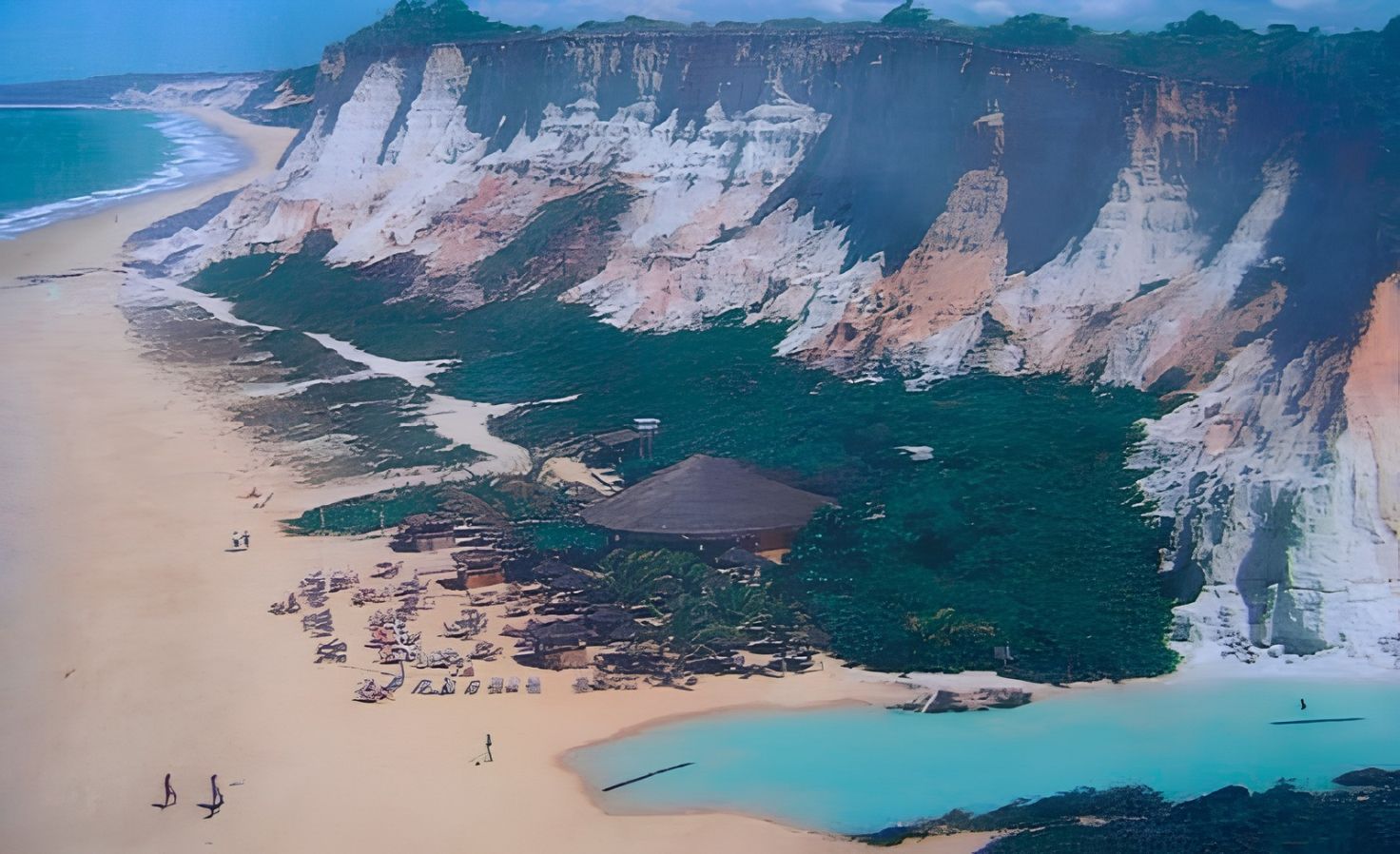
Further south, Lagoa Azul and Taípe form a long beach beneath the cliffs, with rougher seas and clear water. Lagoa Azul is a small pool between the cliffs, sought after for its clay, but it can dry up at certain times of the year.
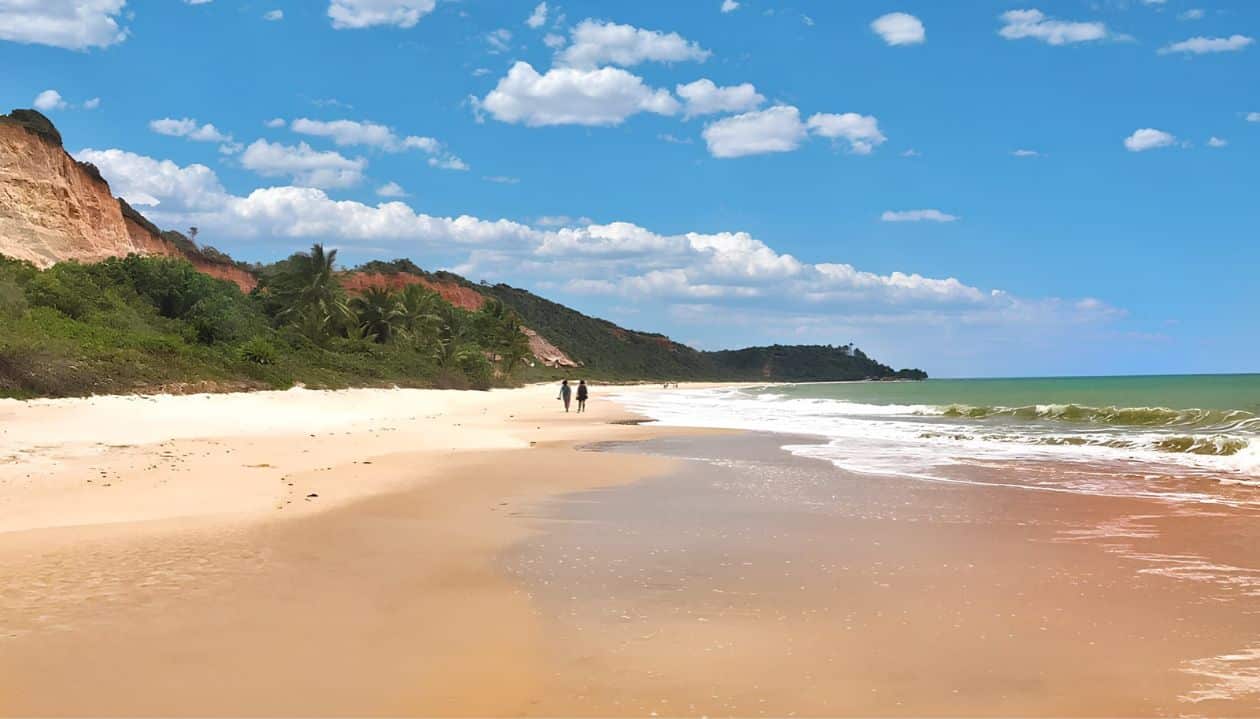
Taípe, on the other hand, is the quietest, with few facilities. Moreover, trails lead to the top of the cliffs, with a view of the sea.
Tourist attractions in Arraial d’Ajuda
Historic center and Church of Nossa Senhora d’Ajuda
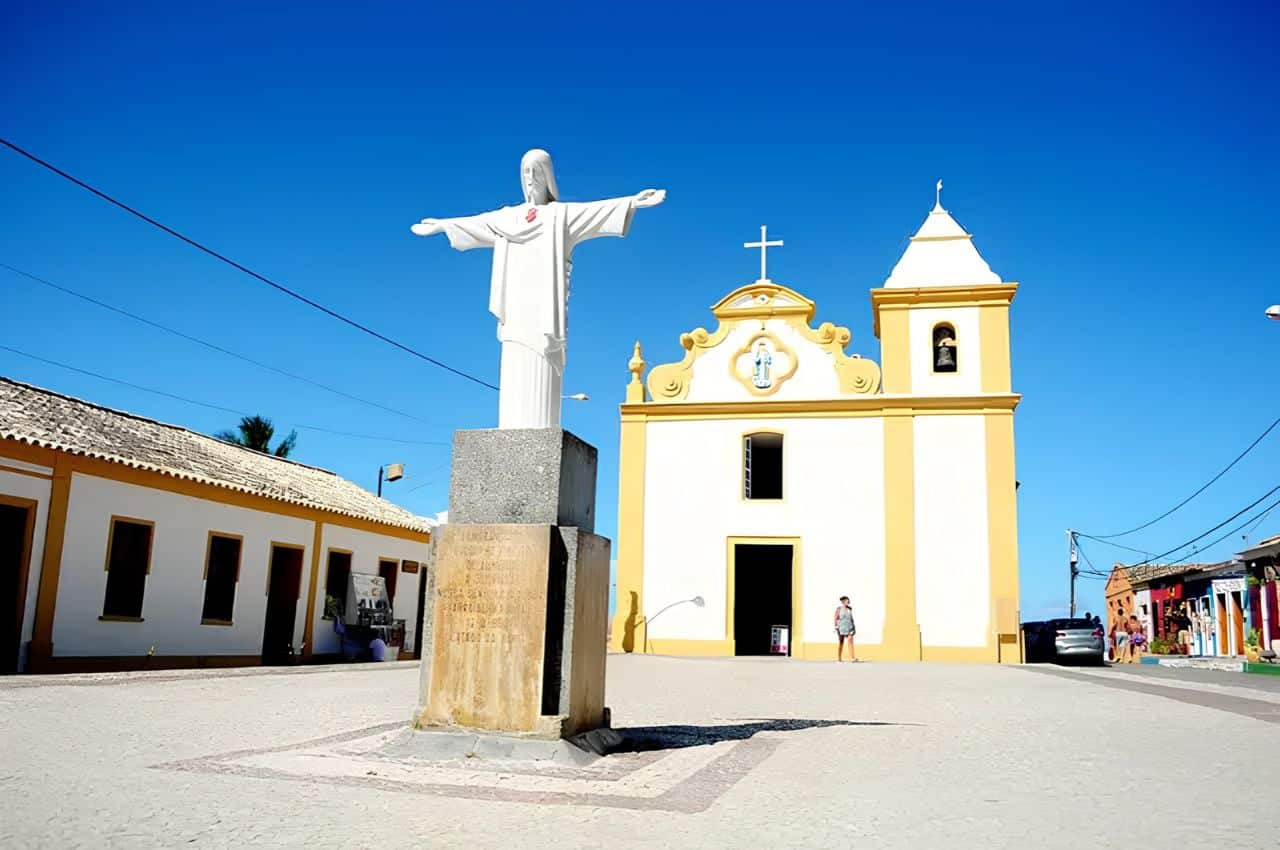
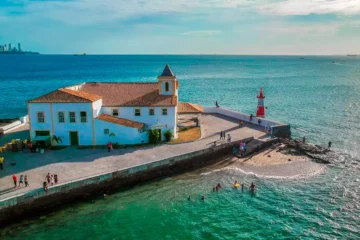
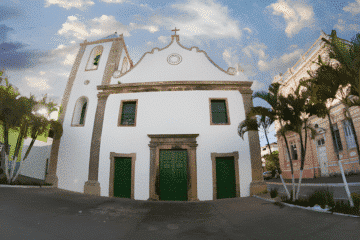
The village grew up around the chapel of Nossa Senhora d’Ajuda, built by the Jesuits in 1549. Today, the church square is surrounded by colorful colonial houses, with handicraft shops, cafés and restaurants.
Escadaria da Santa and Mirante das Fitas

The Escadaria da Santa (the Saint’s Staircase) connects the church square to the Sacred Spring and is decorated with colorful mosaics. Next to it, the Mirante das Fitas (Ribbon Viewpoint) offers a panoramic view, and visitors tie ribbons and make wishes.

Rua do Mucugê and nightlife
Rua do Mucugê, meanwhile, links the center to the beach and is packed with bars, restaurants and shops. That is why it is the heart of the nightlife, with live music, forró and reggae.
Central Park
Finally, where Central Park stands today was once the district’s old airfield, opened in 1939 and closed in 1982, when Porto Seguro airport opened.
How to get to Arraial d’Ajuda
- By ferry: from downtown Porto Seguro, the ferry crosses the Buranhém River and arrives at Apaga-Fogo Beach; then you continue by car, taxi or bus to the village.
- By plane: the nearest airport is Porto Seguro’s, on the other side of the river.
- By car: it is also possible to get there by road, without the ferry, by going around through the interior, but the route is much longer.
Tips for visiting
- How many days: in general, 3 to 4 days are enough for the village and the beaches.
- Tide: check the tide table for the natural pools.
- Trips: for example, combine the trip with Trancoso and Porto Seguro.
Frequently asked questions about Arraial d’Ajuda
Where is Arraial d’Ajuda?
In the municipality of Porto Seguro, in Bahia, on the other side of the Buranhém River.
So, it lies between downtown Porto Seguro and Trancoso.
Is Arraial d’Ajuda an island?
No, it is on the mainland, but the ferry is the most common route.
That is why many people think it is an island.
What are the best beaches in Arraial d’Ajuda?
For example, Mucugê, Parracho, Pitinga and Taípe.
In addition, several of them have natural pools at low tide.
Which is the best beach for families?
In general, Praia da Ajuda and Mucugê, which have calmer seas.
They also have good facilities, with beach huts and guesthouses.
When was the church of Arraial d’Ajuda founded?
The chapel of Nossa Senhora d’Ajuda dates back to 1549, with the Jesuits.
Therefore, it is one of the landmarks of Bahia’s history.

Publicações Relacionadas
Arembepe Beach, Bahia: Hippie Village, Piruí and map

Paranaguá Palace — History, architecture and visiting information | Ilhéus (BA)

São Jorge Parish Church: historic church in Ilhéus, Bahia

Piedade Church, Ilhéus: history, convent and stained glass

Ilhéus Cathedral (São Sebastião): history and visit

Skydiving, Paragliding and Ballooning in Bahia

Historic Towns in Bahia: A Journey Through Time
Places to visit on the south coast of Bahia

História da Arte - Caracteristicas, Aspectos e Periodos
30 tourist attractions in Bahia, Brazil, by region

Subaúma, Bahia: where it is, things to do and where to stay

Massarandupió Naturist Beach, Bahia: Rules and Access
Beaches on the South Coast of Bahia: 10 Best and Tips
Towns and the Abrolhos Archipelago — The southernmost tip of Bahia

Baixio: Between lagoons, dunes and the charm of a village surrounded by nature
26 best beaches in Bahia, Brazil: list by region
Salinas da Margarida & Barra do Paraguaçu: beach guide

Guarajuba Beach, Bahia: Natural Pools and Tips

Barra do Cahy, Bahia: where it is and how to get there

Garcez Beach and Ilha d’Ajuda, Bahia: how to get there

Rio de Ondas, Barreiras: Acaba Vida and Redondo waterfalls
Cachoeira dos Catabrigas, Bahia: photos and how to get there

Serra Grande, Bahia: beaches, map and things to do
Corumbau, Bahia: Ponta de Corumbau, beaches, map, how to go

Taipu de Fora: Discovering Natural Pools

Iguaí (BA): attractions, waterfalls, map and history
Morro de São Paulo: Map, Beaches & How to Get There (2026)
São Francisco do Conde, Bahia: what to do and history

Bay of All Saints, Bahia: history, islands and Recôncavo

Rafting in Taboquinhas: The Ultimate Adventure Guide
Abseiling Sites in Bahia: Top Locations to Explore

Diving Spots in Bahia: Discover Underwater Treasures
Paragliding at Pitinga Beach in Arraial d'Ajuda
Extreme Sports in Bahia: Adventure Awaits You

Skydiving in Bahia: An Unforgettable Experience