Published on · Updated on
Trancoso is a district of Porto Seguro, in southern Bahia, famous for the Quadrado (“the Square”), its colorful little houses and its cliff-backed beaches. In addition, it began as a Jesuit village in the 16th century and became a haven for artists and travelers from the 1970s onward. So, in this guide to Trancoso, you will see how to get there, its history, the beaches and where to stay.
- Where it is: in Porto Seguro, on the Costa do Descobrimento (Discovery Coast), 26 km from Arraial d’Ajuda.
- How to get there: Porto Seguro airport, then the ferry to Arraial and a paved road.
- Highlight: the Quadrado and the Church of São João Batista, from the 17th century.
- Beaches: Nativos, Coqueiros, Rio da Barra, Itapororoca and, further south, Espelho.
- High season: from December to February and on public holidays.
Where Trancoso is and how to get there
Trancoso lies on the coast of Porto Seguro, on the Costa do Descobrimento. First of all, the nearest airport is the one in Porto Seguro. Then, the ferry crosses the Buranhém River to Arraial d’Ajuda, with departures every 30 minutes, day and night.
From Arraial, in turn, it is about 26 km on a paved, winding road, which takes around 50 minutes. On the other hand, if you avoid the ferry, you drive about 77 km by road alone.

Video about Trancoso


History and Historic Center of Trancoso
Trancoso began as the Jesuit village of São João Batista dos Índios at the end of the 16th century; sources cite 1583 or 1586. Later, the village grew around the Quadrado, which is now called Praça São João.
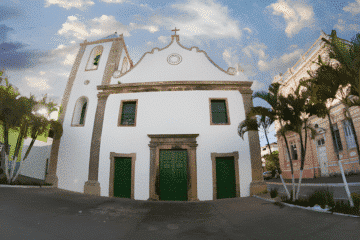
At the far end of the Quadrado, incidentally, stands the Church of São João Batista, built in the 17th century; some sources cite 1656. In addition, the ensemble is part of the area of Porto Seguro that Iphan has protected since the 1970s.
Finally, from the 1970s onward, hippies and artists discovered the village. Since then, Trancoso has become one of the most sought-after destinations in Brazil.


Beaches of Trancoso
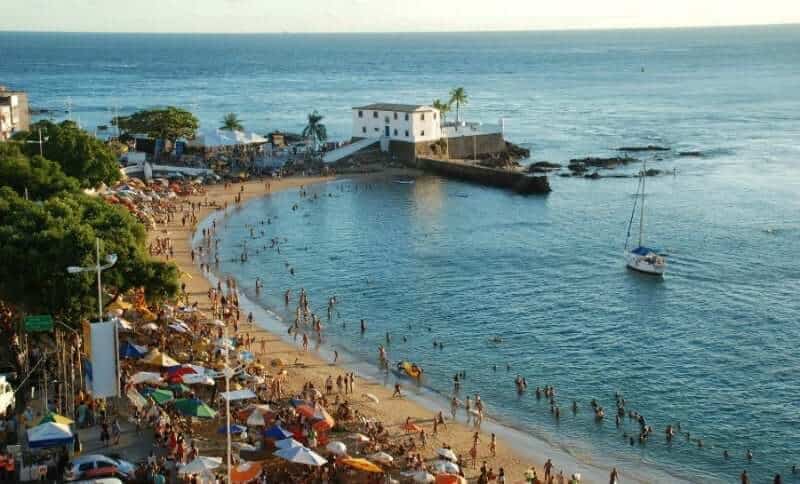
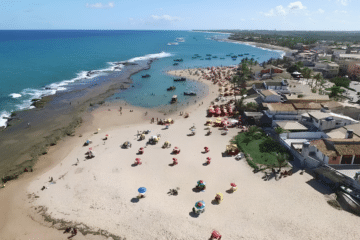
In general, the beaches of Trancoso have light sand, cliffs, coconut palms and natural pools at low tide. Next, take a look at the main ones.
| Beach | Highlight |
|---|---|
| Nativos | North of the mouth of the Trancoso River, with beach huts |
| Coqueiros | South of the river, near the Quadrado, calm sea |
| Rio da Barra | Quieter, with a river and, in addition, mangroves |
| Rio Verde and Itapororoca | Cliffs and more secluded beaches |
| Taípe (between Arraial and Trancoso), Tartarugas and Amores | Cliffs and unspoiled landscapes |
| Espelho | To the south, on the way to Caraíva, via a dirt road |
Coqueiros Beach
Near the Quadrado, Coqueiros Beach has a calm sea and coconut palms. For this reason, in fact, it is the busiest. Besides, you can walk down along the side of the church.


Nativos Beach
Meanwhile, north of the river mouth, Nativos Beach has beach huts serving Bahian food. However, in high season some of them charge a minimum spend.


Rio da Barra, Rio Verde and Itapororoca
Further away, these beaches are, in general, quieter. At Rio da Barra, for example, the river and the mangroves meet the sea. Rio Verde and Itapororoca, meanwhile, have cliffs and few people.


Taípe, Tartarugas, Amores and Ponta de Itaquena
Moreover, Trancoso has beaches with tall cliffs and unspoiled landscapes, such as Taípe, Tartarugas, Amores and Ponta de Itaquena. Finally, further south lies Espelho Beach, on the way to Caraíva, via a dirt road.


What to do in Trancoso
- Quadrado: first of all, stroll around in the afternoon and have dinner at the restaurants on the square.
- Beaches: in addition, alternate between Coqueiros and Nativos and visit Espelho Beach.
- Sports: you can also go surfing, stand-up paddleboarding and kitesurfing in Trancoso.
- Trips: finally, take day trips to Arraial d’Ajuda and Caraíva.
Where to stay in Trancoso
- Quadrado: in general, it is the best option for getting around on foot and having restaurants nearby.
- Nearby streets: in turn, more peace and quiet, with varied prices.
- Nativos and Coqueiros: on the other hand, ideal for waking up close to the beach.
- Rio da Barra and the cliffs: these areas, meanwhile, offer more privacy, but they require a car or a transfer.
In high season, from December to February and on public holidays, book early. Also, check recent reviews and the cancellation policy.

Frequently asked questions about Trancoso
Where is Trancoso?
It is, in fact, a district of Porto Seguro, in southern Bahia.
In addition, it is 26 km from Arraial d’Ajuda.
How far is it from Porto Seguro to Trancoso?
Via the ferry and Arraial, it is about 26 km after the crossing.
By road alone, however, it is about 77 km.
What is the Quadrado of Trancoso?
In short, it is the central square, with colorful little houses and the Church of São João Batista.
That is why it is the village’s postcard image.
What are the best beaches in Trancoso?
In general, Coqueiros, Nativos, Rio da Barra and Itapororoca.
It is also worth visiting Espelho Beach, further south.
When is the best time to go to Trancoso?
Outside the high season, which runs from December to February.
That way, prices are lower and the beaches are emptier.

Publicações Relacionadas
Arembepe Beach, Bahia: Hippie Village, Piruí and map

Paranaguá Palace — History, architecture and visiting information | Ilhéus (BA)

São Jorge Parish Church: historic church in Ilhéus, Bahia

Piedade Church, Ilhéus: history, convent and stained glass

Ilhéus Cathedral (São Sebastião): history and visit

Skydiving in Bahia: Paragliding and Hot-Air Balloons

11 Heritage-Listed Historic Towns in Bahia, Brazil

História da Arte - Caracteristicas, Aspectos e Periodos
30 tourist attractions in Bahia, Brazil, by region

Subaúma, Bahia: where it is, things to do and where to stay
Massarandupió Naturist Beach, Bahia: Rules and Access
Southern Bahia Beaches: 10 Best, Map and Travel Tips

Baixio: Between lagoons, dunes and the charm of a village surrounded by nature
26 best beaches in Bahia, Brazil: list by region
Salinas da Margarida & Barra do Paraguaçu: beach guide

Guarajuba Beach, Bahia: Natural Pools and Tips

Barra do Cahy, Bahia: where it is and how to get there

Garcez Beach and Ilha d’Ajuda, Bahia: how to get there

Rio de Ondas, Barreiras: Acaba Vida and Redondo waterfalls
Cachoeira dos Catabrigas, Bahia: photos and how to get there

Serra Grande, Bahia: beaches, map and things to do
Corumbau, Bahia: Ponta de Corumbau, beaches, map, how to go

Taipu de Fora, Bahia: Natural Pools, Tides and Access

Iguaí (BA): attractions, waterfalls, map and history
Morro de São Paulo: Map, Beaches & How to Get There (2026)
São Francisco do Conde, Bahia: what to do and history

Bay of All Saints, Bahia: history, islands and Recôncavo

Rafting in Taboquinhas, Itacaré: Rapids and Tips

Diving in Bahia, Brazil: Salvador Wrecks, Abrolhos and More
Paragliding at Pitinga Beach in Arraial d'Ajuda
Abseiling in Bahia: Where to Go, Bungee Jumping and More
Kitesurfing in Trancoso, Bahia: Wind, Lessons and Tips

São Desidério, Bahia: Lagoa Azul and Buraco do Inferno
Paulo Afonso, Bahia: Canyons, Falls and Top Sights
Juazeiro (BA): things to do, riverfront, carrancas and where it is