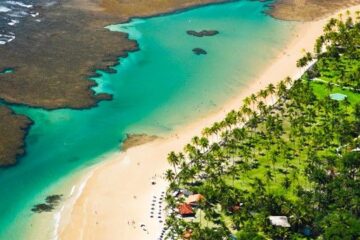
Imbassaí Beach, located on the Costa dos Coqueiros, has recently been reopened to tourism with the opening of the Linha Verde (BA-099), a motorway, which links Salvador to Aracaju (SE) and passes through destinations such as Praia do Forte, Arembepe and Imbassaí.
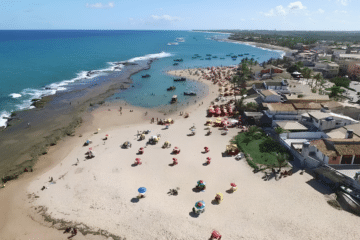
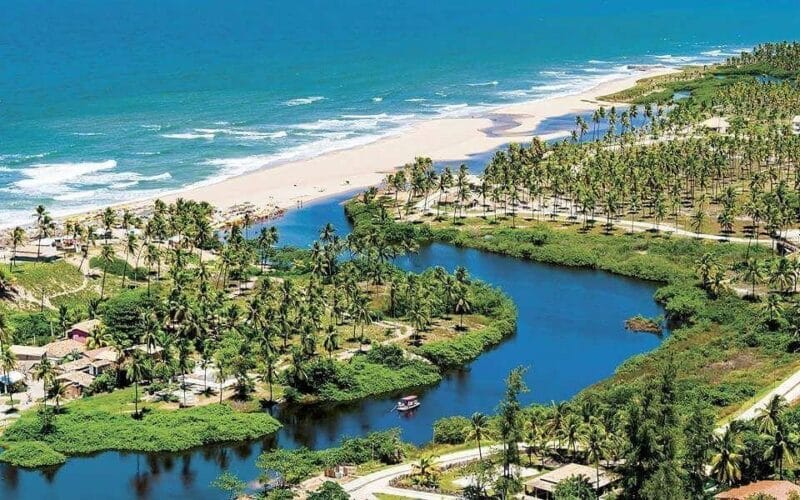
Imbassaí is a natural paradise, with around 6 kilometres of beach and 6 kilometres of river running parallel to the sea, surrounded by high dunes and coconut trees.

Located in the municipality of Mata de São João, the village is only 65 kilometres from Salvador and 14 kilometres from Praia do Forte, making it an accessible and charming destination.
Access to the beach depends on where you are staying. You can get to the sea
- By raft, crossing the river;
- By bicycle, along the fishing village path;
- On foot, across the dunes;
- Or by golf cart, offered by some resorts, on a suspended wooden path through the forest.
The name Imbassaí comes from the Tupi-Guarani language and means“path of the river”, referring to the Imbassaí River that runs parallel to the dunes before emptying into the sea. Its fresh waters form small cascades and rapids, creating a perfect setting for relaxation.

See the map of Costa dos Coqueiros
Videos about Imbassaí in Bahia

Praia de Imbassaí na Bahia06:23
IMBASSAI NA BAHIA - CONHEÇA A SUA HISTÓRIA06:19

Praia de Imbassaí - Drone

Imbassaí - Drone e Guia Turístico02:41
Points of interest in Imbassaí
What to do in Imbassaí
Visitors can choose to bathe in the sea or river, or simply relax on a sun lounger, on the sand or in the dunes.
For the more adventurous, there are options such as
- Cycle along the coastal cycle path;
- Visit the Klaus Peters Park;
- Swim at the Dona Zilda Waterfall, near Praia do Forte;
- Diving in the Jauara Lagoon;
- And even swimming in the natural pools of Praia de Santo Antônio.
Eco-tours also include buggy or van rides to neighbouring beaches such as Praia do Forte and Costa do Sauípe.
Infrastructure and nature
The beach is surrounded by coconut trees, rivers and dunes, ideal for sports such as rafting, canoeing and fishing. Access to the beach is restricted to pedestrians, which contributes to the preservation and tranquillity of the area.
The stalls are located on the strip of sand between the sea and the river, offering cold drinks, fried fish snacks, seafood and the traditional acarajé, served on trays by Bahian women.
At low tide, the reefs form natural pools of warm, crystal-clear water, ideal for family swimming.
Grand Palladium Imbassaí Resort & Spa
With the arrival of international investment, the town has gained prominence with the appearance of the Grand Palladium Imbassaí Resort & Spa, an all inclusive resort located in the Imbassaí Reserve. Surrounded by native forest, coconut and cashew trees, the resort offers
- 654 junior suites with hydromassage, LCD TV, king-size bed or twin beds;
- 10 bars and 5 restaurants;
- Spa with swimming pools and jacuzzis;
- Convention Centre and full leisure facilities.
It is a 15 minute walk from the resort to where the river meets the sea.
Ecotourism on the rise
The region is part of a Green Line Conservation Unit. Since the construction of the motorway, Imbassaí has received tourist infrastructure, with hotels, bars and restaurants spread over an area of 3 km². This has boosted ecological and adventure tourism, making Imbassaí one of the most enchanting destinations on the northern coast of Bahia.

Publicações Relacionadas
Juazeiro: Discover the Land of the Carrancas
Santo Antônio da Barra Fort — history, Barra Lighthouse and the Nautical Museu
Belmonte's Rich History and Cultural Heritage
Costa do Dendê: A Tropical Paradise in Bahia
Costa do Sauípe: Discover Paradise in Bahia
Tourist Information about Chapada Diamantina
Todos-os-Santos Bay (Bahia) — History, geography and conservation
Prado (BA) — Beaches, Cliffs and Whale Watching | Whale Coast
The Coconut Coast and its tourism heritage
39 Museums in Salvador: Discover the history and culture of Bahia
Barreiras: An Ecological Paradise in Bahia
Taipu de Fora: Discovering Natural Pools
Bom Jesus dos Passos Island: A Complete Guide (Beaches, Church and How to Get There)
Church of São Pedro dos Clérigos — History, architecture and religious art
History of the Convent and Church of Nossa Senhora da Piedade in Ilhéus
Marimbus Pantanal: Adventure in Chapada Diamantina
Igatu: Explore the 19th-Century Stone Houses
Complete Guide to Visiting Arraial d'Ajuda in Bahia
History and sights of Avenida Contorno in Salvador BA
Where to Stay in Salvador for Your Best Experience
Whale Coast (BA) — Complete guide: Abrolhos, beaches and whale-watching
History of Cocoa: From Aztecs to Modern Use
Tourist Attractions on the Discovery Coast in Bahia
History and Historical Attractions of Itacaré Reveale
História da Arte - Caracteristicas, Aspectos e Periodos
Island of Fear: Mysteries and Hauntings
Picos das Almas, Itobira and Barbado Trekking Guide
Porto Seguro (BA) — History, Beaches, Tours and Practical Tips
Learn more about the sloth and its unique characteristics
Wine Tourism in the São Francisco Valley Guide
What to do on Boipeba Island - Tourist Guide - videos
Ventura Village: A Rich History of Diamonds
Bay of Todos os Santos: nature, history and cultur
Cultura dos Índios Pataxós na Costa do Descobrimento
Arembepe: beaches (Piruí, Praia do Canto), Hippie Village and the Tamar Project
Maré Island (Bay of Todos os Santos) — beaches, culture and how to get there
This post is also on:
 Português
  English
  Deutsch
  Español
  Français