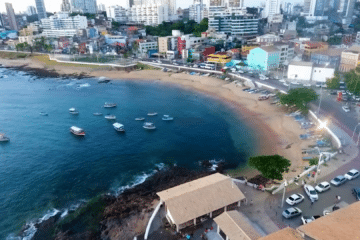
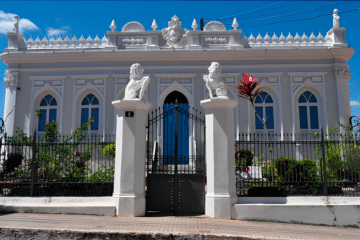
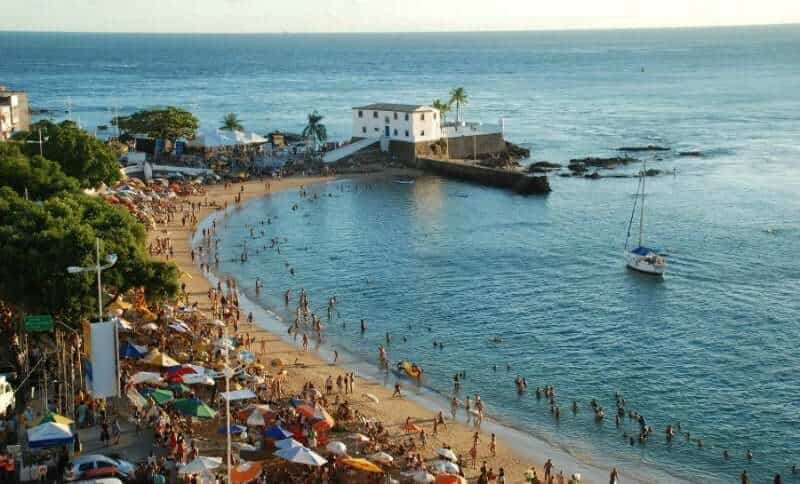
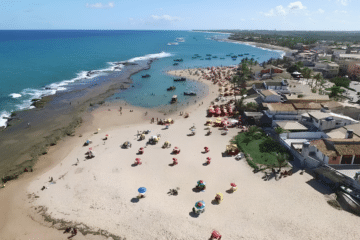
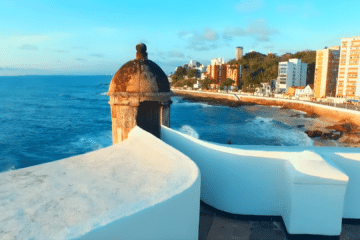
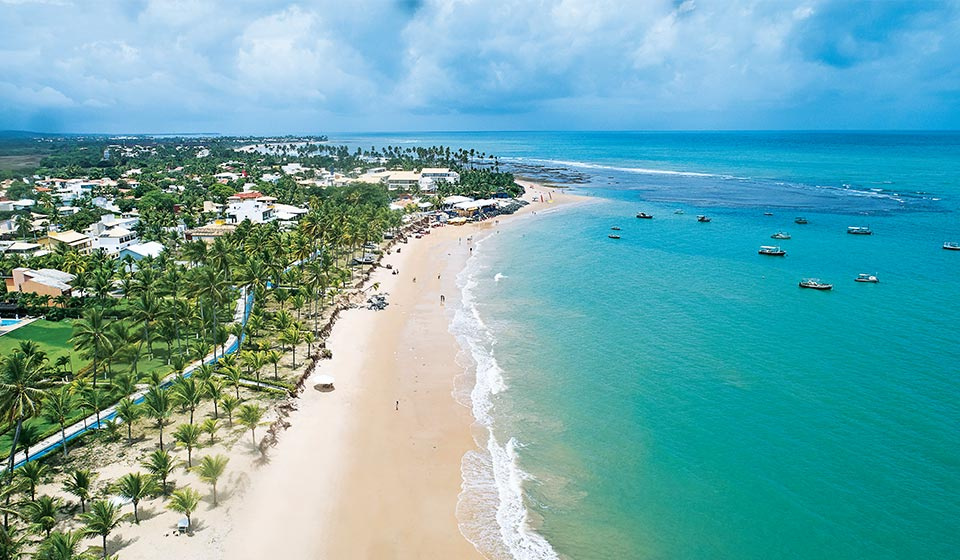
Praia do Forte is a district in the municipality of Mata de São João, situated on the northern coast of Bahia, Brazil, approximately 80 km from Salvador.
Originally a fishing village, Praia do Forte has become a popular tourist destination, known for its beaches with crystal-clear waters, natural pools formed by coral reefs, extensive coconut groves and nature reserves.
Videos about Praia do Forte in Bahia

Praia do Forte - Guia Turístico

Praia do Forte - Dicas04:58

Vila da Praia do Forte12:34

Praia do Forte04:07

Praia do Forte - Projeto Tamar08:41
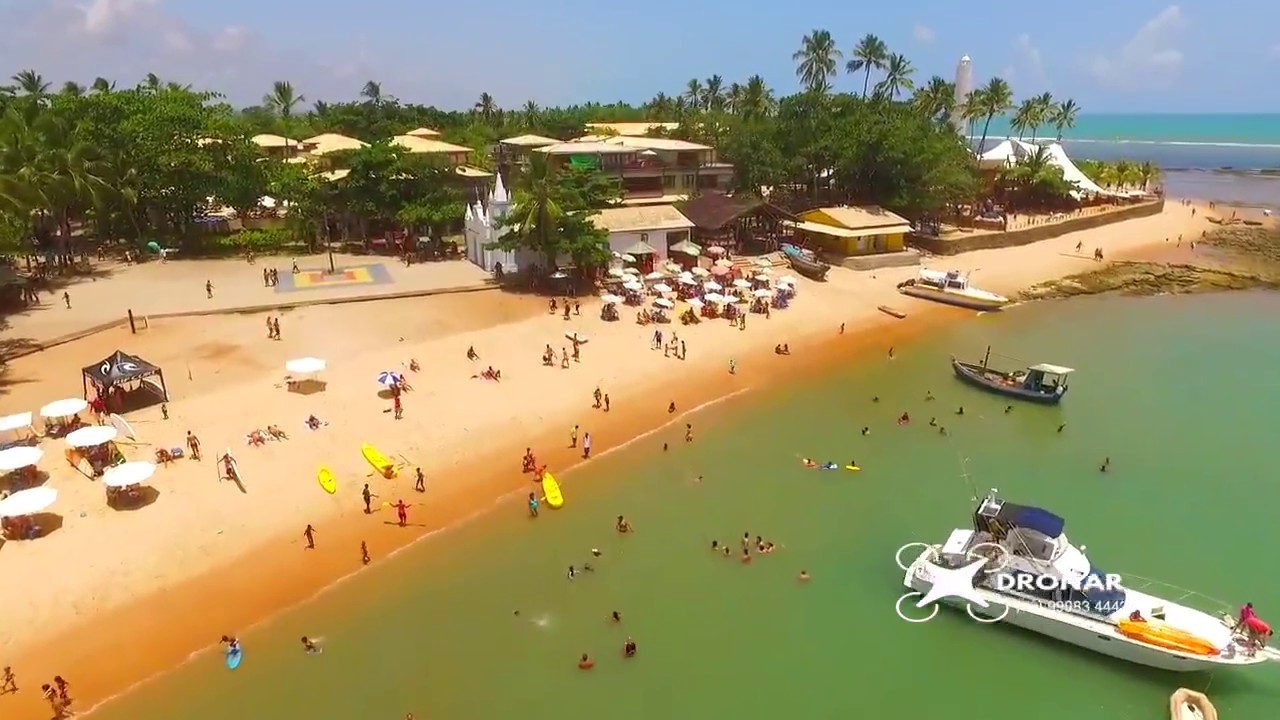
Praia do Forte - Drone04:34
Praia do Forte e Imbassaí - O que fazer?24:03
História do Castelo Garcia D'Ávila ou a Casa da Torre05:01
6 LUGARES PARA VISITAR NA PRAIA DO FORTE BA06:51
See the map of Costa dos Coqueiros
1. The village of Praia do Forte
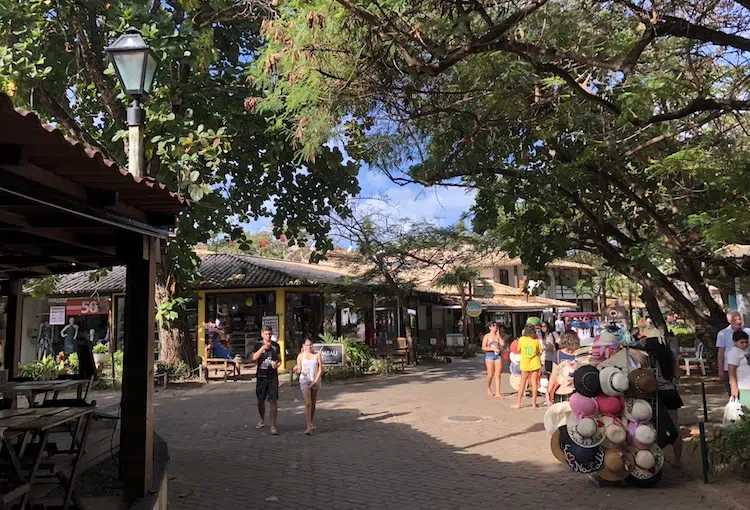
The heart of the region is Vila da Praia do Forte — charming, rustic and sophisticated. With pedestrian-only streets, where bicycles and cycle taxis can be seen, the atmosphere is peaceful and safe.

The village’s attractions include:
- Craft shops and designer boutiques
- Lively cafés and bars
- Restaurants serving a variety of cuisines
- Fairs and cultural events
In the evening, the village comes alive with live music, events and parties, but it also offers options for those looking to take a stroll under the full moon by the sea.


2. Accommodation to Suit All Tastes
The range of accommodation is varied and welcoming, with over 1,000 beds. Options range from luxury resorts and guesthouses to hostels, self-catering flats, campsites, houses and flats to let. Whether you’re travelling romantically, with family or with friends, there’s always a good choice.
3. Food, Shopping and Culture
The region offers top-class cuisine, with dishes ranging from the traditional acarajé to French, Italian and Japanese cuisine. The destination also boasts designer shops, local crafts, galleries, bars and cafés — all set against a backdrop of rustic yet sophisticated charm.
4. Lush Nature
Surrounded by the Atlantic Forest, Praia do Forte is perfect for anyone looking for adventure or tranquillity.
A particular highlight is the Sapiranga Ecological Reserve, just 6 km from the village. Covering 600 hectares of preserved woodland, it is home to species such as:
- Star-nosed monkey
- Anteaters
- Dozens of birds
- Orchids and bromeliads
In the reserve, you can go hiking and swimming in the River Pojuca, as well as enjoying sports such as quad biking, zip-lining, horse riding, cycling and floating on liloes. To relax, a swim in Lagoa Açu brings the trip to a peaceful close.
5. The Beaches
The region boasts a string of enchanting beaches, all with warm waters and idyllic scenery.

Highlights:
- Praia do Papa-Gente: ideal for snorkelling in the natural pools, with a wide variety of colourful fish.
- Praia do Lord: at low tide, it forms a huge natural pool, with snacks served right in the water.
- Praia do Porto: great for families, with stalls selling traditional food and fishing boats.
- Praia do Eco Resort: ideal for long walks and provides access to other beaches such as Itacimirim and Guarajuba — perfect for water sports.
- Tivoli Beach: situated opposite the resort, it is known for its peaceful atmosphere and calm sea, making it ideal for couples and families.
- Casinha Beach: very popular with surfers, with perfect waves for the sport.
- Portinho Beach: right in the centre of the village, near the Church of São Francisco, it’s easily accessible and is great for a quick dip.
- Pedra do Chapéu Beach: with its distinctive rock formations, it’s perfect for photos and simply taking in the view.
- Porto de Cima Beach: picturesque, with reefs and fishing boats at anchor, it offers an authentic and peaceful setting.
- It’s hard to choose the best one… find out which is your favourite beach!
6. The Tamar Project
Praia do Forte is home to the main base of the Tamar Project, which has been protecting the sea turtles that nest in the region since 1980.

Four of the world’s seven species of turtle come to Praia do Forte every year, particularly between September and May.
The headquarters comprises:
- Tanks containing live turtles
- Aquariums
- Interactive museum
- Shop and restaurant
- Cultural and educational events
Usually open from Tuesday to Sunday. We recommend checking the current opening hours and activities directly via the Tamar Project’s official channels.
7. Humpback Whale Institute
Between July and October, the region is visited by the incredible humpback whales, which come from the South Atlantic to breed.

The Humpback Whale Institute, established in 2000, promotes:
- Whale-watching trips
- Interactive museum
- Lectures and educational activities
It is open from Tuesday to Saturday, from 12 noon to 6 pm (please always check the official channels for the latest opening hours before your visit).
8. Sapiranga Ecological Reserve
Unspoilt nature and adventure in the heart of the Atlantic Forest
Located just a few kilometres from Praia do Forte, the Sapiranga Ecological Reserve is a true natural sanctuary that preserves remnants of the Atlantic Forest. Covering approximately 600 hectares, the reserve is ideal for those seeking direct contact with nature and ecotourism experiences.

The area is home to a wealth of biodiversity, with native species of flora and fauna, and is ideal for activities such as:
- Cycling
- Nature trails
- Kayaking trips
- Arvorismo
- Birdwatching
9. Lagoa Timeantube
Despite competition from the sea, Timeantube Lagoon wins over visitors with its own charms. It is an excellent choice for anyone looking for a connection with nature, tranquillity and outdoor activities.
Activities and Leisure
- It has a tree-lined promenade, perfect for running, walking and cycling.
- It offers peaceful kayaking trips, ideal for those looking for a more alternative and relaxing way to spend their time.
- The lagoon is absolutely stunning and makes for great photos, especially at sunset.
- Surrounded by native vegetation, it is also a spot for birdwatching and observing local wildlife.
10. The history of Praia do Forte: from its origins to its present-day charm
Before becoming one of the most charming tourist destinations on the northern coast of Bahia, Praia do Forte was just a small fishing village. Even as time has passed, the place retains traces of its original simplicity, now blended with touches of sophistication and modern infrastructure.
The origins of the settlement date back to the 16th century, when the Portuguese nobleman Garcia D’Ávila ordered the construction of a fortress nearby. The aim was strategic: to protect the region and to store goods that were unloaded on the coast for subsequent shipment to Salvador.
Over time, the area surrounding the fortress began to change. The introduction of coconut saplings, brought from Asia by the Portuguese colonisers, attracted families interested in planting and harvesting coconuts.
Some residents began working as sailors, helping people to cross the Pojuca River, whilst others turned to fishing – and so the settlement around the Fort began to take shape.
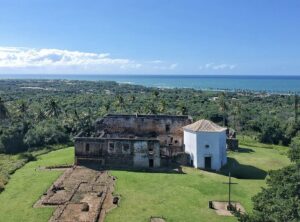
Among the region’s major historical landmarks is the Garcia D’Ávila Castle, also known as the Casa da Torre.
It is the first Portuguese fortification of a military and residential nature in Brazil, considered a unique structure in the Americas due to its medieval style. Work began in 1551, and its construction was led by Garcia D’Ávila, who accompanied Tomé de Souza on his arrival in Bahia in 1549. The monument was listed by IPHAN in 1938.
Today, what remains of the castle lies in ruins, but it is still one of Praia do Forte’s main attractions.
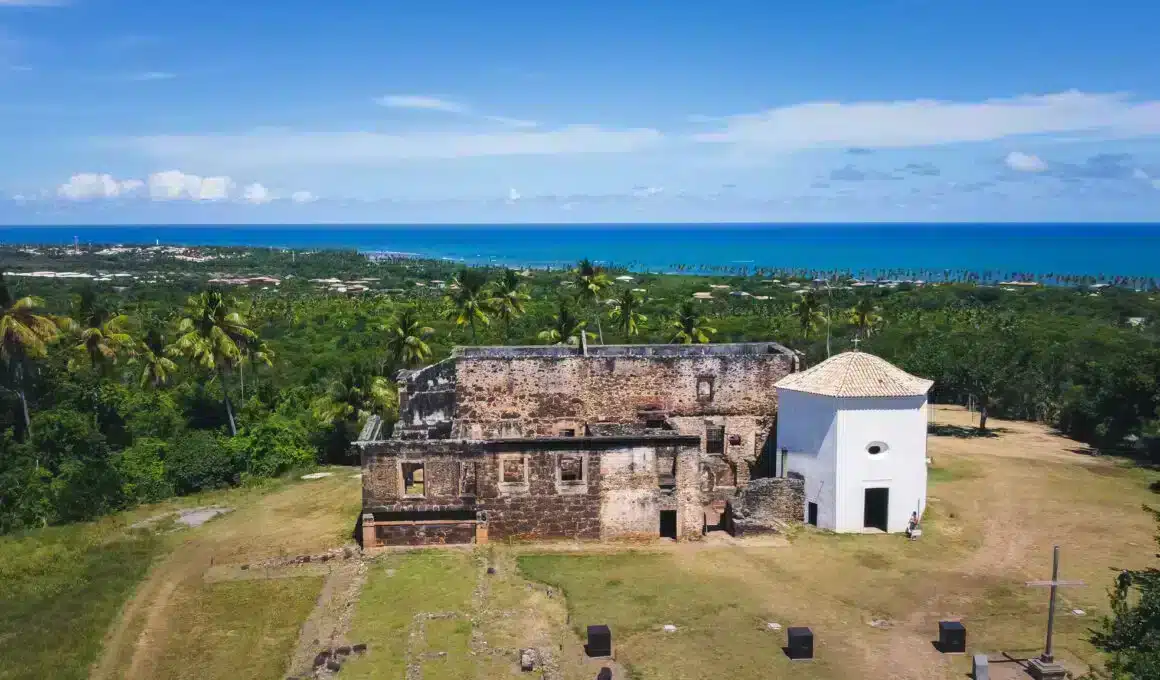
From there, you can enjoy a panoramic view of the sea, and visitors can explore the preserved buildings, such as the Chapel of São Pedro dos Rates – also known as the Chapel of All Saints –, which was started before the castle and completed in 1624.

Following the abandonment of the architectural complex in 1835 by the descendants of the D’Ávila family, the building only underwent restoration work in the 1980s, when it was transformed into the Garcia D’Ávila Historical Park.
The site also features a museum, where Portuguese pottery and indigenous artefacts found during the excavations are on display; all the items have been catalogued by IPHAN.
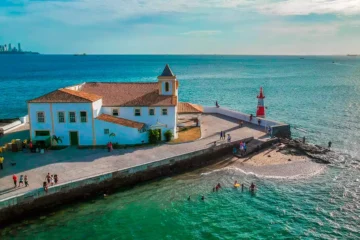
Another landmark of the region is the charming Chapel of St Francis of Assisi, situated opposite Praia do Porto. Small and cosy, it was built by local fishermen around 1900.
Inside, it houses images of St Francis of Assisi, Saint Benedict and Our Lady of the Immaculate Conception, as well as some beautiful paintings of the Way of the Cross, created by the Bahian artist Carlos Bastos.
With its prime location, overlooking the sea and surrounded by boats, the chapel has become one of the most sought-after wedding venues – both for local residents and for couples from other parts of the country who choose Praia do Forte as the setting to celebrate their love.
Garcia D’Ávila Castle: History, Heritage and Resistance
One of the most significant historical landmarks in Praia do Forte, the Garcia D’Ávila Castle — also known as Casa da Torre — is a building of great importance to Brazil’s historical and cultural heritage. Its ruins, situated some 2.5 km from the coast, date back to the 16th century and continue to fascinate visitors today with their grandeur and symbolic significance.

Origins and Construction
The castle’s origins date back to 1551, when Garcia D’Ávila I, at the request of King Dom João III of Portugal, began to build what he called the “Torre Singela de São Pedro de Rates”, in honour of his hometown. Shortly afterwards, he began construction of a manor house and the Chapel of Nossa Senhora da Conceição.
The medieval fortress was gradually extended over time, and in 1624 his grandson, Francisco Dias de Ávila Caramurú, completed the complex, which came to comprise 26 rooms and two large halls. The building served as a residence, a trading post and a surveillance post.
Regarded as the only medieval-style castle in Latin America, the building also served as a strategic fortification to protect Salvador, then the capital of Brazil. All movement at sea was monitored and, in the event of any suspicion, torch signals were sent to alert the city, located 70 km away.
The architectural complex was listed by the National Institute of Historic and Artistic Heritage (IPHAN) in 1938. Today, its ruins form part of the Garcia D’Ávila Historical Park, which features a museum, archaeological artefacts and exhibitions that bring life during the colonial period to life.
Role in the Dutch Invasions
During the second Dutch invasion of Brazil, in 1637, the castle played a decisive role. It became a resting place for Portuguese troops, a night-time watchpost and a centre for communication by signal fires to monitor enemy naval movements.
In recognition of the family’s strategic importance, Garcia D’Ávila II was appointed, in 1641, Captain of the Ordnance by the Portuguese Crown, a military title granted in recognition of the services rendered by his father during the conflicts.
The Pernambuco Uprising against Dutch rule began in 1645; this conflict continued until the invaders were finally expelled in 1654, marking a milestone in the consolidation of Portuguese sovereignty over the territory.
Economic and Cultural Influence
The influence of the Garcia D’Ávila family was not confined to military defence. They are credited with introducing zebu cattle and coconuts to Brazil — factors that transformed the agricultural and livestock economy of the North-East.
The family’s power was so great that they controlled an estate of 800,000 km², the largest in the Americas at the time, equivalent to one-tenth of Brazil’s territory. To put this into perspective, the size of the estate was comparable to the combined territories of Portugal, Spain, the Netherlands, Italy and Switzerland.
The popular expression “sem eira nem beira”, used to describe simple houses, stood in stark contrast to the splendour of the Casa da Torre, which boasted eira, beira and tribeira, signifying wealth, status and prestige.
Heritage and Tourism
Today, Garcia D’Ávila Castle is one of Praia do Forte’s main tourist attractions. Its ruins not only offer a spectacular panoramic view of the sea, but also invite visitors to immerse themselves in centuries of Brazilian history.
As well as the castle, the region is also home to other historic landmarks, such as the Chapel of São Pedro dos Rates — the oldest and best-preserved part of the complex — and the Chapel of São Francisco de Assis, built by fishermen in 1900.

The Garcia D’Ávila Historical Park welcomes thousands of visitors every year, including students, tourists and researchers who wish to learn more about the foundations of colonial Brazil and the central role played by Bahia in its formation.
Praia do Forte – A Complete Destination
Praia do Forte is one of those places where nature, history, culture and leisure come together in perfect harmony.
With enchanting beaches, impeccable facilities, outstanding environmental initiatives and a charming and welcoming village, it’s easy to see why it has become one of Brazil’s top tourist destinations.
Come and discover this special part of Bahia — and find your favourite beach.
Where is it?
Situated on the Costa dos Coqueiros, on the north coast of Bahia, Praia do Forte is just:
- 56 km from Salvador International Airport
- 75 km from Salvador Bus Station
- 80 km from the capital’s historic centre
- With quick and easy access, the destination offers comprehensive facilities to welcome tourists from Brazil and around the world in comfort and style.
Frequently asked questions about Praia do Forte, Bahia
How many days do you need to explore Praia do Forte?
To explore the village, the main beaches, the Tamar Project and Garcia D’Ávila Castle at a leisurely pace, 3 to 4 days is ideal. Anyone wishing to include the Sapiranga Nature Reserve and longer excursions should allow at least 5 days.
When is the best time to see humpback whales at Praia do Forte?
The period from July to October is the best time to spot humpback whales, which come from the South Atlantic to breed in the region.
How do you get to Praia do Forte from Salvador?
Praia do Forte is about 80 km from the Historic Centre of Salvador and 56 km from the International Airport. It can be reached by road, usually via the Estrada do Coco and the Linha Verde (BA-099).
Is Garcia D’Ávila Castle worth a visit?
Yes, especially for anyone interested in Brazilian colonial history. It is considered the only medieval-style castle in Latin America, with ruins listed by IPHAN and a panoramic view of the sea.
Is Praia do Forte a good place for a family holiday?
Yes. Beaches such as Porto have good facilities and calmer waters, making them ideal for families, as well as educational attractions such as the Tamar Project and the Humpback Whale Institute, which appeal to both adults and children.

Publicações Relacionadas
Chocolate Road and trails of the Cocoa Coast - video
Orchids of the Chapada Diamantina in Bahia
History of São Marcelo Fort — Salvador, Bahia
Cathedral Basilica of Salvador — History, Sacred Art and Collection
Municipality of Entre Rios has first official naturist beach
Enchanted fountain in Chapada Diamantina: How to get there
Costa do Sauípe: Discover Paradise in Bahia
Maraú Peninsula: A Coastal Paradise in Bahia
Towns and the Abrolhos Archipelago — The southernmost tip of Bahia
Santa Cruz Cabrália in Bahia — beaches, history and things to do
Ventura Village: A Rich History of Diamonds
7-day itinerary in Salvador and the surrounding area: Pelourinho, the islands and Praia do Forte
Tinharé Archipelago: Discover Hidden Island Gems
Waterfalls and trails in the Capão Valley: Complete Guide
Diving Spots in Bahia: Discover Underwater Treasures
Ponta de Humaitá — Lighthouse, church and the best sunset in Salvador
Learn more about the sloth and its unique characteristics
Tourist Attractions and Documentaries about Chapada Diamantina
Trekking - Route through the Chapada Diamantina in 7 days
Massarandupió Naturist Beach in Bahia
Itaparica Island — Complete Guide: History, Beaches and Tips
Tourist attractions and architectural heritage of Salvador (BA
Igatu: Explore the 19th-Century Stone Houses
Monte Pascoal National Park: Pataxó culture and Brazilian history
Tourism in São Francisco do Conde (BA) — Tips and Attractions
Comandatuba Island: Resort and Family Adventure
History and Heritage of Itaparica Island — Bay of Todos os Santos
Sempre-Viva: Symbol of Preservation in the Chapada Diamantina
History of the Church and Convent of São Francisco in Salvador
Coast of Discovery: Bahia's Historical Treasures
The Secret History of Salvador, Bahia: Caramuru and the City’s Early Day
Fort of Nossa Senhora de Monte Serrat History
Tourist Guide to the Pantanal in Bahia — Jaguaripe (BA) | Mangroves, Fishing and Excursions
Kitesurfing in Trancoso: A Guide for Adventurers
Valença: The Gateway to Morro de São Paulo
Alameda do Sol — Vila da Praia do Forte (BA) | Things to do
This post is also on:
 Português
  English
  Deutsch
  Español
  Français