Discover Boipeba Island: A tropical paradise of natural beauty and vibrant culture
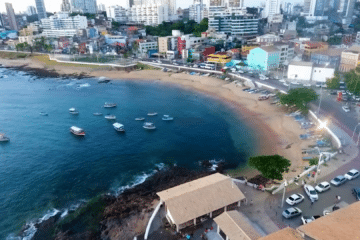
Boipeba Island has more than 20 kilometres of semi-deserted beaches, ideal for swimming.

No fancy restaurants, axé, lounge music, lights, shop windows or street vendors disturbing the tranquillity with their insistent hawking.
Boipeba remains quiet, combining natural beauty with local originality. To complete the flavour, it still retains an air of alternative community.


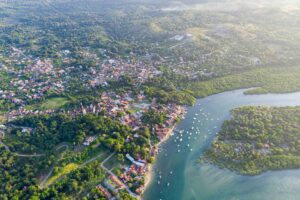
The mouth of the Inferno River, which separates Boipeba from the island of Tinharé, where Morro de São Paulo is located, seems to announce what lies ahead in a more than relaxed atmosphere.
Disembarking at Boca da Barra is where those seeking peace and tranquillity will find it.
Directly in front of the boats is the entrance to Velha Boipeba, a 17th century village that can only be reached on foot and which has not yet been turned into an open-air shopping centre like Praia do Forte on the north coast of Bahia.

The climate by the sea is no different. There are about 20 kilometres of semi-deserted beaches. Take a walk from Tassimirim, with its rock formations and natural pools at low tide, to Moreré.
On the way, stop for a lobster fried in its own seawater at Guido’s Barraca on Cueira Beach, where there are virtually no buildings and coconut trees as far as the eye can see.
By the way, Cueira is one of the best places on the island to swim. There are surfers, but the sea isn’t rough. A long coastline, with cliffs and rocks in the corners, with a long strip of sand shaded by coconut palms.
The villages of the archipelago, such as Morro de São Paulo, Garapuá, Moreré, Velha Boipeba and Gamboa, are very popular with foreign tourists and unfortunately still little known by Brazilians.

Boipeba Island, located at the most privileged point of the Archipelago, is a true paradise: Sunshine all year round, unspoilt beaches, turquoise sea with crystal clear waters, huge biodiversity, total tranquillity and a hospitable and welcoming population!

Videos of Boipeba Island

Vila de Boipeba - Pontos Turísticos

Ilha de Boipeba - Reportagem05:52

Ilha de Boipeba - Guia de Turismo06:17
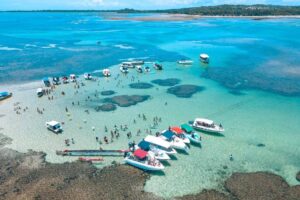
Ilha de Boipeba - Guia de Turismo Completo

Ilha de Boipeba - Guia de Viagem Completo09:50
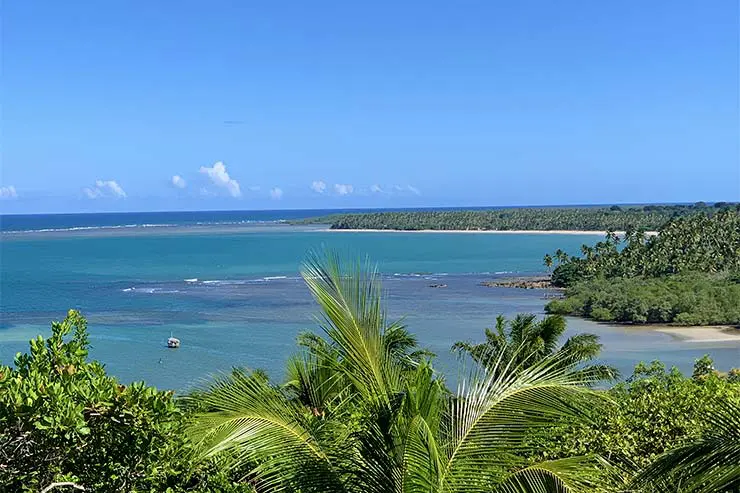
Moreré - Guia Completo26:03
Tourist attractions on Boipeba Island
The island of Boipeba, off the coast of Bahia, is a paradise destination known for its semi-deserted beaches, crystal clear waters and rich biodiversity.

Below is an overview of the main beaches and activities on the island:
- Boca da Barra Beach
- Outeiro beach
- Pedras Beach
- Tassimirim Beach
- Cueira Beach
- Moreré Beach
- Bainema beach
- Ponta dos Castelhanos or Castelhanos beach
- Cova da Onça beach
- Vellha Boipeba
- Monte Alegre
1. Boca da Barra beach
Located near the village of Velha Boipeba, this is the arrival point for many boats.


Depending on the tide, its waters can be darker due to the influence of the Rio do Inferno, which flows into this area. It is an area with an infrastructure of inns and restaurants.
2. Outeiro Beach

Continuing from Boca da Barra towards the open sea, it has clearer waters and is less affected by tidal variations. It’s a quiet beach, ideal for relaxing.
3. Praia das Pedras
A small beach characterised by the presence of different rock formations. It’s a picturesque place, ideal for contemplation and photography.
4. Tassimirim Beach


Accessible by footpath from Outeiro Beach, about 20 minutes walk. This beach is protected by coral reefs and offers a paradisiacal setting.
Due to the presence of corals, it is more suitable for contemplation than for swimming.
5. Cueira Beach
Separated from Tassimirim by a coral block, Cueira is known for its gentle waves, making it a good spot for swimming and occasionally surfing.

The beach is long, with coconut trees providing natural shade. A must is Barraca do Guido, famous for its grilled lobster prepared with fresh ingredients.
6. Moreré Beach
Regarded as one of the most paradisiacal beaches on the island, Moreré has transparent, shallow waters, white sand and extensive coconut groves.

The area has rustic restaurants serving local delicacies such as shrimp moqueca with banana and grilled fish.
The area is also home to charming inns such as the Mangabeira Lodge, which offers comfortable accommodation just 200 metres from the beach.
7. Bainema Beach
Located after Moreré, Bainema is a deserted beach accessible by a path through a coconut grove.

The walk is rewarded with a tranquil setting where you can see herons at dusk.
8. Ponta dos Castelhanos or Castelhanos Beach

Castelhanos Beach stands out from the rest for its more challenging access.
To get there, you can choose between a boat trip, an ATV ride or a hike through the mangroves – the latter is undoubtedly an incredible experience!
The journey is well worth it, as Castelhanos is considered the most beautiful beach on Boipeba.

Castelhanos Natural Pools
The natural pools are a must on your list of things to do in Boipeba!
To get to the natural pools of Castelhanos you need to take a boat as they are quite far from the sand. They only form at low tide – so you need to keep an eye on the tide table (hotels usually tell you when low tide is) to enjoy them.

9. Cova da Onça beach

Located on the southern tip of Boipeba Island, this village is known for its tranquillity and authenticity.
Tourism in the region is still largely unexplored, preserving the local culture and offering visitors a genuine experience.

10. Old Boipeba
Velha Boipeba is the main town on Boipeba Island and the gateway for visitors to this paradise.

With its sandy streets, colourful houses and peaceful atmosphere, the village retains a rustic and authentic charm.
It has inns, restaurants and small shops, making it an ideal base from which to explore the island’s beaches and natural beauty.
In addition, the hospitality of the locals and the local cuisine, with an emphasis on fresh seafood, make Velha Boipeba a welcoming and unforgettable destination.
11. Monte Alegre
Monte Alegre is a quilombola community in the interior of Boipeba Island, surrounded by forests and hills.
Unlike the coastal villages, Monte Alegre has preserved its cultural traditions and its agriculture, which includes manioc, corn, bananas and pineapples.
The local cuisine, especially free-range chicken, is an attraction. The visit offers an authentic and enriching experience of the region’s history and culture.

How to get to Boipeba
- By ferry and bus: From the São Joaquim Maritime Terminal in Salvador, take the ferry to Bom Despacho on the island of Itaparica. From there, take a bus to Valença, where speedboats leave for Boipeba.
- Via Mar Grande: At the Bahia Nautical Tourist Terminal, in front of the Mercado Modelo, take the ferry to Mar Grande, on the island of Itaparica. Once off the ferry, you can take a taxi or bus to Valença, where speedboats leave for Boipeba.
- Via Morro de São Paulo: From the Bahia Nautical Tourist Terminal, catamarans leave for Morro de São Paulo. On arrival, you must go to Segunda Praia, where 4×4 vehicles leave to cross the island of Tinharé to a crossing point to Boipeba.
- By car: From Salvador, take the BR-324 towards Feira de Santana and then the BR-101 south to the Valença junction. In Valença, you can leave your car in the car parks near the water terminal and take a speedboat to Boipeba.
- By air taxi: There are private flights from Salvador airport to the private airstrip at Fazenda Pontal in Boipeba.
The climate
The Boipeba region has two main seasons:
- Dry season: From August to March, with less rainfall.
- Wet season: April to July, with the highest probability of rainfall.
April, May and June are the wettest months and some inns and restaurants tend to close temporarily during this time.
Final thoughts
The island of Boipeba is a destination that combines paradisiacal beaches, rich biodiversity and an unspoilt local culture. Whether you want to relax on deserted beaches, sample Bahian cuisine or explore the trails and mangroves, Boipeba offers unforgettable experiences for all tastes.
Bahia.ws is the largest tourist guide to Bahia and Salvador.
Tourist guide to the island of Boipeba in Bahia

Publicações Relacionadas
Praia do Forte, Bahia: The Complete Travel Guide
Torrinha Cave: A Speleological Marvel in Brazil
Barreiras: Where Carnival Meets Adventure Tourism
South Coast of Bahia: Discover Stunning Beaches
Relief, Fauna and Flora of Chapada Diamantina
Canavieiras: A Hidden Gem in Bahia's Coastline
Maré Island (Bay of Todos os Santos) — beaches, culture and how to get there
Dive Sites of Chapada Diamantina: A Guide
Palaces in Salvador to visit and learn about Brazil's history
Origin and History of Capoeira in Brazil Explained
Rio Vermelho is Salvador’s trendiest and most bohemian neighbourhood
History, the Festival of Nossa Senhora das Candeias and Tourist Attractions
Descobrimento National Park in Bahia: A Natural Heritage Site
Bay of Todos os Santos: nature, history and cultur
Ecotourism at Timeantube Lagoon, Praia do Forte
Sempre-Viva: Symbol of Preservation in the Chapada Diamantina
Ilha dos Frades — History, beaches and tourist attractions
Bom Jesus dos Passos Island: A Complete Guide (Beaches, Church and How to Get There)
Andaraí is the second largest town in the Chapada Diamantina
Belmonte's Rich History and Cultural Heritage
São Desidório: Explore Caves and Biodiversity
Find out how to celebrate Carnival in Salvador, Bahia
Historic Towns in Bahia: A Journey Through Time
History and sights of Avenida Contorno in Salvador BA
Whale Coast (BA) — Complete guide: Abrolhos, beaches and whale-watching
Lauro de Freitas — A comprehensive guide to beaches, culture and leisure
Costa do Sauípe: Discover Paradise in Bahia
Towns and the Abrolhos Archipelago — The southernmost tip of Bahia
Discover the reasons for a holiday in Salvador, Bahia
Trekking - Route through the Chapada Diamantina in 7 days
Ecotourism in Bahia: discover village of Santo André
The highest and most beautiful waterfalls in Chapada Diamantina
Church of São Pedro dos Clérigos — History, architecture and religious art
Garcez Beach: Discover Paradise in Jaguaripe
Ilhéus: A Journey Through Bahia's Rich History
Morro de São Paulo: Beach Guide and How to Get There
This post is also on:
 Português
  English
  Deutsch
  Español
  Français