History of the Fort of Nossa Senhora de Monte Serrat — origins, renovations and historical facts
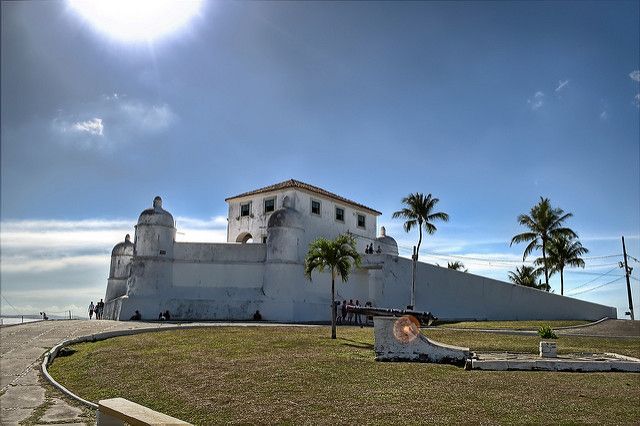
History of the Fort of Nossa Senhora de Monte Serrat: The Fort of Nossa Senhora de Monte Serrat, originally known as Castelo de São Felipe, is one of the oldest and best-preserved examples of colonial fortified architecture in Brazil. Possibly the oldest in the country, the fort retains features of its original design even after successive renovations.


Video on the History of the Fort
História do Forte de Nossa Senhora de Monserrate
Historical significance and iconography
The map of Albernaz (first quarter of the 17th century) already shows Monserrate Fort alongside other defences in Salvador, such as Santo Alberto Fort and the Santo Antônio da Barra Tower. Old engravings and the sketch by José Antônio Caldas (1759) depict features very similar to those seen today, demonstrating how well it has been preserved over the centuries.

Major renovations in the history of the Fort of Nossa Senhora de Monte Serrat
1. Renovations carried out by the Count of Castelo Melhor (1650–1654)
2. Reforms during the viceroyalty of André de Melo e Castro (1735–1742)
3. Restoration by Góis Calmon (1924–1927)
4. Maintenance by the Brazilian Army (20th–21st centuries)
Structure, characteristics and use

Key military events
- Dutch invasions (1624–1625): the fort was occupied by the Dutch; there is disagreement regarding the resistance and withdrawal in 1625.
- Invasion of Nassau (1638): captured by Major van den Brand; the Dutch held it until they had consolidated their positions in Pernambuco.
- Sabinada (1837): occupied by rebels; came under naval attack and saw the landing of loyalist forces.
- The 1863 Reform: implemented following the Christie diplomatic crisis, in accordance with the recommendations of Colonel Beaurepaire Rohan.
Sources and concluding remarks

Publicações Relacionadas
Rio Vermelho is Salvador’s trendiest and most bohemian neighbourhood
Ponta de Humaitá — Lighthouse, church and the best sunset in Salvador
Pelourinho: what to do in Salvador’s Historic Centre
Discover the 23 beaches of Salvador — A complete guide and tips
7-day itinerary in Salvador and the surrounding area: Pelourinho, the islands and Praia do Forte
Bahia Maritime Museum: History of Navigation at the Barra Lighthouse

4 Must-See Museums in Salvador: Art, History and Culture
History of the Cathedral Basilica of Salvador
Cathedral Basilica of Salvador — History, Sacred Art and Collection
Where to Stay in Salvador for Your Best Experience

Church and Convent of Nossa Senhora da Palma in Salvador, Bahia

The most visited churches in Salvador — itinerary and tips

Discover the Magnificence Fort of Nossa Senhora de Monte Serrat

Solar do Unhão & MAM-BA — History, Architecture and a Visit

Tourist attractions in the Gamboa neighbourhood in Salvador BA

History and sights of Avenida Contorno in Salvador BA

Palaces in Salvador to visit and learn about Brazil's history

Basílica Santuário Nossa Senhora da Conceição da Praia — history and architecture

Church and Convent of Santa Clara do Desterro and its History in Salvador

Convent and Church of Santa Teresa and the UFBA Museum of Sacred Art in Salvador

Bahia Art Museum (MAB): Learn about its history and collection

The best beaches near Salvador (distance, facilities and tips)
Lacerda Elevator — history, construction and visits

Santo Antônio da Barra Fort — history, Barra Lighthouse and the Nautical Museu

History of São Marcelo Fort — Salvador, Bahia

Church of Nossa Senhora dos Mares (Salvador) — History and Architecture

Church of the Third Order of St Francis — History, Art and Baroque Architecture

Discover the reasons for a holiday in Salvador, Bahia

Churches of Salvador: Architectural and Historical Treasures
Churches in Salvador (BA) — a guide: history, architecture and itinerary

39 Museums in Salvador: Discover the history and culture of Bahia

Parks and Squares in Salvador for Leisure Activities

A History of the Forts and Lighthouses of Salvador (Bahia)

Places of interest in Salvador — A comprehensive guide

Tourist attractions for children in Salvador: Fun and learning

Find out how to celebrate Carnival in Salvador, Bahia
This post is also on:
 Português
  English
  Deutsch
  Español
  Français