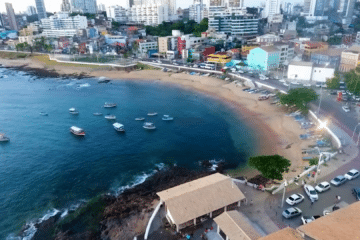
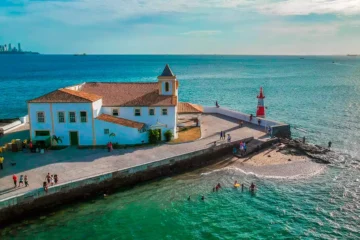
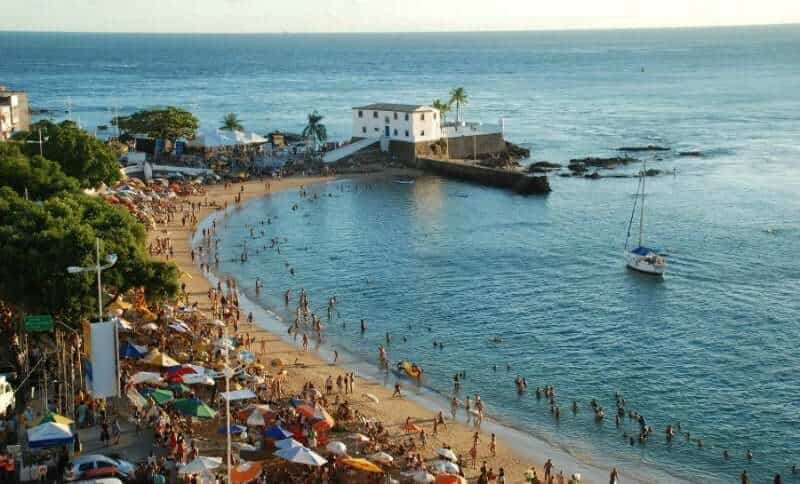
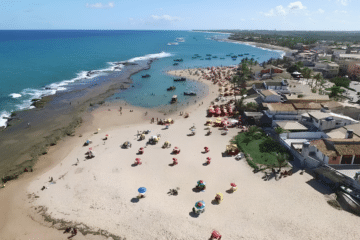
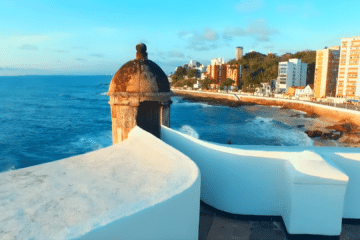
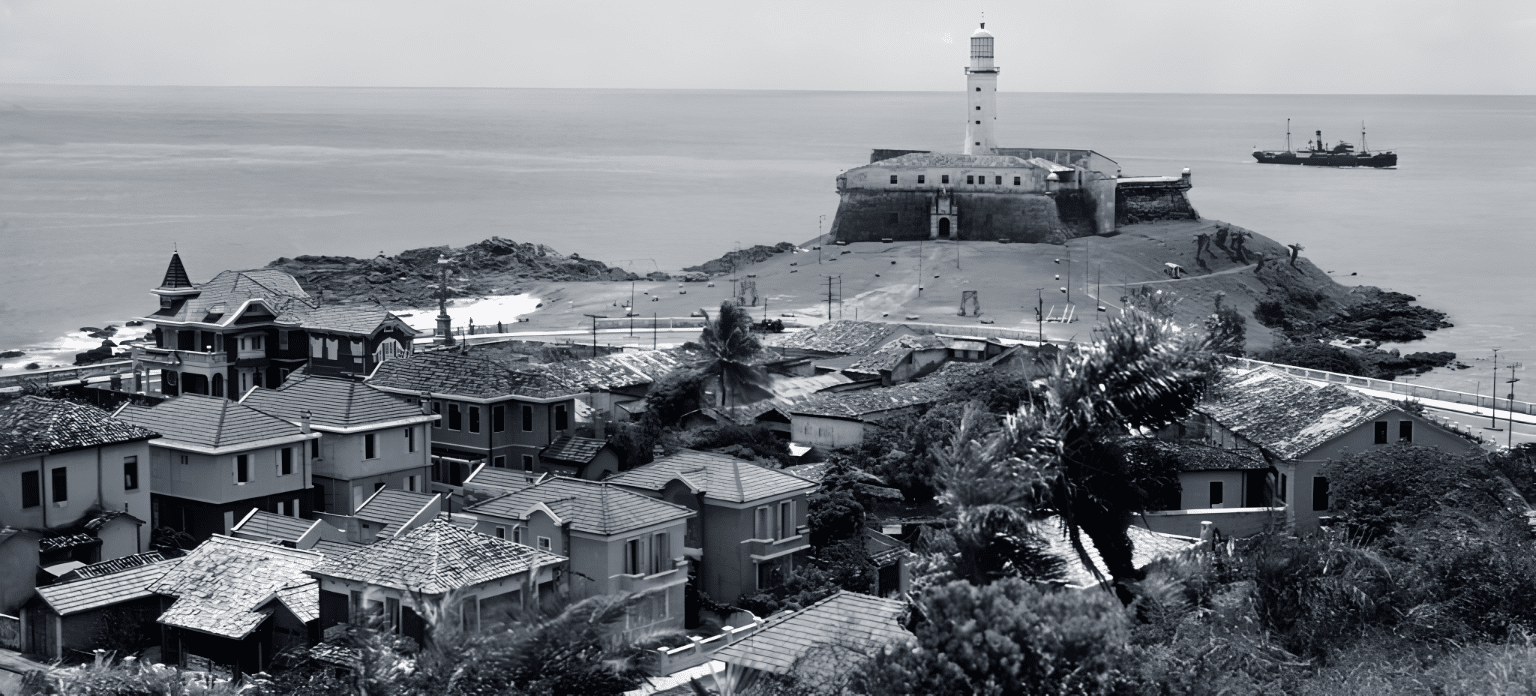
Although commonly known as the ‘Barra Lighthouse’, the site is actually the Fort of Santo Antônio da Barra — an older fortification (16th–17th centuries) which houses the Barra Lighthouse, built in the late 17th century, and the Bahia Maritime Museum.


Historical overview
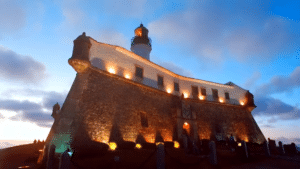
História do Forte de Santo Antônio da Barra em Salvador25:49
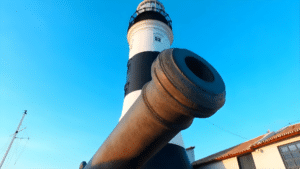
Forte de Santo Antônio da Barra — história, Farol da Barra e Museu Náutico15:09
- Origin: the first earth and timber structures dating from the 16th century (c. 1534).
- Restoration: reconstruction in masonry between 1583 and 1587; extensions in subsequent centuries.
- Lighthouse: a historic structure associated with navigation (late 17th century) — Barra Lighthouse.
- Today: it houses the Bahia Maritime Museum and is a tourist attraction offering panoramic views of the Bay of Todos os Santos.
Origins and development
The Fort of Santo Antônio da Barra was built as a defensive structure at Ponta do Padrão to protect the entrance to the Bay of Todos os Santos. Originally constructed from lightweight materials, it was converted into a stone fortification towards the end of the 16th century, taking on a polygonal layout adapted to the terrain.


Military role and conflicts
Throughout the colonial period, the Fort of Santo Antônio da Barra formed part of Salvador’s defence network and played a role in events such as the Dutch invasion of 1624. Despite historical criticism of its tactical effectiveness during certain periods, its role in monitoring the harbour entrance and signalling to ships remained consistently important.
Navigation and signposting
The Barra Lighthouse, which has stood next to the Fort of Santo Antônio da Barra since the late 17th century, has become a historic landmark for navigation in the region. Over the centuries, the lighting equipment has been modernised, culminating in its electrification in the 20th century.
Restoration and cultural use
In the 19th and 20th centuries, the Fort of Santo Antônio da Barra underwent renovations and restoration work that preserved its structure. Today it houses the Bahia Maritime Museum, with collections on maritime archaeology, navigational instruments, cartography and accounts of shipwrecks.


What to see at the Nautical Museum
- Underwater archaeological collections and finds from shipwrecks.
- Historical navigational instruments and replicas of navigational equipment.
- Information panels on the history of Santo Antônio da Barra Fort and navigation in the Bay of Todos os Santos.
- View of the lighthouse and panoramic view of the coast, ideal for taking photos and watching the sunset.
Practical tips for your visit
- Opening hours: please check the Bahia Maritime Museum’s website before you go (opening hours may vary on public holidays).
- Tickets: check the latest prices at the box office or on the official website.
- Access: located in Largo do Farol da Barra — easily accessible by public transport and car.
- Recommendations: take your camera to the lighthouse viewing point, respect the indoor areas and follow the site’s guidelines.
See also The defences of Porto da Barra – the Forts of Santa Maria and São Diogo and The wreck of the galleon Sacramento in Salvador, Bahia

Publicações Relacionadas
Baixio: Between lagoons, dunes and the charm of a village surrounded by nature
Tourist Guide to the Pantanal in Bahia — Jaguaripe (BA) | Mangroves, Fishing and Excursions
Tourist Attractions on the Rio de Contas in Itacaré, Bahia
Campo Formoso: Explore Caves and Emerald Trade
History of the Convent and Church of Nossa Senhora da Piedade in Ilhéus
Relief, Fauna and Flora of Chapada Diamantina
Skydiving in Bahia: An Unforgettable Experience
Descobrimento National Park in Bahia: A Natural Heritage Site
Fort of Nossa Senhora de Monte Serrat History
Santa Cruz Cabrália in Bahia — beaches, history and things to do
Tinharé Archipelago: Discover Hidden Island Gems
Pelourinho: what to do in Salvador’s Historic Centre
History of the Founding of Salvador, Bahia - History of Brazil
Best Beaches in Bahia: Your Guide to Paradise
Mucuri and Costa Dourada — Beaches, cliffs and ecotourism in Bahia
Iguaí: A Guide to Waterfalls and Relaxation
The highest and most beautiful waterfalls in Chapada Diamantina
Birds Found in Chapada Diamantina: A Guide
Ponta de Corumbau — an unspoilt paradise on the southern coast of Bahia
Bay of Todos os Santos: nature, history and cultur
Beaches and Waterfalls of Itacaré: A Hidden Gem
Church of São Pedro dos Clérigos — History, architecture and religious art
Monte Pascoal National Park: Pataxó culture and Brazilian history
Tourist Attractions on the Discovery Coast in Bahia
Serra Grande: Your Guide to Bahia's Paradise
Lauro de Freitas — A comprehensive guide to beaches, culture and leisure
Tourist attractions for children in Salvador: Fun and learning
São Jorge Parish Church in Ilhéus — history, architecture and religious art
Places of interest in Salvador — A comprehensive guide
Rio de Contas: Learn about the history of how the city was founded
Taipu de Fora: Discovering Natural Pools
Correntina: Discovering the Heart of Bahia
Andaraí is the second largest town in the Chapada Diamantina
Dive Sites of Chapada Diamantina: A Guide
Barreiras: An Ecological Paradise in Bahia
Valença: The Gateway to Morro de São Paulo
This post is also on:
 Português
  English
  Deutsch
  Español
  Français