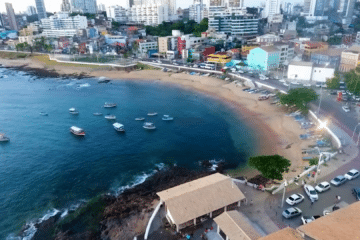
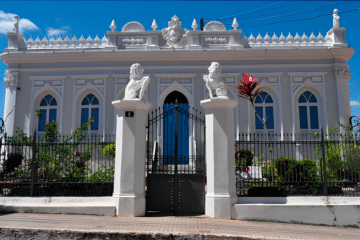
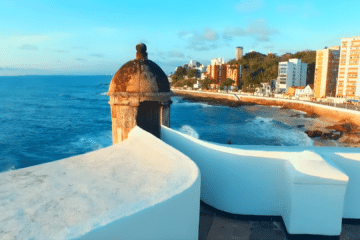
Itaparica Island is home to the following municipalities
1. Itaparica (municipality) — a historical centre
- Historic centre with traditional houses, churches and the Fort of São Lourenço.
- Cultural attractions: Fonte da Bica, art studios and guided tours.
- Main access via the ferry (Bom Despacho).
- Target audience: cultural tourists and visitors on short trips.
2. Vera Cruz (municipality) — a beach and summer holiday destination
- Home to Mar Grande, Cacha‑Pregos, Barra Grande and several beaches and islets.
- Focused on boat trips, ecotourism (mangroves/the Bahian Pantanal) and water sports.
- Access is typically via speedboats and terminals in Mar Grande.
- Target audience: families, holidaymakers and water sports enthusiasts.
Quick summary
The municipality of Itaparica is notable for its historical heritage and city tours; Vera Cruz boasts the best beaches, holiday infrastructure and options for water sports and eco-tourism.
How to get there
- Ferry (São Joaquim, Salvador → Bom Despacho, Itaparica) — journey time approximately 1 hour.
- Speedboats from the Nautical Terminal/Mercado Modelo to Mar Grande — the quickest route.
- By land: local access via roads crossing the western side of the island.

Historical overview
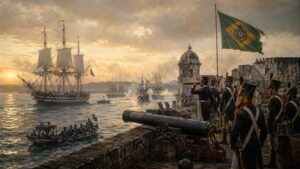
The settlement dates back to the colonial period, with records dating from the 16th century. The island is linked to the history of Caramuru and Paraguaçu and is home to churches, forts and townhouses that bear witness to the region’s economic and cultural development.
Videos about Itaparica Island and its history

Centro Histórico da Ilha de Itaparica10:31
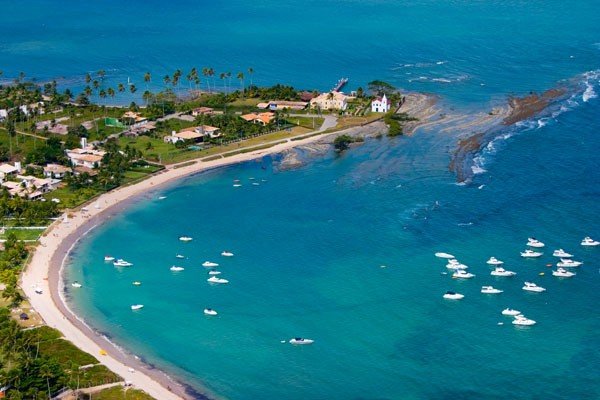
7 Melhores praias de Vera Cruz22:57
Praia da Penha na Ilha de Itaparica04:04
Guia de Turismo da ILHA DE ITAPARICA - Dicas13:18
O BRASIL COMEÇOU NA ILHA DE ITAPARICA11:40
História da Ilha de Itaparica
Ilha de Itaparica - Dicas de Viagem07:23
Ilha de Itaparica - Documentário26:02
Main attractions
Itaparica Village — Historic Centre
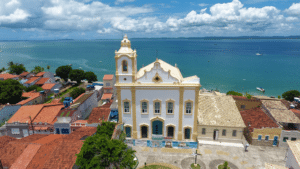
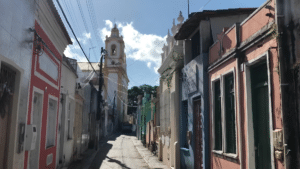
The main town is home to the island’s principal historic quarter, featuring churches, forts and colonial mansions that recount the local history.

Churches and religious heritage
Of particular note are the Church of São Lourenço — the local patron saint — and the Parish Church of the Blessed Sacrament. These 17th- and 18th-century buildings preserve Baroque elements, panels and tiles typical of colonial religious art.
Fort of São Lourenço
Close to the historic centre, the Fort of São Lourenço (a colonial structure) is a landmark of coastal defence and a must-visit for anyone interested in military history and the coastal views.
Craft Centre
Housed in a traditional manor house in the central square, the centre brings together local craftspeople, lace and wooden artefacts — ideal for buying souvenirs and experiencing the local culture.
Fonte da Bica
The Fonte da Bica, situated on Rua 25 de Outubro, is traditionally regarded as a mineral water spring. Known since colonial times, the spring has become a historic and symbolic attraction of the village. Popularly believed to have therapeutic properties, the water is sought after by visitors and locals alike. The inscription on the fountain reads: “Fine water. Makes an old woman young again.”


Main Beaches
The island has dozens of beaches, many protected by reefs that form natural pools — ideal for swimming, stand-up paddleboarding, kayaking and diving.
- Praia do Forte — a tranquil cove with waters protected by reefs, white sand and views of the Fort of São Lourenço.
- Ponta de Areia — calm waters, beach huts and a bustle of boats.
- Amoreiras — a beachfront shaded by almond trees.
- Manguinhos — holiday homes and calm seas.
- Porto dos Santos — surrounded by Atlantic Forest and trails leading to mystical springs.
- Gameleira — ideal for fishing and water sports.
- Mar Grande — main access point for speedboats, with tourist facilities.
- Penha, Barra Grande, Coroa, Barra do Pote, Conceição, Tairu, Aratuba, Berlinque and Cacha‑Pregos — a variety of options to suit all tastes.


Recommended activities
- Boat trips to natural pools and neighbouring islands.
- Short walks and birdwatching in the mangroves.
- Visits to historical sites and local museums.
- Sampling the fish and seafood-based cuisine in the villages.
- Kayak, bicycle and surfboard hire to explore the coastline.
Where to stay
There are guesthouses, small B&Bs, campsites and holiday homes on the most popular beaches (Mar Grande, Cacha-Pregos, Ponta de Areia). Book in advance during the high season.
Practical tips
- Bring sun cream, insect repellent and water; some beaches have limited facilities.
- Check ferry and speedboat timetables, especially at weekends and on public holidays.
- Opt for local guides for hikes and boat trips for safety and local knowledge.
- Respect environmental conservation areas and mangroves.
FAQ — Frequently Asked Questions
When is the best time to visit?
The dry, hot season (spring and summer) is usually the most popular, with calm seas and a wider range of tours on offer; avoid days of heavy rain for water-based activities.
How do I get around the island?
Taxis, local buses, minibuses, car hire and bike hire are common options; many tours are by boat.
Can I visit the Fonte da Bica?
Yes — it’s a tourist attraction in the village that’s easily accessible, known for its history and local traditions.
Is it necessary to hire a guide for beaches and trails?
For trails and tours in mangrove swamps or hard-to-reach areas, a local guide is recommended for safety and a better experience; for urban beaches, it is not compulsory.
Conclusion
Itaparica Island is a versatile destination: it offers history, beaches with calm waters protected by reefs, rich ecosystems and a welcoming local culture. Ideal for those who want to combine relaxation, outdoor activities and cultural immersion just a short distance from Salvador.

Publicações Relacionadas
Massarandupió Naturist Beach in Bahia
Rio Vermelho is Salvador’s trendiest and most bohemian neighbourhood
Trail to Buracão Waterfall in Chapada Diamantina
Discover the São Francisco River Valley Region - Tourist Guide
Costa do Sauípe, Bahia: Resorts and Tourist Guide
History and sights of Avenida Contorno in Salvador BA
Guide to Trancoso (BA) — what to do, beaches and inns
Camaçari: Industry, History and Natural Beauty
History of the Senhor do Bonfim Ribbons — Origin, Meaning and Traditions
Correntina: Discovering the Heart of Bahia
São Sebastião Cathedral (Ilhéus) — History, architecture and tourism
Maré Island (Bay of Todos os Santos) — beaches, culture and how to get there
History of the settlement of Chapada Diamantina
Bahia Maritime Museum: History of Navigation at the Barra Lighthouse
Catabrigas Waterfall — A natural haven in Ibirajá, Itanhém (BA)
Bom Jesus da Lapa Sanctuary: A Complete Visitor’s Guide
Cumuruxatiba (Prado, BA) — Guide to beaches, excursions and whale watching
The highest and most beautiful waterfalls in Chapada Diamantina
Tourist Attractions and Documentaries about Chapada Diamantina
History of the Church of Nosso Senhor do Bonfim in Salvador
Lagoa Encantada in Ilhéus: A Preserved Natural Paradise
Orchids of the Chapada Diamantina in Bahia
Extreme Sports in Bahia: Adventure Awaits You
Find out how to celebrate Carnival in Salvador, Bahia
Cultura dos Índios Pataxós na Costa do Descobrimento
Tourist Regions of Bahia: Discover the diversity of the state
7-day itinerary in Salvador and the surrounding area: Pelourinho, the islands and Praia do Forte
Tourist Attractions on the Rio de Contas in Itacaré, Bahia
Santa Cruz Cabrália in Bahia — beaches, history and things to do
Prostitution, sex, massage parlours and nightclubs in Salvador
Basílica Santuário Nossa Senhora da Conceição da Praia — history and architecture
Barra do Cahy: Brazil's first beach - history and nature
Discover the reasons for a holiday in Salvador, Bahia
Taipu de Fora: Discovering Natural Pools
Things to Do in Rio de Contas (Bahia): A Complete Guide
Canavieiras: A Hidden Gem in Bahia's Coastline
This post is also on:
 Português
  English
  Deutsch
  Español
  Français