Lampião, the emblematic figure of the Cangaço, is often portrayed as a visionary, fearless and cunning warrior, but this heroic image has been increasingly challenged by contemporary historians. Virgulino Ferreira da Silva, the man behind the myth, not only orchestrated robberies and kidnappings, but also cultivated a scene of extreme […]
Tag: historia
Lampião and the Cangaço: Between History and Mythology
Lampião, an iconic figure of the cangaço, is often portrayed as a visionary warrior, fearless and cunning, but this heroic image has increasingly been called into question by contemporary historians. Virgulino Ferreira da Silva, the man behind the legend, not only orchestrated robberies and kidnappings, but also fostered a climate […]
Dutch Recife and the Dutch Invasion of Brazil
Recife dos Holandeses began with the Dutch invasion, which was part of the Dutch project to occupy and administer the north-east of Brazil through the Dutch West India Company. By 1624, the Dutch had already established the West India Company and were planning to expand their overseas territories in Africa […]
History of the Discovery Coast in Bahia – History of Brazil
The story of the Costa do Descobrimento begins on 22 April 1500, when Pedro Álvares Cabral‘s squadron spotted a rounded hill, Mount Pascoal, to the south of Bahia. In search of a safe place to dock, the thirteen ships sailed north along the coast and, at dusk on April 24, […]
Bay of All Saints, Bahia: history, islands and Recôncavo
The Bay of All Saints (Baía de Todos os Santos), also written “Bahia de Todos os Santos”, is considered the largest bay in Brazil. It lies on the coast of Bahia, between Salvador and the Recôncavo Baiano, and it was the harbor that gave rise to the country’s first capital. […]
History of Northeast Brazil: summary and timeline
The history of Northeast Brazil is also the beginning of the history of Brazil: it was on the northeastern coast that the Portuguese arrived in 1500 and where the sugar society was born. Later, the region went through French and Dutch invasions, revolts, the cangaço, drought and migration, until it […]
The History of Fernando de Noronha: Geography and Heritage
The Fernando de Noronha Archipelago consists of 21 islands, islets and rocky outcrops of volcanic origin, situated in the Equatorial South Atlantic. The main island, which is also called Fernando de Noronha, is the only inhabited one and accounts for around 91 per cent of the total area of the […]
History of Porto Seguro and the Discovery of Brazil
The history of Porto Seguro begins with the discovery of Brazil. In fact, it was on this stretch of Bahia’s southern coast that Pedro Álvares Cabral’s fleet arrived in April 1500, and it was here that Europeans and Indigenous people first met. In addition, Porto Seguro became the seat of […]
History of cacao: origins, Aztecs and cacao in Bahia
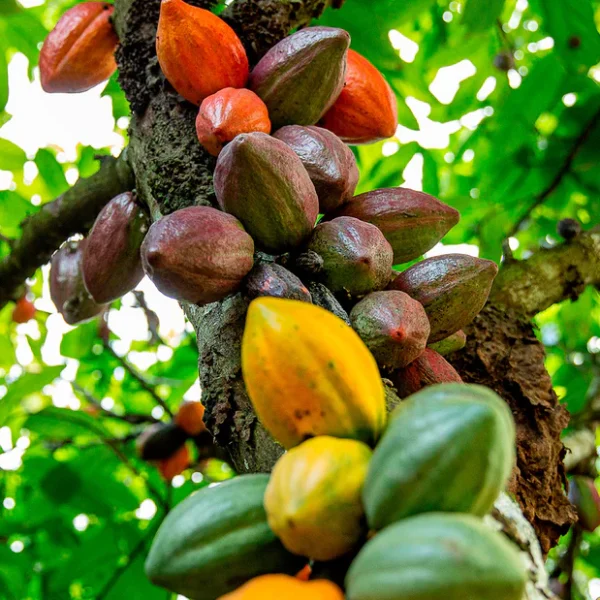
The history of cocoa begins in the Amazon rainforest, passes through the Maya and the Aztecs, who used the seeds as currency, and reaches Europe after Columbus’s voyages. Later, cocoa spread across the tropics, arrived in Bahia in the 18th century and today is grown mainly in Africa. For this […]
Piatã, Bahia: things to do in the Northeast’s highest town
Piatã, in the Chapada Diamantina, has the highest town centre in Northeast Brazil, namely at about 1,280 metres above sea level. As a result, it has a mountain climate that is rare in the region, with winter nights that drop close to 1 °C. In addition, the town was born […]
Ibicoara, Brazil: Buracão, Fumacinha and things to do
Ibicoara lies in the south of the Chapada Diamantina, in Bahia, and is the gateway to two of the region’s most impressive waterfalls: Buracão and Fumacinha. In addition, the town has a mild climate, coffee plantations and a superb view of the Serra do Sincorá. That is why, in this […]
History of Bahia: Colonial, Imperial and Republican Eras
The history of Bahia began with the arrival of the Portuguese in the region of Porto Seguro and then continued through colonization, the Empire and the Republic. The official history of Brazil also began in Bahia. After all, it was on the southern coast of Bahia, in the area where […]
Bonfim Ribbon: Meaning and How to Tie It
The Senhor do Bonfim ribbon is Salvador’s most famous symbol: a colourful ribbon tied around the wrist with three knots, one for each wish. Created in 1809 as the “Bonfim measure”, it was born at the Church of Nosso Senhor do Bonfim and is now known all over the world. […]
Bonfim Church in Salvador: history, ribbons and visit
The Bonfim Church, officially the Basílica do Senhor do Bonfim, is the most famous church in Salvador. It stands on the Colina Sagrada (Sacred Hill), in the Cidade Baixa, and is known for the Lavagem do Bonfim and for the ribbons tied to its railings. In this guide, therefore, you […]
History of Carnival in Salvador, Bahia
The Salvadorian Carnival is now the largest folk festival in the world. During the six days of carnival, around 2 million revelers parade along the routes known as Batatinha, Dodô and Osmar. But it wasn’t always so. The evolution of carnival Until the end of the 19th century, the petit […]
The evolution of carnival: traditions and stories
The fascinating history and evolution of carnival: from ancient times to today The origin of Carnival is a controversial subject. Some historians associate the beginning of Carnival celebrations with ancient rituals performed to praise good harvests, ten thousand years before Christ. Historical influences Others say it began later, in Egypt, […]
Origin of capoeira: Brazilian or African? History
The origin of capoeira lies with the enslaved Africans brought to Brazil and their descendants. They blended fighting styles, dances, songs and rhythms from many parts of Africa, especially the Bantu region, and thus created on Brazilian soil an art that is at once a fight, a dance, music and […]
Afro-Brazilian Religions: History of Candomblé and Umbanda
The history of Afro-Brazilian religions begins with the forced encounter between the African peoples brought over by slavery and the Indigenous and European cultures of Brazil. Out of this coexistence, distinct traditions were born, such as candomblé and umbanda, which are linked by common roots and by a long path […]