Lampião, an iconic figure of the cangaço, is often portrayed as a visionary warrior, fearless and cunning, but this heroic image has increasingly been called into question by contemporary historians.
Virgulino Ferreira da Silva, the man behind the legend, not only orchestrated robberies and kidnappings, but also fostered a climate of extreme violence, where murders were regarded as rituals and torture served as a form of intimidation.
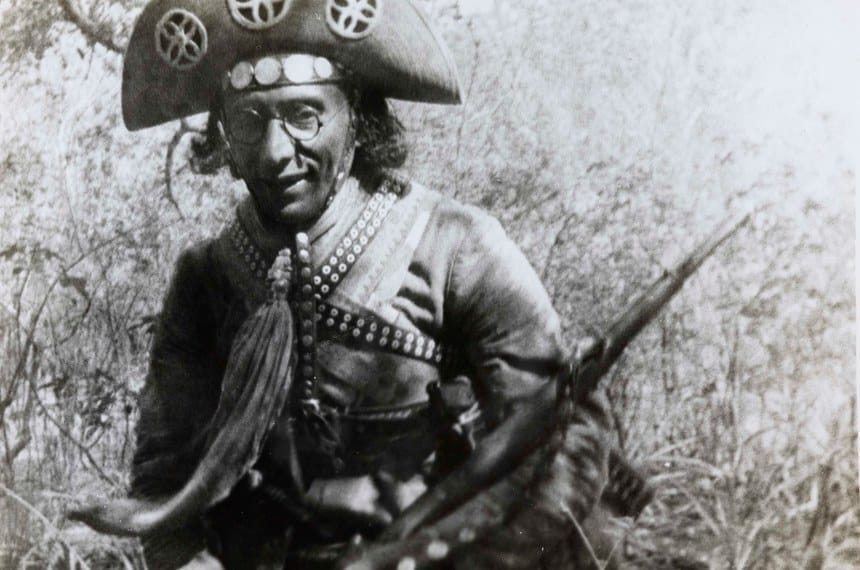
The narrative that once glorified the cangaceiro as a romantic vigilante gives way to a darker analysis, revealing his alliance with local elites and his brutal conduct, which in many respects resembles that of contemporary drug traffickers.
The complexity of the figure of Lampião and the cangaço invites us to engage in critical reflection on the social inequalities and political inequalities in rural Brazil in the early 20th century.
Historians such as Frederico Pernambucano de Mello and Élise Grunspan-Jasmin challenge the simplistic view of the cangaceiro as a hero, presenting a leader who skilfully navigated the structures of power, exploiting both oppression and violence as strategies for survival and social advancement.
This duality in the portrayal of Lampião leads us to re-examine not only his character, but also the conditions that allowed the phenomenon of cangaço to emerge and persist.

História de Lampião em Serra Talhada PE09:41

Museu do Cangaço em Serra Talhada PE05:15

História do Xaxado05:39
The History and Biography of Lampião, Organised by Topic
- Lampião: The Visionary Warrior or a Cruel Criminal?
- Lampião and the Cangaço: The Emergence of Kidnapping and Extortion in the Sertão
- The book “Lampião VP”
- Lampião: The Cangaço Publicity Man and His Contradictions
- The Lampião Saga: The History of the Cangaço and Its Contradictions
- The Tricks of the Cangaço – Strategies and Techniques for Thwarting the Enemy
- The Surprising Encounter: Padre Cícero and Lampião in Juazeiro do Norte
- Bonnie and Clyde of the Sertão
1. Lampião: The Visionary Warrior or a Cruel Criminal
A visionary warrior, fearless and intelligent. No one denies the virtues of Lampião. However, researchers question the true historical role of Virgulino Ferreira.
The cangaceiros turned murder into a macabre ritual. The long dagger, up to 80 centimetres in length, was plunged with a precise blow into the base of the victim’s collarbone – the so-called “soap dish”.
The sharp blade cut through the flesh, severed arteries, pierced the lung, ran through the heart and, as it was withdrawn, produced a spectacular spurt of blood. That was one less policeman or informer in the caatinga – and one more death to add to the cangaço’s tally.
When they did not kill, they made a point of wounding, maiming and leaving visible scars, so that the marks of violence might serve as a warning. They carved deep, cross-shaped wounds into the foreheads of men with a knife, and disfigured women’s faces with a hot cattle brand.
Exactly 70 years after the death of the cangaço’s principal leader, Virgulino Ferreira da Silva, known as Lampião, the aura of heroism that people had for some time sought to attribute to the cangaceiros is giving way to a less idealised interpretation of the phenomenon.
A series of books, theses and academic dissertations published in recent years argues that it makes no sense to glorify the myth of an idealistic Lampião, a primitive revolutionary who rose up against the oppression of the latifundium and the injustice of the north-eastern sertão.
Virgulino was not a romantic vigilante, a Robin Hood of the caatinga, but rather a cruel and bloodthirsty criminal, an ally of colonels and large landowners.
Contemporary historians, anthropologists and social scientists have reached a conclusion that is far from flattering to the legacy of the cangaço: in rural Brazil during the first half of the 20th century, the activities of gangs such as Lampião’s played a role equivalent to that of drug traffickers who today kidnap, kill and corrupt people in the country’s major cities.
2. Lampião and the Cangaço: The Emergence of Kidnapping and Extortion in the Sertão
- The introduction of kidnapping: The cangaceiros introduced kidnapping on a large scale in Brazil, taking hostages in exchange for money to finance further crimes. If they did not receive the ransom, they would torture and kill their victims. Extortion was another source of income, with letters demanding astronomical sums in exchange for not raiding towns and setting fire to houses.
- Violence and corruption: Relentless, they left a trail of violence in their wake and corrupted military officers and civil authorities. With a military arsenal that was always more modern than that of the troops fighting them, the violence of the cangaceiros reflected the inequality of rural Brazil in the first half of the 20th century.
- Comparison with drug traffickers: The anthropologist Luitgarde Oliveira Cavalcanti Barros compares the methods of the cangaceiros with those of today’s drug traffickers, highlighting that both in the sertão and in the favelas, law-abiding citizens live in fear of criminals.
- Social advancement: Joining the cangaço represented a form of social advancement for young people from the caatinga, offering the prospect of a life full of adventure and quick money. The cangaço, which had its precursors as far back as the 18th century, found in Virgulino Ferreira da Silva, known as Lampião, its supreme leader between 1920 and 1938.
- The origins of the cangaço: The origins of the cangaço can be traced back to armed gangs that wreaked havoc in the hinterlands of the North-East. Lampião stood out for his strategic tactics and for cultivating a vast network of coiteiros, which ensured the longevity of his career and his dominance across several states in the North-East.
Controversies surrounding Lampião: Disagreements about the figure of Lampião persist. Was he a demon or a hero?
Researchers and former cangaço bandits present contrasting views, and the narratives surrounding his figure are intertwined with the history of the cangaço, making it difficult to separate the man from the legend. It is this multiplicity of perspectives and accounts that contributes to his status as a myth.
3. The book *Lampião VP*
The book Lampião VP, recently published in France by Jack de Witte, promises to reignite the debate surrounding the figure of Lampião, the “King of the Cangaço” , by comparing him with the Rio de Janeiro drug dealer Marcinho VP, the protagonist of the non-fiction book Abusado by Caco Barcelos.
De Witte argues that the violence in the favelas and the cangaço have similar causes, such as poverty, social injustice, police corruption and political corruption.
However, the historian Jayme Pinsky of Unicamp warns that this comparison may constitute anachronism — the analysis of different historical periods based on contemporary concepts, which distorts our understanding of the facts.
The concept of the “social bandit”, formulated by the English historian Eric Hobsbawm in his book Bandits (1975), has often been applied to Lampião, comparing him to figures such as Robin Hood and Jesse James, who, according to Hobsbawm, acted as defenders of the oppressed in agrarian societies in transition to capitalism.
- Lampião’s image as a revolutionary began to take shape in 1935, when the National Liberation Alliance cited him as a political inspiration.
- In 1963, Rui Facó, in the classic Cangaceiros e Fanáticos, justified the violence of the cangaço as a response to social oppression, a view shared at the time by figures such as the Member of Parliament Francisco Julião, who regarded Lampião as a fighter against the latifundio.
However, scholars such as Élise Grunspan-Jasmin and Frederico Pernambucano de Mello refute this romantic view.
- In Mello’s view, Lampião was not seeking social justice, but rather personal gain.
- He also highlights the relationship between the cangaceiros and colonels, who, rather than being rivals, often collaborated with one another. Powerful colonels, such as Petronilo de Alcântara Reis and Eronildes de Carvalho (future governor of Alagoas), supplied weapons and protection to Lampião, whilst the cangaceiro offered militia services in return.
This historical complexity reveals that, far from being merely a champion of the poor, Lampião skilfully navigated the political and social landscape of his time, maintaining alliances with the conservative elites.
4. Lampião: The Cangaço Publicity Man and His Contradictions
- Refutation of the notion of revenge: The notion that Lampião was an avenger was refuted by the historian Frederico Pernambucano de Mello. He points out that, in almost two decades of cangaço, Lampião did not concern himself with directly avenging his father’s death, which was allegedly caused by Lucena and Saturnino.
- Gestures of peace: Mello reports that Miguel Feitosa, known as Medalha and one of Lampião’s trusted men, mentioned that Saturnino had sent a uniform and a piece of fabric as a gesture of peace, which was accepted by Lampião. When an ally suggested killing Lucena, Lampião replied that those issues were a thing of the past.
- Ethical shields: Mello argues that talk of personal revenge and acts of charity were used as ‘ethical shields’ to justify acts of banditry, lending an aura of legitimacy to the cangaceiros’ actions.
- Sense of belonging: Life in the cangaço, although arduous, fostered a sense of belonging and pride amongst the bandits, making it difficult for them to leave the groups. This was also reflected in the way the cangaceiros dressed; they adopted extravagant outfits, with embroidery and adornments that became symbols of status.
- Image awareness: Lampião was extremely conscious of his public image, using his appearance and frequent media appearances – including photographs and film footage – as tools for self-promotion.
- Comparison with drug dealers: This concern with image is comparable to the visual ostentation of today’s drug dealers, as suggested by the anthropologist Luitgarde Barros, who observes similarities in the use of symbols of power, such as hoods and skull tattoos.
- Parallels with police violence: The police violence that oppressed the cangaceiros also finds a parallel in the brutal treatment faced today by the favelas dominated by drug gangs. The volantes, police units tasked with hunting down the cangaceiros, acted with the same brutality as the bandits, often confusing the two groups, who wore similar clothing and, in some cases, switched sides.
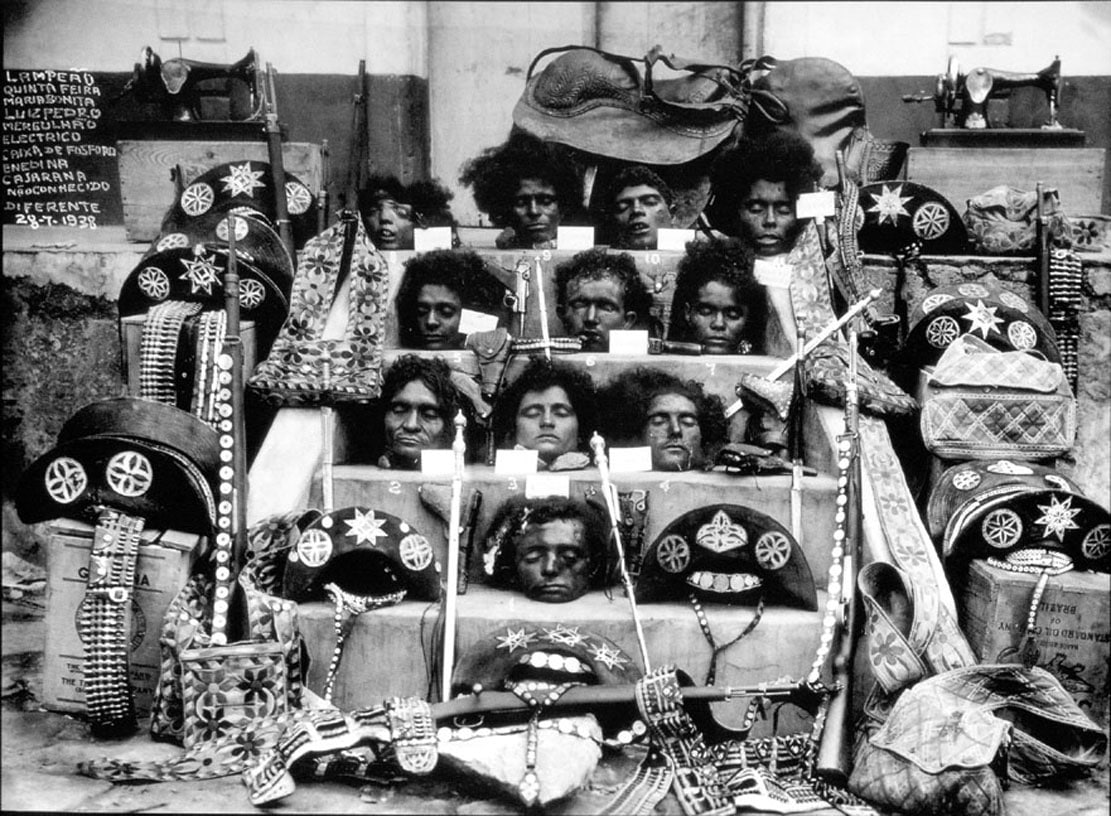
- The End of Lampião: The end of Virgulino Ferreira, known as Lampião, mirrored the violent fate of many criminals. In 1938, he was betrayed by Pedro de Cândida, one of his henchmen, who was tortured by the police until he revealed the gang’s hideout in Grota do Angico, in Sergipe.
- Death and legacy: After a brief 15-minute battle, Lampião, Maria Bonita and nine other cangaceiros were killed, and their bodies beheaded by the forces of Lieutenant José Bezerra. The heads of Lampião and Maria Bonita were displayed as trophies and remained unburied until 1969, when, at the request of their families, they were finally laid to rest, bringing to a close one of the most memorable chapters in the history of the cangaço in Brazil.
5. The Lampião Saga: The History of the Cangaço and Its Contradictions
Key Events
- 1898: Birth of Virgulino Ferreira da Silva, the future Lampião, in Serra Talhada, Pernambuco.
- 1915: The start of the rivalry between the Ferreira family and the family of José Saturnino.
- 1920: Death of Lampião’s father, José Ferreira. Virgulino and his brothers join the cangaço.
- 1922: Lampião takes command of the gang following the departure of Sinhô Pereira and begins his robberies.
- 1926: He is awarded the symbolic rank of captain by Padre Cícero and is called up to fight the Prestes Column.
- 1927: A failed attack on the town of Mossoró, in Rio Grande do Norte, considered one of his greatest defeats.
- 1929: He met Maria Bonita, who would become his companion in the cangaço.
- 1930: Maria Bonita officially joins the gang, marking the presence of a woman amongst the cangaceiros.
- 1932: Birth of Expedita, daughter of Lampião and Maria Bonita.
- 1936: The filmmaker Benjamin Abraão films Lampião and his gang, capturing rare scenes from the daily lives of the cangaceiros.
- 1938: Lampião, Maria Bonita and some of their gang are killed in an ambush at Grota do Angico, in Sergipe.

The story of Lampião continues to fascinate and spark debate about his character, with some portraying him as a “social hero” and others as a mere bandit.
The cangaço, as a movement, was a phenomenon linked to the social and political conditions of the North-East region, particularly to power struggles, social inequality and the absence of a centralised state.
6. The Tricks of the Cangaço – Strategies and Techniques for Thwarting the Enemy
Although it is inaccurate to classify the cangaceiros as guerrillas — given that they had no defined political objective —, it is undeniable that they adopted tactics typical of guerrilla warfare. Adapted to life in the caatinga, they became difficult opponents for the police, especially for the units sent from the cities on a mission to fight them in the sertão.
Agile Offensives
- Swift Attacks: One of the main difficulties in confronting them was their preference for swift and ferocious attacks, which took the enemy by surprise. Furthermore, they did not hesitate to flee when they found themselves cornered. This retreat, often interpreted as cowardice, was in fact a shrewd strategy on the part of the cangaceiros, allowing them to preserve their strength and continue operating in a hostile environment.
Elite Squad
- Small Bands: The bands were always small, comprising no more than 10 to 15 men. This ensured the mobility needed to carry out surprise attacks and withdraw quickly in dangerous situations.
Dead of Night
- Travelling on Foot: Instead of travelling on horseback along roads and tracks known to the police, they covered long distances on foot, preferably at night.
- Sabotage: To prevent new routes into the hinterland from being opened up, workers on road and railway construction sites were murdered.
The Skills
- Belongings Carried on the Body: All of the cangaceiro’s belongings were carried hanging from his body.
- Secret Storage: As they could not carry much luggage, money and food were placed in pots buried in the ground, to be retrieved later.
Desert Foxes
- Covering Their Tracks: The cangaceiros were masters at covering their tracks.
Some of the tricks included
- Wearing the sandals the wrong way round, so that the police thought they were heading in the opposite direction.
- Walking in single file, with our backs to one another, stepping in the same footprints and covering them with leaves.
- Jumping onto a slab, giving the impression of vanishing into thin air.
Dead Weight
- Rare Prisoners: With the exception of those who had been kidnapped, they almost never took prisoners in combat, as this hampered their ability to move quickly. Nor did they keep wounded comrades or those with mobility difficulties with them.
Conflict Resolution within the Gang
- Conflict Resolution: To resolve internal disputes within the gang, Lampião would always plan a major attack. All members of the group would unite against the enemy, putting aside their differences.
The Infiltrators
- Coiteiros: Those who provided shelter and hiding places for the cangaceiros were known as coiteiros and did so in exchange for money, armed protection or even out of fear. Coiteiros who betrayed that trust were killed to set an example.
Escape Route
- Areas of Operation: The cangaço’s main areas of operation were close to state borders. If pursued, they could cross these borders to escape attack by the local police.
Friendly and Enemy Fire
- Fundamental Rule: During battles, there was one fundamental rule: in the event of a retreat, never leave weapons behind for the enemy; in the event of victory, seize the enemy’s arsenal.
7. The Surprising Encounter: Padre Cícero and Lampião in Juazeiro do Norte
The night on which Padre Cícero spoke with Lampião went down in history as an extraordinary encounter between two of the greatest legends of the history of the North-East.
A third mythological figure, Luís Carlos Prestes, the commander of the Prestes Column, also played a part in that meeting. Since the previous year, this guerrilla military movement had been winding its way through the country’s interior, facing off against the troops of President Artur Bernardes.
With the advance of the revolutionary column towards the North-East, the federal government decided to call on local political leaders to raise their own armies and fight the rebels.
General Góes Monteiro, Chief of Staff for operations against the Column, acknowledged that the idea of calling on jagunços and cangaceiros had come from him.
In Ceará, the deputy Floro Bartolomeu, a political ally of Padre Cícero, officially invited Lampião’s gang to join the “Patriotic Battalion”.
In February 1926, Padre Cícero sought a peaceful solution by sending a letter to the revolutionaries urging them to lay down their arms, promising them refuge in Juazeiro do Norte and legal guarantees of fair treatment. Lourenço Moreira Lima, secretary to the Column, noted in his diary that the message revealed the priest’s sincere desire to make peace.
The request, however, was ignored. When Lampião arrived in Juazeiro do Norte on 4 March, Floro Bartolomeu had already travelled to Rio de Janeiro, where he would die.
Father Cícero then found himself faced with the challenge of welcoming the notorious bandit and honouring the agreement that had been made.
Lampião and another 49 cangaceiros occupied a house near Floro’s farm and took up quarters in Juazeiro do Norte, where Virgulino threw coins to the people from the window.
In the early hours of the morning, Father Cícero came across the gang and tried to persuade Lampião to give up the cangaço following the campaign against Prestes.
To formalise the situation, he summoned the only federal official available in the town, the agronomist Pedro de Albuquerque Uchoa, to draw up a document that would guarantee safe passage for the group and the promised licence.
However, Lampião soon realised that the document had no legal validity, but that did not stop him from signing it as “Captain Virgulino”.
As a result, the cangaceiro obtained enough money and weapons to continue on his way, now proudly displaying his fake military commission.
Uchoa later explained his involvement in the incident, saying that, when faced with Lampião, he would have signed anything: “Even the removal of the President of the Republic”, he said.
8. Bonnie and Clyde of the Sertão
The love between Maria Bonita and Lampião sparked a revolution in the daily lives of the cangaceiros. A woman from the hinterland, Maria Gomes de Oliveira, known as Maria Déa, softened the King of the Cangaço’s heart of stone. Separated from her husband, the cobbler José Miguel da Silva, she was the first woman to join the cangaço.
Before her, other bandits had had wives and children, but none had dared to follow their partner into the wandering life of the caatinga.
Maria and Lampião first met in 1929 in Malhada de Caiçara (BA), at the home of Maria’s parents; she was just 17 at the time and the niece of one of Virgulino’s bodyguards. The following year, the young woman left her family to live with the man she loved.
When the news reached Lampião’s old mentor, Sinhô Pereira, he was taken aback. He had never allowed women to join his gang, believing that this would lead to discord and jealousy. However, following Maria’s arrival in 1930, many cangaceiros followed his example.
In the cangaço, women neither cooked nor did the washing, and, as nobody owned a home, they had no domestic duties. The tasks of cooking and washing were assigned to the men, and the women’s role was limited to keeping their partners company.
Newborn children were handed over to foster parents to be raised. Lampião and Maria had a daughter, Expedita, born in 1932. The couple’s first-born, however, was stillborn in 1930. Infidelity was punished in accordance with the Caatinga’s code of honour: the cangaceiro Zé Baiano killed his wife, Lídia, upon discovering her betrayal, and Moita Brava murdered his partner Lili for having an affair with the rascal Pó Corante.
The arrival of the women coincided with the decline of the cangaço. Ever since Maria Bonita began accompanying Lampião, the cangaceiro’s nomadic lifestyle had changed, with longer periods of rest, particularly in Sergipe. Maria’s influence over Lampião was evident. The researcher Pernambucano de Mello stated: “Lampião seemed quite a different man. His aggression melted away in Maria Déa’s arms”.
It was during one of these lulls in the Sergipe hinterland that Lampião was ambushed and killed at Grota do Angico in 1938, following a battle against the troops of Lieutenant José Bezerra. It is said that, when his head was severed, Maria Bonita was wounded but still alive.
Bahia.ws – Tourist Guide to Bahia, Salvador and the North-East
Publicações Relacionadas
History of Afro-Brazilian Religions: Candomblé and Umbanda
King Momo, Pierro, Harlequin and Colombina - Carnival characters
The 7 north-eastern rhythms and musical styles that enchant Brazil
History and Chronology of the Carnival of Salvador de Bahia
History of Northeast Brazil - Chronology and Summary
Monte Santo in Bahia: History and Religious Tourism
Itineraries focused on religious tourism in Salvador, Bahia
Iemanjá Festival: Meaning and Celebrations
Northeastern Literature: A Rich Cultural Tapestry
Casa Grande & Senzala: The Work of Gilberto Freyre
Maranhão's handicrafts have more than 400 years of tradition
Franciscans in Brazil: Urban, architectural and artistic heritage
Plastic Arts of the Northeast: A Cultural Journey
José Américo de Almeida: A Brazilian Literary Icon
Colours of houses and buildings in the colonial architecture of the northeast
The culture of Northeastern Brazil: how it originated, influenced and flourished
Diógenes Rebouças and His Architectural Legacy
Brazil's historic moments illustrated in great works
Brazil’s Northeast: Must-See Tourist Destinations
Bobbin lace and embroidery: predominant handicrafts in Ceará
The Origins of Umbanda: Brazilian History, Beliefs and Practices
Biography of Victor Meirelles and analysis of the work "The First Mass in Brazil"
Lampião and Cangaço: Between history and mythology
Extreme sports in the Northeast of Brazil: Destinations not to be missed
Turban is Religion, Fashion and Culture in Brazil and the World
Candomblé: A Blend of African and Catholic Traditions
The influence of Arab architecture on the buildings of Pernambuco
History of the indigenous peoples of Bahia
Jean-Baptiste Debret: biography and works in Brazil
Iemanjá: Discover the Orixá and the Traditional Festival in Salvador
Cultural Aspects of Northeast Brazil Explained
Graciliano Ramos: The life and work of the Brazilian writer
Brazil's northeastern subsoil has emeralds and archaeology
Jorge Amado's Life and Literary Contributions
Música, Ritmos e Danças do Nordeste do Brasil
Woodcuts and Cordel Literature in Northeastern Brazil
This post is also on:
 Português
  English
  Deutsch
  Español
  Français