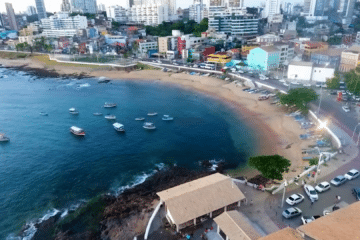
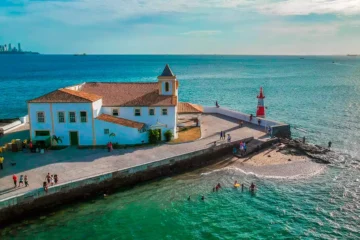
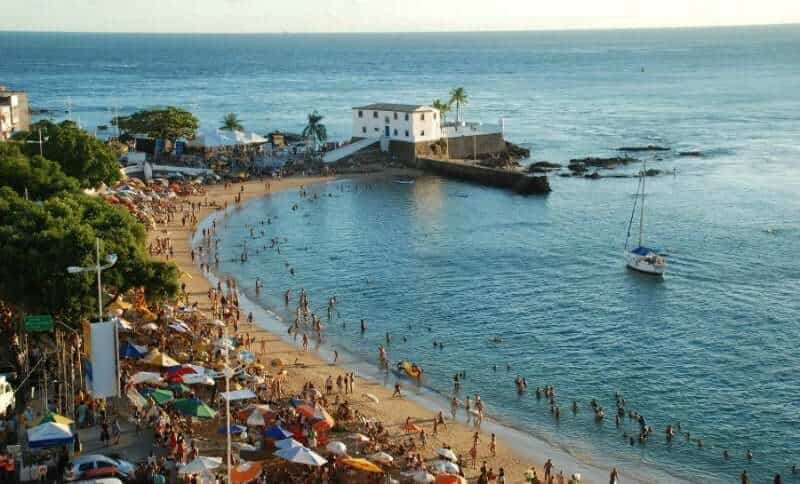
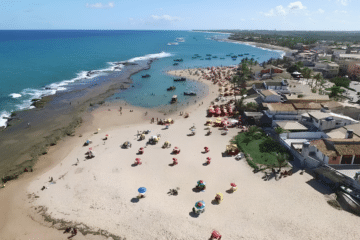
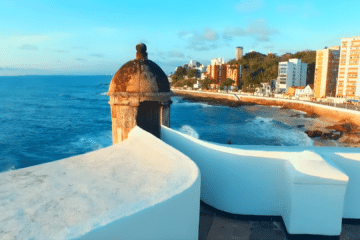
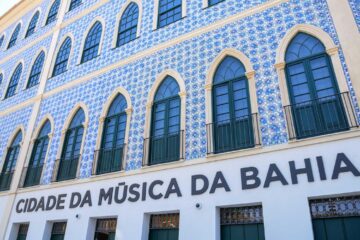
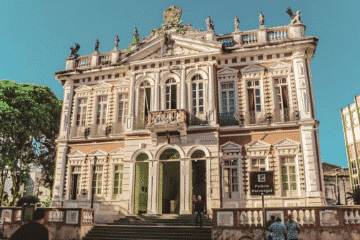
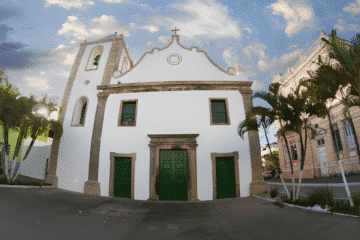
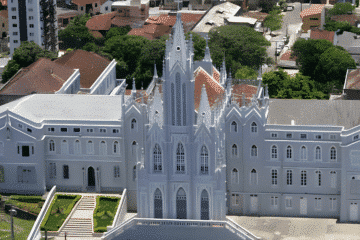
The colours of the facades of the houses and buildings preserve the identity of the colonial architecture of the Northeast. Many houses, buildings, and especially churches, convents, squares and streets, date from the time when Brazil was mainly colonised by the Portuguese.

In addition, various other peoples, such as the Dutch, Jews, English, French, Arabs, Spaniards, Russians and Africans, have left their mark on Brazilian architecture.
The Northeastern culture, present in every state of the region, enchants with its beauty and appreciation of every element. Whether it’s gastronomy, handicrafts, music or nature, the Northeast of Brazil attracts visitors from all over the country and the world, who fall in love with its charms, which deserve to be appreciated and cherished.

Northeastern architecture has a history full of beauty and characteristics, with a strong influence from Portuguese architecture.
With the colonisation of Brazil by Europeans, the Portuguese architectural style dominated the region, especially in religious architecture, with its luxury and richness of detail in the decoration of churches.
History of Baroque art

História da Arte Barroca
The houses had simpler features at first, and even the large farmhouses didn’t have so many decorative elements. However, they did make use of the enormous interior space and the balconies.

Luxury and Ostentation in residences began to become more evident with the arrival of the Portuguese royal family in Brazil, who landed in Salvador in 1808 and then moved on to Rio de Janeiro.
With the advance of urbanisation in the 17th century and the need to protect houses from pirate attacks on the coast, semi-detached houses appeared, following a more compact model. The facades formed one big wall.

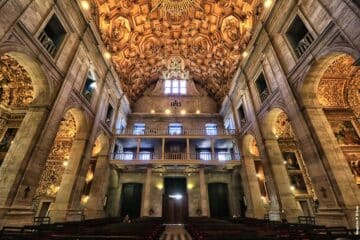
Baroque architecture is prominent in the churches of the north-east.
Salvador is famous for having 365 churches, one for each day of the year. Much of the beauty that doesn’t jump out at tourists is preserved in the churches and monasteries of the Bahian capital.
This architectural style has characteristics that exalt Christianity, with elements such as arches, rounded columns, exuberant decoration, a predominance of gold on the inside and, on the outside, light colours such as shades of beige and white.
The colours of colonial houses in northeastern architecture

The contrast between the colours of the buildings embellishes the town. The houses tend to have a modest appearance, with colonial features, and are still preserved today with their coloured façades and certain characteristics.

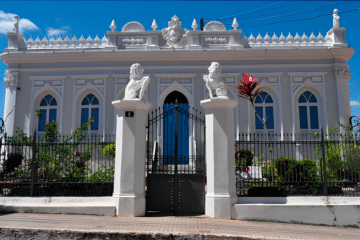
They are known as platbands and are located at the top of the façade. Their function was to “hide” the roof and prevent rainwater from running down the street.
In addition to this use, platbands were also designed to embellish and decorate the building.
Among the most common elements in this type of structure are the year of construction, baroque shells, eagles and women’s sculptures.
In capital cities such as Salvador, Recife and Natal, there are many houses and public buildings where platibandas stand out. They are not only a reminder of the days of monoculture, but also of the cultural identity of the Northeast.
The lime-coloured painting of slabs and facades is an artisanal practice that is very characteristic of the region.
In the capitals as well as in the interior and the interior, houses with coloured facades stand out in the towns. The variety of colours creates a kind of rainbow that is characteristic and unique to the northeastern culture.
During the revitalisation process that took place at the end of the 20th century, many buildings took on bright colours that have been preserved to this day.

It is interesting to note that the colours used on the façades also show something of the personalities of the inhabitants. This is a characteristic that helps to reveal the identity of the people of the region.
Tourist guide to Bahia and the Northeast

Publicações Relacionadas
Itineraries focused on religious tourism in Salvador, Bahia
King Momo, Pierro, Harlequin and Colombina - Carnival characters
European architecture - chronology, styles and characteristics
Lampião and the Cangaço: Between History and Mythology
History, biography and paintings of Frans Post in Dutch Brazil
Jorge Amado's Life and Literary Contributions
Jean-Baptiste Debret: biography and works in Brazil
Biography of Victor Meirelles and analysis of the work "The First Mass in Brazil"
Lampião and Cangaço: Between history and mythology
June festivals: Tradition and Culture in the Northeast of Brazil
Historic Towns in the Northeast: Explore the Past
Musical styles, rhythms, singers and composers of northeastern Brazil
Northeastern Literature: A Rich Cultural Tapestry
Rural Maracatu: A carnival tradition in the interior of Pernambuco
Graciliano Ramos: The life and work of the Brazilian writer
The 7 north-eastern rhythms and musical styles that enchant Brazil
Woodcuts and Cordel Literature in Northeastern Brazil
History and Chronology of the Portuguese Tile Industry
Geography and Climate Regions of Northeast Brazil
History of Baroque Architecture in the Northeast and Minas Gerais
Origin and history of Acarajé: Discover the Afro-Brazilian tradition
The culture of Northeastern Brazil: how it originated, influenced and flourished
History and Chronology of the Carnival of Salvador de Bahia
Turban is Religion, Fashion and Culture in Brazil and the World
Iemanjá Festival: Meaning and Celebrations
Cultural Aspects of Northeast Brazil Explained
Extreme sports in the Northeast of Brazil: Destinations not to be missed
The Origins of Umbanda: Brazilian History, Beliefs and Practices
Monte Santo in Bahia: History and Religious Tourism
History of the indigenous peoples of Bahia
Bobbin lace and embroidery: predominant handicrafts in Ceará
São Jorge dos Erasmos Sugar Mill: A Landmark in Brazil
Discover the History of Capoeira in Salvador
José Américo de Almeida: A Brazilian Literary Icon
History of Northeast Brazil - Chronology and Summary
Northeastern architecture with typical colonial features
This post is also on:
 Português
  English
  Deutsch
  Español
  Français