The Baiana costume: A cultural expression

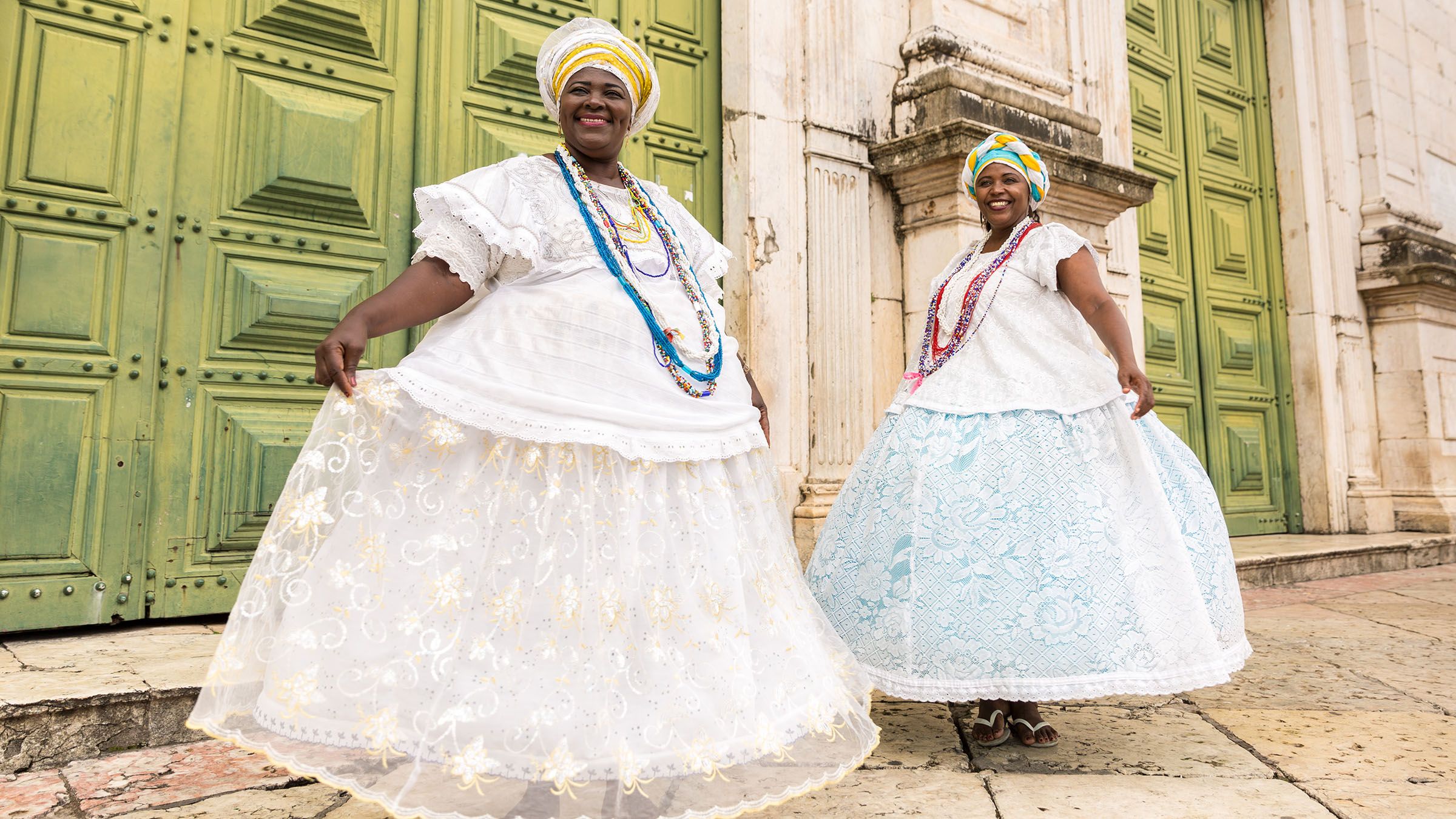
The costume worn by baianas, often called baiano, reflects the influence of African culture in Brazil, combined with the swaying hips and swaying gait characteristic of samba.
Traditional Baiana costume
The traditional costume of the baiana is a set of traditional clothes and is the same as that worn in the candomblé terreiros. There are costumes for every occasion.
Variety of costumes
The Baiana costume is the simplest, while costumes made with Richelieu embroidery can be very expensive. The baiana costume can take on a special colour when it comes to baianas at touristic events.
Samba school and maracatu costumes
The costume worn by the baiana (female samba dancer) of the Samba School is unique, changing colour and style each year according to the school’s theme, as well as that of the Maracatu in the northeast.
Cultural elements: Turban and Balangandãs
The turbante das baianas (headscarf worn by women in Bahia) and the balangandãs (pearl necklaces) are elements of the Islamic culture that predominates in North Africa (Sudan). The bunches of balangandãs were part of the traditional dress of black maids in the 18th and 19th centuries.
Definition of Balangandã
Balangandã is an ornament made of coloured beads or amulets in the shape of a fig, fruit, medal, coin, key or animal tooth. It can be a ring pendant, a brooch, earrings or a silver bracelet worn by women in Bahia on festive days.
Materials and techniques used to make balangandãs
Balangandãs are made using a variety of materials and techniques, incorporating elements that reflect cultural and religious influences. They are usually made in silver, gold or silver metal, but may also include coloured beads, silver or gold beads and other decorative elements. They are usually made of gold or silver metal, but may also include coloured beads, precious stones or semi-precious stones, and materials such as mother-of-pearl.
Amulets and their functions
figs, teeth and guides are used as amulets for protection, praise or to fight the evil eye.
The fig, in particular, is an amulet in the shape of a closed hand, with the thumb between the index finger and the big toe, used as a personal ornament or for the home or a commercial establishment.
History of the Pano da Costa
In Africa, the coastal cloth was simply an accessory for black women, without religious connotations.

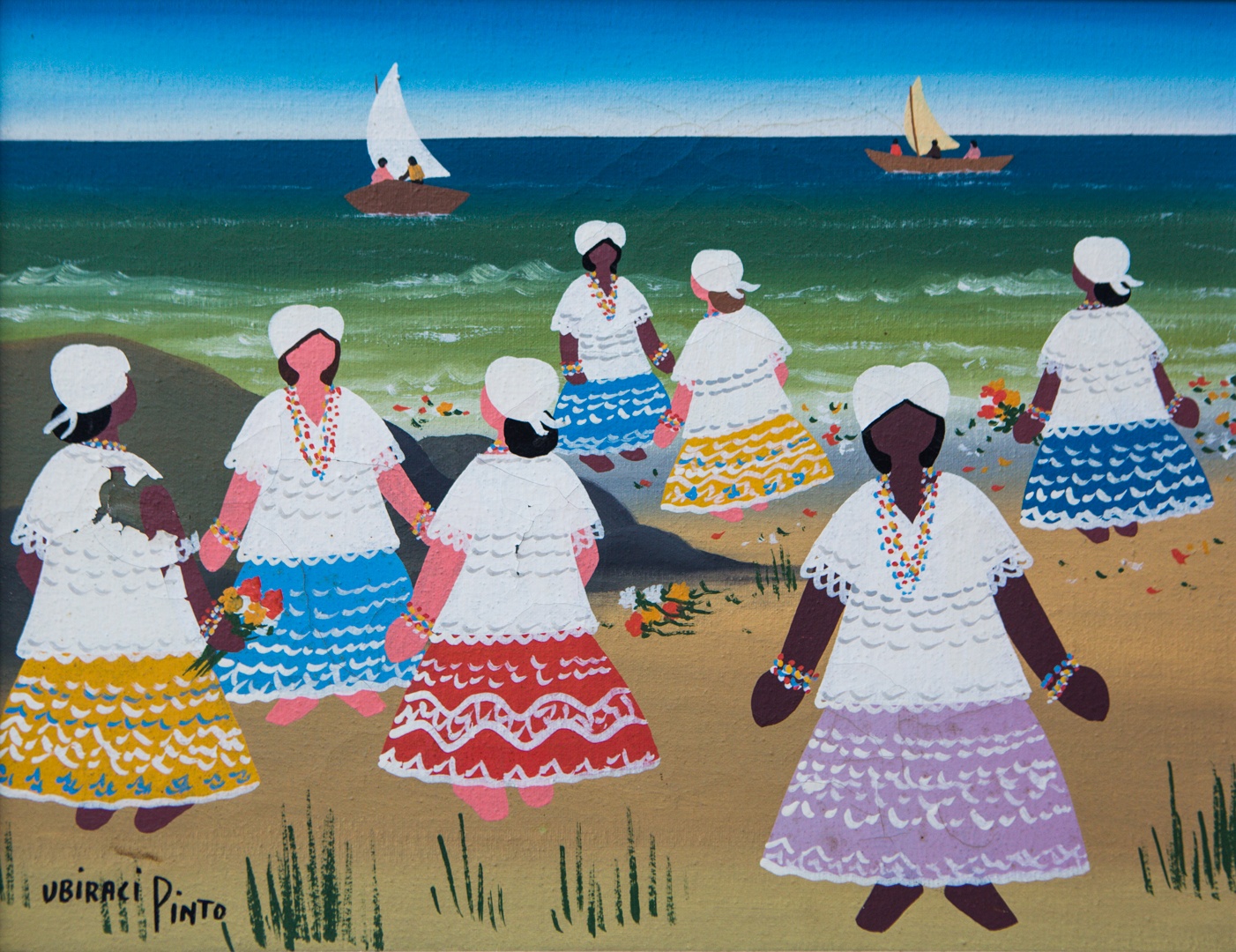
História e Origem do Traje das Baianas
History and origin of the Baianas costume
The typical costume of the baianas is a mixture of Portuguese, African and Islamic cultures.
The full skirts and stretched petticoats are inspired by the style of Portuguese women, while the necklaces and bracelets come from African culture, and the turbans from Islamised blacks. “The costumes of the Baianas are true cultural celebrations.
Influence of the 19th century
From the 19th century, these costumes became associated with Candomblé celebrations in Brazil.
Terminology and origin
In Africa they are called alaká or pano de alaká. In Brazil they became known as pano da costa because they came from the Ivory Coast and also because they were used on the coast. The first panos da costa were carried on the bodies of female slaves who had no clothes and were sold wrapped in this cloth.
Production and characteristics of the Pano da Costa
The cloth was then woven in Brazil by slaves or their descendants on rustic hand looms that arrived in the country in the 18th century. Woven on a hand loom, the pano da costa is made up of strips two metres long and between 10 and 15 centimetres wide. The strips are then sewn together one by one.
White is not the predominant colour in the coastal cloth, which is usually striped or embroidered in high relief and colourful, with decayed patterns, depending on the orixá of each nation.
Cultural use and meaning
The children of saints wear the alaká wrapped around their bodies. Slave mothers carried their babies on their backs during working hours, with their legs wrapped around their waists and secured by an alaká.
Today’s Baianas, descendants of Africans (from the ioruba, nagô, mina, fula and haussá tribes), are the ones who take the most pride in their dress. The Nagô, whose presence is most prominent in Candomblé, are short and fat, wearing bright, garish colours and wide, patterned skirts.
The Muslim Bahian (from Sudan, Africa), tall and slender, wears a pristine white dress and sometimes a rustic Costa cloth over her shoulder.
The Baiana in contemporary culture
Today, the baiana pregoeira (street vendor), with her colourful trays of traditional food and sweets, can be seen in the streets, hillsides and beaches of Salvador, or at Candomblé and Umbanda rituals, as well as religious festivals such as the Lavagem do Bonfim, as the traditional dress of Bahian women and a typical figure of the state, celebrated by Dorival Caymmi.
See also The colour of the Baiana costume and its contemporary interpretations
Day of the Baiana
In Salvador, Dia da Baiana (Day of the Baiana) is celebrated on 25 November, with a mass in the church of Nossa Senhora do Rosário dos Pretos and various cultural events, such as the samba de roda, a traditional dance, and the samba de roda, a traditional dance, in the church of Nossa Senhora do Rosário dos Pretos. Sra. do Rosário dos Pretos and various cultural events, such as Samba de Roda, Capoeira, Olodum and Afoxé, at the Memorial das Baianas.
The baiana is a figure that carries the links to her African ancestral heritage – oral tradition, cuisine, beliefs, mysticism, dance, ginga and, above all, colour.
You need to have ancestral blood to understand what the Bahia has.
Bahia.ws is the largest tourism and travel guide for Bahia and Salvador.

Publicações Relacionadas
Popular Art from the Northeast of Brazil
Rapadura: A Sweet Treat from Northeastern Brazil
Origin and history of Acarajé: Discover the Afro-Brazilian tradition
History and Chronology of the Carnival of Salvador de Bahia
History, biography and paintings of Frans Post in Dutch Brazil
History of Carnival in Brazil: Origins and Traditions
Turban is Religion, Fashion and Culture in Brazil and the World
Casa Grande & Senzala: The Work of Gilberto Freyre
Jean-Baptiste Debret: biography and works in Brazil
Brazil's historic moments illustrated in great works
José Américo de Almeida: A Brazilian Literary Icon
Maranhão's handicrafts have more than 400 years of tradition
Brazil’s Northeast: Must-See Tourist Destinations
Discover the History of Capoeira in Salvador
Candomblé: A Blend of African and Catholic Traditions
Historic Towns in the Northeast: Explore the Past
The influence of Arab architecture on the buildings of Pernambuco
Graciliano Ramos: The life and work of the Brazilian writer
Northeastern Literature: A Rich Cultural Tapestry
Lampião and Cangaço: Between history and mythology
Diógenes Rebouças and His Architectural Legacy
Geography and Climate Regions of Northeast Brazil
Bobbin lace and embroidery: predominant handicrafts in Ceará
Monte Santo in Bahia: History and Religious Tourism
São Jorge dos Erasmos Sugar Mill: A Landmark in Brazil
History of Baroque Architecture in the Northeast and Minas Gerais
History and Chronology of the Portuguese Tile Industry
The culture of Northeastern Brazil: how it originated, influenced and flourished
Musical styles, rhythms, singers and composers of northeastern Brazil
June festivals: Tradition and Culture in the Northeast of Brazil
Cultural Aspects of Northeast Brazil Explained
European architecture - chronology, styles and characteristics
Rural Maracatu: A carnival tradition in the interior of Pernambuco
Influences and main dishes of northeastern cuisine
Itineraries focused on religious tourism in Salvador, Bahia
The origins of Afro hairstyles in Salvador, Bahia
This post is also on:
 Português
  English
  Deutsch
  Español
  Français