For many, the turban is a symbol of blackness, culture and beauty, but this accessory, full of meanings and functions, is also widely used by people from the East.

As well as being a symbol of identity and tradition for many African cultures, the turban has a strong presence in other regions and peoples. For us, it is not only beautiful and practical, but also a symbol of attitude.

História do Turbante06:58

Aprenda a fazer um Turbante03:18
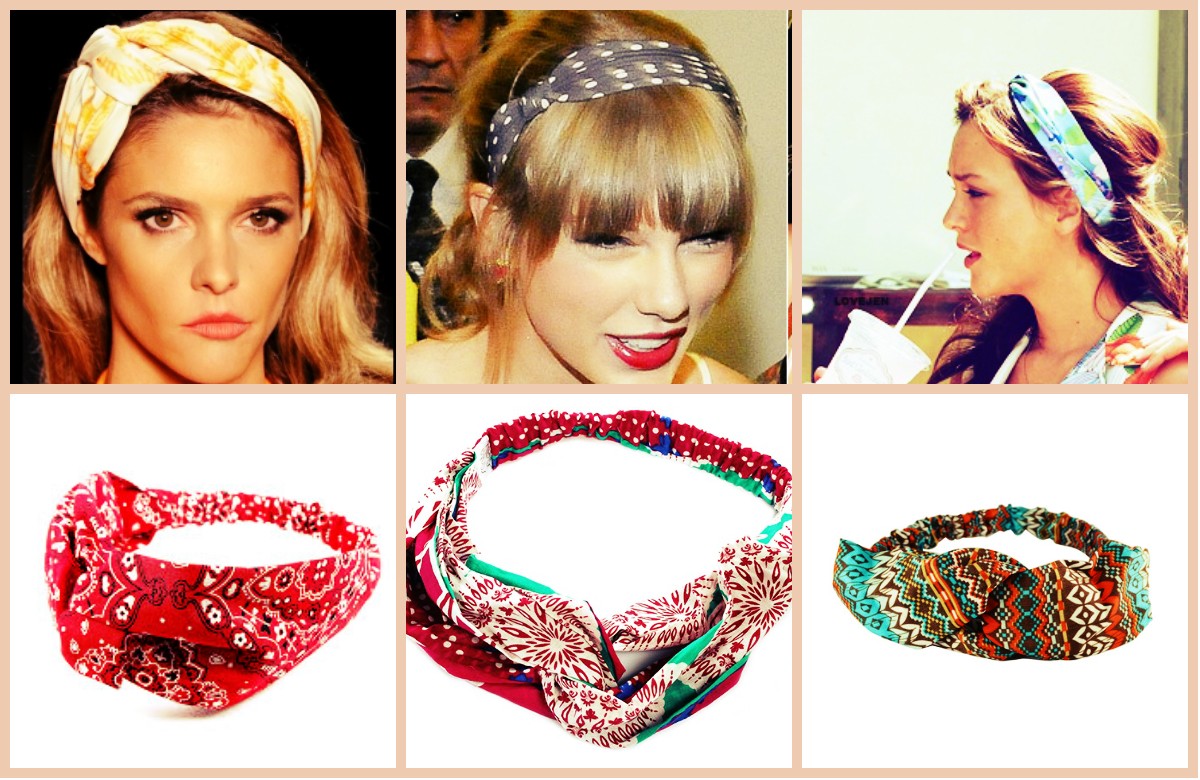
Como fazer Turbantes
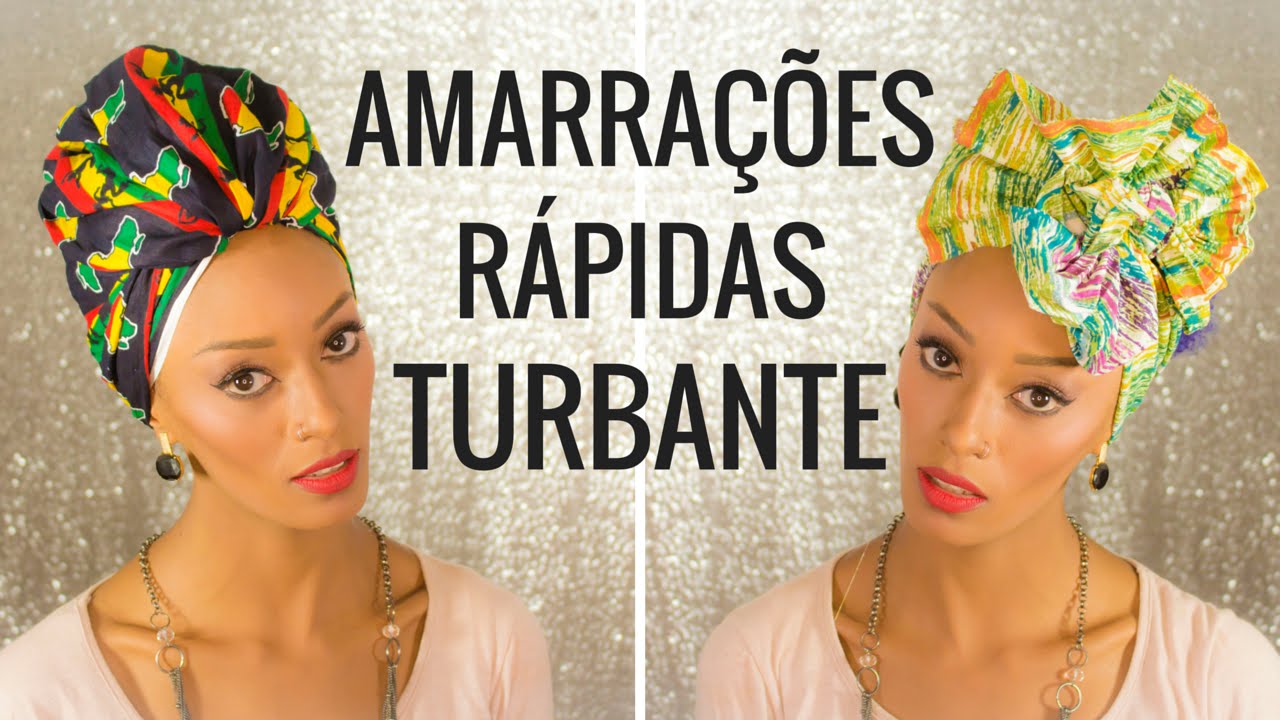
Como amarrar rápido um Turbante04:10

6 amarrações de Turbante
5 MANEIRAS DE AMARRAR UM lenço de cabeça / turbante / cachecol (TUTORIAL RÁPIDO E FÁCIL)09:00
We’ve divided the history of the turban into two parts
- The East
- Africa, Brazil and fashion
We hope you enjoy and are inspired by the beauty of the turban.
1 Turban in the Orient
The exact origin of the turban is still unknown, but it is known to have existed before 570 AD, i.e. before the birth of Mohammed and the emergence of the Islamic faith.
Within Islam, the turban has an important religious function, being a material symbol that reinforces spiritual awareness and represents a boundary between belief and disbelief.

Since it is in the head that decisions are made between good and evil, right and wrong, true and false, the turban, called a kawrah, envelops and protects the thoughts, reinforcing the choice of faith. It is traditionally worn only by men, but unfortunately the use of this type of turban is now often associated with images of terrorist attacks.
The turban is also the main symbol of the Sikh faith, an Indian monotheistic religion. In this tradition, both men and women are not allowed to cut their hair, but wear turbans to cover it.
On World Turban Day (13 April), Sikh men proudly display their exuberant turbans, inspiring new generations to keep the practice and religion alive.
Also in India, turbans are used as protection against the harsh desert climate and, without a word being spoken, they indicate the caste, financial status and religion of the wearer. In the Indian state of Rajasthan, it is said that the dialect and styles of turbans change every 12 kilometres!
Main types of turbans
The two best known types of turbans are the Safa and the Pagdi.
- The Safa is a strip of cloth about 9 metres long and 1 metre wide;
- the pagdi is about 1.50 metres long and 1 metre wide.
Culturally, in some regions, removing the turban and placing it at someone’s feet is a sign of submission. In addition, the exchange of turbans with another person symbolises the strengthening of bonds of brotherhood.
The turban is so important that the city of Jaipur has a Turban Museum.
Many tourists visit this place to buy original turbans. In the past, kings and maharajas wore turbans and set the fashion for the people. It is still an essential part of wedding ceremonies, especially for the bridegroom.
The turban is part of Eastern, African and Brazilian cultures and is often seen in fashion shows. More than just an accessory, the turban has a rich and significant history.
In the continuation of our research (see Part I of this post), we explore further this accessory which is a subtle communication tool, a centuries-old garment, and which can be as practical, modern, glamorous as it can be simple and chic.
2. The turban in Africa, Brazil and fashion
In Africa, clothes wrapped around the body are a fundamental part of culture, and turbans complement this clothing, forming the visual and symbolic whole.
Turbans are worn by both men and women, and in Black Africa the so-called Gelê turbans have various social and religious functions, as well as being an important fashionable element.
What is the meaning of the gelê turban?
The gelê is a type of turban traditionally worn in Black Africa, especially in some West African cultures. The meaning of the gelê is complex and includes social, religious and aesthetic aspects.
- Cultural identity: The gelê is a symbol of identity and cultural belonging, often associated with specific ethnic groups.
- Social Function: It can indicate social status, function within the community and even the stage of life of the person wearing it.
- Religious Expression: In many African religious traditions, the gelê is used in ceremonies and rituals, representing spirituality and connection to the Orixás or other deities.
- protection and strength: Gelê is also seen as an element of protection, wrapping around the head and thoughts, symbolising strength and resilience.
- Fashion and style: In addition to its cultural and social functions, the gelê is a fashion accessory that allows for personal and aesthetic expression.
In short, the gelê is much more than a simple accessory; it carries a wealth of meanings that reflect the culture, religiosity and identity of those who wear it.
Why do Baianas wear turbans?
The Baianas, traditional figures of Bahian culture in Brazil, wear turbans as part of their distinctive dress. The turban has several cultural and historical connotations:
- Cultural identity: The turban is a symbol of African heritage and Afro-Brazilian culture. It represents resistance and the affirmation of black identity in Brazil.
- Tradition: The use of the turban is associated with practices and customs that date back to the time of slavery, when African women used scarves and cloth to protect their hair and to express their culture.
- Spirituality: In many Afro-Brazilian traditions, such as Candomblé, the turban can have spiritual and ritual significance and is worn in ceremonies and festivals.
- Style and beauty: In addition to its cultural significance, the turban is a form of artistic expression and beauty, allowing Bahian women to create vibrant and unique combinations with their clothing. Thus, the turban is an important element that reflects the rich history and diversity of Bahian culture.
3. The Baiana costume and turban
In the Bahia of all the Gods, with their pompous costumes, turbans, , batas (long, loose blouses), twisted skirts (white or with a colourful print), lots of lace and starched anagas, and bracelets and necklaces in the colour of their orixá, the negras de ganho created a physical type that became traditional.
The costume we usually call the baiano reflects the influence of the African culture in Brazil, combined with the rebolado and ginga of the body.

The turban and the Balangandans indicate elements of the Islamic culture that predominates in North Africa (Sudan).
3.1 Balangandans
Balangandãs were part of the traditional dress of black Mucamas in the 18th and 19th centuries. Balangandã is an ornament made of coloured beads or an amulet in the form of a figure, fruit, medal, coin, key or animal tooth; a ring pendant, brooch, earrings or silver bracelet worn by Baianas on festive days.
The figures, teeth and guides are used as amulets for protection, praise or to fight the evil eye. The figure in particular is an amulet in the shape of a closed hand, with the thumb between the index and the big finger, used as a personal ornament, for the home or commercial establishment.
3.2 Coastal cloth
In Africa, the pano da costa was simply a complement to black women’s clothing and had no religious connotations. From the 19th century in Brazil, it became associated with Candomblé celebrations.
In Africa it is called alaká or alaká cloth. In Brazil it became known as pano da costa because it came from the Ivory Coast (Africa) and also because it was worn on the back.
The first panos da costa were found on the bodies of female slaves who had no clothes and were sold wrapped in the cloth. Later, the cloths were woven here by slaves or their descendants on rustic handlooms brought to Brazil in the 18th century.
Woven on a handloom, the pano da costa is made up of strips two metres long and between 10 and 15 centimetres wide. The strips are then sewn together.
White is not the predominant colour of the coastal cloth, which is usually striped or embroidered in high relief and coloured with different patterns, depending on the orixá of each nation.
3.3 Uses of the alaká
The children of the saint wear the alaká wrapped around their torso. Slave mothers used to carry their babies on their backs (with their legs around their waists) during working hours, bound by an alaká.
Today’s baianas, descendants of Africans (from the Yoruba, Nagô, Mina, Fula and Haussá tribes), are the ones who take the most care with their dress.
The Nagô, whose presence is most noticeable in the candomblés, are short and fat, wearing bright, garish colours and wide skirts with prints.
The Bahian Muslim (from Sudan in Africa), tall and slender, wears immaculate white. She sometimes wears a rustic “pano da Costa” on her shoulder.
3.4 Today’s Baiana
Today, as the typical costume and figure of Bahia so often sung about by the Dorival Caymmi, the Baiana can be seen preaching with her colourful trays of typical food and sweets in the streets, hillsides and beaches of Salvador, or at Candomblé and Umbanda rites and religious festivals such as the Lavagem do Bonfim.
In Salvador, the Day of the Baiana is celebrated on 25 November with a mass in the Church of Our Lady of the Rosary of the Black People and cultural events such as the Samba de Roda, Capoeira, Olodum and Afoxé are held at the Memorial das Baianas.
The Baiana is a figure that brings together the links of the African heritage – orality, cuisine, belief, mysticism, dance, ginga and above all colour.
You must have ancestral blood to know what a baiana has.
Learn how to make a turban to dress up for carnival
The turban, known as the ojá or torço, is a versatile accessory that can be worn wrapped around the head, around the waist of women, or carrying children on the back of mothers.

In African religions, as well as being used as a turban, it can be wrapped around the bust and end in a bow, or tied around the atabaques during important ceremonies and tied to the trunk of a sacred tree – its colour varies according to the orixá.
In Brazil, due to the strong African influence, the turban is transformed into a blanket, which is wrapped around the head and forms the costume of the baianas, who are typical figures of the country, recognised for their struggle and the regularisation of their professions.
As in Africa, the turban has a religious function in candomblé, umbanda and xangô in the north-east, with the number of flaps varying according to the Orixá. It represents seniority and respect, as well as protection for the saint’s children, especially women.
In fashion, French designer Paul Poiret introduced the turban into haute couture in the 1930s, inspired by oriental dress and exotic costumes, making it a hit with sophisticated women such as Simone de Beauvoir and Greta Garbo.
Soon after, Carmen Miranda popularised the accessory in Brazil.
Practical and functional, during the Second World War many women wore turbans to hide the poor state of their hair. In the 1960s, the Black Pride movement, which originated in the United States, brought the turban back onto the scene as a form of affirmation for black people.
More recently, the turban has appeared in fashion shows by famous brands such as Prada and made a comeback in Western fashion.
The turban is history, religion, fashion and culture.
Guide to the Northeast, Bahia and Salvador

Publicações Relacionadas

Monte Santo in Bahia: History and Religious Tourism

European architecture - chronology, styles and characteristics
The culture of Northeastern Brazil: how it originated, influenced and flourished

Musical styles, rhythms, singers and composers of northeastern Brazil

Extreme sports in the Northeast of Brazil: Destinations not to be missed

Influences and main dishes of northeastern cuisine
Brazil's historic moments illustrated in great works
Biography of Victor Meirelles and analysis of the work "The First Mass in Brazil"
Jean-Baptiste Debret: biography and works in Brazil

History of Baroque Architecture in the Northeast and Minas Gerais

Popular Art from the Northeast of Brazil

History, biography and paintings of Frans Post in Dutch Brazil

History and Chronology of the Portuguese Tile Industry

Franciscans in Brazil: Urban, architectural and artistic heritage
Colours of houses and buildings in the colonial architecture of the northeast
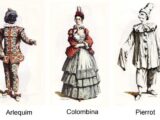
King Momo, Pierro, Harlequin and Colombina - Carnival characters

History and Chronology of the Carnival of Salvador de Bahia

History of the introduction of Portuguese tiles in Brazil
Maranhão's handicrafts have more than 400 years of tradition

The influence of Arab architecture on the buildings of Pernambuco

Historic Towns in the Northeast: Explore the Past

Northeastern Brazilian Rhythms: 7 Main Musical Styles
Rural Maracatu: A carnival tradition in the interior of Pernambuco

Woodcuts and Cordel Literature in Northeastern Brazil

Brazil's northeastern subsoil has emeralds and archaeology
History of the 8-bass accordion and its influence on forró

June festivals: Tradition and Culture in the Northeast of Brazil
Bobbin lace and embroidery: predominant handicrafts in Ceará

Diógenes Rebouças and His Architectural Legacy
Casa Grande & Senzala: The Work of Gilberto Freyre

São Jorge dos Erasmos Sugar Mill: A Landmark in Brazil

Graciliano Ramos: The life and work of the Brazilian writer
Lampião and Cangaço: Between history and mythology
Lampião and the Cangaço: Between History and Mythology

José Américo de Almeida: A Brazilian Literary Icon

Rapadura: A Sweet Treat from Northeastern Brazil
This post is also on:
 Português
  English
  Deutsch
  Español
  Français