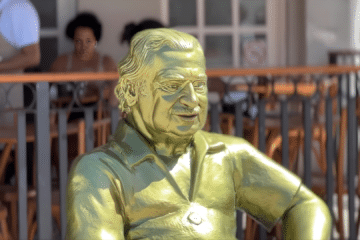
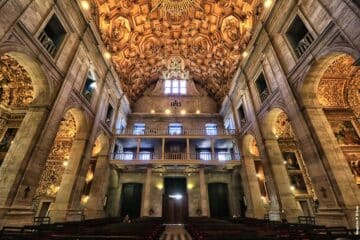
Umbanda, by virtue of its origins, is a genuinely Brazilian religion
Umbanda is a Brazilian religion, which emerged in the early 20th century, characterised by syncretism between elements of spiritualism, Afro-Brazilian cults, indigenous traditions and influences from popular Catholicism.
Its core purpose is charity, peace and harmony, emphasising the connection between the material world and the spiritual world through mediumistic work and by welcoming those who seek guidance, healing and support.
Important: In many branches, Umbanda does not involve animal sacrifice, and there are traditions that emphasise simple rituals focused on mutual support.


A História da Umbanda

Orixás, Guias e Rituais na Umbanda18:17
Origemda Umbanda: A Versão Tradicional de Zélio Fernandino de Moraes03:24
Key features of Umbanda
- Religious syncretism
It incorporates various spiritual and cultural references, embracing manifestations such as Orixás, caboclos, pretos-velhos, as well as symbols and popular names associated with Catholic saints in some houses. - Mediumship
Mediums act as intermediaries between those seeking guidance and spiritual entities, who offer guidance, advice and assistance. - Worship and rituals
Ceremonies may include chanted verses, prayers, smoking rituals, herbal baths, healing passes and offerings, varying according to the tradition of each terreiro. - Doctrine and values
It emphasises love for one’s neighbour, spiritual development, humility and charity, with a focus on moral improvement and spiritual balance.
Over time, Umbanda has branched out into various branches, but it remains centred on practical spirituality and fraternal support.
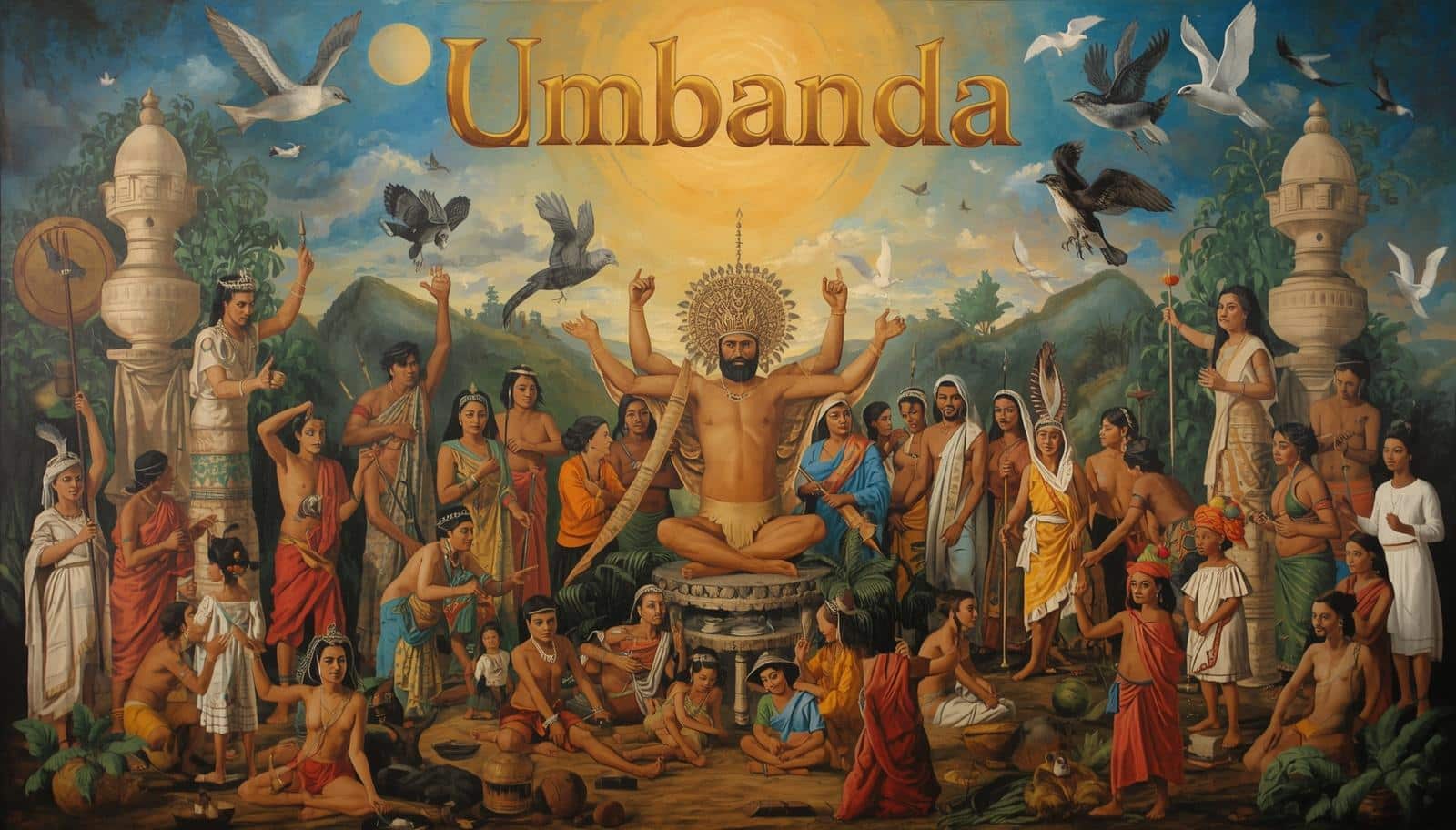
Foundation of Umbanda (1908)
The most widely accepted account of the founding of Umbanda dates it to 1908 in the state of Rio de Janeiro, and is linked to the medium Zélio Fernandino de Moraes and the spiritual manifestation of Caboclo das Sete Encruzilhadas.
According to this tradition, Umbanda was founded with the aim of being an accessible religion, geared towards the humble, based on charity and spiritual equality, making room for entities such as pretos -velhos and caboclos, who were rejected in other religious circles of the time.
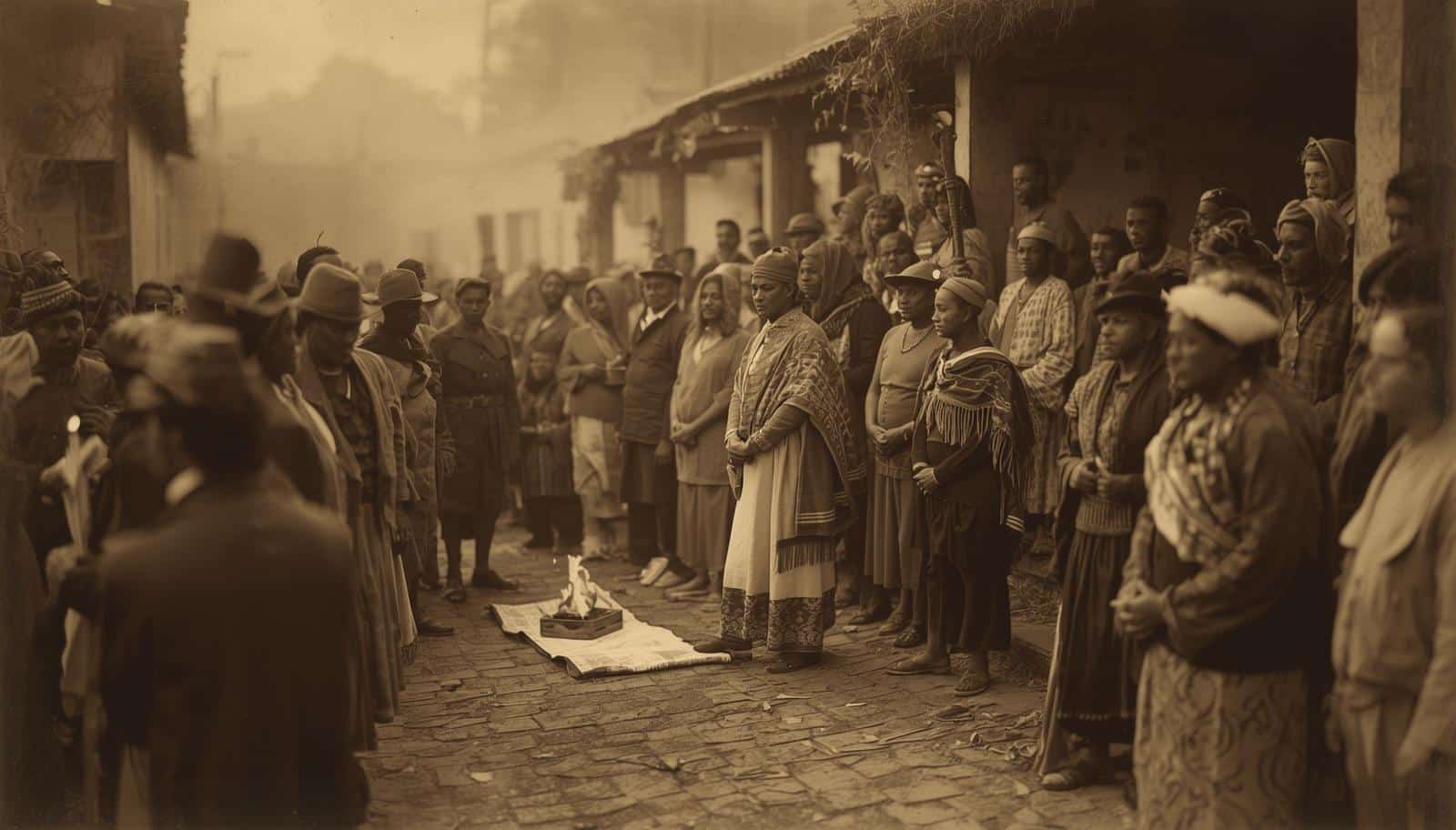
The first Umbanda temples
Following its emergence, Umbanda organised itself into tendas and casas, which helped to consolidate the cult. Among the most frequently mentioned in the Umbanda tradition are:
- Nossa Senhora da Piedade Spiritist Centre (1908) – Rio de Janeiro
- Umbanda Spiritist Centre – Rio de Janeiro
- Caboclo das Sete Encruzilhadas Umbanda Temple – Olaria (RJ)
Over the years, the religion spread rapidly across the country, giving rise to new branches and offshoots.
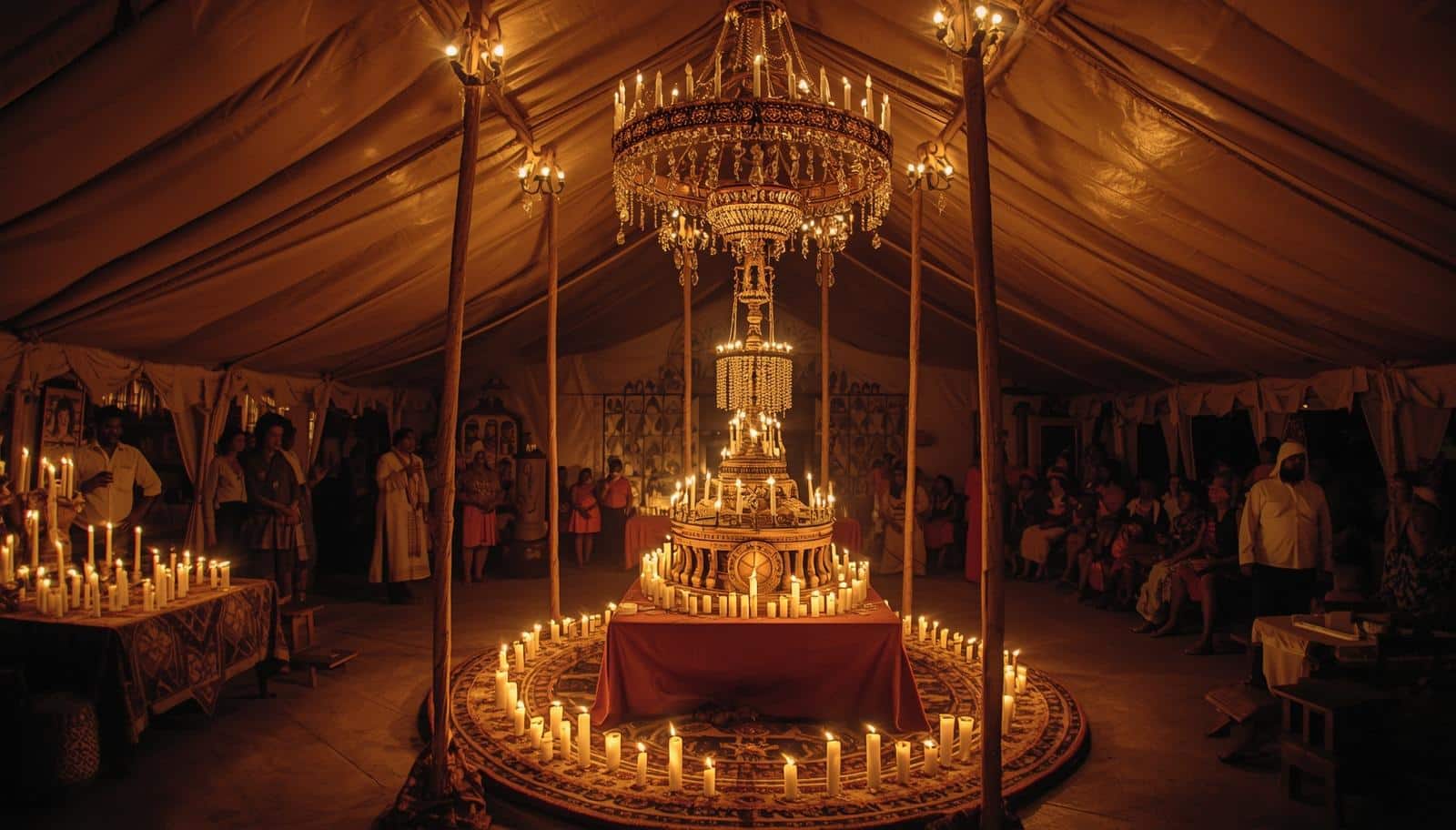
The Origins and Founding of Umbanda: The Traditional Account by Zélio Fernandino de Moraes
The following account presents the most widely known traditional version of the origins of Umbanda, as passed down by practitioners and terreiros; some passages are rooted in religious memory rather than verifiable historical records.
Towards the end of 1908, when he was 17 years old, Zélio Fernandino de Moraes began to experience episodes that his family and neighbours interpreted as “attacks”. Following medical assessments that yielded no clinical explanation, a link to spiritualist practices was suspected, and Zélio was referred to the Niterói Spiritualist Federation.
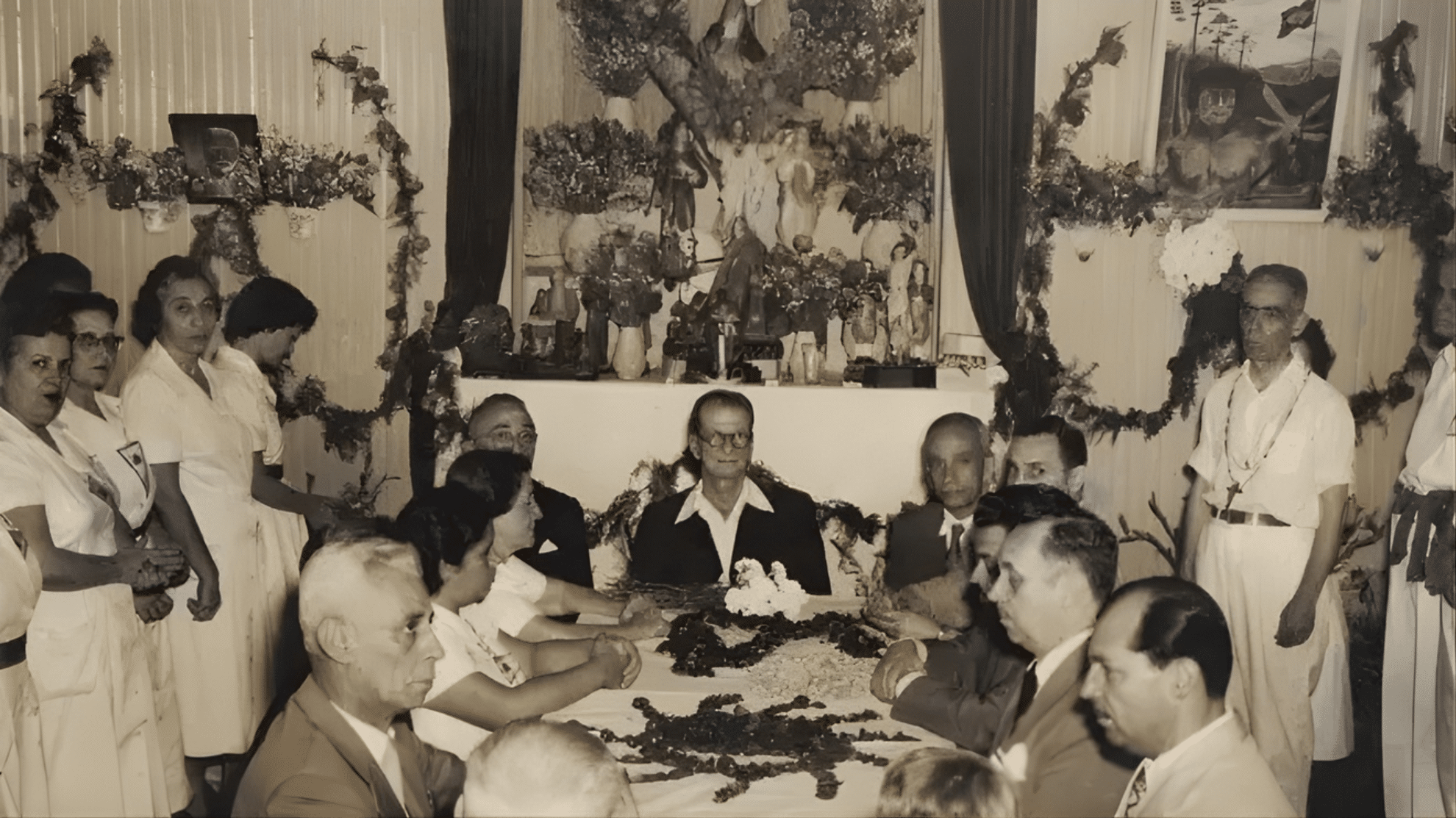
According to tradition, during a session in that setting, Zélio is said to have stood up, gone into the garden and brought a flower back to the table, a gesture that caused surprise. It is said that entities identified as caboclos, pretos-velhos and other guides then manifested themselves — figures frequently marginalised by Spiritist leaders of the time.
Through the medium, a spirit is said to have communicated, questioning the rejection of these entities and identifying itself as Caboclo das Sete Encruzilhadas, announcing its intention to establish a cult dedicated to charity and spiritual guidance without distinction of colour, race, creed or social class. The date most commonly cited today as a symbolic milestone is 16 November 1908, when, according to the traditional account, the first public meeting in support of this proposal is said to have taken place.
At the next gathering, held at the Moraes family home, relatives, neighbours, members of the Spiritist Federation and onlookers came together. In keeping with tradition, a form of worship was established there that emphasised charity, the reading of the Gospel, free consultations, the wearing of white clothing by participants, and regular sessions. The name “Umbanda” came to be used to designate this spiritual movement focused on assistance, according to the practitioners’ own understanding.
The first venue associated with these gatherings was named Nossa Senhora da Piedade, with the aim of offering a welcoming place to those in need. There are also accounts of the presence of figures such as pretos-velhos — exemplified by figures such as Pai Antônio — who are remembered for their humility and words of healing.
Historically, researchers emphasise that Umbanda emerged from urban and collective processes of syncretism — between Kardecist Spiritism, popular Catholic practices and Afro-Brazilian religious elements — and not merely from a single founding event. Throughout the 20th century, the tradition associated with Zélio influenced the establishment of many houses and tents, and he is recognised as a central figure for having dedicated decades to the work that his followers continue to this day. Zélio Fernandino de Moraes passed away on 3 October 1975, according to biographical records.
Final note: there are regional variations and alternative accounts regarding the origins, practices and names of entities. When publishing, I recommend including a note stating that this is the traditional version widely accepted by many Umbanda practitioners, as well as, where appropriate, references enabling the reader to consult academic studies on the subject.
FAQ
1) What is Umbanda?
Umbanda is a Brazilian religion that combines elements of Spiritism, Afro-Brazilian and indigenous traditions, and influences from popular Catholicism, with a focus on charity and spiritual guidance.
2) What are the origins of Umbanda?
Umbanda emerged in the early 20th century in Brazil as a religious movement characterised by syncretism and the veneration of entities such as caboclos and pretos-velhos.
3) When was Umbanda founded?
The most commonly cited date is 1908, linked to the mediumistic work of Zélio Fernandino de Moraes.
4) Who founded Umbanda?
Tradition credits Zélio Fernandino de Moraes, who was spiritually guided by Caboclo das Sete Encruzilhadas.
5) What does ‘Caboclo das Sete Encruzilhadas’ mean?
It is the name of the spirit associated with the 1908 landmark, traditionally presented as a spiritual guide at the origins of the cult, symbolising open paths and a mission of charity.
6) Does Umbanda believe in Orixás?
Many Umbanda temples worship Orixás as spiritual forces or lines of work, although the way they are understood varies between different branches.
7) Is Umbanda a form of Spiritism?
Not exactly. Umbanda shares some commonalities with Spiritism (such as mediumship), but it has its own rituals, entities and principles.
8) Does Umbanda involve animal sacrifice?
In many Umbanda traditions, no. There are communities that emphasise simple rituals and explicitly state that animal sacrifice is prohibited.
9) What are the most common entities in Umbanda?
Among the best known are caboclos, pretos-velhos, children (erês), baianos, boiadeiros, marinheiros and other lineages, depending on the temple.
10) What is an Umbanda ritual like?
It generally involves prayers, chanted verses, rituals involving herbs and incense, healing rituals and spiritual guidance, varying from one terreiro to another.

Publicações Relacionadas
Musical styles, rhythms, singers and composers of northeastern Brazil
The Rhythm of Candomblé and the Invocation of the Orixás
Turban is Religion, Fashion and Culture in Brazil and the World
Franciscans in Brazil: Urban, architectural and artistic heritage
Cultural Aspects of Northeast Brazil Explained
Monte Santo in Bahia: History and Religious Tourism
History of Afro-Brazilian Religions: Candomblé and Umbanda
Bobbin lace and embroidery: predominant handicrafts in Ceará
Discover the History of Capoeira in Salvador
June festivals: Tradition and Culture in the Northeast of Brazil
Extreme sports in the Northeast of Brazil: Destinations not to be missed
Brazil's historic moments illustrated in great works
Colours of houses and buildings in the colonial architecture of the northeast
Popular Art from the Northeast of Brazil
Iemanjá Festival: Meaning and Celebrations
The influence of Arab architecture on the buildings of Pernambuco
História e Evolução do Trio Elétrico no Carnaval
Influences and main dishes of northeastern cuisine
Rural Maracatu: A carnival tradition in the interior of Pernambuco
Graciliano Ramos: The life and work of the Brazilian writer
The 7 north-eastern rhythms and musical styles that enchant Brazil
Rapadura: A Sweet Treat from Northeastern Brazil
Música, Ritmos e Danças do Nordeste do Brasil
The culture of Northeastern Brazil: how it originated, influenced and flourished
Jean-Baptiste Debret: biography and works in Brazil
Candomblé: A Blend of African and Catholic Traditions
Biography of Victor Meirelles and analysis of the work "The First Mass in Brazil"
Jorge Amado's Life and Literary Contributions
Casa Grande & Senzala: The Work of Gilberto Freyre
History of Northeast Brazil - Chronology and Summary
History of the 8-bass accordion and its influence on forró
Woodcuts and Cordel Literature in Northeastern Brazil
Historic Towns in the Northeast: Explore the Past
Lampião and Cangaço: Between history and mythology
The origins of Afro hairstyles in Salvador, Bahia
History, biography and paintings of Frans Post in Dutch Brazil
This post is also on:
 Português
  English
  Deutsch
  Español
  Français