Salvador: A destination for religious tourism
Salvador, the capital of Bahia, is one of the main destinations for religious tourism in Brazil, reflecting its rich historical and cultural heritage.
Church and Spirituality
Religious tourism in Salvador takes place in more than 300 secular churches.
It is often said in the city that there is a different church to visit every day of the year. Among the Catholic temples most visited by tourists are the Igreja do Bonfim, São Francisco, Conceição da Praia, Rosário dos Pretos and the Catedral Basílica.

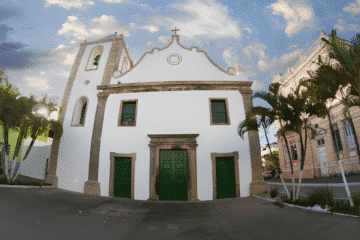
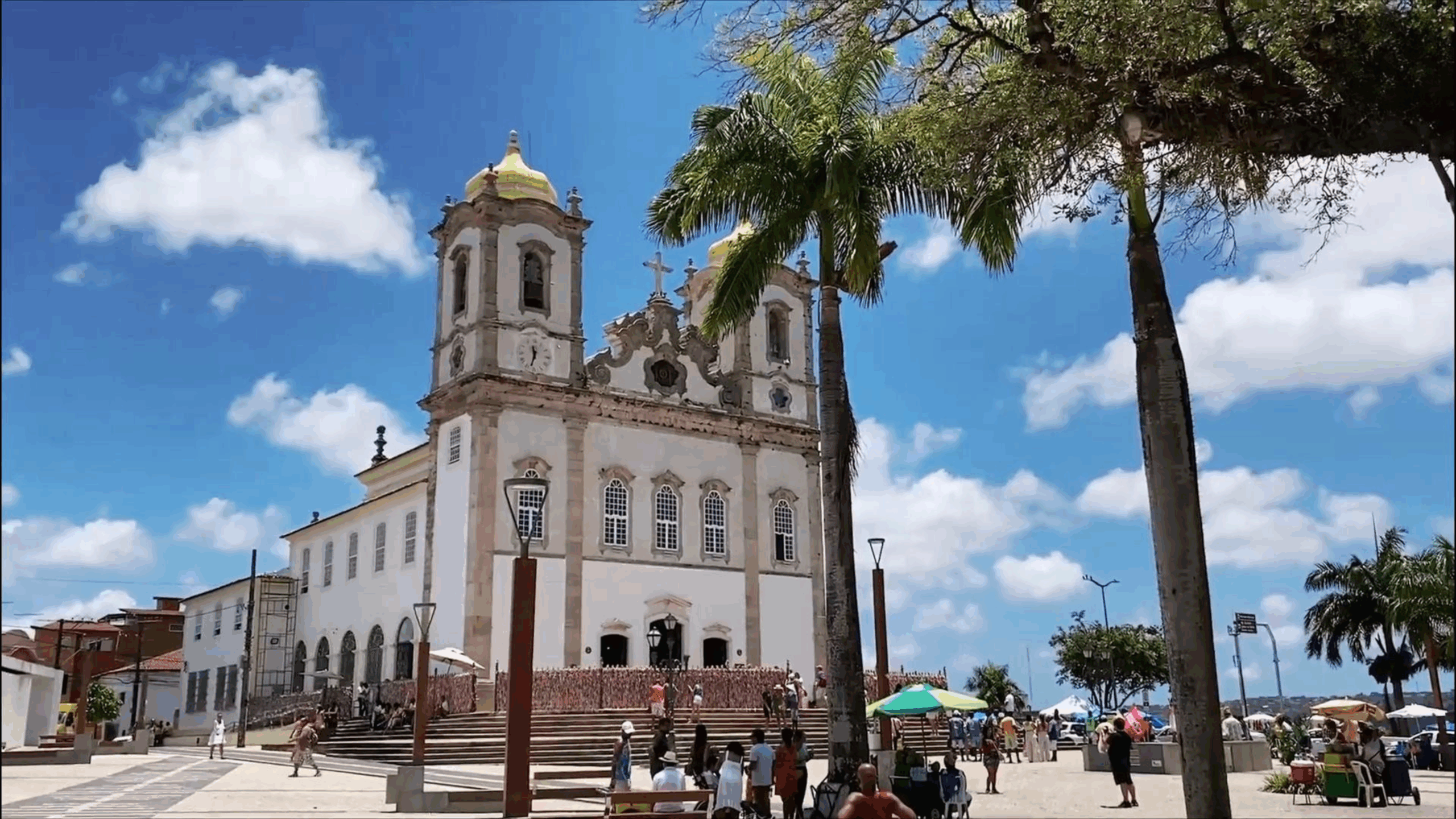
The Bonfim Church
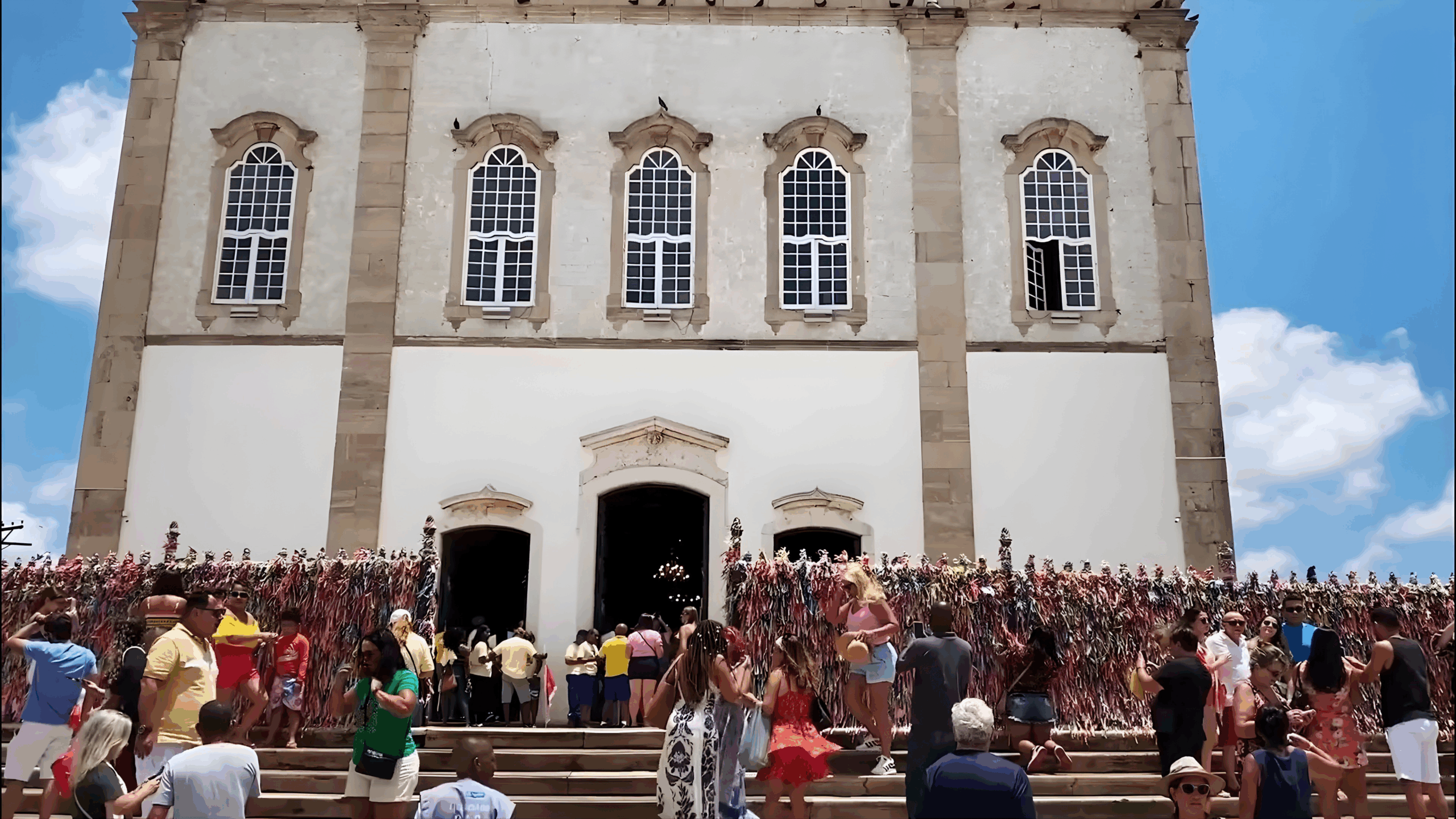
The Church of Bonfim is famous for the belief that the people of Bahia have in the Senhor do Bonfim (Lord of Bonfim). Inside the church, in the Sala dos Milagres (Hall of Miracles), the faithful leave photographs and replicas of human body parts in gratitude for a cure, after making promises and requests to the deity.
The famous fitinhas do Senhor do Bonfim (Lord of Bonfim ribbons) are sold at the church door. Devotees usually tie them around their wrists with three knots. A wish is made for each knot, and it is believed that when the ribbon breaks, the wish will be granted.

The Church of St. Francis
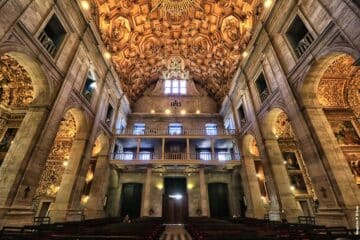
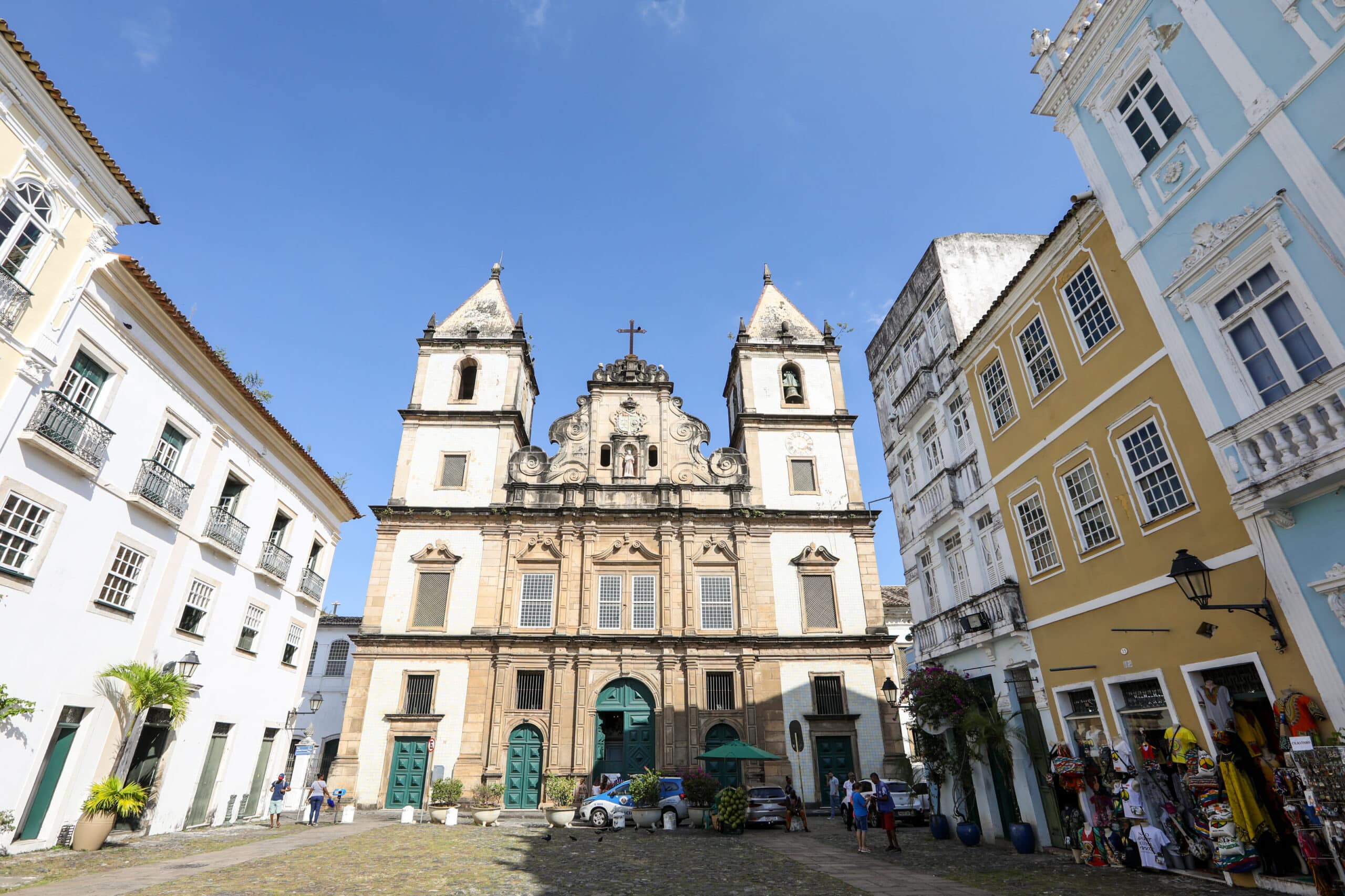
In the Terreiro de Jesus, in the historic centre of Salvador, stands the Church of São Francisco, considered one of the richest and most beautiful in the country. In its construction, different materials were used, from Lozenge stone to gold, to cover the interiors.
The baroque façade dates from 1723, as do the Portuguese tile panels. The sacristy houses 18 oil panels depicting the life of Saint Francis.
The paths of faith
Developed in partnership with the Pastoral do Turismo da Arquidiocese de Salvador (Ministry of Tourism of the Archdiocese of Salvador), the Paths of Faith in the City of Salvador circuit includes churches, monasteries, convents and shrines in the capital, offering visitors the opportunity to discover the religious art and history behind each site.
Religious tourism in Salvador
Salvador, founded in 1549, bears a strong influence of Catholicism, introduced by the Portuguese colonisers, while preserving Afro-Brazilian traditions, the result of religious syncretism between African and Christian cults. -Brazilian traditions, which are the result of religious syncretism between African and Christian cults.
This cultural intertwining is reflected in religious festivals, historic churches and monuments of great spiritual and architectural value, such as the church of Nosso Senhor do Bonfim, which attracts millions of worshippers every year.
The popular festivals, such as the Lavagem do Bonfim and the Festa de Iemanjá, combine religious devotion with cultural and festive expressions, making Salvador a unique destination for those seeking not only faith but also a deep immersion in its traditions and beliefs.

Igreja e Convento São Francisco de Assis em Salvador BA06:40

Turismo religioso em Salvador BA03:32
Turismo Religioso em Salvador na Bahia

Turismo Religioso em Salvador da Bahia06:11
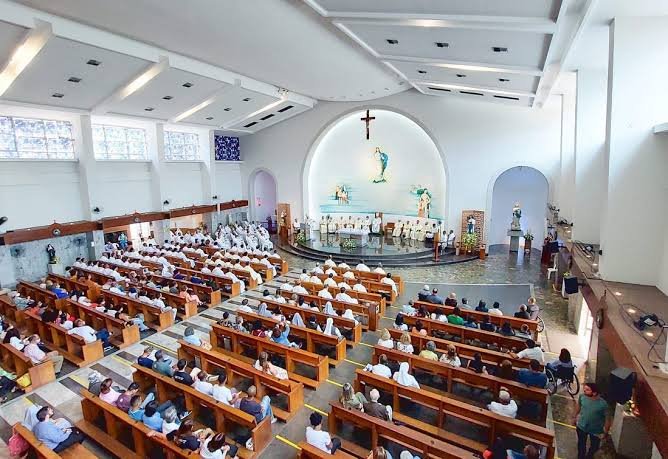
Caminhos de Fé - Arte e Fé Católica em Salvador07:35
1. 3 itineraries focusing on religious tourism
- “Itinerary “Charity and Faith
- Art and Faith’ Itinerary
- Itinerary for ‘Monasteries and convents
1. “Itinerary “Charity and Faith
- Basilica Sanctuary of Conceição da Praia
- Church of Our Lady of Pilar and Saint Lucy
- Convent of Salvador
- Parish of Our Lady of the Floods and St John Paul II
- Sanctuary of Saint Dulce of the Poor
- Basilica Shrine of Senhor do Bonfim
- Parish of Our Lady of the Seas
- Our Lady of Good Voyage Parish
- Our Lady of Penha Parish
2. Itinerary ‘Art and Faith
- São Bento Monastery
- Church of Ajuda
- Church and Museum of Mercy
- Archbishop’s Palace Cultural Centre
- Basilica Cathedral of Salvador
- Church of São Bento dos Clérigos
- Church of São Domingos de Gusmão,
- Monastery and Church of São Francisco
- Church of the Third Order of St Francis
- Church of Our Lady of the Black Rosary
- Church of the Blessed Sacrament of Passo
- Church of the Third Carmelite Order
- Church of Our Lady of Carmel
- Church of Our Lady of Boqueirão
- Church of Saint Anthony Beyond the Carmel
3. Itinerary ‘Monasteries and Convents
- Church and Convent of Santa Clara do Desterro and Devotion to the Servant of God Vitória da Encarnação
- Church of the Blessed Sacrament and Santana
- Church and Monastery of Our Lady of the Conception of Lapa
- Shrine of Our Lady of Mercy and Capuchin Memorial
- Chapel of Blessed Lindalva Justo
- Church of Saint Raymond
- Church of St Peter and Monastery of St Benedict
2. Beatification of Sister Dulce
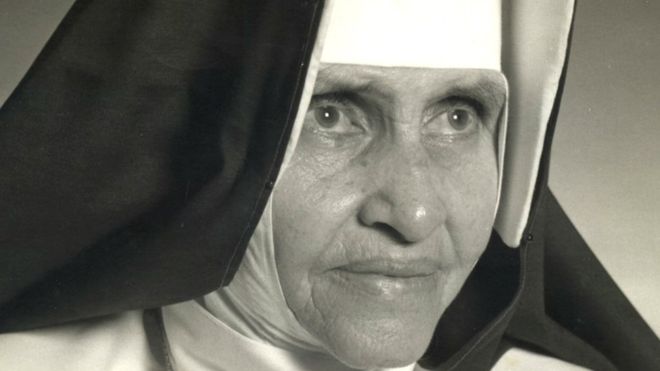
With the announcement of the beatification of Sister Dulce, the number of tourists visiting Salvador for religious tourism is expected to increase significantly. This is especially true now that Pope Benedict XVI has signed off on the beatification process, which is expected to be completed by December.
Visibility of construction sites and tourist attractions
According to Osvaldo Gouveia, Consultant for Memory and Culture at the Social Works of Sister Dulce, the canonisation will not only raise the profile of the works. The beauty of the Itapagipana peninsula and the 11 places where Sister Dulce spent time spreading her charity and love of neighbour will also be recognised and will welcome visitors from all over the world.
Revitalisation of the São Joaquim Market
One example of this transformation is the São Joaquim market, which is currently being revitalised. The market traders were the first to collaborate with the nun’s work, demonstrating the impact of her beatification on the community.
Interest in Sister Dulce
The fame of the nun’s virtues attracts thousands of visitors every year who are interested in learning about the life and work of Sister Dulce, which are exhibited in the Sister Dulce Memorial.
Visit to the Church of the Immaculate Conception
In addition to the exhibition, visitors can extend their visit to the Church of the Immaculate Conception of the Mother of God, where the relics of the Venerable Dulce are currently kept. There is also a small shop where visitors can buy T-shirts, brooches, rosaries, bracelets and various other products bearing the nun’s image, as well as information on some of the institution’s service centres.
Path to canonisation
Sister Dulce is the first person from Bahia to be beatified and is just one step away from sainthood. For this to happen, proof of two more miracles performed by Sister Dulce and recognised by the Vatican is required.
3. The Festival of Iemanjá is one of the most popular in Brazil.
The Festa de Iemanjá is also part of the Religious Tourism.
Maritime parade
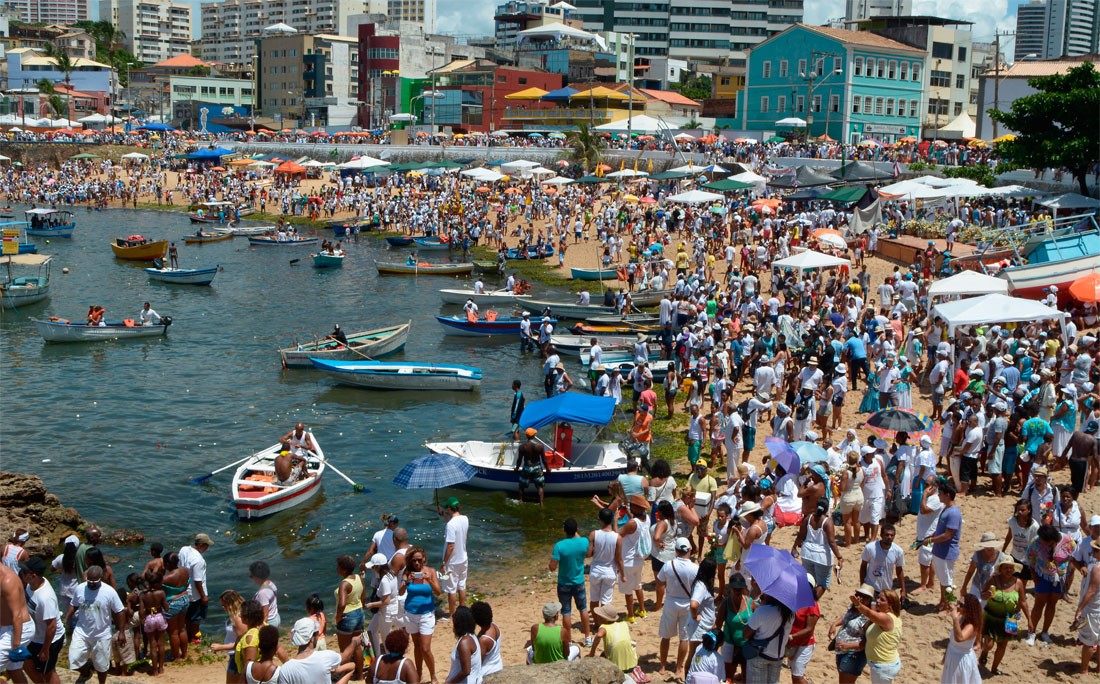
Fishermen and believers celebrate in a maritime procession that sets sail at 4pm in countless boats carrying flowers and other gifts for the Queen of the Waters. This is one of the largest public religious demonstrations of Candomblé.

Crowds in Rio Vermelho
The streets of the Rio Vermelho neighbourhood are filled with people who gather to watch the boats leaving with their offerings. The event, which has been held since 1974, is organised by fishermen from the neighbourhood’s fishing colony.
Representation of Iemanjá
Iemanjá is often depicted in the Latinised form of a mermaid, with long hair blowing in the wind. She is also known as Dona Janaína or Rainha do Mar (Queen of the Sea).
Historical tradition
In the year 1923, the tradition began with the offering of gifts to the Queen of the Waters on 2 February. Year after year the fishermen repeated the ceremony. At first it was held in conjunction with the Paróquia do Rio Vermelho (Red River Parish), due to the syncretism between the Orisha and Our Lady of the Conception.
Reaction of the Catholic Church
In the 1960s there was a reaction from the Catholic Church against pagan worship, and the festival officially lost its devotion to the Catholic saint. The Church of Santana, on the same site as the festival, always keeps its doors closed on 2 February.
Homage to modern art
Today, the tributes to this orisha begin at dawn, when followers of Candomblé, Umbanda and Catholicism place offerings and notes with requests in baskets that are taken out to sea. These baskets are carried by around 300 boats, with the fishermen’s offering always at the head of the procession.
Inclusive celebration
People of all religions celebrate in the same way, bringing flowers, perfume, champagne and candles. However, there are those who have never heard of the legend of Iemanjá. The festival is intended to please the Queen of the Sea, in the hope that she will bless the fishermen even more.
4. Main Churches in Salvador, Bahia
- Church and Convent of São Francisco
- Church of Our Lady of the Black Rosary
- Church of the Third Carmelite Order
- Basilica Cathedral of Salvador
- Venerable Church of the Third Order of Saint Dominic Gusmão
- Church of Ajuda
- Church of Our Lady of the Conception of Praia
- Church of the Blessed Sacrament of Passo
- Church of Our Lady of the Floods and Saint John Paul II
We have selected a few of these churches to give you a little insight into the history and religious beliefs left behind by our Portuguese colonisers.
1. Church and Convent of São Francisco
The Church and Convent of São Francisco is located in the heart of Pelourinho. The church was chosen as one of the Wonders of Portuguese Baroque in the world and is one of the most unique and rich expressions of Brazilian Baroque.
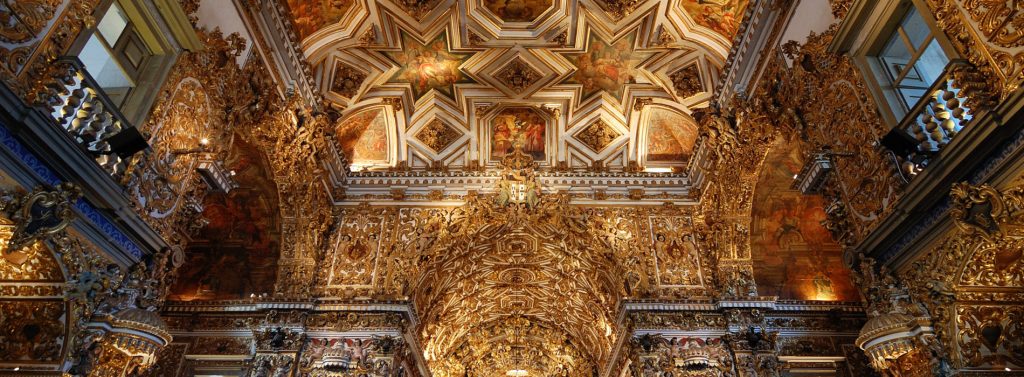
Built between the 17th and 18th centuries, the buildings have spectacular interiors, especially the church, with its gold-plated panels and altar.
The site also houses the only set of Portuguese tiles depicting the city of Lisbon, Portugal, before the earthquake of 1755.
Visiting hours: Visitors can visit the church every day from 9am to 5pm.
Location: Rua da Ordem Terceira, Pelourinho, Historic Centre
2. Church of Our Lady of the Black Rosary
Built by slaves who had no place to celebrate their faith, the church is now a space for intercultural dialogue, with beautiful celebrations that use elements of Afro-Brazilian culture, characterised by syncretism between Catholicism and African religions such as Candomblé.

At the mass held every Tuesday evening, atabaques are the instruments used to accompany the hymns.
Visiting hours: The church can be visited from Monday to Friday from 8.00 to 17.00. On Saturdays it is open until 12.00.
Location: Largo do Pelourinho, 25, Pelourinho.
3. Church of the Third Order of Carmel
Built between 1788 and 1803, it stands next to the Church of the First Order, on Ladeira do Carmo, in the historic centre of Salvador. It was built in the Baroque style, with Gothic details.
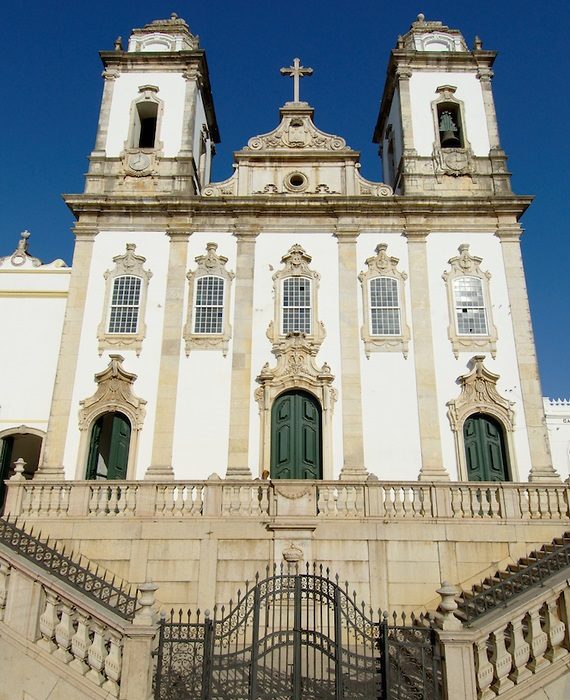
It houses a cedar image of the Dead Lord with two thousand rubies, carved in 1730 by the enslaved Francisco das Chagas, known as the “Aleijadinho of Bahia”. Its staircases are traditionally used to photograph university graduates.
The convent next door was bought by a hotel chain and is now one of the most expensive hotels in Salvador.
Visiting hours: The church is open Monday to Friday from 7am to 5pm.
On Saturdays it is open until noon. There is no information on entrance fees. Location: Rua do Carmo, 01, Carmo. Telephone: (71) 3242-0182.
4. Cathedral Basilica of Salvador
The current Cathedral Basilica of Salvador is the fourth to be built on the same site. Its foundation stone was laid in 1657, and it was inaugurated and consecrated in 1672, but it was not completely finished.
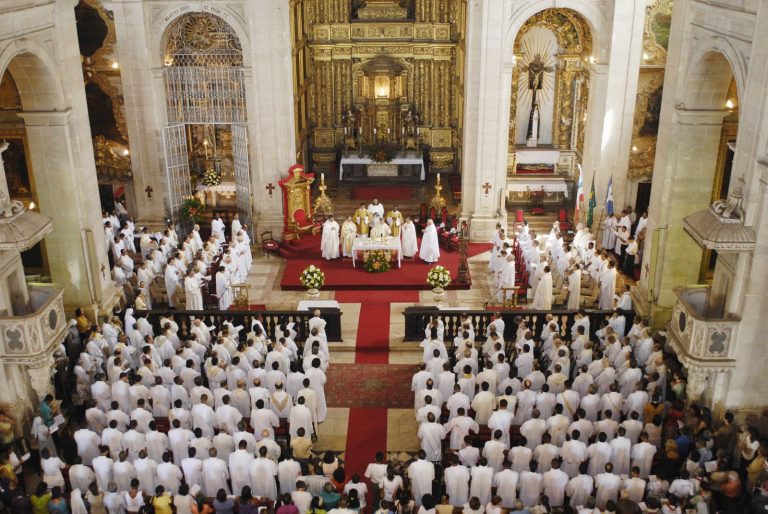
Visiting Hours: The cathedral is open on Saturdays and Sundays from 8am to 6pm, with an entrance fee of R$5, except during mass.
Location: Terreiro de Jesus Square, Pelourinho.
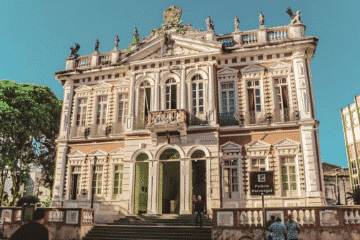
5. Venerable Church of the Third Order of Saint Dominic Gusmão
Located in Terreiro de Jesus, in Pelourinho, right in front of the Basilica Cathedral, the Church of the Venerable Third Order of Saint Dominic Gusmão began construction in 1731.
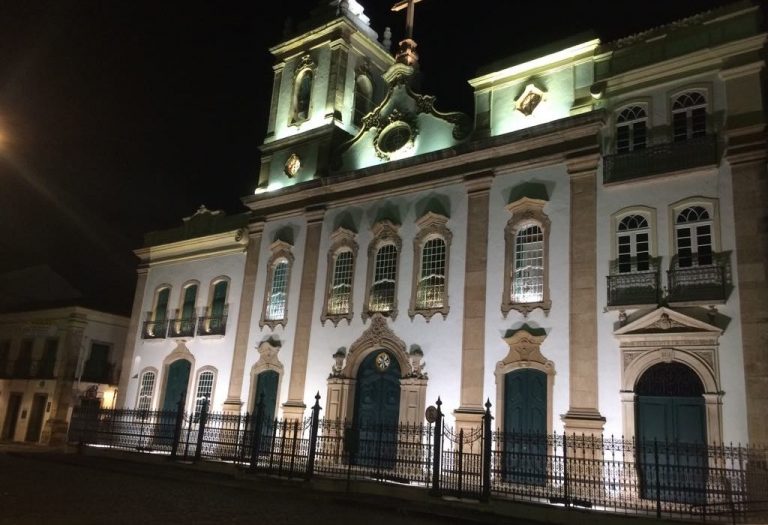
The façade is in rococo style and the interior has neoclassical woodcarvings that replaced the original baroque carvings.
Visiting hours: The church can be visited from Monday to Friday.
Location: Largo Terreiro de Jesus, 19, Pelourinho.
6. Church of Ajuda
The first church in Ajuda was built in 1549, during the construction of the city of Salvador by Governor General Tomé de Sousa.
Its builders were the Jesuits, led by Manuel da Nóbrega, who constructed a small makeshift church with wattle and daub walls covered with straw. It was located within the walls of Salvador, a city that at the time was surrounded by a palisade to protect the colonists. It was dedicated to Nossa Senhora da Ajuda, the name of one of the ships in Tomé de Sousa’s fleet.
Visiting hours: The church is open to visitors free of charge from Monday to Friday, from 8.00 to 17.00. Location: Rua do Tesouro, 62-128, Centro.
7. Church of Our Lady of the Conception of the Beach
Built in 1623, it is one of the oldest parishes of the Archdiocese of São Salvador. Located at the foot of the mountain that connects the upper and lower cities, its first church was built by order of the first Governor General of Brazil, Tomé de Sousa.
Its current Baroque structure was built entirely of soapstone brought from Portugal.
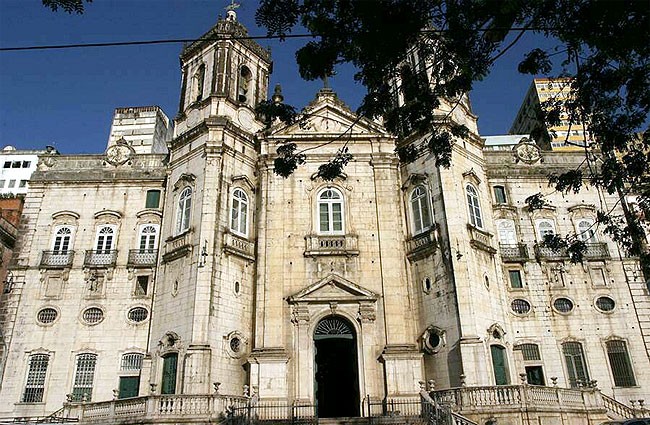
From the temple, the procession of one of the most important religious festivals of Bahia, the Festa do Bonfim, celebrated in January, starts. The procession ends at the Church of Senhor do Bonfim.
Visiting Hours: There is no information on visiting hours, but the temple follows the liturgical calendar and holidays of the Catholic Church. Location: Rua da Conceição da Praia, Comercio.
8. Church of the Blessed Sacrament of the Passo
This temple, of remarkable architectural value, was built on a steep slope. It has a layout typical of early 18th-century Bahian churches, with side aisles, tribunes and a choir on the upper floor, and a transverse sacristy.
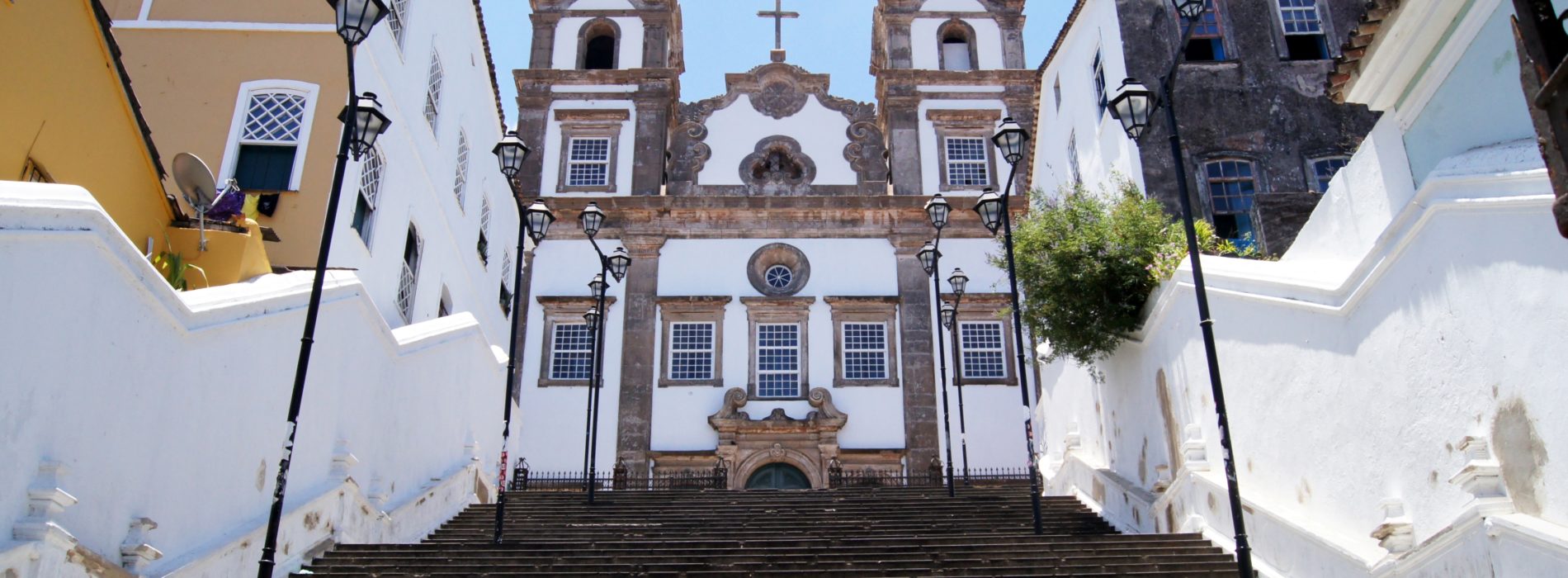
There is an ossuary in the basement. Its altars and altarpieces, in neoclassical style, date from the mid-19th century. It has images of Saint Joseph, Our Lady of the Conception and Our Lady Mother of Man.
The famous scenes from the mini-series “O Pagador de Promessas” (1988), based on the play of the same name by Dias Gomes, were filmed on the stairs of this place.
Visiting hours: No information available. Location: Rua do Passo, 54, Santo Antônio Além do Carmo.
9. Shrine of the Blessed Dulce of the Poor
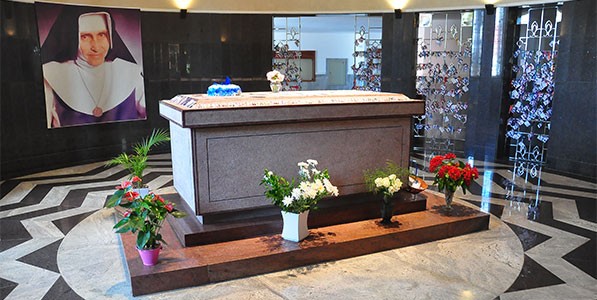
The most famous nun in Bahia, known for her legacy of love for the poor, has a sanctuary dedicated to her.
The site houses the tomb of the “Good Angel of Brazil” and a memorial that tells the story of Sister Dulce and her social work.
Visiting hours: Open every day from 7.00 to 18.00. Location: Avenida Bonfim, 161, Largo de Roma.
10. Church of Our Lady of Alagados and Saint John Paul II
Inaugurated by Pope John Paul II in 1980, the church was built in a contemporary architectural style, clad in exposed brick in rectangular and circular forms.
The church is located in a suburb of the capital of Bahia (Alagados), which has been visited by three great saints of our time: Saint John Paul II, Saint Teresa of Calcutta and Blessed Dulce dos Pobres.

Visiting hours: The church can be visited on Thursdays between 7.00 and 17.00. On other days, visitors must make an appointment by calling (71) 3314-5087.
Location: Rua Luiz Régis Pacheco, in the Alagados region, Uruguai district.
Bahia.ws is the largest tourist guide for Bahia and Salvador.
Religious tourism in Bahia

Publicações Relacionadas
Influences and main dishes of northeastern cuisine
Franciscans in Brazil: Urban, architectural and artistic heritage
Graciliano Ramos: The life and work of the Brazilian writer
Discover the History of Capoeira in Salvador
Iemanjá Festival: Meaning and Celebrations
History of Carnival in Brazil: Origins and Traditions
Jean-Baptiste Debret: biography and works in Brazil
Geography and Climate Regions of Northeast Brazil
Maranhão's handicrafts have more than 400 years of tradition
História e Evolução do Trio Elétrico no Carnaval
São Jorge dos Erasmos Sugar Mill: A Landmark in Brazil
Biography of Victor Meirelles and analysis of the work "The First Mass in Brazil"
King Momo, Pierro, Harlequin and Colombina - Carnival characters
Diógenes Rebouças and His Architectural Legacy
History of the 8-bass accordion and its influence on forró
The culture of Northeastern Brazil: how it originated, influenced and flourished
Brazil’s Northeast: Must-See Tourist Destinations
Turban is Religion, Fashion and Culture in Brazil and the World
History of Northeast Brazil - Chronology and Summary
The dress of the Baianas is influenced by African culture
History and Chronology of the Portuguese Tile Industry
Jorge Amado's Life and Literary Contributions
Musical styles, rhythms, singers and composers of northeastern Brazil
Historic Towns in the Northeast: Explore the Past
Plastic Arts of the Northeast: A Cultural Journey
Extreme sports in the Northeast of Brazil: Destinations not to be missed
Monte Santo in Bahia: History and Religious Tourism
Lampião and the Cangaço: Between History and Mythology
History of the introduction of Portuguese tiles in Brazil
Brazil's historic moments illustrated in great works
The Rhythm of Candomblé and the Invocation of the Orixás
The influence of Arab architecture on the buildings of Pernambuco
Iemanjá: Discover the Orixá and the Traditional Festival in Salvador
Colours of houses and buildings in the colonial architecture of the northeast
Lampião and Cangaço: Between history and mythology
History of Baroque Architecture in the Northeast and Minas Gerais
This post is also on:
 Português
  English
  Deutsch
  Español
  Français