Maracatu Rural is a traditional cultural manifestation that stands out in the city of Nazaré da Mata, located in the state of Pernambuco, Brazil.
Originating from the rural region of Pernambuco, Maracatu Rural is a variation of Maracatu, a form of popular culture and Afro-Brazilian music and dance.
Unlike Maracatu de nação, which is more urban and has a strong influence from African traditions and the Congo court, Maracatu Rural has characteristics more linked to rural traditions and life in the countryside.
Maracatu is a manifestation of Brazilian folklore that includes dance and music.
Its origins date back to colonial Brazil and are a mixture of African, Portuguese and indigenous cultures.

Video of Rural Maracatu in Pernambuco
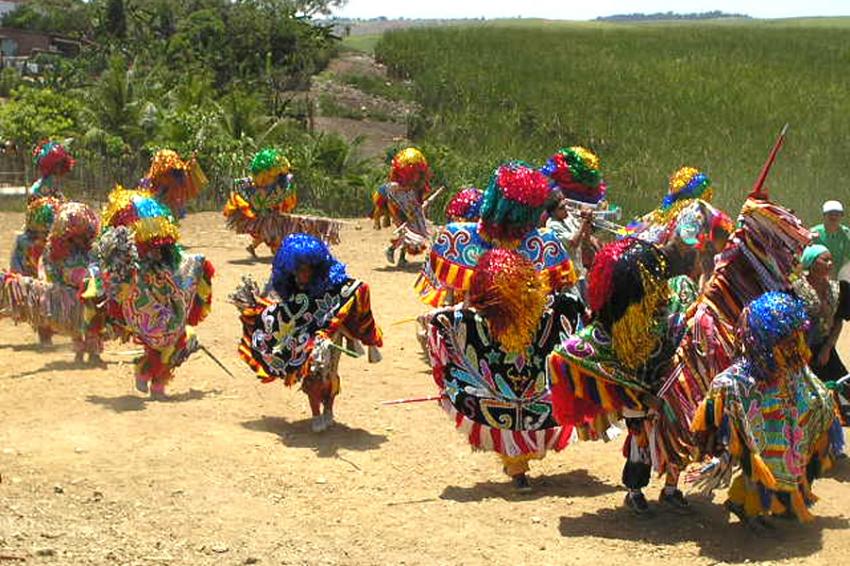
Maracatu Rural em Nazaré da Mata em Pernambuco01:53
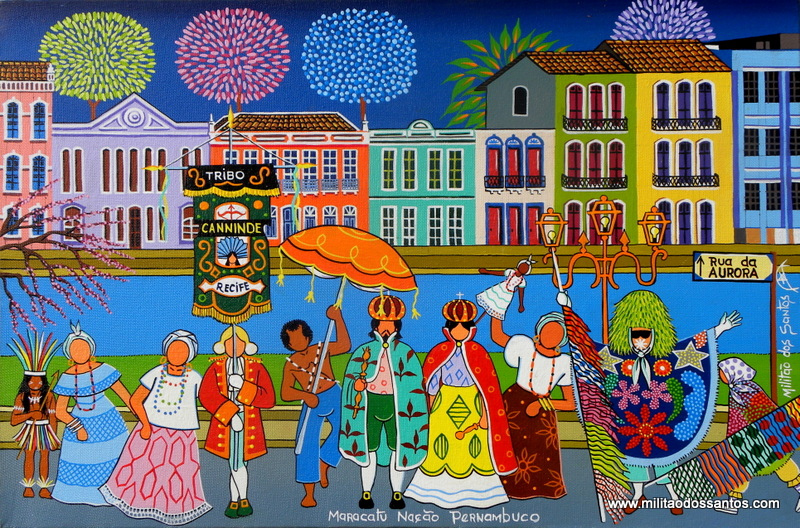
Saiba mais sobre o Maracatu Rural (Baque Solto)04:42
Rural Maracatu
1. Characteristics of rural Maracatu
- Rhythm and music: Maracatu Rural is characterised by lively rhythms and dances using drums, boxes and other percussion instruments. The music is lively and relates to rural life, reflecting the agricultural environment and local festivals.
- Costumes and representations: Participants in Maracatu Rural usually wear colourful and elaborate costumes, often imitating the clothing of ancient African nobles or kings. The procession also includes figures representing folklore and local culture.
- Parade and ritual: During the celebrations, a parade is held through various streets and squares, where dance and music attract the attention of the public. The event is an expression of local cultural identity and a way of preserving traditions.
- Festivals and Celebrations: Maracatu Rural is mainly celebrated during the Carnival, but can also take place during other local festivals and events. The celebrations are a time of great activity and are enjoyed by locals and tourists alike.
2. The influence of African religion.
The Rural Maracatu of Nazaré da Mata, in Pernambuco, is an outstanding example of the influence of African religiosity on Brazilian culture. This cultural phenomenon has characteristics marked by the legacy of African religions brought by enslaved Africans and their integration with local traditions.
Characteristics of African religiosity in rural Maracatu
- Symbols and rituals: The Rural Maracatu includes symbols and rituals that have their roots in African religious practices. The caboclos de lança, for example, have a symbolic function that refers to protection and connection with the sacred. They play a similar role to spiritual warriors in African traditions, representing the spiritual protection of the procession.
- Costumes and Allegories: The costumes and allegories worn during the parade have deep meanings and are often associated with African entities and deities. The richness of the costumes, with their colourful details and ornamentation, may reflect the influence of traditional African ritual dress used to honour and connect with the spirit world.
- Music and Dance: The music of the Rural Maracatu is characterised by the use of percussion instruments of African origin, such as the drum and the implements. The dance that accompanies the procession also has elements reminiscent of African ritual dances used to celebrate and connect with spiritual forces.
- Language and chanting: The chanting during the parade, often in African languages or a hybrid dialect, preserves aspects of African ritual communication. The lyrics may contain references to sacred and mythological elements of African religions, contributing to cultural and religious preservation.
- Divisions and hierarchies: The structure of the procession, with figures such as the mestres puxadores and the caboclos de lança, may reflect the hierarchies and divisions present in African religious practices. These roles are fundamental to the organisation and execution of the rituals during the parade.
The presence and influence of African religiosity in rural Maracatu shows the continuity and adaptation of religious traditions brought to Brazil by Africans, which were integrated in a significant way into local culture and carnival.
3. When did Maracatu originate?
Maracatu is of Afro-Brazilian origin and originated in the state of Pernambuco in the 18th century. Its oldest performance dates back to 1711.
4. Rural Maracatu at the Nazaré da Mata Carnival
As you drive into Nazaré da Mata, Pernambuco, you will notice that the town takes on a special colour at this time of year. And it’s not just the carnival decorations, but the costumes of the spear-wielding caboclos, who arrive noisily for the meeting of the Maracatu nations.
The traditional procession, with nearly 100 groups, takes over the square in the town of Nazaré da Mata and is renewed every year with the participation of women. With around 30,000 inhabitants and about an hour from the capital Recife, the town in the Zona da Mata region of Pernambuco is the epicentre of the rural maracatu culture (or maracatu de baque solto), which is closely linked to the sugar cane plantations, an important tradition in the region.
Unlike the maracatu de baque virado, where the sound of the implements (percussion instruments) predominates, the rural maracatu parade is animated by the allegorical costumes of the court and the lance caboclos, as well as the mestres puxadores, who make the rhyme and lead the procession.
The figure of the caboclo de lança, who symbolises protection in the parade, is usually portrayed by men who are respected in the communities. But this tradition is changing. This Monday, one of the first groups to perform was Coração Nazareno, made up entirely of women from a local association.
While women’s roles in the tradition have been limited to being queens of the court, or baianas, and making the costumes, the group shows that they can also be the warriors of maracatu. “Some still look askance. But we’re flying our flag,” says the group’s leader.
Maracatu Rural is therefore a truly Brazilian expression, created in the state of Pernambuco, mainly in the cities of Olinda, Recife and Nazaré da Mata.
North East and Pernambuco Guide

Publicações Relacionadas
Monte Santo in Bahia: History and Religious Tourism

European architecture - chronology, styles and characteristics
The culture of Northeastern Brazil: how it originated, influenced and flourished

Musical styles, rhythms, singers and composers of northeastern Brazil

Extreme sports in the Northeast of Brazil: Destinations not to be missed

Influences and main dishes of northeastern cuisine
Brazil's historic moments illustrated in great works
Biography of Victor Meirelles and analysis of the work "The First Mass in Brazil"
Jean-Baptiste Debret: biography and works in Brazil
History of Baroque Architecture in the Northeast and Minas Gerais

Popular Art from the Northeast of Brazil

History, biography and paintings of Frans Post in Dutch Brazil
History and Chronology of the Portuguese Tile Industry
Franciscans in Brazil: Urban, architectural and artistic heritage
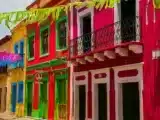
Colours of houses and buildings in the colonial architecture of the northeast
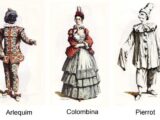
King Momo, Pierro, Harlequin and Colombina - Carnival characters

History and Chronology of the Carnival of Salvador de Bahia
History of the introduction of Portuguese tiles in Brazil

Maranhão's handicrafts have more than 400 years of tradition
The influence of Arab architecture on the buildings of Pernambuco
Historic Towns in the Northeast: Explore the Past

Northeastern Brazilian Rhythms: 7 Main Musical Styles
Woodcuts and Cordel Literature in Northeastern Brazil

Brazil's northeastern subsoil has emeralds and archaeology
History of the 8-bass accordion and its influence on forró

June festivals: Tradition and Culture in the Northeast of Brazil

Bobbin lace and embroidery: predominant handicrafts in Ceará

Diógenes Rebouças and His Architectural Legacy
Turban is Religion, Fashion and Culture in Brazil and the World
Casa Grande & Senzala: The Work of Gilberto Freyre
São Jorge dos Erasmos Sugar Mill: A Landmark in Brazil

Graciliano Ramos: The life and work of the Brazilian writer
Lampião and Cangaço: Between history and mythology
Lampião and the Cangaço: Between History and Mythology

José Américo de Almeida: A Brazilian Literary Icon
Rapadura: A Sweet Treat from Northeastern Brazil
This post is also on:
 Português
  English
  Deutsch
  Español
  Français