According to many scholars, music and dance have been part of Brazilian culture since its inception, providing an outlet for the tensions arising from the diversity of individuals involved in the process and facilitating the adaptation of a European social model to a tropical context.
Frevo, linked to Carnival, depicts the conflicts and clashes that have been experienced since the second half of the 19th century. This helps us to understand its multiple historical and social meanings.

1. Entrudo: The Roots of Carnival Celebrations

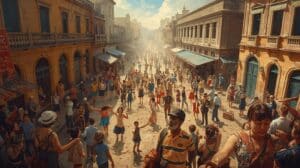
Frevo: história, identidades e manifestações culturais
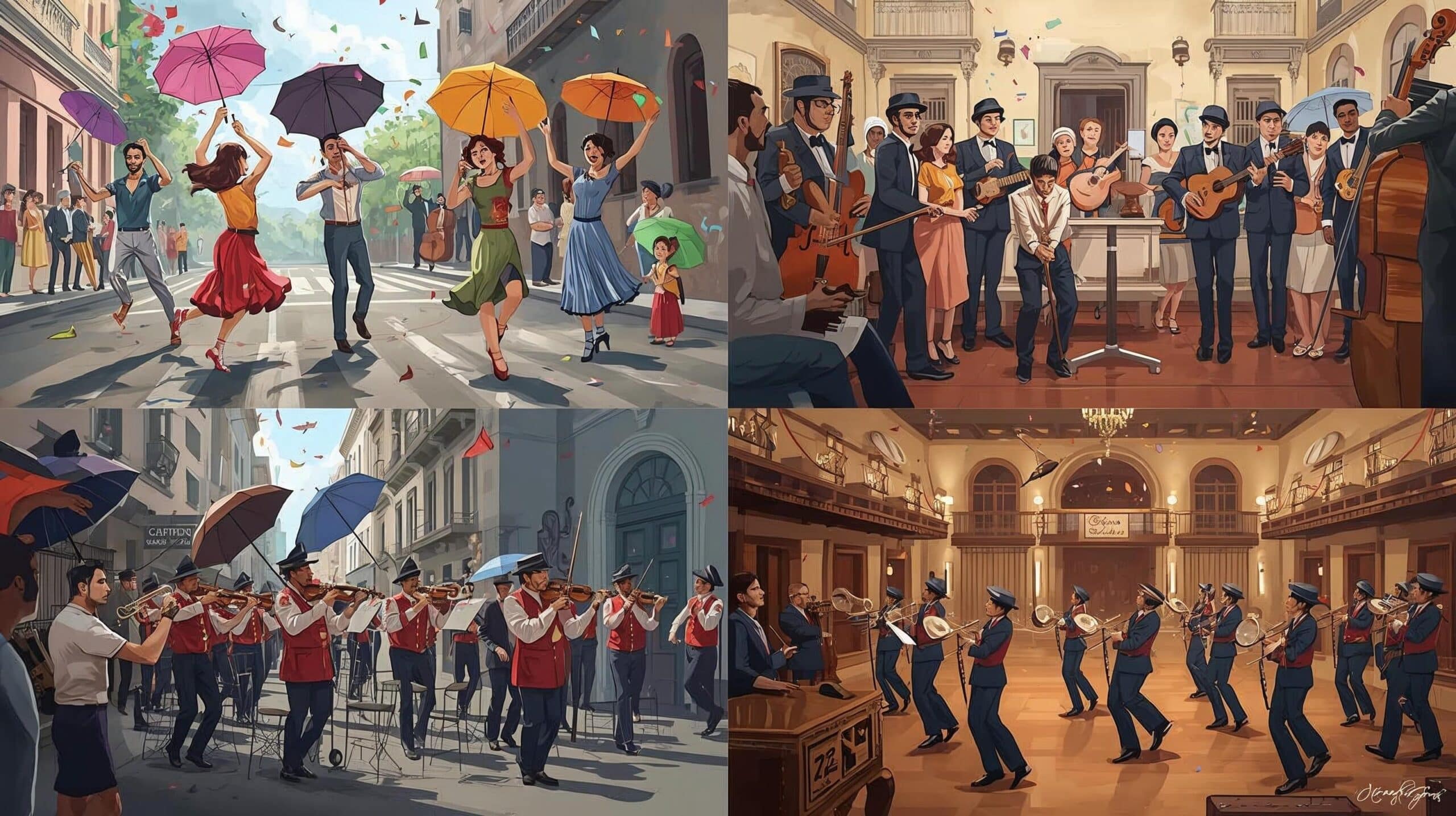
Você conhece as modalidades do frevo?02:32:42
Aprenda a dançar frevo em apenas 12 passos
Entrudo is the oldest form of popular carnival on the Iberian Peninsula and in its colonies from the 16th to the 19th century. During this street party, people played by throwing water, mud, flour, eggs and sometimes dirty objects at each other.
It was characterised by anonymity, festive disorder, and an inversion of social norms. Men and women mingled and wore masks, participating in games that could become aggressive.
The Portuguese introduced entrudo to Brazil, where it influenced the origins of the local Carnival. Initially, it consisted of groups or individuals throwing lemons at each other while telling jokes and sharing food. Records from the early 19th century show that this tradition was firmly embedded in colonial life.
However, over time, the fun degenerated. Lemons were replaced by urine, rotten fruit, mud, and other waste, and the games began to mark and divide urban spaces. This caused problems with public order and hygiene. These excesses led to prohibitions and regulations in the 19th century, paving the way for more organised forms of carnival.

2. Recife and the Formation of Frevo
In the city of Recife, this journey culminated in the emergence of frevo. Initially less frenetic, it took shape from marching bands and fanfares, as well as the presence of capoeira groups — consisting of black and mixed-race men — who competed for various interests, including political ones, at the head of the bands.
The fighting skills and new jumps of capoeira dancers, performed to the sound of bands, directly influenced the creation of street frevo steps.

3. From Fighting to Choreography
The police repression of capoeira practitioners led to the moves being disguised as choreographed movements. This gave rise to specific names for the steps, such as dobradiça (hinge), parafuso (screw), tesoura (scissors), tramel (latch) and alicate (pliers), which were borrowed from the world of work.
These names were also adopted by the first frevo groups, which were originally pedestrian clubs.

4. Profile of initial groupings
Walking clubs usually formed around docks and warehouses.
Its members were former slaves, local service providers, sailors and prostitutes — ordinary people seeking entertainment, relaxation or confrontation.
By contrast, the elite organised grand masquerade balls and parades, such as the Alegorias e Críticas (Allegories and Criticisms) and the Corso clubs.

5. Social Expansion: Arrival in the middle classes.
Frevo originated in working-class circles and reached the middle classes around 1920 through the mixed carnival blocos, which were associations similar to Christmas ranches and were formed by petty bourgeois families. These blocos saw greater female participation, including in choirs.
The orchestras of these blocos — known as ‘pau e cordas’ (sticks and strings) — initially played tangos, choros and arias. Gradually, they incorporated frevos, whose melodies ranged from the lyrical to the nostalgic, and paid tribute to notable figures in the genre.

6. Female participation and popular names
Initially, walking clubs were male-only, but the presence of women gradually became accepted through groups identified by trade, such as market women, ironers and greengrocers, or by their marginal reputation, as with the Ciganas Revoltosas (Rebellious Gypsies), who frequented Recife’s central streets, including Rua do Fogo, Rua da Guia, Beco do Veado and Rua das Águas Verdes.

7. Troças and Puppet Clubs
Troças are traditional carnival groups mainly found in north-eastern Brazil. They parade through the streets and neighbourhoods in a festive and often improvised manner.
In addition to walking clubs and mixed blocks, the Frevo Carnival system included Troças, which came from various neighbourhoods and suburbs and were organised or improvised, as well as puppet clubs, which were usually named after Carnival figures, characters or founders.

8. Final considerations
Frevo is an ongoing work: unpredictable and transgressive, erudite and popular, and balancing tradition with modernity.
Its plurality and uniqueness mean it is considered intangible cultural heritage.

Publicações Relacionadas
Caetano Veloso and His Impact on Brazilian Culture
The History of Forró: Origins and Development
Carlinhos Brown: Biography of a Percussion Legend
Musical Style and History of Samba de Roda
Biography of Raul Seixas: Life and Musical Career
Biography of Dominguinhos, the accomplished accordionist
Maria Bethânia: A Legend in Brazilian Music History
Elba Ramalho: A Journey Through Music History
The evolution of carnival: traditions and stories
Simone Bittencourt: The Journey of a Brazilian Music Star
Olodum pays tribute to Michael Jackson in Pelourinho, Salvador
The Evolution of Forró: A Musical Journey
Morais Moreira's Evolution from os Novos Baianos
Gal Costa: Biography of a Musical Icon
Carmen Miranda: Icon of Brazilian Music History
Alceu Valença: A Journey Through His Music
Alcione: The Journey of a Music Icon
History of Bossa Nova - When Bossa Nova conquered the world
Luiz Gonzaga's Impact on Brazilian Music Culture
Novos Baianos: A Journey Through Brazilian Music
History of Frevo: Memory, Urban Space and Identit
History of Carnival in Salvador, Bahia
Daniela Mercury: Queen of Axé Music in Brazil
Gilberto Gil: The Icon of World Music Today
Dorival Caymmi and His Musical Legacy
Forró Pé-de-Serrra: The Heart of Brazilian Music
Jackson do Pandeiro: The King of Rhythm and his Music
João Gilberto: The Father of Bossa Nova
Ivete Sangalo: The Biography of a Music Legend
This post is also on:
 Português
  English
  Deutsch
  Español
  Français