Full biography of Simone Bittencourt: The star of Brazilian music
Birth and name
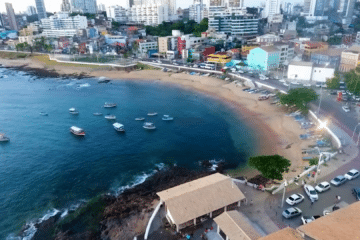
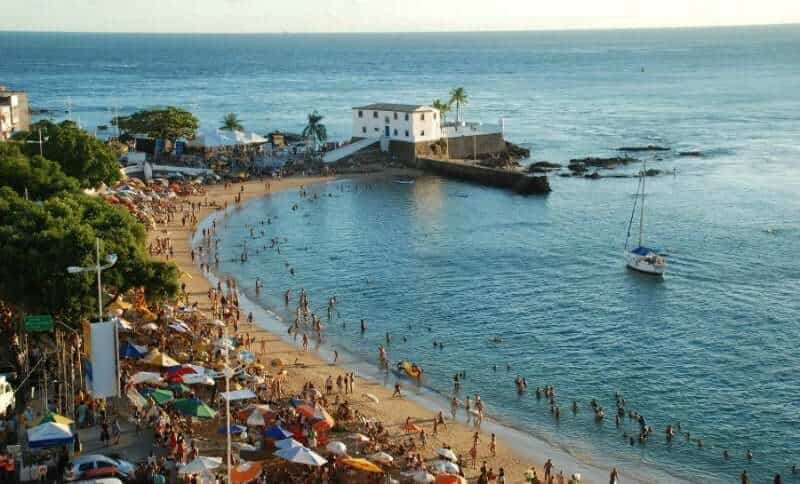
The singer Simone Bittencourt was born on Christmas Day 1949 in Salvador, the capital of Bahia. For this reason she was to be christened Natalina, but in the end the name Simone Bittencourt de Oliveira prevailed.

Family traits
The family doctors said that the newborn Simone Bittencourt would have a characteristic in common with other women in the family: short stature – a prediction that was proved wrong in her teenage years. The daughter of an opera singer and a pianist, Simone grew up surrounded by music.

Biografia de Simone Bittencourt
Move to São Paulo
In 1965, at the age of 16, Simone Bittencourt moved with her parents from Salvador to São Paulo. In the state capital, she studied music and took up sport, excelling in basketball and playing for Brazilian teams in official competitions.
Love of music
Despite her sporting talent, Simone Bittencourt never considered herself a great player. During training camps before important matches, she enjoyed playing the guitar and her teammates loved her singing.
Beginning of her musical career
At the age of 24, Simone was taken by Moacir Machado to audition at the Odeon. She was so successful that she signed a contract with the label and released her first LP, Simone, in 1972.
This work marked the beginning of her musical career. In October 1973, at the invitation of Hermínio Bello de Carvalho, she toured Belgium and France with the “Panorama Brasileiro” show.
International recognition
Shortly after her return, the American production company Madison Square hired her for a three-month tour, this time in Canada and the United States. That same year, she released the LP Brasil-Export 73 Agô Kelofé and contributed to the tracks “Nem Eu”, “Coqueiro de Itapoan/João Valentão” and “Fechei a Porta” from the LP Expo-Som 73 – Ao vivo.
Hits of the 70s
His second solo LP, Quatro Paredes , released in 1974, brought two hits to the charts: “Bodas de Prata” and “De Frente pro Crime“, by the duo João Bosco and Aldir Blanc.
The following year, 1975, would be marked by the album Gota d’água, which achieved high sales and led to a memorable concert. The lyrics of Chico Buarque in the song “Gota d’água” gained strength in the interpretation of Simone and Milton Nascimento, her guest.
New projects
After “Face a Face”, “Cigarra” and “Pedaços“, the album “Pedaços” gave rise to the show of the same name, directed by Flávio Rangel and seen by more than 120,000 people throughout Brazil.
Romantic songs were Simone’s speciality, and “Começar de Novo” by Ivan Lins was responsible for her rise to fame.
Return to success
In 1980, he successfully re-recorded Geraldo Vandré’s “Pra Não Dizer que Não Falei das Flores”, a song that had been censored for years due to the country’s repressive politics.
Career milestones
Simone Bittencourt has a lot to be proud of. In 1981, with her show “Amar”, she became the first singer to sell out the Maracanãzinho stadium alone. In 1982, at the Morumbi stadium, the singer performed in the show “Canta Brasil”, in front of an audience of 15,000 people a day.
Discography
The average of one album per year continued with “Delírios e Delícias”, “Desejos”, “Cristal”, “Amor e Paixão”, “Vício”, “Sedução”, “Simone Tudo por Amor”, “Liberdade”, “Raio de Luz”, “Simone” (Spanish), “Sou Eu”, “La Distancia” (Spanish), “Simone Bittencourt de Oliveira”, “Dois Enamorados” (Spanish) and “25 de Dezembro”.
Personal projects
A CD containing only songs by Martinho da Vila, “Café com Leite”, launched his personal projects in 1996, such as the show “Brasil” , at the Metropolitan in Rio de Janeiro, where Simone performed songs by Ari Barroso, Dorival Caymmi, Gonzaguinha, among others. The CD “Loca”, released in 1998, and the show “Fica Comigo Esta Noite”, directed by Ney Matogrosso, also marked her career. In 2001 she released “Seda Pura” and in 2002, “Feminino”, exploring the work of various Brazilian composers.
Recognition and legacy
Despite her success, her relationship with critics has not always been friendly. However, having earned her place, Simone Bittencourt is considered a star of MPB (Brazilian Popular Music) and shone on the tour for the 2004 album Baiana da Gema, which featured compositions by Ivan Lins. Simone ao Vivo” was released on CD and DVD in 2005, featuring some of the singer’s greatest hits and special guest appearances by Ivan Lins, Milton Nascimento and Zélia Duncan.
Biography as singer and composer Simone Bittencourt
Bahia.ws is the largest tourism and travel guide for Bahia and Salvador.

Publicações Relacionadas
Gilberto Gil: The Icon of World Music Today
Luiz Gonzaga's Impact on Brazilian Music Culture
Caetano Veloso and His Impact on Brazilian Culture
The evolution of carnival: traditions and stories
Musical Style and History of Samba de Roda
Biography of Dominguinhos, the accomplished accordionist
Gal Costa: Biography of a Musical Icon
Olodum pays tribute to Michael Jackson in Pelourinho, Salvador
Forró Pé-de-Serrra: The Heart of Brazilian Music
Ivete Sangalo: The Biography of a Music Legend
The History of Forró: Origins and Development
Alcione: The Journey of a Music Icon
Biography of Raul Seixas: Life and Musical Career
Carlinhos Brown: Biography of a Percussion Legend
Elba Ramalho: A Journey Through Music History
Daniela Mercury: Queen of Axé Music in Brazil
Jackson do Pandeiro: The King of Rhythm and his Music
History of Frevo: Memory, Urban Space and Identit
João Gilberto: The Father of Bossa Nova
Maria Bethânia: A Legend in Brazilian Music History
History of Bossa Nova - When Bossa Nova conquered the world
The Evolution of Forró: A Musical Journey
Morais Moreira's Evolution from os Novos Baianos
Novos Baianos: A Journey Through Brazilian Music
Alceu Valença: A Journey Through His Music
Dorival Caymmi and His Musical Legacy
The History of Frevo: Origins, Evolution, Rhythms and Style
History of Carnival in Salvador, Bahia
Carmen Miranda: Icon of Brazilian Music History
This post is also on:
 Português
  English
  Deutsch
  Español
  Français