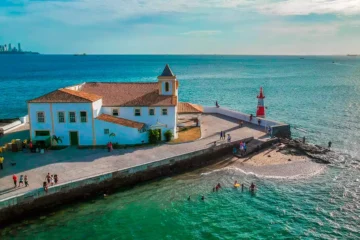
On June 26, 2009, the band Olodum held a tribute to Michael Jackson at Largo do Pelourinho in Salvador—the location where the artist filmed scenes for the music video “They Don’t Care About Us” in February 1996. Thirty musicians performed for the passersby.


Memories and emotion
Ubiraci Carvalho, known as Bira Jackson, aged 37, recalled the day of filming and paid tribute to the artist: “We are celebrating his life, not mourning his death.” Bira, who appears several times in the video as a percussionist, is recognised for his signature move of raising the drum — a trademark gesture that changed his life and even his stage name. “It was the most beautiful day of my life. I became known all over the world, just like Olodum,” he said, visibly moved.
Why was this meeting important?
- International visibility: Appearing in the music video brought Olodum to the attention of a global audience, raising the profile of Afro-Brazilian music.
- Cultural promotion: The collaboration showcased Afro-Brazilian rhythms, dances and traditions to audiences outside Brazil.
- Social and educational impact: The partnership helped to foster discussions on inequality and social justice, themes that feature prominently in the group’s work.
- Tourism and the local economy: The episode sparked interest in Salvador and Pelourinho as cultural destinations.
The importance of Olodum in Brazilian music
Olodum is renowned for its contribution to Afro-Brazilian culture, combining tradition with musical innovation. Key highlights include:
- Cultural richness: a blend of samba, maracatu and other Afro-Brazilian traditions.
- Social awareness: uses art to tackle racism and inequality.
- Musical innovation: blends traditional rhythms with rock, pop and reggae.
- Education and community: runs projects and workshops that help shape new generations.
- International recognition: collaborations with global artists have expanded his influence.
Video

Olodum com Michael Jackson em Salvador da Bahia

Publicações Relacionadas
History of Frevo: Memory, Urban Space and Identit
The History of Frevo: Origins, Evolution, Rhythms and Style

Jackson do Pandeiro: The King of Rhythm and his Music
The History of Forró: Origins and Development

History of Bossa Nova - When Bossa Nova conquered the world

João Gilberto: The Father of Bossa Nova

Alcione: The Journey of a Music Icon

Alceu Valença: A Journey Through His Music

Elba Ramalho: A Journey Through Music History

Carlinhos Brown: Biography of a Percussion Legend

Gal Costa: Biography of a Musical Icon

Biography of Dominguinhos, the accomplished accordionist
Forró Pé-de-Serrra: The Heart of Brazilian Music
The Evolution of Forró: A Musical Journey
Luiz Gonzaga's Impact on Brazilian Music Culture

Gilberto Gil: The Icon of World Music Today

Musical Style and History of Samba de Roda

Ivete Sangalo: The Biography of a Music Legend

History of Carnival in Salvador, Bahia

Dorival Caymmi and His Musical Legacy

Caetano Veloso and His Impact on Brazilian Culture

Daniela Mercury: Queen of Axé Music in Brazil

Maria Bethânia: A Legend in Brazilian Music History

Simone Bittencourt: The Journey of a Brazilian Music Star
Novos Baianos: A Journey Through Brazilian Music

The evolution of carnival: traditions and stories

Morais Moreira's Evolution from os Novos Baianos
Carmen Miranda: Icon of Brazilian Music History

Biography of Raul Seixas: Life and Musical Career
This post is also on:
 Português
  English
  Deutsch
  Español
  Français