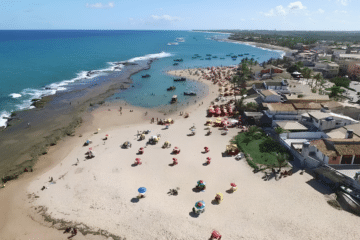
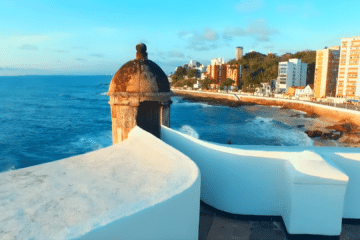
Just a few kilometres between Pipa and Baía Formosa, Sibaúma is a well-preserved coastal village in Rio Grande do Norte, perfect for those seeking peace and quiet, a connection with nature and authentic coastal scenery.
A bit of history
Sibaúma has its roots in a Quilombo community that was established near the point where the River Catú meets the sea. Over time, the village has grown up around small-scale fishing, and to this day maintains a simple way of life and a strong cultural identity inherited from its first inhabitants. These origins explain the ‘rustic’ atmosphere that attracts those seeking a more authentic experience than the hustle and bustle of neighbouring seaside resorts such as Pipa.
Highlights

Praia de Sibaúma (RN) — refúgio rústico no litoral sul potiguar
- Atmosphere: peaceful and largely unspoilt.
- Landscape: white sands, dunes, stretches of sandbank, coconut groves and low cliffs.
- Natural pools: these form at low tide — ideal for swimming and observing marine life.
- Community: linked to small-scale fishing and seafood-based cuisine.


The natural pools of Sibaúma
Formed by a barrier reef off the coast of the village, the pools appear when the tide goes out, creating pools of calm, clear water — ideal for observing fish and small crustaceans. As this phenomenon depends directly on the tide table, it is best to check the low tide times before planning your visit, to avoid arriving whilst the water is still high.
What to do
- Visit the natural pools (check the tide table).
- Walks along the seafront and photographs of the sunset over the cliffs.
- Buggy or quad bike tours to nearby beaches (Pipa, Camurupim, Barra de Tabatinga).
- Birdwatching and short walks along the sandbank trails.
- Try local dishes in the village’s bars and restaurants.
Practical tips
- Access: a car is recommended; the most common route is from Natal via the BR-101 and local roads (check road conditions on rainy days).
- Accommodation: guesthouses and basic facilities — bring essentials (water, sun cream, insect repellent).
- Safety: few lifeguard teams — watch out for currents and deeper areas.
- Best time to visit: the driest months (September to March) for calmer seas and bluer skies.
How to get there
Leaving Natal: around 1½ to 2 hours by car, depending on the route; follow the BR-101 southbound and take local roads to Nísia Floresta/Sibaúma.
Transport: private car or transfers; check with local companies for combined tours from Pipa or Natal.

Where to stay
Guesthouses and simple accommodation in the village and the surrounding area. For more options and greater comfort, consider staying in Pipa or Nísia Floresta.

Publicações Relacionadas
Beaches of Fernando de Noronha: A Visitor's Guide
7-Day Itinerary in Rio Grande do Norte: Natal, Pipa and Maracaja

Pipa Beach | Pipa Guide (Tibau do Sul) — Beaches and excursions

8-Day Itinerary in Rio Grande do Norte: Beaches and Culture

The North Coast of Rio Grande do Norte: an unmissable 8-day itinerary

Rio Grande do Norte Dunes: Buggy Tours and Adventure
Galinhos, RN: A Complete Tourist Guide — Beaches, Lighthouse and Dunes
Maracajaú Beach (RN): Parrachos and the Brazilian Caribbean

Tibau do Sul and Pipa Beach (RN): A Comprehensive Travel Guide

Spinner Dolphins in Fernando de Noronha: A Guide

São Miguel do Gostoso: A Windsurfing Paradise

Statue of Saint Rita of Cascia in Santa Cruz, RN: faith, religious tourism and devotion in RN
Rio do Fogo, RN: Beaches, Parrachos and Paradise-like Lagoons
Barra do Cunhaú: things to do, beaches, kitesurfing and nature in Rio Grande do Norte

Nísia Floresta (RN): Beaches and Lagoons of Rio Grande do Norte
The sinking of the corvette Ipiranga off Fernando de Noronha

Seridó, Brazil: towns, UNESCO Geopark, map and things to do
The North Coast of Rio Grande do Norte: A Guide to the Beaches

The Southern Coast of Rio Grande do Norte: Beaches and Lagoons

Natal, RN: Complete Travel Guide — Beaches, Dunes, and Nightlife

Rio Grande do Norte: Your Ultimate Travel Guide
Fernando de Noronha — A comprehensive guide to beaches, diving and surfing
The History of Fernando de Noronha: Geography and Heritage
Surfing in Fernando de Noronha — Guide to Spots, Season and Tip
Diving in the Fernando de Noronha Archipelago
How to get there, when to go and what to do in Fernando de Noronha?
This post is also on:
 Português
  English
  Deutsch
  Español
  Français