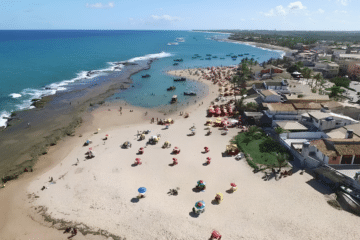
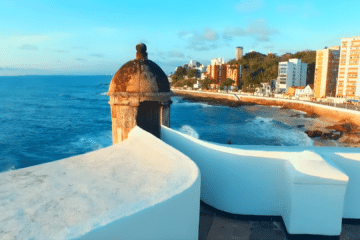
In recent years, Galinhos has emerged as a rising star in north-eastern Brazilian tourism, precisely because it offers deserted beaches and unspoilt landscapes — something increasingly rare on the Brazilian coast.

Videos – Main Attractions
Galinhos RN - Guia de Viagem02:14

Galinhos no RN - Guia Turismo05:52

Galinhos RN - Reportagem26:55
Galinhos RN - Encantos e Belezas11:11
Where it is and what makes Galinhos unique
Situated on a narrow peninsula on the northern coast of Rio Grande do Norte, the municipality of Galinhos covers an area of approximately 341 km² and, according to the 2022 IBGE Census, has a population of around 2,100 inhabitants. In some places, the peninsula is less than 500 metres wide between the Atlantic Ocean and the River Aratuá — which is why it is possible to walk from the river to the sea in just a few minutes.
The landscape features white dunes, salt flats, mangroves and both freshwater and saltwater beaches, all within the same small area.
Local transport: no cars on the streets
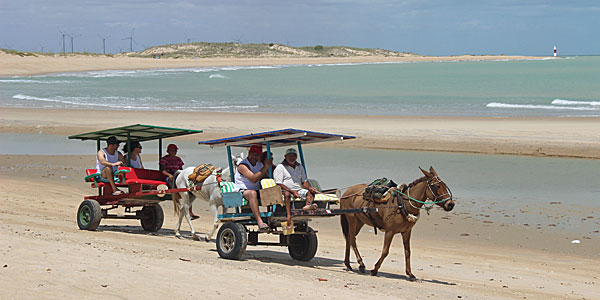
There are no ordinary cars on the roads within Galinhos. Transport is provided by horse-drawn carriages, buggies and the curious ‘donkey taxi’, which carries luggage and passengers along the village’s sandy streets.
Anyone arriving by car must leave their vehicle at the Pratagil car park and complete the journey by boat — a quick crossing of around 10 minutes, which is already part of the experience of reaching this remote destination.
The origin of the name Galinhos
The town’s name has a curious origin linked to fishing. In the past, the roosterfish was fished extensively, and the smaller specimens were nicknamed “galinhos” by local fishermen.
On the neighbouring beach, named Galos, the larger roosterfish were caught. This gave rise to the expression that led to the two names: “today we’ll fish at Galinhos, tomorrow at Galos”.
Galinhos Beaches
- Galinhos Beach: long and peaceful, with calm waters, ideal for relaxing and enjoying the sun without the hustle and bustle.
- Galos Beach: even more serene and less crowded, with calm waters and unspoilt scenery.
- Farol Beach: the town’s main attraction, home to the iconic Galinhos Lighthouse.
Galinhos Lighthouse: a landmark dating back almost a century
Built in 1931, the Galinhos Lighthouse was the eighth lighthouse to be erected in Rio Grande do Norte and, to this day, guides navigation in the region under the administration of the Brazilian Navy.

The original structure, made of iron truss, offered poor visibility and suffered severe corrosion from the sea air. Consequently, years later, the lighthouse underwent a refurbishment that included a masonry turret built on top of the original balcony — giving the structure the distinctive appearance it retains to this day. It is also one of the best spots in the region for admiring the sunset.
Mangroves: a nursery for marine life
The Galinhos mangrove is rich in biodiversity and serves as a nursery for crabs, oysters and birds such as white and blue herons. Amidst the vegetation, the white mounds formed by salt extracted directly from seawater in the region’s salt pans catch the eye.

Must-see excursions in Galinhos
- The natural pools at Ponta do Farol: one of the most highly recommended excursions. You get there by mule — the only way to reach the spot — and it’s well worth it to watch the sunset there.
- Buggy ride through the dunes: the most comfortable way to explore the region’s dunes, with a stop at the salt flats.
- Boat or canoe trip: a great way to explore the mangroves and the blue lagoons amongst the dunes.
- Vila de Galos: a small village where you can walk from the river to the sea in just a few minutes, in a peaceful and quiet setting.
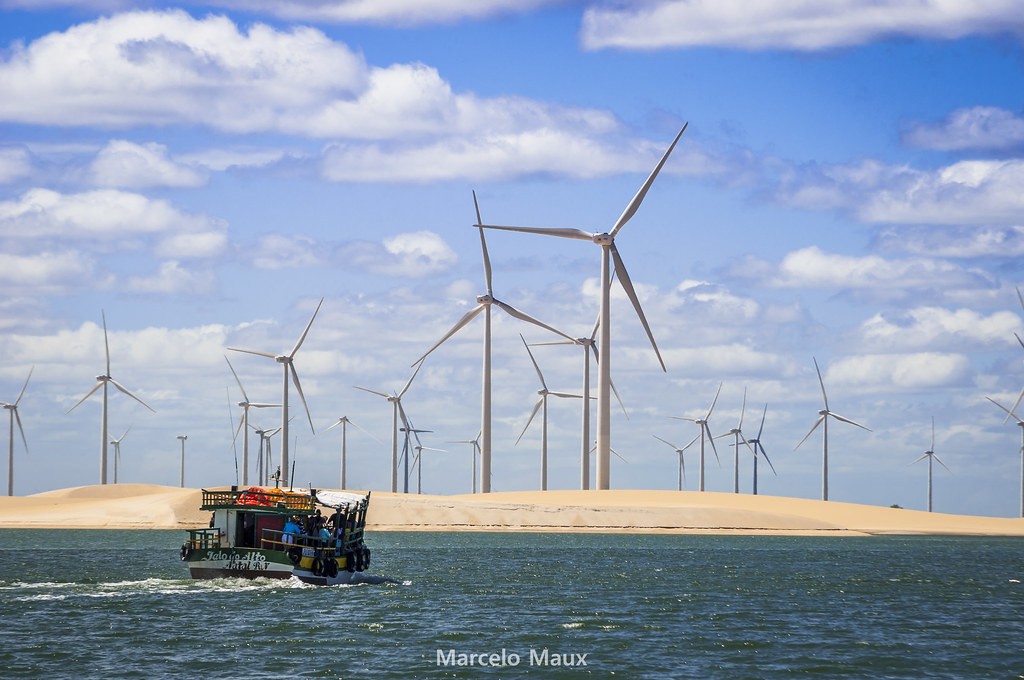
- Wind farm: the large wind turbines installed on the dunes near the town also make it a great spot for kitesurfing, thanks to the region’s strong and steady winds.


Best time to visit
Galinhos enjoys sunshine practically all year round and strong winds most of the time — features that appeal to both beachgoers and kitesurfers. The second half of the year, which is drier, is usually the peak season, whilst the first half brings more frequent rainfall and greener scenery around the mangrove swamp.
Where to stay
The village of Galinhos has simple, cosy guesthouses, most of which are small, which adds to the destination’s peaceful atmosphere. It is worth booking in advance, especially during the high season and over the New Year period, when the town sees a significant increase in visitors.
How to get to Galinhos

Leaving from Natal, the route follows the BR-406 to the village of Pratagil, covering around 160 km in approximately 2 hours 30 minutes, depending on traffic and road conditions.
The car park where conventional cars must be left is in Pratagil — from there onwards, access to Galinhos is only possible by boat (a crossing of around 10 minutes) or by 4×4 vehicle along the beach, depending on the tide.

Publicações Relacionadas
Sibaúma Beach — a rustic retreat on the southern coast of Rio Grande do Norte
Natal, RN: Complete Travel Guide — Beaches, Dunes, and Nightlife
Spinner Dolphins in Fernando de Noronha: A Guide
Barra do Cunhaú: things to do, beaches, kitesurfing and nature in Rio Grande do Norte
Maracajaú Beach (RN): Parrachos and the Brazilian Caribbean
The North Coast of Rio Grande do Norte: an unmissable 8-day itinerary
Seridó, Rio Grande do Norte: A Comprehensive Tourist Guide
Beaches of Fernando de Noronha: A Visitor's Guide
Rio do Fogo, RN: Beaches, Parrachos and Paradise-like Lagoons
Nísia Floresta (RN): Beaches and Lagoons of Rio Grande do Norte
Rio Grande do Norte Dunes: Buggy Tours and Adventure
Fernando de Noronha — A comprehensive guide to beaches, diving and surfing
The History of Fernando de Noronha: Geography and Heritage
Diving in the Fernando de Noronha Archipelago
Rio Grande do Norte: Your Ultimate Travel Guide
8-Day Itinerary in Rio Grande do Norte: Beaches and Culture
The North Coast of Rio Grande do Norte: A Guide to the Beaches
São Miguel do Gostoso: A Windsurfing Paradise
How to get there, when to go and what to do in Fernando de Noronha?
Statue of Saint Rita of Cascia in Santa Cruz, RN: faith, religious tourism and devotion in RN
Pipa Beach | Pipa Guide (Tibau do Sul) — Beaches and excursions
7-Day Itinerary in Rio Grande do Norte: Natal, Pipa and Maracaja
Tibau do Sul and Pipa Beach (RN): A Comprehensive Travel Guide
The Southern Coast of Rio Grande do Norte: Beaches and Lagoons
Surfing in Fernando de Noronha — Guide to Spots, Season and Tip
The sinking of the corvette Ipiranga off Fernando de Noronha
This post is also on:
 Português
  English
  Deutsch
  Español
  Français