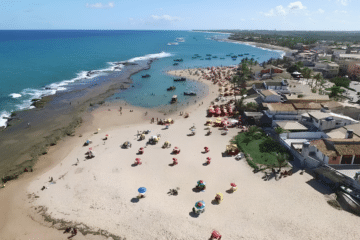
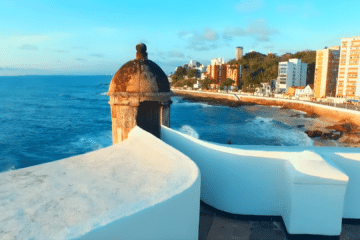
Nísia Floresta, on the southern coast of Rio Grande do Norte, is one of the region’s most popular destinations, as it combines beaches with warm waters, crystal-clear lagoons, cliffs, natural pools and areas of unspoilt nature.
The town attracts visitors looking for day trips from Natal, swimming in the sea, water sports, regional cuisine and the perfect settings for relaxation and photography.

Why is Nísia Floresta an important tourist destination?
The town forms part of the tourist route along the southern coast of Rio Grande do Norte and stands out for its combination of natural beauty and easy access from Natal. It is situated approximately 43 km from the capital of Rio Grande do Norte, with the journey mainly taking place along the Rota do Sol.
As well as its beaches, the municipality is known for its lagoons, its traditional handicrafts and historical sites linked to the founding of the former village of Papary.
A tribute to Nísia Floresta Brasileira Augusta
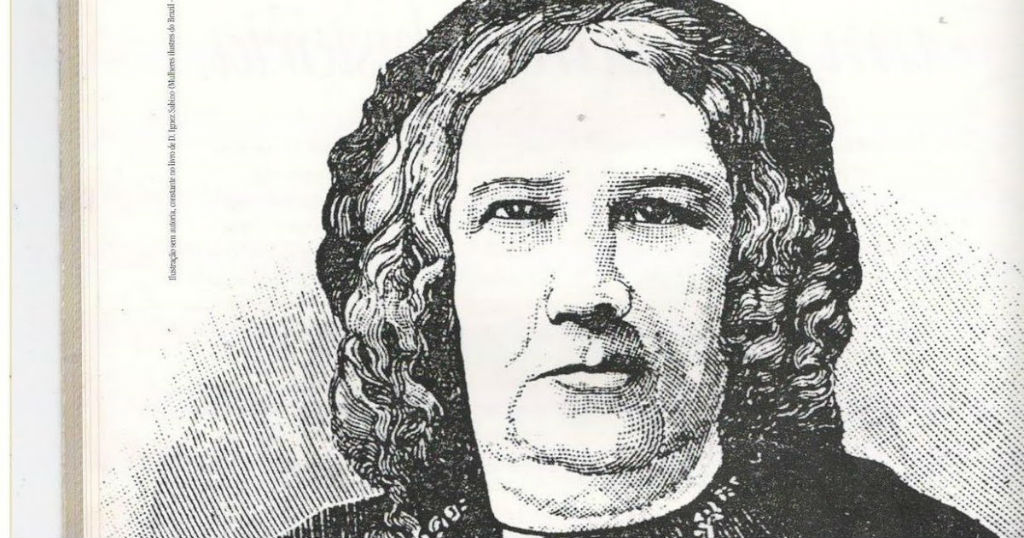
The name of the municipality pays tribute to the writer, educator and thinker Nísia Floresta Brasileira Augusta (1810–1885), the pseudonym of Dionísia Gonçalves Pinto, who was born at Sítio Floresta and was one of the leading figures in the defence of women’s rights and women’s education in Brazil.
Recognised as a pioneer of emancipatory thought in the country, Nísia Floresta has become a symbol of cultural and historical significance for the municipality.
The history of Nísia Floresta and the origin of its name
The town’s history dates back to the 18th century, when the settlement of Papary began to take shape and construction of the Church of Nossa Senhora do Ó began. The place was known as Papary (also spelled Papari) and had its name changed on 23 December 1948, by state law, to Nísia Floresta, in honour of the writer from Rio Grande do Norte.
The old settlement preserves important historical features, particularly in the central area, where there are traditional buildings and landmarks dating from the colonial period.

Video: beaches and lagoons in Nísia Floresta, RN

Praias de Nísia Floresta03:30

Lagoas de Nísia Floresta02:49
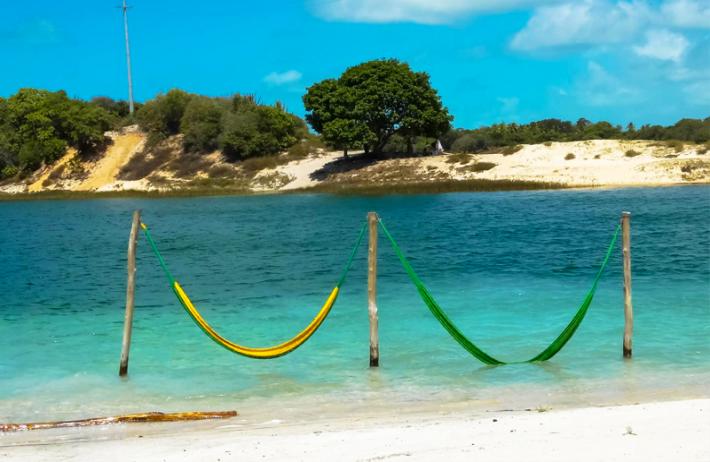
Lagoa de Alcaçuz em Nísia Floresta - RN04:36
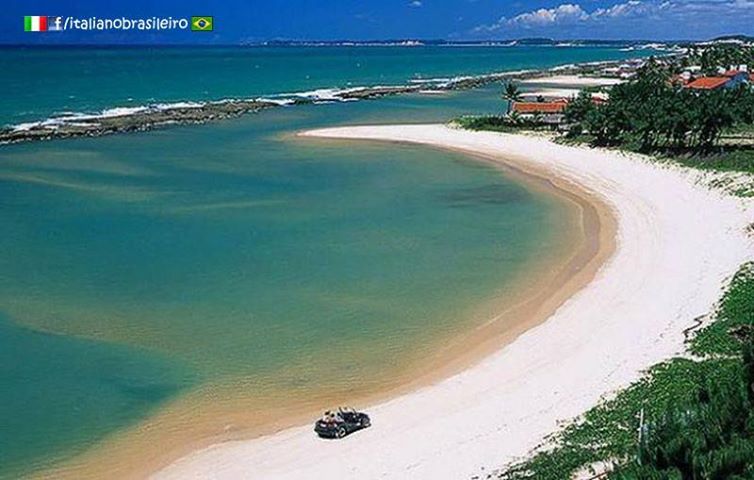
Praia de Tabatinga em Nísia Floresta - RN01:17
Nísia Floresta a primeira educadora feminista do Brasil05:15
Nísia Floresta RN - Guia de Turismo24:40
Take a look at the tourist map of Rio Grande do Norte
Things to do in Nísia Floresta
Among the main attractions of Nísia Floresta, RN are beaches with reefs and natural pools, lagoons for swimming and leisure, viewing points, cliffs, buggy rides and experiences linked to local crafts.
1. Praia de Barreta
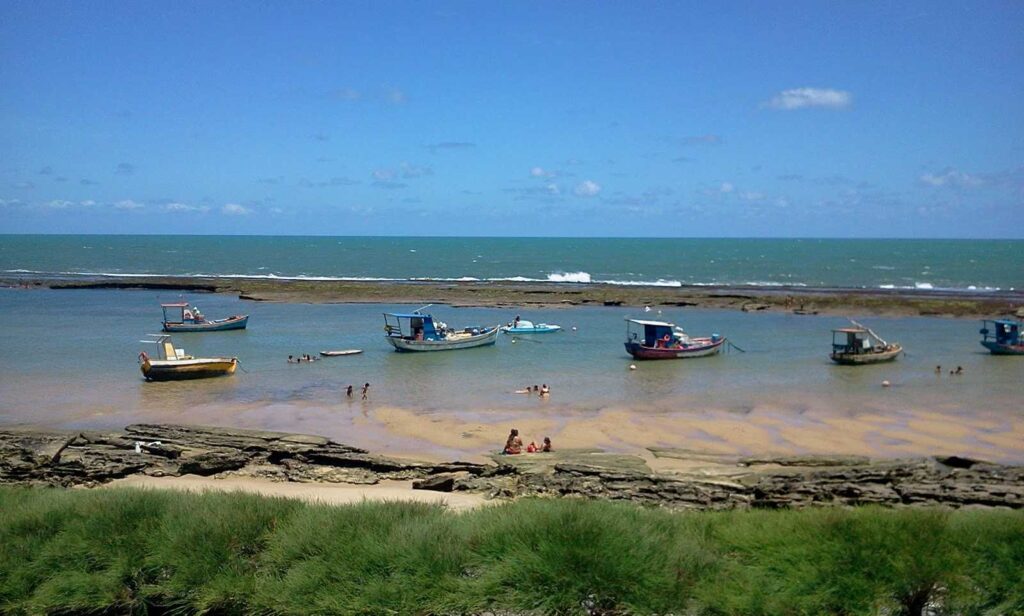
Barreta Beach is one of the best-known beaches in Nísia Floresta. Its natural pools, which form at low tide, make swimming there a more peaceful and enjoyable experience, especially for families with children.
The landscape combines the sea, a stretch of sand and reefs, which help to create sheltered, shallow areas in some places.

2. Búzios Beach
Búzios Beach is one of the busiest in the region and tends to attract visitors looking for leisure facilities, beach huts, kiosks and restaurants.
The sea is ideal for swimming, as well as activities such as beach sports and walks along the shore.

3. Camurupim Beach
Camurupim Beach is famous for its long stretch of sand and the rock formations that create natural pools at low tide. The spot is very popular with those looking for calm waters and beautiful scenery.
It is also a popular stop on buggy and jeep tours along the south coast.

4. Pirambúzios Beach
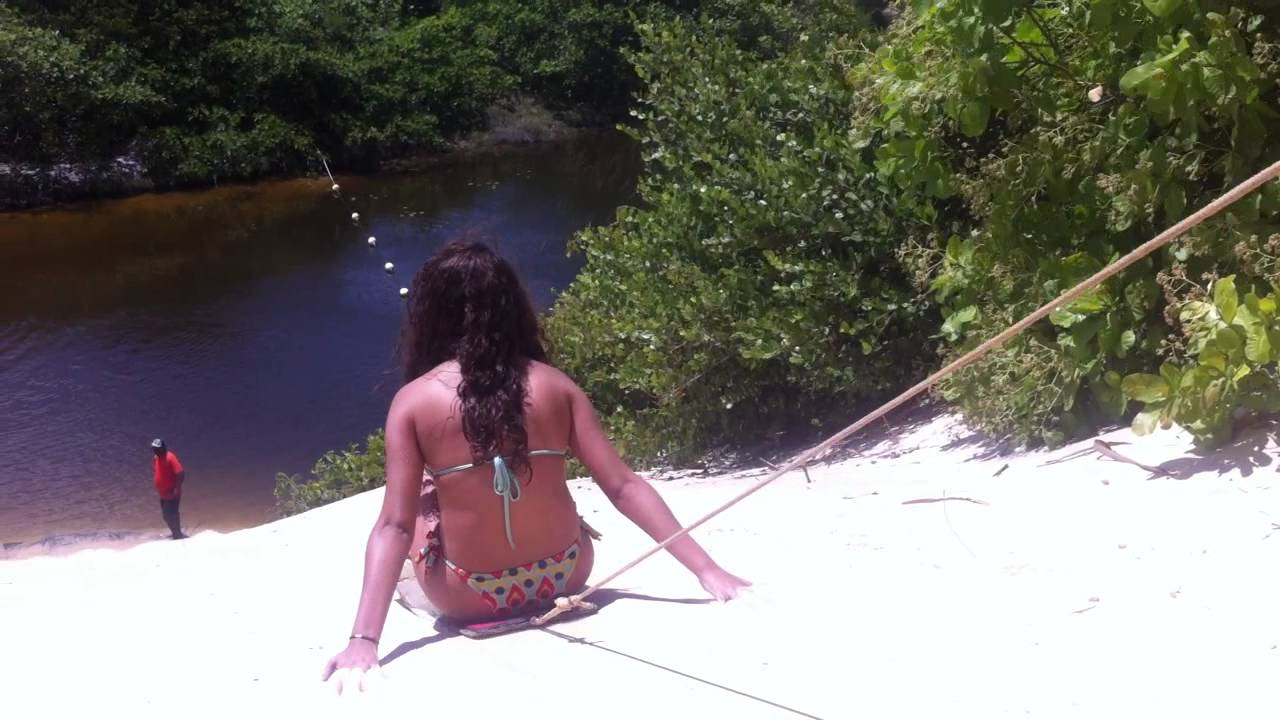
Pirambúzios Beach is a quieter option and very popular with those seeking to get close to nature. Where the river meets the sea, a unique landscape is created, with shallow waters in some places and plenty of space to relax.
At low tide, small pools of water and natural pools appear, making the scenery even more attractive.

5. Pirangi do Sul Beach
One of the best-known beaches along the Nísia Floresta coastline, Pirangi do Sul Beach is very popular with groups of friends, families and visitors looking for calm waters and good dining options.
The site features stalls, restaurants and easy access for those travelling around the Natal metropolitan area.

6. Tabatinga Beach
Tabatinga Beach is one of the iconic sights of the southern coast of Rio Grande do Norte. Its cliffs, golden sands and natural viewpoint attract many visitors throughout the year.
The region is also known for dolphin watching, particularly in the late afternoon, as well as for good surfing conditions in some areas.

7. Barreta Beach Waterfalls
The waterfalls at Praia de Barreta are a spectacular sight that occurs when the tide rises and the water flows over the reef barrier, creating an effect similar to small waterfalls cascading over the rocks.
It’s one of the most beautiful spots on the beach and makes for some excellent photos.

The Nísia Floresta Lakes
As well as its beaches, Nísia Floresta is home to one of the best-known groups of lagoons in Rio Grande do Norte. There are more than 20 lagoons scattered throughout the municipality and the surrounding area, making it a major attraction for swimming, leisure and family outings.
Among the most visited are:
- Arituba Lake
- Bonfim Lake
- Carcará Lake
- Boágua Lake
- Alcaçuz Lake
- Youth Lake


How to get to Nísia Floresta from Natal
Access to the municipality is quick and easy. Nísia Floresta is situated about 43 km from Natal and can be reached via the Rota do Sol or via inter-municipal roads linking the capital to the south coast.
The journey can be made by hire car, buggy on organised tours or public transport, depending on the chosen itinerary.
Water sports and activities in Nísia Floresta
The region’s beaches and lagoons are ideal for kitesurfing, windsurfing, kayaking and relaxing in calm waters. Some lagoon areas are also very popular with families with children as the waters offer a safer environment for swimming.
Cultural and historical attractions in Nísia Floresta
Local crafts
The municipality is also known for its handcrafted products, particularly bobbin lace, cushion lace and labyrinth lace.
- Bobbin lace or pillow lace
The largest concentration of craftswomen practising this technique is in the Alcaçuz Community, near the lagoon of the same name. - Labyrinth lace
The Campo de Santana Community, in the countryside, is home to a significant production of labyrinth lace, a tradition preserved for generations.


Historical heritage and places of interest
- Century-old houses
The old street layout of Papary preserves important historic buildings, notably the Parish Church of Nossa Senhora do Ó. - Papary Railway Station
Built by the British and completed in 1881, it was listed as a State Heritage Site in Rio Grande do Norte on 6 December 1984 and today houses the restaurant Marina’s Camarões. - Dolphin Viewpoint
Situated on the cliffs of Tabatinga, it is an excellent spot for viewing the coastline and, at certain times of year, dolphins in the late afternoon. - Pedra Oca
A cave formed by the action of the water; it can be visited at low tide and is one of the coastal area’s natural attractions. - Church of Nossa Senhora do Ó
Construction began in 1703 and was completed in 1755; it is one of the oldest and most important historical monuments in Nísia Floresta.


Tips for making the most of Nísia Floresta
To make the most of your visit, it’s best to check the tide table, as many attractions are at their most beautiful and safe at low tide. It’s also worth including at least one day for beaches and another for lagoons in your itinerary, if you’re staying for a longer period.
Those seeking peace and quiet tend to prefer less crowded lagoons and beaches, such as Pirambúzios or Boágua. Meanwhile, those looking for more amenities will find better options in places such as Búzios and Pirangi do Sul.
Frequently Asked Questions about Nísia Floresta
What is the distance between Natal and Nísia Floresta?
Nísia Floresta is about 43 km from Natal, a journey of approximately 50 to 60 minutes by car along the Rota do Sol.
When is the best time to visit the beaches at Nísia Floresta?
The beaches can be visited all year round, but the months from September to February – the driest period in Rio Grande do Norte – usually offer more sunshine and calmer seas. To see the natural pools, it is best to plan your visit for low tide, checking the tide table before you go.
Are the beaches at Nísia Floresta safe for children?
Yes. Beaches such as Barreta, Camurupim and Pirambúzios form natural pools protected by reefs at low tide, making them safer for families with children to swim in. Even so, it is always worth checking the sea conditions on the day of your visit.
Do you need a 4×4 or a buggy to visit the beaches?
It isn’t compulsory. Beaches such as Búzios and Pirangi do Sul are easily accessible by ordinary car. Stretches such as Camurupim, on the other hand, are best explored on buggy or jeep tours along the sandy shore.
Which lakes in Nísia Floresta are most worth visiting?
Of the more than 20 lakes in the municipality, the most popular are Lagoa de Arituba, Lagoa do Bonfim, Lagoa de Alcaçuz and Lagoa da Juventude, all of which have good facilities for swimming and leisure activities.
What is there to see at Papary Railway Station?
The old railway station, built in 1881 and listed as a state heritage site in 1984, now houses the restaurant Marina’s Camarões — a great place to learn about local history and sample the regional cuisine.
Conclusion
Nísia Floresta is a well-rounded destination in Rio Grande do Norte, combining beautiful beaches, lagoons, history, crafts and outdoor activities. Whether for a day trip from Natal or a more relaxing break, the town offers attractions to suit all types of visitor.

Publicações Relacionadas
Sibaúma Beach — a rustic retreat on the southern coast of Rio Grande do Norte

Beaches of Fernando de Noronha: A Visitor's Guide
7-Day Itinerary in Rio Grande do Norte: Natal, Pipa and Maracaja

Pipa Beach | Pipa Guide (Tibau do Sul) — Beaches and excursions

8-Day Itinerary in Rio Grande do Norte: Beaches and Culture

The North Coast of Rio Grande do Norte: an unmissable 8-day itinerary

Rio Grande do Norte Dunes: Buggy Tours and Adventure
Galinhos, RN: A Complete Tourist Guide — Beaches, Lighthouse and Dunes
Maracajaú Beach (RN): Parrachos and the Brazilian Caribbean

Tibau do Sul and Pipa Beach (RN): A Comprehensive Travel Guide

Spinner Dolphins in Fernando de Noronha: A Guide

São Miguel do Gostoso: A Windsurfing Paradise

Statue of Saint Rita of Cascia in Santa Cruz, RN: faith, religious tourism and devotion in RN
Rio do Fogo, RN: Beaches, Parrachos and Paradise-like Lagoons
Barra do Cunhaú: things to do, beaches, kitesurfing and nature in Rio Grande do Norte
The sinking of the corvette Ipiranga off Fernando de Noronha

Seridó, Brazil: towns, UNESCO Geopark, map and things to do
The North Coast of Rio Grande do Norte: A Guide to the Beaches

The Southern Coast of Rio Grande do Norte: Beaches and Lagoons

Natal, RN: Complete Travel Guide — Beaches, Dunes, and Nightlife
Rio Grande do Norte: Your Ultimate Travel Guide
Fernando de Noronha — A comprehensive guide to beaches, diving and surfing
The History of Fernando de Noronha: Geography and Heritage
Surfing in Fernando de Noronha — Guide to Spots, Season and Tip
Diving in the Fernando de Noronha Archipelago
How to get there, when to go and what to do in Fernando de Noronha?
This post is also on:
 Português
  English
  Deutsch
  Español
  Français