The monument attracts thousands of visitors every year, particularly pilgrims, the devout and tourists keen to experience the power of faith that drives the city. As well as the grandeur of the monument itself, Santa Cruz stands out for bringing together spirituality, culture, tradition and scenery in a single place.
The religious complex surrounding the statue has become a national landmark and has established the municipality as a major destination for religious tourism in Brazil.

Video on religious tourism in Santa Cruz
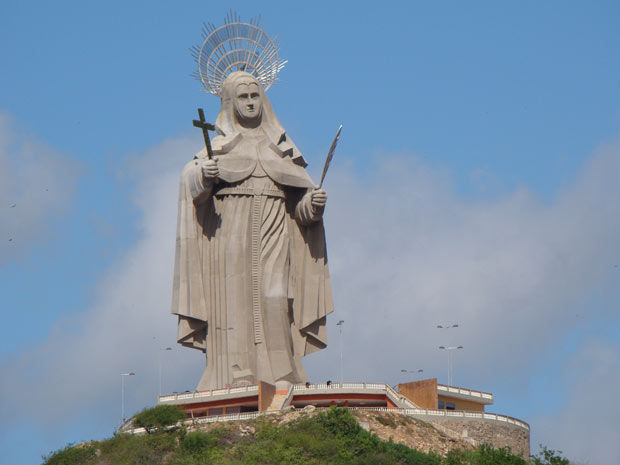
Cidade de Santa Cruz no RN e Santa Rita de Cássia04:38
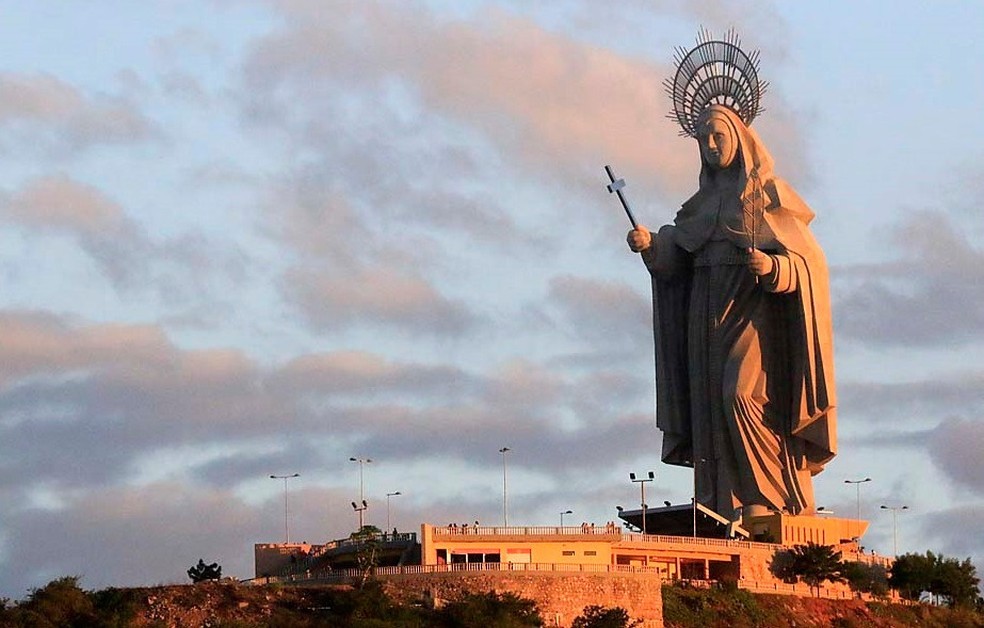
Estátua de Santa Rita de Cássia RN01:21
Santa Cruz no RN02:45
Cidade de Santa Cruz no RN02:03
Where is the statue of Saint Rita of Cascia?
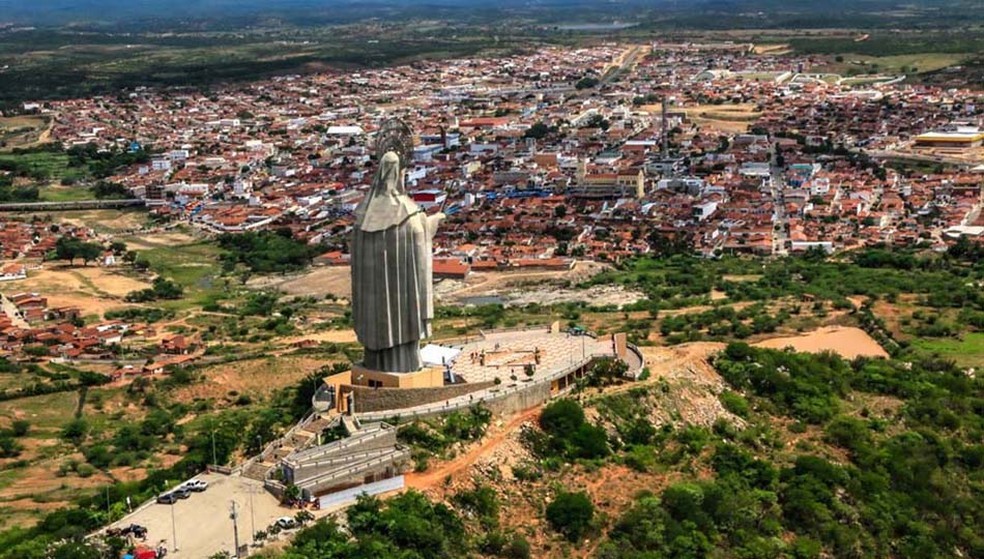
The statue is situated in Santa Cruz, in Rio Grande do Norte, on the side of the BR-226, on high ground near the River Trairi, some 120 km from Natal. The monument’s strategic location means it can be seen from various points in the city and the surrounding region, emphasising its grandeur and its symbolic importance to the faithful.
The site was designed to welcome visitors with suitable facilities, combining devotion and tourism within a single space. As a result, the religious complex has become one of the main tourist attractions in the Seridó and Trairi regions of Rio Grande do Norte.

Devotion to Saint Rita and the origins of the town
The connection between Santa Cruz and Saint Rita of Cascia goes back a long way: the town’s founders built the first chapel in honour of the saint in 1825, and she has been the town’s patron saint ever since. This centuries-old devotion is the historical root which, almost two centuries later, gave rise to the monument that has made the town famous throughout Brazil.
When the statue was unveiled
The building was inaugurated on 26 June 2010, following years of construction and campaigning in support of the project. The initiative marked a milestone for Santa Cruz and the entire region, further strengthening devotion to Saint Rita of Cascia, the city’s patron saint.
Since then, the monument has attracted visitors all year round, with the greatest numbers on religious holidays and during periods of pilgrimage, particularly during the festival in honour of the patron saint.
Features of the Statue of Saint Rita of Cascia
Standing 56 metres tall, the statue is one of the largest Catholic statues in the world and is notable for its grandeur. The monument was built using materials such as clay, concrete and a crown of brushed steel, creating a work of great visual and symbolic impact.
Construction began in November 2007 and involved an investment of approximately 6 million reais. The project was designed to celebrate popular faith and transform Santa Cruz into a leading destination for religious tourism in the North-East.
Structure of the monument and the religious complex
As well as the statue, the site offers a range of visitor facilities, including:
- Auditorium with a capacity of 225 people;
- Restaurant catering for tourists and pilgrims;
- Chapel for moments of prayer and religious services.
This combination makes the visit more fulfilling and welcoming, allowing the space to be used for both religious services and tourist and cultural activities.
It is worth noting that work is currently under way on a cable car that will link the centre of Santa Cruz directly to the Sanctuary, making it easier for visitors to get there. The project, budgeted at around R$ 12.6 million, began in 2014 and is still under construction.
Parish Church of Santa Rita de Cássia in Santa Cruz
The town’s main church is the Parish Church of Santa Rita de Cássia, a central hub of local religious life. It plays a key role in the local community’s devotion and in the town’s liturgical calendar, particularly during the festivities in honour of the patron saint.
The church and the statue complement one another as symbols of Santa Cruz’s identity. Whilst the parish church represents the community’s religious tradition, the monument reinforces the national significance of the devotion to Saint Rita of Cascia.

The religious and cultural significance of the mother church
More than just a Catholic church, the Parish Church of Santa Rita de Cássia is a place of gathering, prayer and celebration for local residents and visitors alike. Its significance extends beyond its architecture or liturgical function: it is directly linked to the town’s history and its emotional heritage.
Throughout the year, the church hosts Masses, novenas, special celebrations and events linked to the religious calendar, keeping alive the tradition that characterises the town of Santa Cruz.
Religious tourism in Santa Cruz, RN
Religious tourism is one of the main economic and cultural driving forces in Santa Cruz. The presence of the statue, the parish church and other places of worship has turned the town into a must-visit destination for anyone seeking experiences linked to the Catholic faith.
This initiative benefits hotels, restaurants, local businesses and the service sector in general, whilst also strengthening the local population’s sense of belonging. The city has established itself as one of the main pilgrimage centres in Rio Grande do Norte.

Morro do Carmelo as a place of pilgrimage
Another important site in the city’s religious tradition is Morro do Carmelo, known for its route of around 7 km and for being a place of pilgrimage associated with popular faith. The route was established by Friar Damião de Bozzano and continues to attract the faithful seeking prayer, sacrifice and devotion.
This route further enhances the spiritual dimension of Santa Cruz, making the town a veritable pilgrimage route for pilgrims from various regions of the country.


Facilities for tourists and pilgrims
As visitor numbers have grown, Santa Cruz has begun to invest in infrastructure and organisation to better accommodate visitors. The town now offers accommodation, dining and other services that cater both to those who come for religious pilgrimage and to those who visit the monument as a tourist attraction.
This has enhanced the visitor experience, transforming the destination into a benchmark for well-organised religious tourism in the North-East.
Feast of the patron saint, Saint Rita of Cascia
The traditional festival in honour of the patron saint, Saint Rita of Cascia takes place on 22 May and is one of the most important events in Santa Cruz’s religious calendar. The celebrations include masses, processions, novenas and a packed programme of religious events that brings together locals and visitors alike.
During this period, the city welcomes more than 60,000 pilgrims and devotees, which boosts tourism and stimulates the local economy. It is a time when religion, popular culture and community identity come together in a striking way.
The tradition that brings the city to life
The feast day of the patron saint is not only a religious observance, but also an event that reaffirms the importance of Saint Rita of Cascia in the lives of the local people. The celebration keeps an ancient tradition alive and helps to preserve the spirit of devotion that characterises Santa Cruz.
This link between faith and the city is one of the main reasons why Santa Cruz has gained recognition throughout Brazil.
Conclusion
The Statue of Saint Rita of Cascia in Santa Cruz, RN is much more than just a monument. It symbolises faith, identity, devotion and development for the municipality and the entire region. Together with the Parish Church of Saint Rita of Cascia, Morro do Carmelo and the traditional festival in honour of the patron saint, the religious complex has established Santa Cruz as one of the most important destinations for religious tourism in Rio Grande do Norte.
For anyone wishing to discover a place where spirituality and culture go hand in hand, Santa Cruz is a must-visit.
Frequently Asked Questions about the Statue of Saint Rita of Cascia
How tall is the statue of Saint Rita of Cascia?
The statue is 56 metres tall and is regarded as one of the largest Catholic statues in the world.
When was the statue of Saint Rita of Cascia unveiled?
It was opened on 26 June 2010, following the start of construction in November 2007.
Where is the statue?
The monument is situated in Santa Cruz, in Rio Grande do Norte, on the side of the BR-226, about 120 km from Natal.
What is the main church in Santa Cruz, RN?
The town’s main church is the Parish Church of Santa Rita de Cássia.
When is the feast day of the patron saint?
The festival in honour of the patron saint takes place on 22 May, the feast day of Saint Rita of Cascia, attracting more than 60,000 pilgrims.
Are there any plans to make it easier to access the statue?
Yes. A cable car is currently under construction that will link the city centre directly to the Sanctuary, making it easier to reach the monument. The project is estimated to cost around R$ 12.6 million.

Publicações Relacionadas
7-Day Itinerary in Rio Grande do Norte: Natal, Pipa and Maracaja
Rio Grande do Norte Dunes: Buggy Tours and Adventure
Fernando de Noronha — A comprehensive guide to beaches, diving and surfing
The Southern Coast of Rio Grande do Norte: Beaches and Lagoons
The North Coast of Rio Grande do Norte: an unmissable 8-day itinerary
How to get there, when to go and what to do in Fernando de Noronha?
Rio do Fogo, RN: Beaches, Parrachos and Paradise-like Lagoons
São Miguel do Gostoso: A Windsurfing Paradise
Barra do Cunhaú: things to do, beaches, kitesurfing and nature in Rio Grande do Norte
8-Day Itinerary in Rio Grande do Norte: Beaches and Culture
Surfing in Fernando de Noronha — Guide to Spots, Season and Tip
Sibaúma Beach — a rustic retreat on the southern coast of Rio Grande do Norte
Pipa Beach | Pipa Guide (Tibau do Sul) — Beaches and excursions
Tibau do Sul and Pipa Beach (RN): A Comprehensive Travel Guide
Natal, RN: Complete Travel Guide — Beaches, Dunes, and Nightlife
Seridó, Rio Grande do Norte: A Comprehensive Tourist Guide
Diving in the Fernando de Noronha Archipelago
The sinking of the corvette Ipiranga off Fernando de Noronha
Nísia Floresta (RN): Beaches and Lagoons of Rio Grande do Norte
Spinner Dolphins in Fernando de Noronha: A Guide
Beaches of Fernando de Noronha: A Visitor's Guide
Maracajaú Beach (RN): Parrachos and the Brazilian Caribbean
The North Coast of Rio Grande do Norte: A Guide to the Beaches
Galinhos, RN: A Complete Tourist Guide — Beaches, Lighthouse and Dunes
Rio Grande do Norte: Your Ultimate Travel Guide
The History of Fernando de Noronha: Geography and Heritage
This post is also on:
 Português
  English
  Deutsch
  Español
  Français