Explore the beaches of Fernando de Noronha with this practical guide, which provides access information, details of trails and the best spots for snorkelling and surfing. It also offers conservation guidelines and local tips for enjoying the island safely while respecting nature.

Video about the beaches of Fernando de Noronha.

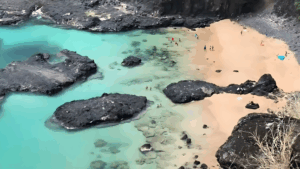
Baía dos Porcos em Fernando de Noronha28:57
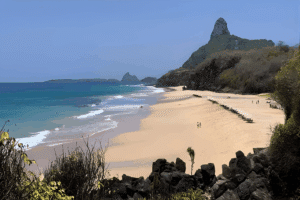
Praia da Cacimba do Padre em Fernando de Noronha15:07
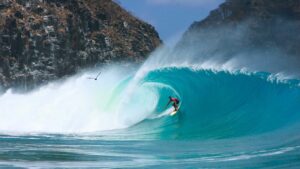
Surf na Praia da Cacimba do Padre em Fernando de Noronha01:04:52
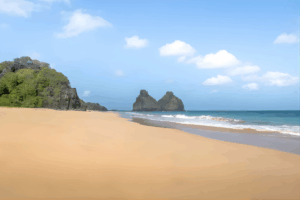
Praia do Bode em Fernando de Noronha03:20:46
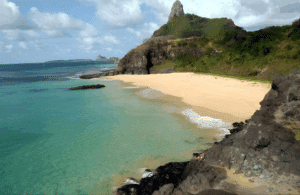
Praia do Americano em Fernando de Noronha01:35:46
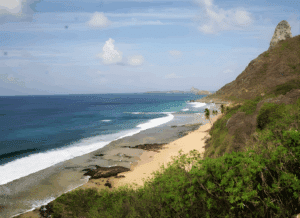
Praia do Boldró em Fernando de Noronha41:52
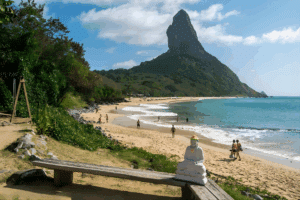
Praia da Conceição em Fernando de Noronha16:16
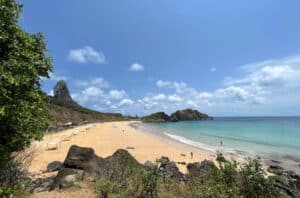
Praia do Meio em Fernando de Noronha06:55
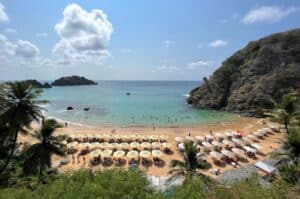
Praia do Cachorro em Fernando de Noronha01:23:24
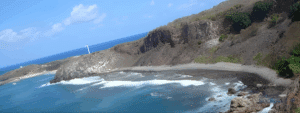
Praia da Biboca em Fernando de Noronha40:53
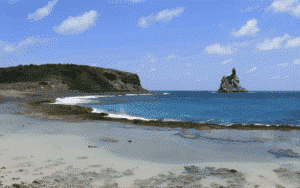
Praia de Atalaia em Fernando de Noronha20:07
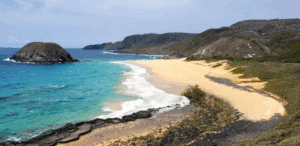
Praia do Leão em Fernando de Noronha11:14
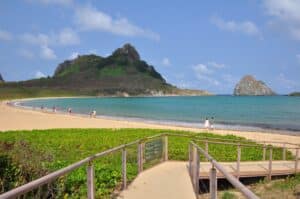
Praia do Sueste em Fernando de Noronha41:30
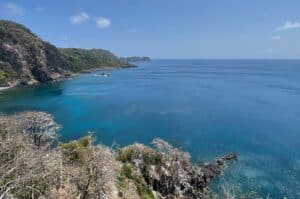
Baía dos Golfinhos em Fernando de Noronha49:43
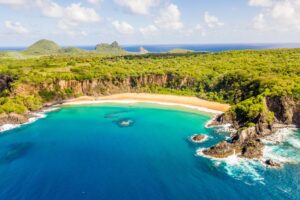
Baía do Sancho em Fernando de Noronha18:40
Map showing the location of the beaches around the Inner Sea in Fernando de Noronha.

1. Baía dos Porcos
The Baía dos Porcos is a small cove in Fernando de Noronha which is renowned for its spectacular rock formations, including the Morro Dois Irmãos, as well as its crystal-clear waters which form natural pools at low tide.
It is a popular place for photography and for observing marine life while snorkelling, provided the sea is calm.
Access
- You can access it via a short trail from the road near the Mirante dos Dois Irmãos viewpoint. There are stairs and rocky sections along the way.
- In favourable conditions, it is also possible to arrive by boat.
- Although the location is relatively easy to access, the route can be steep in places.
2. Cacimba do Padre Beach

There is extensive sand and strong waves.
Cacimba do Padre is famous for surfing, with the best waves occurring in winter. It is also close to the trail leading to Baía dos Porcos.
Access and setting
You can reach the area by car and there is parking available, with a short walk to the beach. Morro Dois Irmãos, one of Fernando de Noronha’s most iconic landmarks, stands opposite.
Trail to Baía dos Porcos
There is a short trail with rocky sections in the left corner of Cacimba that leads to Baía dos Porcos. This route is safer at low tide. This small, sheltered bay is a popular spot for taking photos, as well as for snorkelling and free diving.
Surfing season
Cacimba do Padre is the island’s main surfing spot, particularly during the first half of the year when the waves are at their best. This attracts many surfers and visitors.

3. Bode Beach

Praia do Bode is a small, secluded cove in Fernando de Noronha that is prized for its tranquil landscape and pristine environment. Characterised by a narrow strip of sand, rocky outcrops and generally clear waters, it is an ideal location for free diving and snorkelling when the tide is low.
Access
Access is usually via a trail from the island’s secondary roads. There are no tourist facilities, such as toilets, kiosks or lifeguards, so it is advisable to bring water, sunscreen and appropriate footwear for walking on steep or rocky terrain.
4. Americano Beach

Praia do Americano is a secluded cove in Fernando de Noronha with a medium-to-narrow strip of sand, rocky outcrops and clear waters.
It is less crowded than the more famous beaches and offers a more secluded atmosphere. When the tide is low, there is good visibility for snorkelling. Access:
Access is via trails and side paths from the nearby village and track. There are no kiosks or lifeguards. Steep and rocky sections require suitable footwear.
5. Boldró Beach

Boldró Beach, a small cove in Fernando de Noronha, is renowned for its stunning views of Morro do Pico and its privileged location for watching the sunset.
There is a short stretch of sand and some rocky sections, as well as clear waters. The conditions are good for swimming and snorkelling at low tide.
Access
It is easy to access by road, and it is a short walk from the Boldró area. There is a viewpoint and lay-bys nearby, as well as access to the trail that leads to other beaches on the south coast.
6. Praia da Conceição

Conceição Beach in Fernando de Noronha is one of the island’s most traditional beaches. It is a long stretch of white sand with an emerald sea, and it is ideal for swimming when the sea is calm.
It is close to both the village and the airport runway, and is easily accessible by road with parking available nearby.
Map showing the location of the beaches around the Inner Sea in Fernando de Noronha.

7. Praia do Meio

Praia do Meio is a small cove located between Praia da Conceição and Praia do Cachorro in Fernando de Noronha. It boasts a short stretch of sand and an emerald-coloured sea.
It is very close to both the town centre and the airport runway, and can be easily accessed on foot from the village.
8. Cachorro Beach

Praia do Cachorro is one of Fernando de Noronha’s central beaches. It is small and urban, located near the village and the airport runway. It has a short stretch of sand and rocky sections, and the water is usually calm on favourable days.
Access
It is very easy to access on foot from the centre, as there is a staircase that leads directly to the beach. It is also close to Conceição and Meio beaches.
9. Biboca Beach

Biboca Beach is a small, secluded cove in Fernando de Noronha with a narrow strip of sand and rocky areas.
The water is usually clear and there are natural pools at low tide, making it an ideal place for snorkelling and observing marine life when the sea is calm.
Access
Access is usually via a trail or secondary path. There is no formal infrastructure, such as toilets, kiosks or lifeguards, so appropriate footwear and sunscreen are recommended.
10. Praia do Porto de Santo António

Porto de Santo Antônio Beach, sometimes referred to as simply Porto, is located in the north of Fernando de Noronha, near the boat mooring area of Porto de Santo Antônio, which is accessible by road.
It is a medium-to-narrow, sandy cove with rocky sections, and the sea is generally rough depending on the conditions. The water is clear and visibility is good on calm days.
Access
Access is via a paved road near the port, which is easy to reach by car or on foot from nearby locations. Please note that there may be boat traffic and port facilities in the area.
Map showing the beaches of the Open Sea in Fernando de Noronha.

11. Atalaia Beach

Atalaia Beach (also known as Piscinas do Atalaia) is one of the most iconic images of Fernando de Noronha: a natural pool formed in a rocky area with crystal-clear water teeming with marine life, including fish, corals, sea urchins and sometimes turtles, and offering excellent visibility for snorkelling and photography.
Access
Access is strictly controlled and only permitted through monitored and scheduled visits. There is a daily visitor limit and a visitation fee, both of which are regulated by ICMBio/park authorities.
The meeting point for the guided tour is reached via a trail/staircase from the road, so it is recommended that you arrive punctually.
12. Sueste Beach

Sueste Beach, located on the southeast coast of Fernando de Noronha, is renowned for its calm waters, excellent snorkelling spots, and frequent sea turtle sightings.
It is also an ideal starting point for diving and observing marine life in rocky areas and on reefs.
Access
It is possible to access the site by road, with nearby parking, or by walking from central locations. Short trails lead to the sandy strip and observation points.
13. Leão Beach

Praia do Leão is one of the largest and best-preserved beaches in Fernando de Noronha. It boasts an extensive stretch of golden sand and cliffs at either end, and the sea can range from calm to quite rough.
It is renowned for being an important nesting site for sea turtles and for its untouched wilderness.
Access
There is access by road with nearby parking and a short trail to the beach. During the turtle breeding season, access may be controlled or restricted by the Marine National Park.
14. Dolphin Bay

Dolphin Bay, located in Fernando de Noronha, is a picturesque cove boasting white sands and green cliffs. It is renowned for its frequent spinner dolphin sightings, particularly at dawn, when they often swim close to the coast.
The site offers an ideal observation and photography spot, with a short trail and access ramp providing a natural viewpoint.
As this is a protected area, you must not make direct contact with the animals. Keep your distance and remain silent so as not to disturb them.
To preserve the fauna and flora, access to the beach is restricted at certain times. Please check before you go.
The bay is impressive, offering scenic beauty and frequent encounters with dozens of dolphins in a virtually untouched environment.
15. Sancho Bay

Sancho Bay is widely regarded as one of the most beautiful beaches in the world. This secluded cove is sheltered by cliffs and boasts white sand and crystal-clear waters with excellent visibility. The area is teeming with marine life, including fish, turtles and corals, making it an ideal location for underwater photography.
Access
The main access route is via the top of the cliffs, followed by a descent down a steep staircase with stone walls on either side (this section has steps and a metal walkway).
Alternative: disembark by boat when the sea is calm (authorised vessels only). Access may be controlled by the Marine National Park, so please follow the signs and instructions.

Publicações Relacionadas
Sibaúma Beach — a rustic retreat on the southern coast of Rio Grande do Norte
The sinking of the corvette Ipiranga off Fernando de Noronha
Fernando de Noronha — A comprehensive guide to beaches, diving and surfing
The History of Fernando de Noronha: Geography and Heritage
The North Coast of Rio Grande do Norte: A Guide to the Beaches
Pipa Beach | Pipa Guide (Tibau do Sul) — Beaches and excursions
Rio Grande do Norte: Your Ultimate Travel Guide
Rio Grande do Norte Dunes: Buggy Tours and Adventure
8-Day Itinerary in Rio Grande do Norte: Beaches and Culture
Natal, RN: Complete Travel Guide — Beaches, Dunes, and Nightlife
Galinhos, RN: A Complete Tourist Guide — Beaches, Lighthouse and Dunes
Rio do Fogo, RN: Beaches, Parrachos and Paradise-like Lagoons
Surfing in Fernando de Noronha — Guide to Spots, Season and Tip
Diving in the Fernando de Noronha Archipelago
Statue of Saint Rita of Cascia in Santa Cruz, RN: faith, religious tourism and devotion in RN
Spinner Dolphins in Fernando de Noronha: A Guide
São Miguel do Gostoso: A Windsurfing Paradise
Nísia Floresta (RN): Beaches and Lagoons of Rio Grande do Norte
The North Coast of Rio Grande do Norte: an unmissable 8-day itinerary
Barra do Cunhaú: things to do, beaches, kitesurfing and nature in Rio Grande do Norte
Seridó, Rio Grande do Norte: A Comprehensive Tourist Guide
The Southern Coast of Rio Grande do Norte: Beaches and Lagoons
How to get there, when to go and what to do in Fernando de Noronha?
Tibau do Sul and Pipa Beach (RN): A Comprehensive Travel Guide
7-Day Itinerary in Rio Grande do Norte: Natal, Pipa and Maracaja
Maracajaú Beach (RN): Parrachos and the Brazilian Caribbean
This post is also on:
 Português
  English
  Deutsch
  Español
  Français