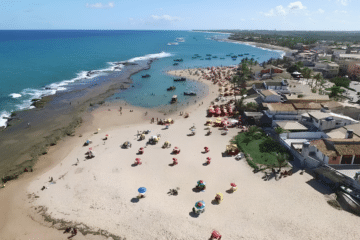
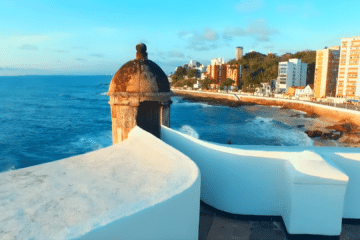
Fernando de Noronha is a favourite destination among Brazilian and international surfers for its powerful waves and idyllic scenery. The island offers breaks for experienced surfers and more accessible options for intermediate surfers, all set in an area of outstanding natural beauty.

Video about surfing in Fernando de Noronha

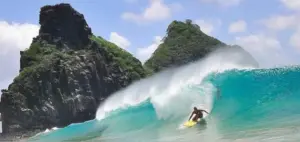
Surf em Fernando de Noronha05:42

Surf na praia da Cacimba do Padre em Fernando de Noronha03:30
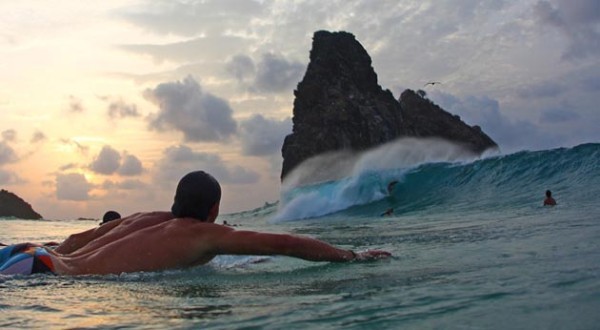
Surf em Fernando de Noronha - Dicas13:09
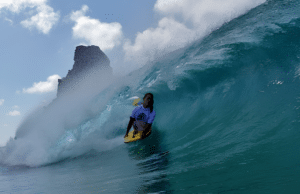
5 dicas para surfar em Fernando de Noronha03:43
Surfing season
The best time of year for surfing in Noronha is generally from November to March/April, with the months from December to March bringing the strongest and most consistent swells.
February and March usually offer the best conditions (favourable winds and longer-period swells). Outside this period (roughly April to October), the swell drops off and good conditions become less frequent.
Best beaches/spots for surfing
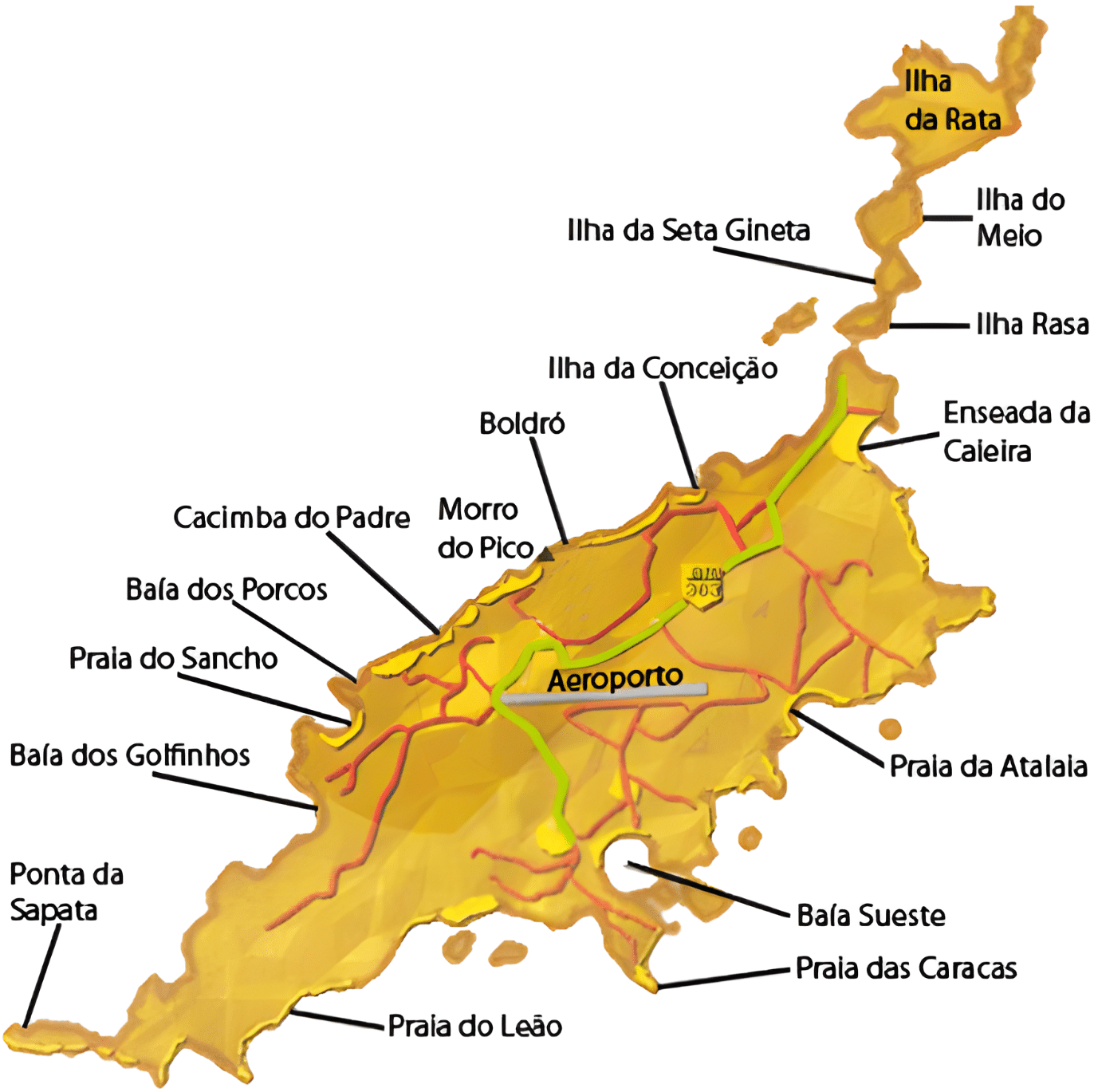
1. Cacimba do Padre Beach

The island’s main spot: beach break that produces powerful, long barrels when the swell is good. Suitable for experienced surfers when the swell is large.
2. Boldró Beach

Set against a backdrop of reefs and rocks and sections of reef flat; it offers fast, tubular waves at certain tides and swells — a technical and challenging break.
3. Conceição Beach

Beach break with a sandy seabed; a beautiful beach that’s more accessible for those looking for more frequent, quality waves suitable for intermediate surfers.
4. Praia do Cachorro

Mixed seabed (sand and rocks), usually offering rideable waves and a good choice for intermediate surfers.
5. Biboca Beach

On the north side of the island; it works in specific swells and can offer good waves throughout the season.
6. Praia do Meio

A beach break that performs well in strong swells; less consistent than Cacimba or Boldró, but useful on days with big swells.
Skill level and safety
- Cacimba and Boldró can be dangerous in strong swells (shallow waters/rocks) — recommended for advanced surfers.
- Conceição, Cachorro and Meio offer more beginner-friendly options; always check the tide and current.
Practical tips
- Check the swell and wind forecast before you go (surf apps and forecast websites).
- Please respect the island’s protected areas and environmental regulations — Noronha is a conservation area.
- Take suitable boards: shortboards for barrels; slightly larger boards are better for crowded breaks.
- You may wish to hire a local guide on busy days for safety and to ensure you know your way around the reef.
Conclusion: Fernando de Noronha offers some of Brazil’s most iconic waves — particularly Cacimba do Padre and Boldró — with the best conditions between November and March (peaking in February/March). Plan your trip by checking the forecasts and respecting the island’s conservation rules.

Publicações Relacionadas
Tibau do Sul and Pipa Beach (RN): A Comprehensive Travel Guide
The Southern Coast of Rio Grande do Norte: Beaches and Lagoons
Rio Grande do Norte: Your Ultimate Travel Guide
8-Day Itinerary in Rio Grande do Norte: Beaches and Culture
Beaches of Fernando de Noronha: A Visitor's Guide
Fernando de Noronha — A comprehensive guide to beaches, diving and surfing
The North Coast of Rio Grande do Norte: an unmissable 8-day itinerary
Seridó, Rio Grande do Norte: A Comprehensive Tourist Guide
Maracajaú Beach (RN): Parrachos and the Brazilian Caribbean
São Miguel do Gostoso: A Windsurfing Paradise
Barra do Cunhaú: things to do, beaches, kitesurfing and nature in Rio Grande do Norte
How to get there, when to go and what to do in Fernando de Noronha?
The North Coast of Rio Grande do Norte: A Guide to the Beaches
Galinhos, RN: A Complete Tourist Guide — Beaches, Lighthouse and Dunes
Sibaúma Beach — a rustic retreat on the southern coast of Rio Grande do Norte
Diving in the Fernando de Noronha Archipelago
7-Day Itinerary in Rio Grande do Norte: Natal, Pipa and Maracaja
Spinner Dolphins in Fernando de Noronha: A Guide
Natal, RN: Complete Travel Guide — Beaches, Dunes, and Nightlife
Rio do Fogo, RN: Beaches, Parrachos and Paradise-like Lagoons
The sinking of the corvette Ipiranga off Fernando de Noronha
Rio Grande do Norte Dunes: Buggy Tours and Adventure
The History of Fernando de Noronha: Geography and Heritage
Nísia Floresta (RN): Beaches and Lagoons of Rio Grande do Norte
Pipa Beach | Pipa Guide (Tibau do Sul) — Beaches and excursions
Statue of Saint Rita of Cascia in Santa Cruz, RN: faith, religious tourism and devotion in RN
This post is also on:
 Português
  English
  Deutsch
  Español
  Français