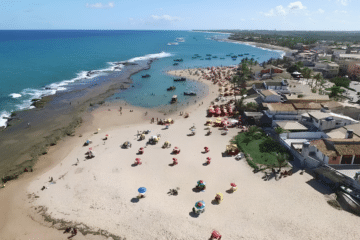
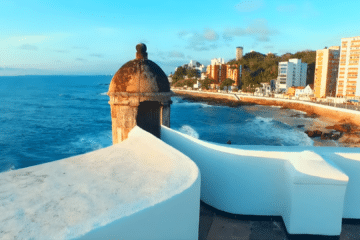
Maracajaú is a charming fishing village situated in the municipality of Maxaranguape, on the northern coast of Rio Grande do Norte, Brazil.
Affectionately known as the “Brazilian Caribbean“, Maracajaú attracts visitors with its crystal-clear waters, rich marine life and stunning natural beauty.

The village of Maracajaú: dunes, coconut groves and marine life
Surrounded by dunes, coconut groves and lagoons, Maracajaú is a small fishing village with a population of around 2,000. Today, tourism is the region’s main economic activity, driven by the area’s natural beauty.
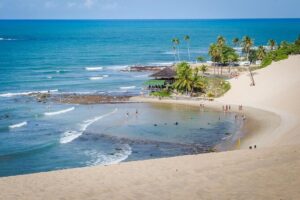
The beach’s main attraction is the coral reef, which is home to an impressive variety of reef fish and is an ideal spot for recreational diving (snorkelling). The coral reef, known locally as parrachos, lies about 7 km off the coast.
At low tide, the parrachos are transformed into a vast natural pool of crystal-clear water, with depths ranging from 1.0 to 3.0 metres, revealing a rich and fascinating array of marine life — colourful fish, crustaceans and, occasionally, sea turtles.

Maracajaú Beach, RN
The crystal-clear waters and coral reefs are the main attractions at Maracajaú Beach, which lies approximately 60 km north of Natal (the distance varies slightly depending on the route, between 55 and 65 km). One of the beach’s most striking features is the vibrant colour of the sea, which is ideal for recreational activities.
Maracajaú is the last beach on the coastline of the municipality of Maxaranguape. The name has Tupi origins, deriving from maracajá-u, which means ‘water’ or ‘river of the maracajá’ — the common name given to the wildcat, also known as the jaguatirica —, a reference to the wildlife that once inhabited the region.

Maracajaú Beach is considered one of the best spots in Brazil for snorkelling. Furthermore, its natural conditions are excellent for a first scuba dive, offering an unforgettable experience for beginners.

Video: Parrachos and Maracajaú Beach in Rio Grande do Norte


Top Attractions
Maracajaú Vineyards
The parrachos are coral reefs situated around 7 km from the coast, within an Environmental Protection Area (APA) covering an area of around 13 km². They are ideal for diving and snorkelling, offering the chance to observe a wide variety of fish and other marine life. Boat and catamaran trips are organised to take visitors there, where diving equipment can be hired.
Maracajaú Beach
The beach is famous for its natural beauty, with white sand and clear waters. It’s a great place to relax and soak up the sun, as well as offering a range of water sports, such as kitesurfing, windsurfing and stand-up paddleboarding.
Diving
As well as the shallow reefs, there are diving options in deeper waters for experienced divers, with the chance to see shipwrecks and underwater formations — the region has seen a number of shipwrecks over the years, precisely because of the shallow depth of the reefs.


Quad Bike Tours
Exploring the dunes and the countryside around the village on a quad bike is an exciting way to discover the region and its natural beauty.
Ma-Noa Water Park
A water park near the beach offering fun for the whole family, with swimming pools, water slides and other water attractions — ideal for a day out.

Tourism Infrastructure
- Accommodation: Maracajaú offers a range of accommodation options, from simple guesthouses to more comprehensive resorts, catering to different types of tourists.
- Restaurants: The local cuisine is based on fresh seafood, but there are also options featuring national and international dishes.
- Travel agencies: Several agencies offer packages that include trips to the parrachos, diving, buggy rides and other activities.
Best Time to Visit
The best time to visit Maracajaú is during the dry season, from September to March, when sea conditions are usually more favourable for the trip to the parrachos. It’s always worth checking the tide table before your trip, as the trip only takes place at low tide.
Frequently Asked Questions about Maracajaú
How far is it from Maracajaú to Natal?
Maracajaú is about 60 km north of Natal (the distance can vary between 55 and 65 km, depending on the route), a journey of approximately 1 hour by car along the BR-101.
How long does the walk to the Parrachos take?
The boat or catamaran trip to the Parrachos, including time spent swimming in the natural pools, usually lasts around 2 hours, subject to the low tide timetable.
Do I need to know how to swim to go diving at Parrachos?
It is not compulsory. The depth of the natural pools varies between 1.0 and 3.0 metres, and life jackets are provided on the tours, making the experience safe even for those who cannot swim or are trying diving for the first time.
When is the best time of year to visit Maracajaú?
The best time to visit is the dry season, between September and March, when the sea is usually calmer and visibility in the water is better for diving and snorkelling.
Do I need to book the trip to Parrachos in advance?
It is advisable to book in advance, particularly during the high season, as the tour is dependent on the low tide times and the availability of places on the local agencies’ boats.
Is Maracajaú a good place for children?
Yes. As it has calm waters and shallow natural pools, Maracajaú is usually a good choice for families with children, provided they are always supervised and wear safety equipment during the boat trip and whilst snorkelling.

Publicações Relacionadas
Galinhos, RN: A Complete Tourist Guide — Beaches, Lighthouse and Dunes
The sinking of the corvette Ipiranga off Fernando de Noronha
Rio Grande do Norte Dunes: Buggy Tours and Adventure
Surfing in Fernando de Noronha — Guide to Spots, Season and Tip
Pipa Beach | Pipa Guide (Tibau do Sul) — Beaches and excursions
Spinner Dolphins in Fernando de Noronha: A Guide
Statue of Saint Rita of Cascia in Santa Cruz, RN: faith, religious tourism and devotion in RN
The Southern Coast of Rio Grande do Norte: Beaches and Lagoons
7-Day Itinerary in Rio Grande do Norte: Natal, Pipa and Maracaja
Diving in the Fernando de Noronha Archipelago
Rio do Fogo, RN: Beaches, Parrachos and Paradise-like Lagoons
The History of Fernando de Noronha: Geography and Heritage
Barra do Cunhaú: things to do, beaches, kitesurfing and nature in Rio Grande do Norte
Natal, RN: Complete Travel Guide — Beaches, Dunes, and Nightlife
Nísia Floresta (RN): Beaches and Lagoons of Rio Grande do Norte
Beaches of Fernando de Noronha: A Visitor's Guide
São Miguel do Gostoso: A Windsurfing Paradise
Rio Grande do Norte: Your Ultimate Travel Guide
8-Day Itinerary in Rio Grande do Norte: Beaches and Culture
Fernando de Noronha — A comprehensive guide to beaches, diving and surfing
The North Coast of Rio Grande do Norte: A Guide to the Beaches
How to get there, when to go and what to do in Fernando de Noronha?
Seridó, Rio Grande do Norte: A Comprehensive Tourist Guide
The North Coast of Rio Grande do Norte: an unmissable 8-day itinerary
Sibaúma Beach — a rustic retreat on the southern coast of Rio Grande do Norte
Tibau do Sul and Pipa Beach (RN): A Comprehensive Travel Guide
This post is also on:
 Português
 English
 Deutsch
 Español
 Français