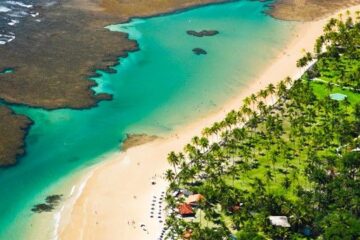
Olinda: Historical and Cultural Heritage
Olinda has precious colonial houses, architecture, history and carnival.
Historical importance
Olinda, in the state of Pernambuco, is one of Brazil’s most important historic cities, boasting rich colonial houses and one of the country’s liveliest Carnival celebrations.

Culture and Local Life
It is a city of friars and nuns, of wild revellers, fast-talking children’s guides, visual artists and popular musicians; It is also a place to contemplate the sea and sun-drenched coconut groves revealed by its viewpoints, from which you can also see the capital of Pernambuco, just 7 kilometres away.
Colonial architecture
The colonial architecture of Olinda has its origins in the period of Portuguese colonisation, which began in the 16th century.
During this period, the city was planned with an urban structure that reflected the ideals of the time, combining elements of European culture with local characteristics.
Most of the buildings were inspired by Manueline architecture and the architectural traditions of Portugal, incorporating tiles, arches and decorated facades.
The colonists used materials available in the region, such as stone and wood, which contributed to the unique style of the buildings.
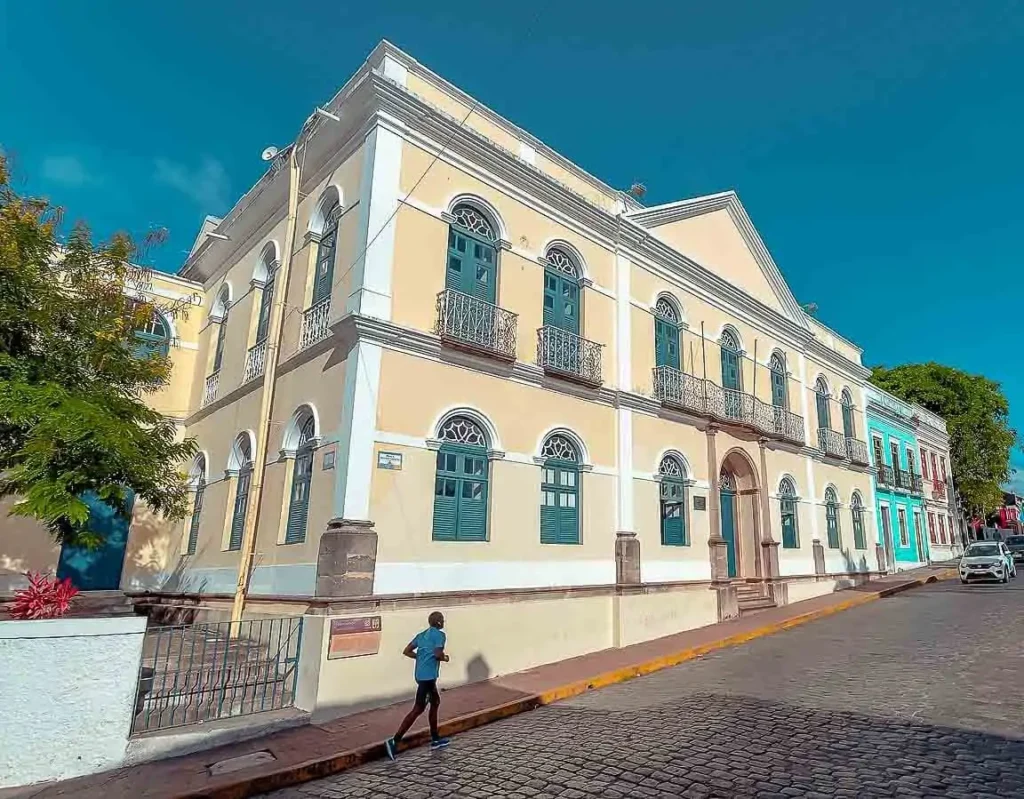
Religious heritage
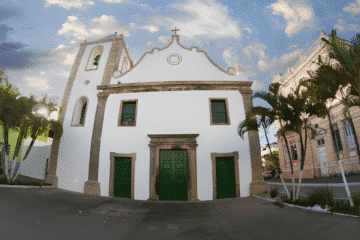
Olinda is famous for its baroque churches, such as the Church of St John the Baptist and the Cathedral, which are outstanding examples of religious architecture from the period, with rich ornamental details and elaborate altars.
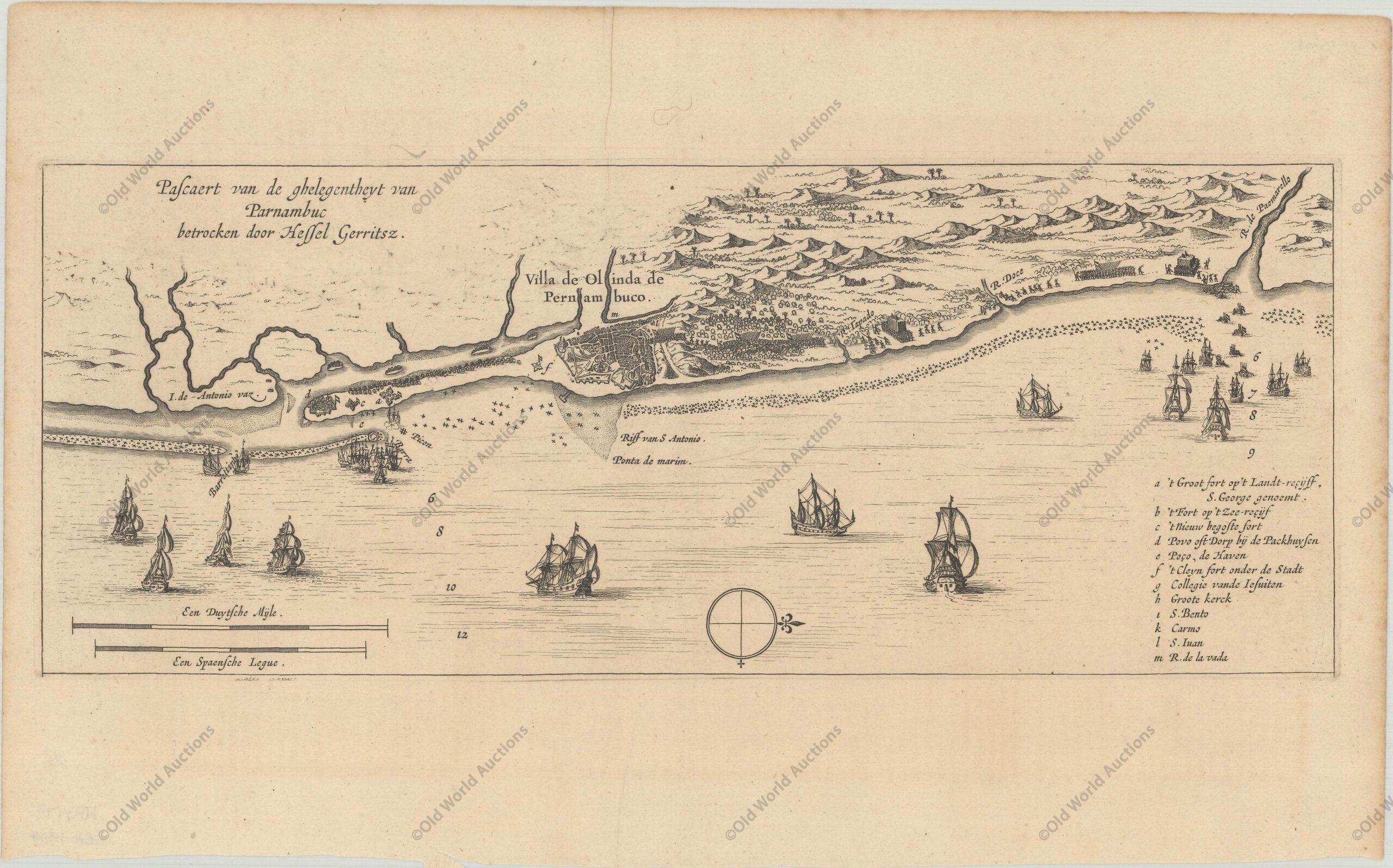
The city also underwent several phases of development, including the Dutch invasion in the 17th century, which brought influences from different architectural styles that blended with the Portuguese heritage.

Why go to Olinda?
- A visit to Olinda is an experience rich in culture and history.
- The city offers a vibrant atmosphere, full of festivals, art and traditions.
- During Carnival, the streets are filled with music, dance and joy, offering an immersion in Pernambuco’s culture.
- The beauty of the hillsides, the charm of the colourful houses and the views of the sea make the visit even more special.
- Tourists can explore museums, local artists’ studios and enjoy the region’s delicious cuisine.
- Olinda is undoubtedly an unmissable destination for those who want to learn more about Brazilian culture.
What makes Olinda Carnival a unique experience?
The Olinda Carnival is considered a unique experience for several reasons:
- Authentic culture: The Carnival of Olinda is a reflection of the culture of Pernambuco, with a strong presence of local traditions. The street blocks, rhythms such as frevo and maracatu, and typical dances are authentic expressions of the region’s cultural identity.
- Blocos de Rua: Unlike many carnivals that take place in large parades in sambadromes, Olinda’s carnival takes place in the streets, with blocos that bring together people of all ages. This creates a more inclusive and participatory atmosphere, where everyone can join in the fun.
- Costumed revellers : People dress up in creative and colourful ways, with costumes ranging from traditional to more contemporary and fun. The giant puppets depicting characters from popular culture are a visual highlight, attracting locals and tourists alike.
- Music and Dance: The vibrant sound of frevo, a music and dance genre typical of the region, animates the streets. People dance to the sounds of local bands and DJs, creating an atmosphere of energy and joy. Music is an essential part of the celebration and people give themselves over to dancing.
- Social interaction : The Olinda Carnival encourages intense social interaction. Locals and visitors celebrate together, sharing laughter, dancing and good times. This conviviality creates bonds and a sense of community that is hard to find elsewhere.
- Historic setting: The town of Olinda, with its colonial houses and steep hillsides, provides a stunning backdrop for the party. The beauty of the place, combined with the energy of the carnival, makes the experience even more special.
- Local Gastronomy: During Carnival, Pernambuco’s cuisine stands out, with stalls offering typical dishes such as acarajé, caldinho and other regional delicacies. Visitors can sample the local gastronomy while enjoying the festivities.
- Accessibility: Olinda Carnival is known for being accessible to all, with a friendly and welcoming atmosphere. There are no large fences or barriers, so everyone can freely participate in the festivities.
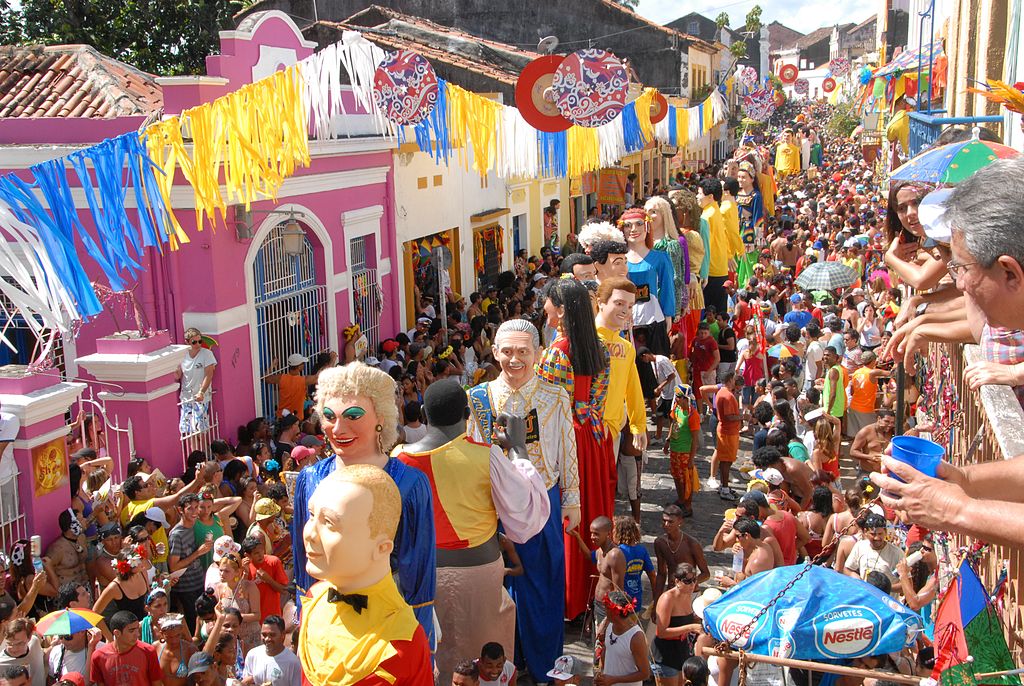
These elements combine to make the Olinda Carnival one of the most vibrant and authentic festivals in Brazil, attracting tourists from all over the world in search of a rich and unforgettable cultural experience.
Tourist Experience
Walking along the beautiful hillsides of Olinda requires willingness and a little patience and caution; tourists are often harassed by street vendors and guides. Olinda’s beaches, with their infrastructure, are usually very crowded, and the promenade invites you to take a nice walk.
Natural beauty
Olinda’s architecture appears amidst the splendour of tropical nature. The ocean appears in the background, behind the towers and coconut palms. Tropical vegetation fills the hill between the alleys.

Videos – Attractions and places of interest in Olinda PE

Olinda em Pernambuco06:33

Drone - Olinda em Pernambuco01:00

Carnaval em Olinda PE05:26

Patrimonio Mundial da Unesco Olinda PE01:58
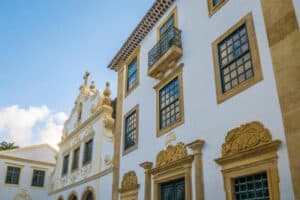
Arquitetura e História de Olinda PE11:19
Museu de Arte Sacra de Pernambuco10:34
Attractions and places of interest in Olinda PE
- MIRANDA
- AMPARO STREET
- OLINDA MARKETS
- MUSEUM OF SACRED ART OF PERNAMBUCO
- PAPIER-MÂCHÉ MASKS AT CARNIVAL
- CARNIVAL ON THE HILLSIDES OF OLINDA
- HOUSE OF THE BRAZILIAN RABECA
- CHURCH AND CONVENT OF SÃO BENTO
- ARTS CIRCLE
- OUR LADY OF GRACE CHURCH AND OLINDA SEMINARY
- SAN FRANCISCO MONASTERY COMPLEX
- CHURCH AND CONVENT OF THE VIRGIN OF THE CONCEPTION
- CHURCH OF OUR LADY OF MONTE
- CHURCH OF OUR LADY OF MERCY
- CATHEDRAL
1. VIEWPOINTS
There are wonderful views all over the city: in the backyards of restaurants, in alleys and at the end of every hill you can see houses, trees and the sea.
Two viewpoints are quite traditional: the Church of Nossa Senhora da Misericórdia and the Alto da Sé, both reached on foot via the Misericórdia Hill. The fun is to climb it backwards (watch out for the uneven cobblestones!) and watch the landscape “grow” bit by bit.
The Sé hill is less steep, but doesn’t have the same charm.
At the top is the Church of Nossa Senhora da Misericórdia, with winding benches in front of it. From there, visitors can see the famous four corners of Olinda, where the city’s four main streets intersect: Misericórdia hill, Bernardo Vieira de Melo street, Prudente, de, Moraes street and Amparo street. The cluster of houses is interspersed with tall coconut palms and leafy mango trees; the church towers follow the sea and, further away, the harbour and the city of Recife, with a stretch of the Capibaribe River.
One block away, Alto da Sé is the highest point in Olinda. From here, where Duarte Coelho built his long-gone house, you have the best view of neighbouring Recife. You can see the roofs of the old houses and the towers of the churches in the Upper Town.
Watch the sunset in the late afternoon and stroll around the Alto da Sé market, where you can sample crunchy tapioca or freshly baked curd cheese.
2. AMPARO STREET

The traditional Rua do Amparo is home to workshops, museums and shops.
3. MARKETS IN OLINDA

Legend has it that the Mercado da Ribeira was once a trading post for slaves. That’s not true; the old 19th-century palace building only sold fruit and vegetables.
Today there is a market with sixteen stalls selling handicrafts and works by local artists (Rua Bernardo Vieira de Melo, s/n, Varadouro).
The Eufrásio Barbosa Market, at the entrance to the city, was the site of the Royal Customs House, where products from Europe were sold in the 17th century.
Today, the market is home to craft shops, snack bars and food stalls, as well as a 250-seat theatre that houses the Maracatu Nação Pernambuco, which opens at weekends for performances by local groups (largo do Varadouro, s/n, Varadouro).
4. SACRED ART MUSEUM OF PERNAMBUCO

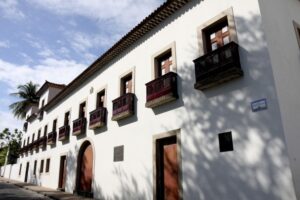
The Museum of Sacred Art of Pernambuco in Olinda is very well located at the top of the Cathedral. The 16th-century building was once a city hall, the bishop’s official residence, a school, a barracks and a nunnery.
Inaugurated on 11 April 1977, the Museum of Sacred Art of Pernambuco (Maspe) is housed in one of the first buildings of the city of Olinda, the old City Hall, founded by Duarte Coelho in 1537. In 1676, when Olinda became a city, the building served as the Episcopal Palace for its first bishop, Dom Estevão Brioso de Figueiredo.
The former Palace of the Bishops of Olinda, belonging to the Archdiocese of Olinda and Recife, underwent various adaptations during the 18th and 19th centuries, serving as a collective residence for religious, a college and army barracks during the World War II. On its façade you can see the old episcopal coat of arms and a plaque from Unesco, dated 14 December 1982, declaring Olinda to be a Humanity’s Cultural Monument.
Privileged by its location and spaciousness, the former Bishop’s Palace has been transformed by the Pernambuco Historical and Artistic Heritage Foundation (Fundarpe) into a space for the exhibition and study of sacred or religiously inspired art.
The permanent collection of Maspe, which began with more than a hundred pieces donated by the Archdiocese of Olinda and Recife, now includes religious objects such as popular and processional saints, reliquaries, custodies and religious paintings. One of the highlights of this collection is the collection of erudite, polychrome and gilded antique pictures dating from the 16th century.
Its collection includes colonial paintings made by Indians in workshops run by the Jesuits in Bogotá, Cuzco, La Paz, Quito and other colonial cities, as well as wood, clay and plaster pictures made by popular artists.
There is a room dedicated to old maps and a list of Olinda’s monuments. The museum offers guided tours. Rua Bispo Coutinho, 726, Alto da Sé.
5. PAPER MACHE CARNIVAL MASKS

The colourful papier-mâché masks created by Master Julião depict human figures with exaggerated features, animals or devils with remarkable horns.
These masks have a rich and varied origin, intertwined with cultural traditions from different parts of the world.
The origin of masks
The use of masks dates back to ancient civilisations, such as the Egyptians, who used them in rituals and festivals. During the Middle Ages and the Renaissance, masks began to be associated with festivals and celebrations, especially the Carnival.
In Italy, papier-mâché masks became popular during the Carnival of Venice, where they were used to conceal identity and allow freedom of expression.
Papier-mâché, made from recycled or shredded paper mixed with glue or water, proved to be a light and inexpensive material for making masks and spread throughout Europe and eventually the world.
In Brazil, these masks became part of the Carnival tradition, especially in Olinda and Recife. Local artists, such as Mestre Julião, popularised the art of creating colourful and expressive masks, which have become symbols of Pernambuco’s carnival.
Current production
The family of the artist, who died at the end of the 1990s, continues to make the masks, which can often be seen on the faces of the revelers playing during the Olinda Carnival, or even as decorative pieces inside houses.
They can be found at the Julião das Máscaras Workshop (Av. Joaquim Nabuco, 1102, Varadouro).
Giant puppets
The giant puppets, mainly created by the artist Silvio Botelho, are another tradition of the Olinda Carnival.
They are on average 3.6 metres tall and weigh up to 50 kilos. The studio is closed, but the artist takes orders; the dolls, which cost around R$3,000 each, take a week to make (Rua do Amparo, 45, Carmo).
Mamulengo Museum
The Mamulengo Museum, located near the Ribeira Market, has a collection of great cultural value, consisting of more than seven hundred puppets (Rua São Bento, 344, Varadouro).
See The history of the Olinda Carnival and its giant puppets.
6. CARNIVAL IN THE STREETS OF OLINDA
Samba schools, groups, bears, afoxés, rural and national maracatus, caboclinhos groups, puppet blocks and various other groups take turns in the Olinda Carnival, dragging around 2 million revelers through the historic streets of the Upper Town.
The fun starts in the morning and ends at dawn. It is estimated that there are around 350 parades, each with its own orchestra, themes, colours, profile, day and time. The full programme, which is made available about two weeks before the festival, is distributed in hotels, restaurants, restaurants and public spaces.
The town hall has divided the city into theme centres (frevo, maracatu), which can change their name every year. Traditional groups include Pitombeira dos Quatro Cantos, Elefante, Vassourinhas, Lenhadores, Grêmio Lítero Recreativo Eu Acho é Pouco, Enquanto Isso na Sala, de, Justiça and Bacalhau do Batata, which closes the Carnival on Wednesday.
Monday is the day of the Maracatus, which starts in the Cidade Tabajara neighbourhood and moves to the slopes of Olinda. The colourful costumes include papier-mâché masks from the studio of Julião das Máscaras, as well as custom-made pieces that evoke everything from superheroes to world personalities.
The giant puppets are a separate attraction. One of them, the Midnight Man, created in 1932, opens the festivities at midnight on Saturday.
On Tuesday, the traditional Puppet Meeting is held, where other members of the family can be seen parading with Frevo orchestras: the Woman of Noon, from 1967, the Son of the Midnight Man, from 1980, the Boy and the Girl of the Afternoon, from 1974.
7. CASA DA RABECA DO BRASIL
The Casa da Rabeca in Olinda is the workshop of Mestre Salustiano, or simply Mestre Salu, a profound connoisseur of Pernambuco’s popular culture; his father, Manuel Salustiano Soares, was the founder of the traditional Maracatu Piaba de Ouro group.
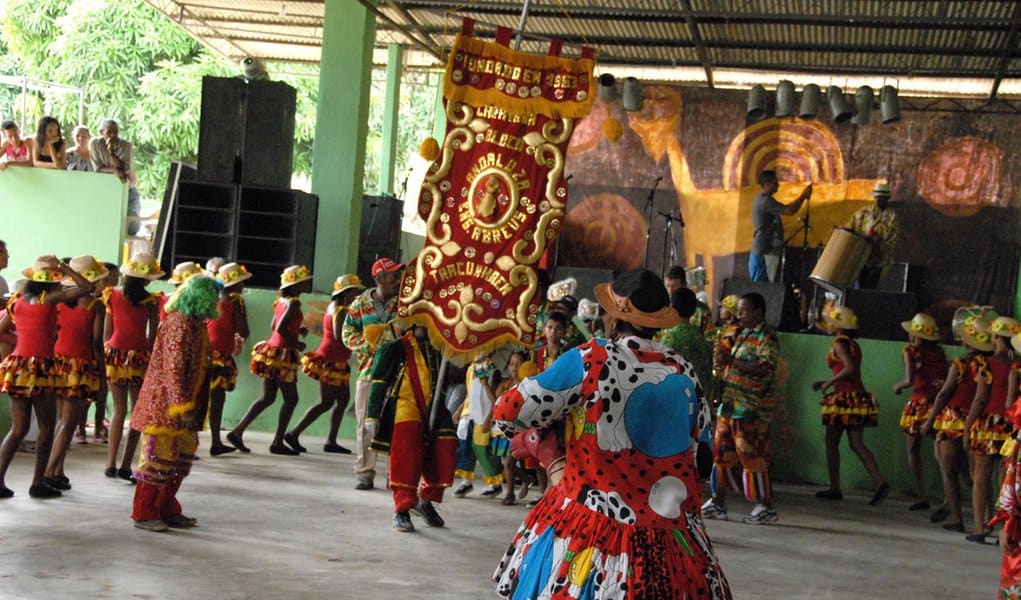
The Mestre Salu, responsible for the preservation of the rural maracatu, coco, cirandas and caboclinhos, organises the traditional meeting of the baque-solto and baque-virado maracatus during the Olinda Carnival.
The Casa da Rabeca has an extensive programme of concerts throughout the year with popular artists, especially forró pé-de-serra groups and repentistas. Rua Curupira, 340-B, Cidade Tabajara.
8. CHURCH AND MONASTERY OF SAO BENTO
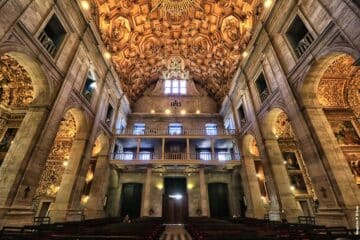
The Church of São Bento in Olinda, with its heavy jacaranda doors, is one of the richest in the city: The high altar has beautiful cedar carvings gilded in gold, and the ceiling panel tells the story of the life of St Benedict.

Note the sandstone columns supporting the heavy choir, the well-crafted pulpits and the elaborate sacristy.
The complex, predominantly Baroque in style, was built at the end of the 16th century, burnt down by the Dutch in 1631 and restored in 1761. In the 19th century the building housed one of the country’s first law schools.
On Sundays at 10am, the 27 monks open the church doors and accompany the mass with Gregorian chant. Rua de São Bento, s/n, Varadouro.
See the history and architecture of the São Bento Monastery in Olinda PE.
9. ART CIRCUIT
The hillsides of Olinda are home to the studios of various artists, some of whose careers are intertwined with the history of art in the country. Some are open to the public at fixed times, others by appointment.

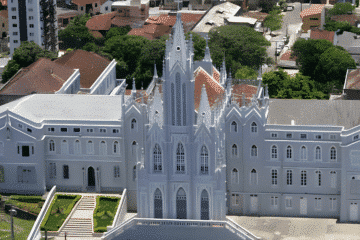
10. CHURCH OF OUR LADY OF GRACE AND SEMINARY OF OLINDA
Duarte Coelho built it as a chapel in 1552. It was given to the Jesuits to catechise the natives and build the Royal College of Olinda, known as the “Coimbra of America”, which was completed in 1575. The church was burnt down by the Dutch and rebuilt in 1660.
It housed the Archdiocesan College, the Faculty of Architecture, the School of Agronomy and the Archdiocesan Seminary, which is still in operation and where Father Antônio Vieira taught. Despite these interventions, the complex is a rare example of 16th-century architecture.
Its side-chapels are the oldest stone constructions in Brazil. The visit, which is always limited to a few areas, can be guided by appointment. Rua Bispo Coutinho, s/n, Alto da Sé.
11. SAN FRANCISCO MONASTERY COMPLEX
The Franciscans began construction in 1585 and gradually expanded the facilities.
The complex, which includes the Church of Nossa Senhora das Neves, the Chapel of São Roque and the Convent, suffered damage during the Dutch invasion and was rebuilt in the 17th century.

In the Cloister, inside the convent, you can see the Chapter Room, the only room that remains from the original convent, decorated with Portuguese tiles in blue, yellow and red, which form the great wealth of this ensemble and also decorate the church, the corridors of the convent and the chapel.
Inside the church, the coffered ceiling with paintings of the Holy Family from the 18th century and the tiles depicting the life of the Madonna, including one showing the circumcision of Jesus, are impressive.
At the back, don’t miss the Sacristy with its beautifully carved Rosewood Chest. In the chapel attached to the church, you can see the details of the carvings. Rua São Francisco, 280, Carmo.
See also History, construction and architecture of the Franciscan Monastery of Olinda
12. CHURCH AND CONVENT OF OUR LADY OF CONCEPTION
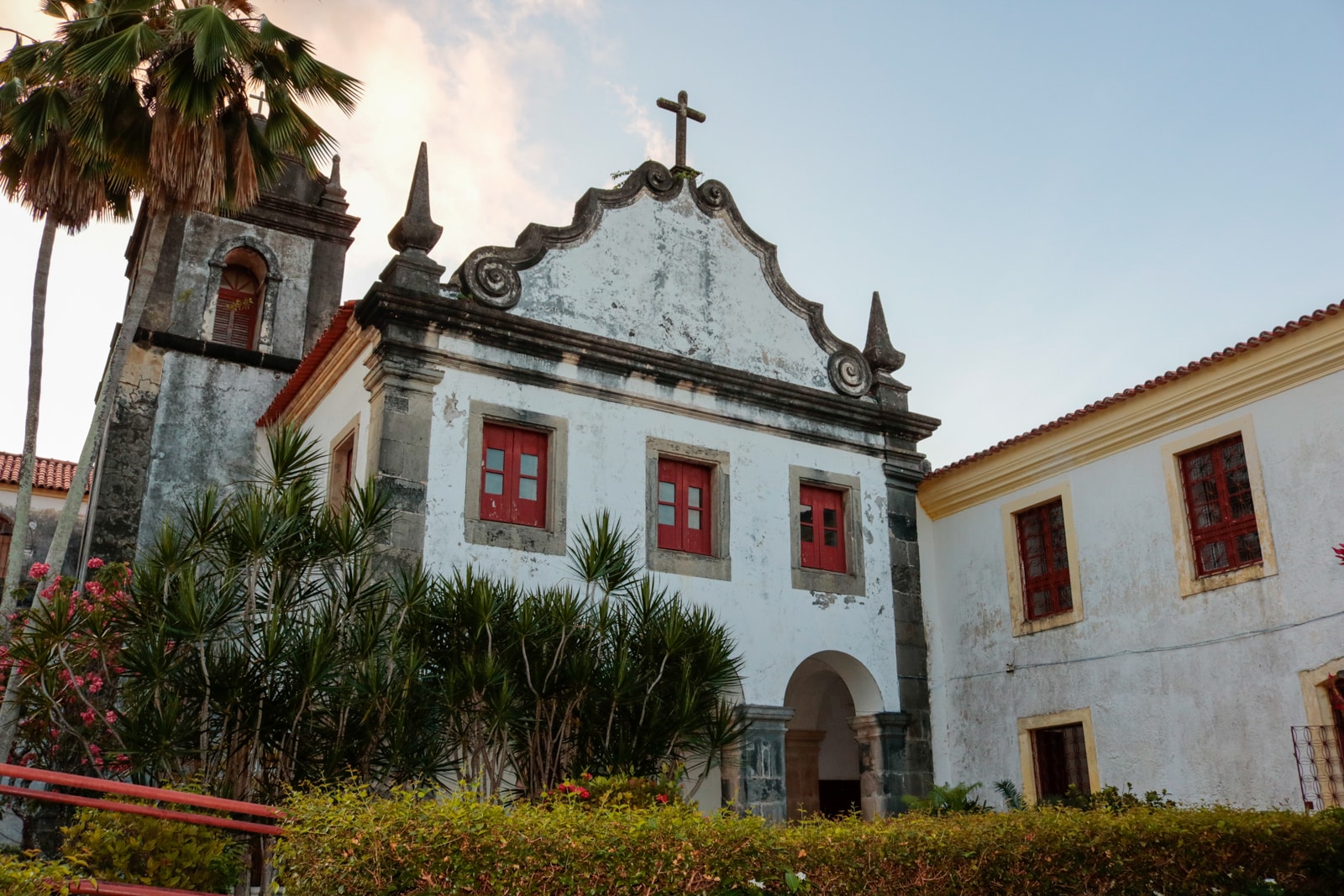
This precious building, now in the care of the Dorothean Sisters, was a meeting place for Ladies in the 16th century. It is only open to the public during the Mass.
Built in 1585 after being burnt down by the Dutch, the church was rebuilt in 1675 and turned into a convent. Highlights of the church include the paintings on the ceiling, depicting stages in the life of Our Lady.
Also noteworthy is the Baroque image of Our Lady of the Conception, decorated with gold and polychrome paintings and a silver crown. Largo da Misericórdia, s/n, Alto da Sé.
13. CHURCH OF OUR LADY OF THE MOUNT
The church of Our Lady of the Mount, built in 1540, is located in a hilly area, 55 metres above sea level. That’s why it didn’t suffer much damage during the Dutch invasion.

The stone arch that frames the entrance door is striking.
The interior is simple, with no roof, and the roof structure is exposed. The austere altar holds the image of St Benedict. Thirty Benedictine nuns now live here.
It is recommended to visit the church at 5pm, when the nuns sing and sell their traditional bricelets (very thin layers of wheat dough folded like paper to form a puff pastry) at the side door.
The Swiss recipe is transformed into something almost sacred by the delicacy with which the dough is made. Orders can be taken. Praça Nossa Senhora do Monte, s/n, Bultrins.

14. CHURCH OF OUR LADY OF MERCY
Also known as the Church of Our Lady of Light, it was built in 1540 next to the Holy House of Mercy. Burnt down during the battles against the Dutch, it was rebuilt after the invaders were driven out.
Inside, the Dom João V style carvings on the pulpit and altar stand out, as do the ceiling panels with passages from the life of the Virgin Mary and the baptismal font in Portuguese stonework.
It is maintained by the Benedictine nuns who sing at the daily masses at 6pm. There’s a beautiful view of Olinda from the churchyard. Rua Bispo Coutinho, s/n, Carmo.
15. SÉ CATHEDRAL
The Cathedral of Sé is the main church in Olinda. The Sé Cathedral, or Church of Saint Saviour of the World, the patron saint of the city, has gone through several phases.

The first building, small and made of rammed earth, dates from 1540; in 1584 a church of stone and lime was built, demolished by the Dutch and restored in 1656.
After extensive restoration work in the 20th century, a new project has restored the 16th-century layout.
The stages are recorded in drawings and photographs displayed on the side wall of the church. Inside, the 17th century tiled panels stand out; next to the high altar is the tomb of Dom Hélder Câmara, former archbishop of Olinda.
Outside you can enjoy one of the best views of Olinda and Recife. Curia: Ladeira da Sé, s/n, Carmo.
Details of the architecture and history of Olinda’s Sé Cathedral
See The oldest churches in Pernambuco and the first church in Brazil.
History of Olinda – PE
- Inclusion in the World Heritage List
- Occupation of Brazil
- The sugar cane cycle
- Urban layout
1. inscription on the World Heritage List
The architectural, urban and landscape ensemble of Olinda was inscribed in the Fine Arts, Historical and Archaeological, Ethnographic and Landscape Registers in 1968.
On 17 December 1982, the town was inscribed by UNESCO on the World Cultural and Natural Heritage List.

2. Occupation of Brazil
Olinda was founded in 1537 by Duarte Coelho Pereira, the first don of the Captaincy of Pernambuco.
Tradition has it that the town’s name comes from Coelho’s expression of enchantment at the landscape seen from the top of the hills: “O beautiful place to found a villa”.
The Portuguese chose the site as the seat of their government, following the Mediterranean tradition of building cities on hills for military defence. A few kilometres to the south, in the present-day city of Recife, was the port.
Olinda’s historic centre faithfully preserves the urban fabric, landscape and location of the town founded in the first half of the 16th century, when the Portuguese began their occupation of the land discovered in 1500.
The urban layout is informal, characteristic of Portuguese villages of medieval origin, and its charm is enhanced by the landscape and location.
On the hillsides, the entire built complex is surrounded by vegetation. In the streets, gardens and backyards, fruit trees such as coconut palms, mango trees, jackfruit trees, sapodilla trees and others give the site its dominant value as an urban centre immersed in a mass of green, bathed in tropical light, with the beach and the sea at its feet.
Olinda’s unmistakable character lies in this landscape, which has characterised it throughout its history.
3. The sugar cane cycle
The sugar-cane cycle made Olinda one of the most important centres of colonial Brazil. When the Dutch conquered Pernambuco in 1630, the city was burnt down and the capital moved to Recife.
Since the last years of the 16th century, Olinda became one of the most important centres of the sugarcane cycle, benefiting from the high price of the product on the international market in the 16th and 17th centuries.
In 1612, it centralised the production of Pernambuco’s 99 sugar mills, while Bahia, the seat of the colony’s general government, had only 50.
Sugar, which made Olinda rich, also motivated the Dutch invasion. In a dispute over the monopoly of the product, the Dutch West India Company invaded the town and occupied it militarily in 1630.
A year later, the Dutch considered it unsuitable – not only because it facilitated the Portuguese reaction, but also because of its distance from the port – and abandoned it, setting fire to it and moving to Recife.
Of its ruins, admirable testimonies remain, such as the paintings of François Post (1612-1680), one of the first artists to record Brazil’s tropical landscape.
When Portuguese rule was restored in 1654, Olinda and Recife began to challenge the political hegemony of the captaincy.
Sugar producers and religious orders fought to return the administration to the old seat, while groups interested in maritime trade favoured Recife.
The former won the battle and Olinda once again became the seat of the government of Pernambuco. Olinda was slowly rebuilt over the next 100 years.
In 1676, Olinda became the capital of the Bishopric of Pernambuco and was elevated to the status of city.
New churches were built and the original ones, built at the beginning of the 16th century and almost completely destroyed by the fire of 1631, were restored.
Situated by the sea, the city is built on eight hills, connected at their summits by steep streets and slopes, and connected by the Capibaribe and Beberibe rivers.
4. Urban layout
The colourful houses characteristic of the Portuguese colonial settlement and the imposing white churches stand out against the intense green of the tropical vegetation and the tourmaline blue of the sea.
The breeze that moves the coconut groves bathed in intense tropical light makes Olinda an unforgettable place.
The urban layout is informal, characteristic of Portuguese villages of medieval origin, and its charm is enhanced by the landscape and location.
On the hillsides, the entire built complex is surrounded by vegetation. In the streets, gardens and backyards, fruit trees such as coconut palms, mango trees, jackfruit trees, sapodilla trees and others give the site its dominant value as an urban centre immersed in a mass of green, bathed in tropical light, with the beach and the sea at its feet.
Olinda’s distinctive character lies in this landscape, which has characterised it throughout its history.
The streets follow the crests, the contours, or climb the slopes, sometimes following the lines of the steepest slopes. They were, and still are, sinuous, linking churches, monasteries and the most important buildings.
Sometimes they are defined by the façades of the houses, which are continuous, and sometimes by the walls surrounding the courtyards and gardens, which are irregular in their layout, width and intersections.
Alongside the houses, most of which are simple but beautifully integrated, there are churches that are remarkable both for their architectural value and for the quality of their decorative elements, such as altarpieces, paintings, tiles, etc. They were built between the 16th and 18th centuries.
They were built from the 16th century onwards by the religious missions that settled there.
The residential architecture combines elements from the 17th century, with its lattice balconies, with others from the 18th and 19th centuries, with tiled roofs, and neoclassical elements from the beginning of the current century.
The characteristics of Olindense’s vernacular architecture were striking: a manifestation of the culture inherited from Portugal and adapted to Brazilian conditions, they acquired their own character and continuity over time.
The changes in form and use, which testify to the evolutionary process of the complex, were made without sacrificing the original urban setting or the relationship of integration with the landscape.
In Olinda, landscape and art come together in an admirable way. The richness of the 20 Baroque churches and convents, remarkable for their architecture and the quality of their decorative elements, is complemented by the simple houses with tiled façades and lattice balconies.
5. Historical engravings of Olinda
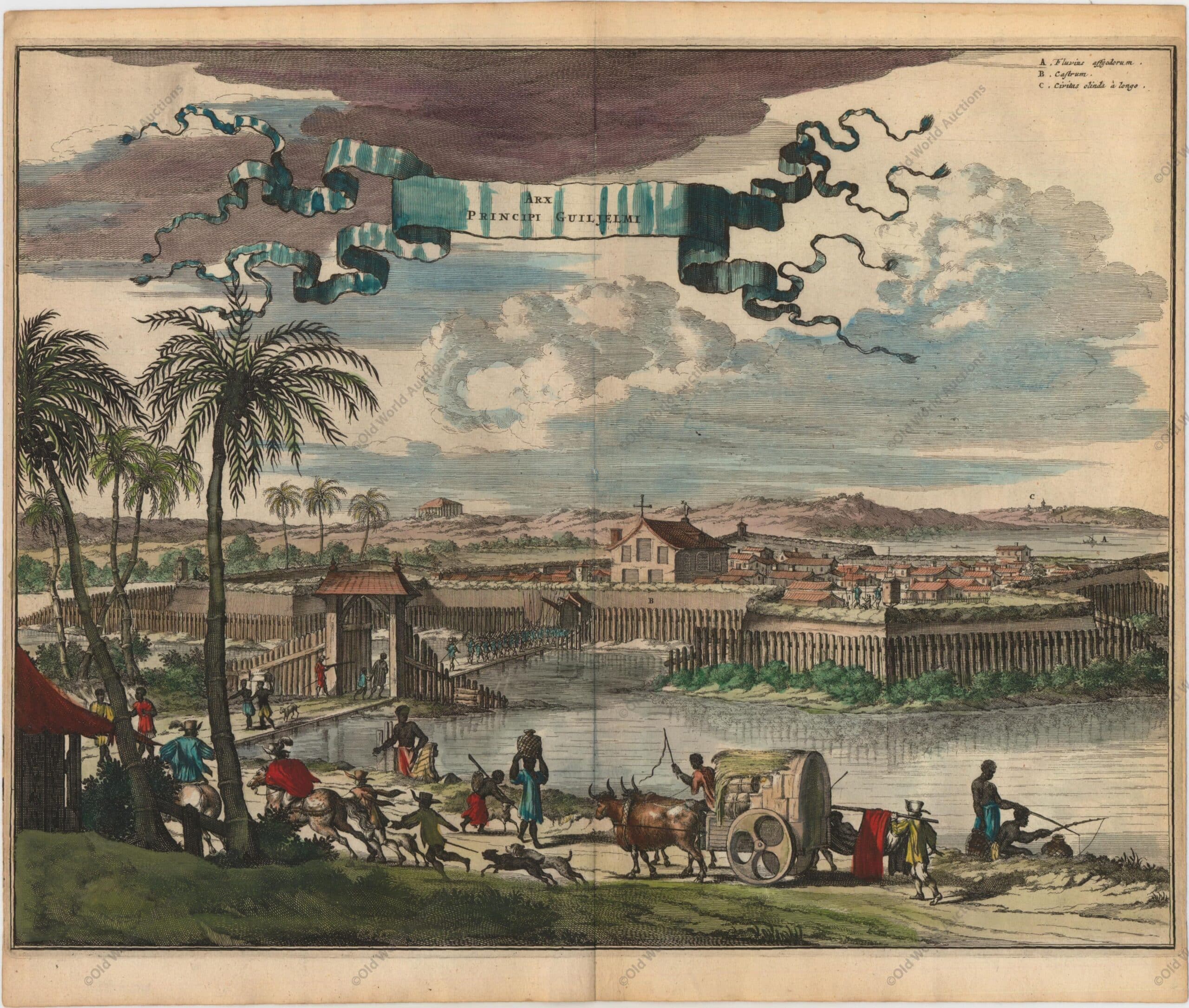
Impressive view of Dutch Fort William with its central church and strong palisades. Olinda is on a hill in the background. Ribbon-like cartouche in the sky. “Arx Principi Guiljelmi”, Montanus, Arnoldus
![Duas plantas das colônias açucareiras portuguesas no Brasil durante a invasão holandesa em 1630. A vista superior mostra a cidade de Olinda com duas figuras em primeiro plano exibindo um pano no qual estão expostas a chave com quatorze nomes de prédios. Abaixo, uma visão offshore mostra a frota holandesa atacando o porto e o forte. "Olinda [on sheet with] Olinda de Phernambuco", Merian, Matthaus](http://bahia.ws/wp-content/uploads/2023/04/Gravura-de-Olinda-de-1634-scaled.jpg "Gravura de Olinda de 1634")
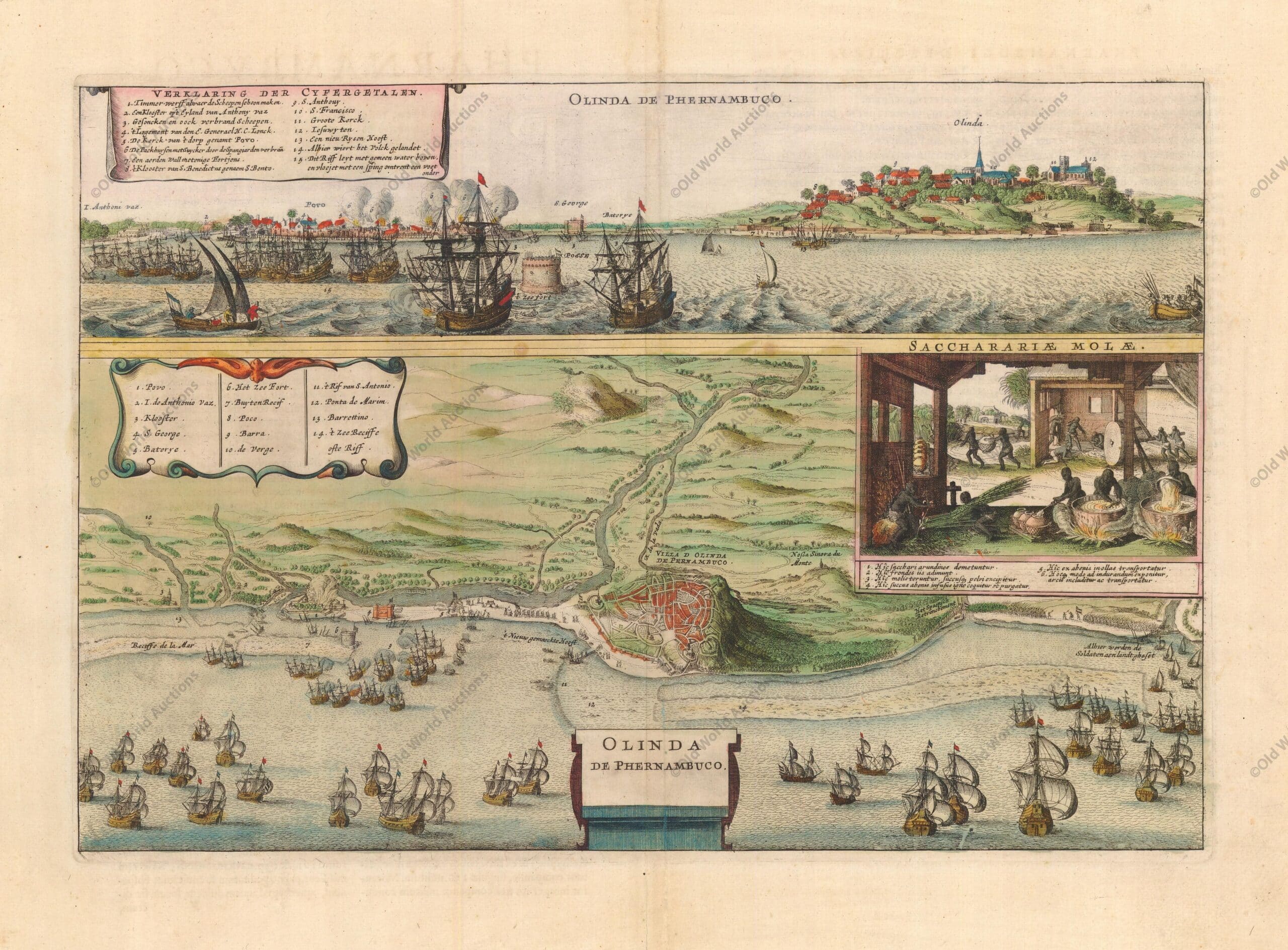
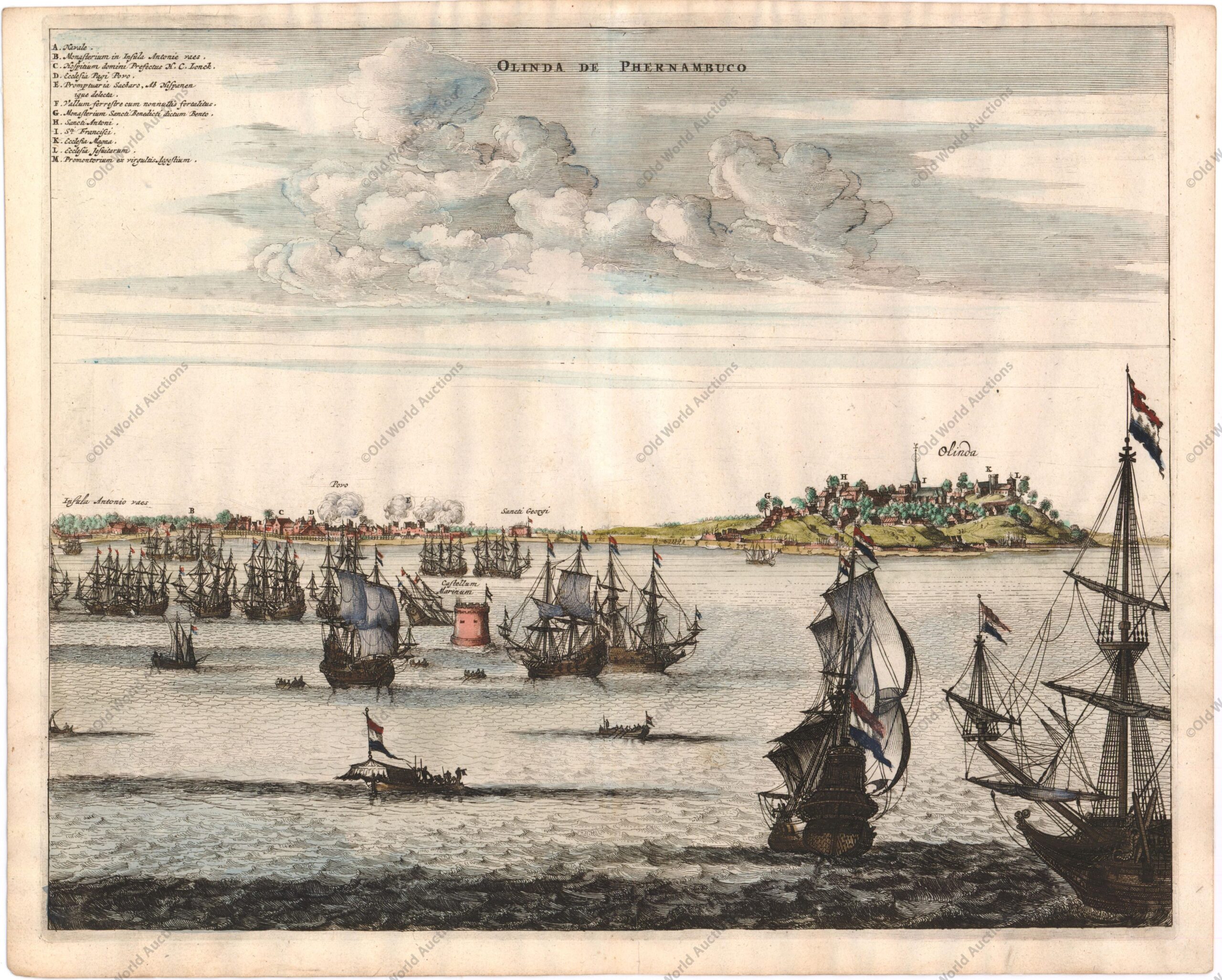
This splendid view illustrates the Dutch attack on the Portuguese city of Olinda in 1630. For most of the 17th century, Portugal and the Netherlands had a trade agreement whereby the Portuguese colonies in the New World produced sugar and the Dutch distributed it throughout Europe through their vast trading network. Following the unification of the kingdoms of Portugal and Spain, the Dutch lost their monopoly on distribution and founded the West India Company in 1621. Shortly after, the Dutch began their attack on Pernambuco, first in Salvador and then in Olinda. “Olinda de Phernambuco”, Montanus, Arnoldus
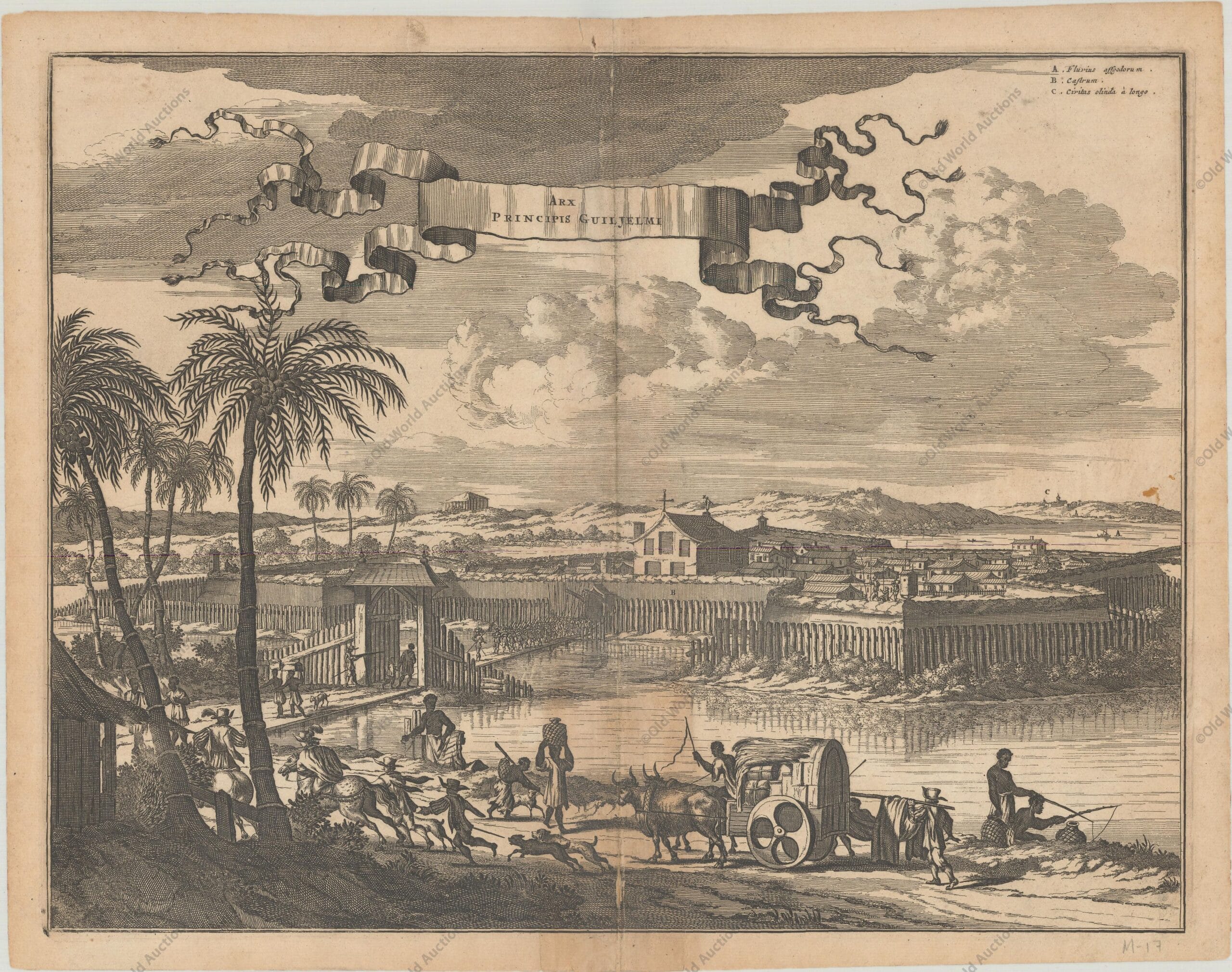
Impressive view of Dutch Fort William on the Afagados River with its central church and strong palisades. Olindia is on a hill in the background. Fort Príncipe Guilherme was part of the Dutch defences of Pernambuco. This detailed engraving was inspired by a 1639 painting by the famous Dutch artist Frans Post. “Arx Principis Guiljelmi, Montanus, Arnoldus
![Essas esplêndidas vistas ilustram o ataque holandês à cidade portuguesa de Olinda em 1630. Durante a maior parte do século XVII, Portugal e Holanda fizeram um acordo comercial em que as colônias portuguesas no Novo Mundo produziam açúcar e os holandeses o distribuíam pela Europa usando seus vasta rede comercial. Após a fusão dos reinos de Portugal e Espanha, os holandeses perderam o monopólio da distribuição e criaram a Companhia das Índias Ocidentais em 1621. Pouco depois os holandeses iniciaram seu ataque a Pernambuco, primeiro em Salvador e depois em Olinda. Do alto, a vista do Povo (que depois se transformou em Recife) e Olinda vista do mar. Ao fundo, uma grande vista panorâmica da região repleta de navios, alguns em batalha, e a cidade do Povo já em chamas. "[Povo [with] Villa d Olinda d Pernambuco]", Leti, Gregorio](http://bahia.ws/wp-content/uploads/2023/04/Gravura-de-Olinda-de-1690-scaled.jpg "Gravura de Olinda de 1690")
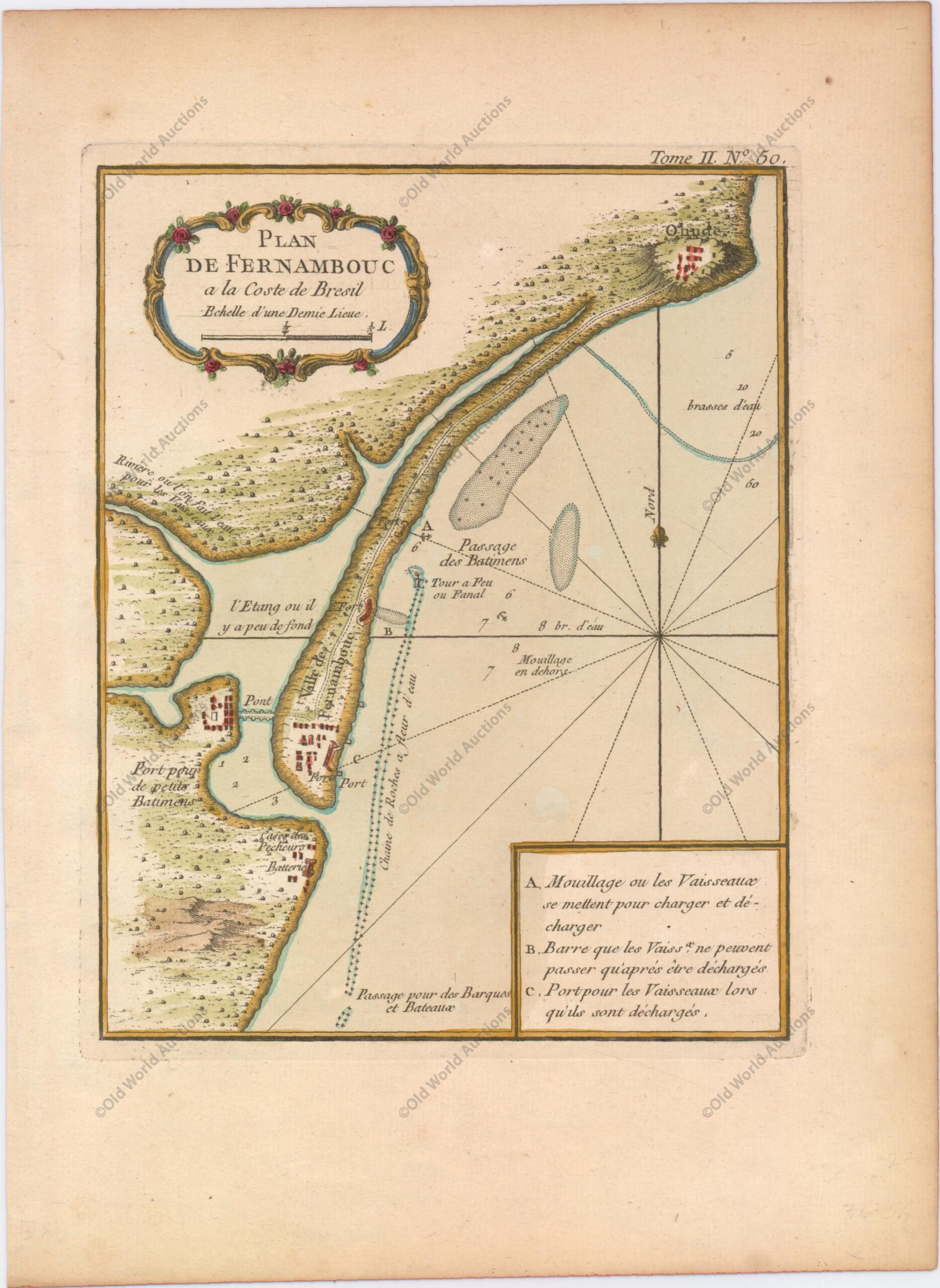
Tourist guide to Olinda in Pernambuco

Publicações Relacionadas
Praia dos Carneiros voted one of the most beautiful beaches in the Northeast
Graça Church and Olinda Seminary Historical Significance
Giant Puppets and Their Role in Olinda Carnival
History and architecture of the Palácio do Campo das Princesas in Recife
Olinda Cathedral: A Historical Landmark in Brazil
Sacred Recife and Religious Tourism in Recife, Pernambuco
Tamandaré: Explore the Best of Pernambuco
Main Tourist Attractions in Recife You Must Visit
Porto de Galinhas: Your Guide to Perfect Beaches
Sugar mills on the outskirts of Porto de Galinhas PE
Main historical landmarks of Pernambuco and Recife
Pernambuco's best beaches and their attractions
Tourist Attractions in Agreste de Pernambuco
Porto de Galinhas: beaches, natural pools and travel tips
Basilica of Our Lady of Penha: A Historical Overview
Pernambuco: History and must-see attractions
Sights in Recife: 5 must-see attractions
7-Day Itinerary in Pernambuco with Historical Highlights
History of the Basilica of Our Lady of Mount Carmel in Recife
Boa Viagem Beach (Recife) — A Complete Guide for Visitors
Pernambuco's Rural Tourism Route: A Traveler's Guide
Route of the Sugar Mills and Maracatus in Pernambuco
Vale do Catimbau National Park: Your Guide to Ecotourism
Ricardo Brennand Institute — Castle Museum, Armory, and Art Gallery
Cais do Sertão Museum: Discover Sertanejo Culture
Serra Talhada: A Journey Through Pernambuco's Culture
Sertão of Pernambuco: A Cultural Diversity Hub
Museu do Homem do Nordeste: A Cultural Journey
Mata Sul Region of Pernambuco: Waterfalls to Explore
The best beaches in Pernambuco — a 5-day itinerary
Itamaracá Island: Best Attractions and Activities
Golden Chapel: A Jewel of Brazilian Baroque
Goiana: A Historical Treasure in Pernambuco
Gravatá: Your Guide to the Best Attractions
Kahal Zur Israel Synagogue — Jewish Museum and Cultural Centre (Recife)
Beaches on the South Coast of Pernambuco: A Complete Guide
This post is also on:
 Português
  English
  Deutsch
  Español
  Français