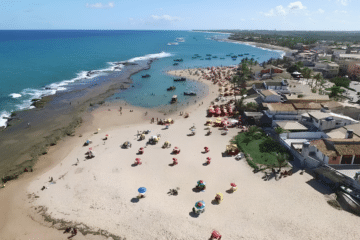
Iemanjá, thousands of Bahians and tourists flock to the beaches of Rio Vermelho in Salvador every year on 2 February.

The goddess Iemanjá
Iyemanjá, Yemanjá, Yemaya, Iemoja or Yemoja is an African orisha whose name derives from the Yoruba expression “Yèyé omo ejá” (“Mother whose children are fish”).
Identified in the game of merindilogun by the odu ejibe and ossá, Iemanjá is represented both materially and immaterially by candomblé, through the sacred settlement called igba yemanja.
Popularity in Brazil
In Brazil, Orisha is very popular among followers of Afro-Brazilian religions and even among members of other religions. In Salvador, one of the country’s biggest celebrations in honour of the “Queen of the Sea” takes place every year on 2 February.
The celebration
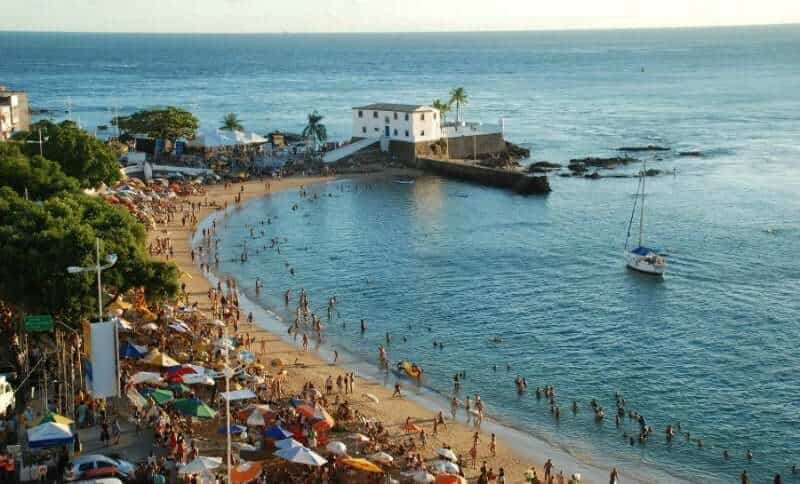
The celebration involves thousands of people dressed in white walking in procession to the temple – mor, located near the mouth of the Vermelho River, where they leave a variety of offerings such as mirrors, jewellery, food, perfumes and all kinds of gifts.

Festa de Iemanjá no Rio Vermelho
Another important festival dedicated to Iemanjá takes place on New Year’s Eve in Rio de Janeiro. Thousands of people attend and make offerings to the deity in the sea. The celebration also includes the traditional “popcorn bath” and the seven waves that believers, or even followers of other religions, jump over to ask the Orixá for good luck.
Syncretism and representations
In Umbanda, Iemanjá is considered the deity of the sea, as well as the patron of shipwrecked sailors and the mother of all human heads.
“Iemanjá, Queen of the Sea, is also known as Dona Janaína, Inaê, Princess of Aiocá and Maria, in parallel with the Catholic religion. Aiocá is the kingdom of the mysterious lands of happiness and freedom, an image of the native lands of Africa, longing for the free days in the forest” – Jorge Amado.
In addition to the many African names by which Iemanjá is known, the Portuguese form Janaína is also used, although rarely.
This nickname, which originated during slavery, was the mildest form of syncretism that blacks found to perpetuate their traditional cults without the intervention of their masters, who considered such “pagan manifestations” on their property unacceptable.
Although this incantation has fallen into disuse, several compositions by popular authors have been written in honour of “Janaína do Mar” and as liturgical songs.

The sculpture of Iemanjá
For the first time, on 2 February 2010, a sculpture of a black mermaid, created by the artist Washington Santana, was chosen to represent Iemanjá in the great and traditional gift of the Rio Vermelho Festival in Salvador, Bahia, in honour of Africa and the Afro-descendant religion.
Celebration of Iemanjá: Honouring the Queen of the Sea
There is a syncretism between the Catholic saint Our Lady of the Navigators and the African mythological goddess Iemanjá. Sometimes the celebrations in honour of the two figures even merge.
Holiday dates
In Brazil, both Our Lady of the Navigators and Iemanjá have their feast day on 2 February. It is customary to celebrate the day dedicated to them with a large river procession.
Celebrations in Porto Alegre
One of the largest celebrations takes place in Porto Alegre, in Rio Grande do Sul, due to its syncretism with Our Lady of the Navigators. In the same state, in Pelotas, the image of Our Lady of the Navigators is taken to the port of Pelotas.
Before the end of the Catholic festival, one of the most memorable moments of the Feast of Our Lady of the Navigators in Pelotas, which in 2008 reached its 77th edition, takes place.
The boats stop and are greeted by umbandistas carrying the image of Iemanjá, creating an ecumenical gathering watched by many people from the shore.
Feast of Our Lady of the Conception of the Beach
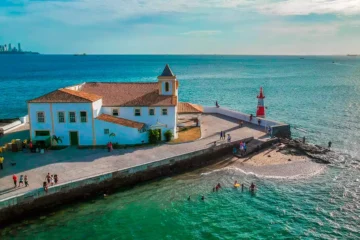
On 8 December, the Bahian coast celebrates another festival: Festa de Nossa Senhora da Conceição da Praia. This day is dedicated to the patron saint of Bahia, Nossa Senhora da Conceição da Praia, and is a municipal holiday in Salvador.
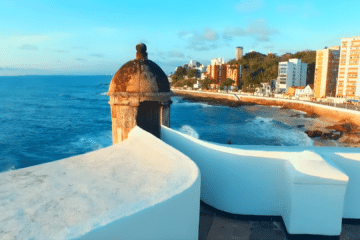
Also on this day, at Pedra Furada, on Monte Serrat in Salvador, the Gift of Iemanjá is presented, a popular celebration that originated from the local fishermen’s devotion to the Queen of the Sea, also known as Janaína.
Celebrations in João Pessoa
In the capital of Paraíba, the city of João Pessoa, the municipal holiday dedicated to Our Lady of the Conception, 8 December, is the day of the traditional festival in honour of Iemanjá.
Every year, a circular stage is erected on Tambaú beach, surrounded by blue and white flags and ribbons, around which devotees from different parts of the state and curious onlookers gather to watch the parade of the orixás (spirits) and, above all, the guest of honour.
Along the beach there are holes with lit candles, flowers and gifts. In 2008, according to the party organisers, 100,000 people attended the event.
Red River Festival
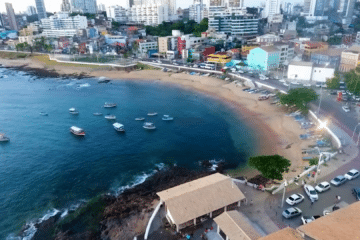
The traditional Festa de Iemanjá (Festival of Iemanjá) in the city of Salvador, capital of Bahia, takes place on Rio Vermelho beach every 2 February. On the same day, Iemanjá is also worshipped on several other Brazilian beaches, where candles and flowers are offered to her and thrown into the sea from small handmade boats.

Religious Celebrations
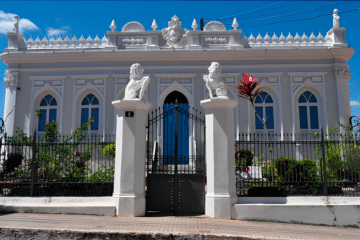
The Catholic festival is held in the Church of Our Lady of the Conception of the Beach in the lower town. Meanwhile, the Candomblé and Umbanda terreiros (places of worship) are divided by ropes, ribbons and flowers on the beaches, delimiting the space for the casas de santo (houses of the saints) to carry out their work on the sand.
Iemanjá in Brazilian culture
In Brazil, in Pierre Verger’s version, Iemanjá represents the mother who protects her children at all costs, the mother of many children, or many fish, who loves to look after children and pets.
History and origins of the festival of Iemanjá
Beginning of the tradition
According to historians, the tradition began in 1923, when a group of 25 fishermen decided to offer gifts to the “Mother of the Waters” in the hope that she would solve the problem of fish scarcity.

Annual requests
Since then, every year they ask the orixá for an abundance of fish and calm seas. Among the superstitions surrounding the celebrations is the question of the receptivity of the gifts.
Legends and superstitions
Legend has it that if the gift is found on the beach, it is because the God did not like the offering. However, if the offering disappears into the sea, it is a sign that the gift has been accepted.
Sustainability and awareness
In recent years, campaigns have been carried out to raise awareness so that people adopt sustainable gifts, as a way of preserving the environment.
Bahia.ws – Tourism and travel guide for Salvador, Bahia and the Northeast

Publicações Relacionadas
History of the 8-bass accordion and its influence on forró
History and Chronology of the Carnival of Salvador de Bahia
The 7 north-eastern rhythms and musical styles that enchant Brazil
June festivals: Tradition and Culture in the Northeast of Brazil
Graciliano Ramos: The life and work of the Brazilian writer
Extreme sports in the Northeast of Brazil: Destinations not to be missed
Iemanjá: Discover the Orixá and the Traditional Festival in Salvador
Musical styles, rhythms, singers and composers of northeastern Brazil
The culture of Northeastern Brazil: how it originated, influenced and flourished
José Américo de Almeida: A Brazilian Literary Icon
Jorge Amado's Life and Literary Contributions
Influences and main dishes of northeastern cuisine
The origins of Afro hairstyles in Salvador, Bahia
Popular Art from the Northeast of Brazil
Brazil's northeastern subsoil has emeralds and archaeology
Maranhão's handicrafts have more than 400 years of tradition
History of Baroque Architecture in the Northeast and Minas Gerais
History of the indigenous peoples of Bahia
History of Northeast Brazil - Chronology and Summary
Diógenes Rebouças and His Architectural Legacy
Woodcuts and Cordel Literature in Northeastern Brazil
King Momo, Pierro, Harlequin and Colombina - Carnival characters
Historic Towns in the Northeast: Explore the Past
History and Chronology of the Portuguese Tile Industry
Northeastern architecture with typical colonial features
Itineraries focused on religious tourism in Salvador, Bahia
Geography and Climate Regions of Northeast Brazil
Rapadura: A Sweet Treat from Northeastern Brazil
Lampião and the Cangaço: Between History and Mythology
Biography of Victor Meirelles and analysis of the work "The First Mass in Brazil"
Discover the History of Capoeira in Salvador
Candomblé: A Blend of African and Catholic Traditions
História e Evolução do Trio Elétrico no Carnaval
The Rhythm of Candomblé and the Invocation of the Orixás
European architecture - chronology, styles and characteristics
Brazil's historic moments illustrated in great works
This post is also on:
 Português
  English
  Deutsch
  Español
  Français