History of Carnival in Brazil
Carnival, a festival of ancient Catholic tradition originating in Europe, is celebrated annually during the three days before Lent.
Introduced to Brazil by the Portuguese colonisers, it was known as the Entrudo during the first centuries of colonial life.
During this period, it was customary to play with limes and lemons or to throw powder and containers of water and other liquids at each other.

Video about the history of Carnival in Brazil

História do Carnaval no nordeste06:23

Aprenda a fazer um turbante03:18

Carnaval em Pernambuco01:00
Festa de Carnaval nos estados do Brasil02:32

História do Carnaval de Rua
Play and society
Games were played between families in the mansions or in the streets and squares, where slaves and poor free men generally enjoyed themselves. During the Empire, the festival dedicated to laughter and pleasure became more commonly known as Carnival.

European influences
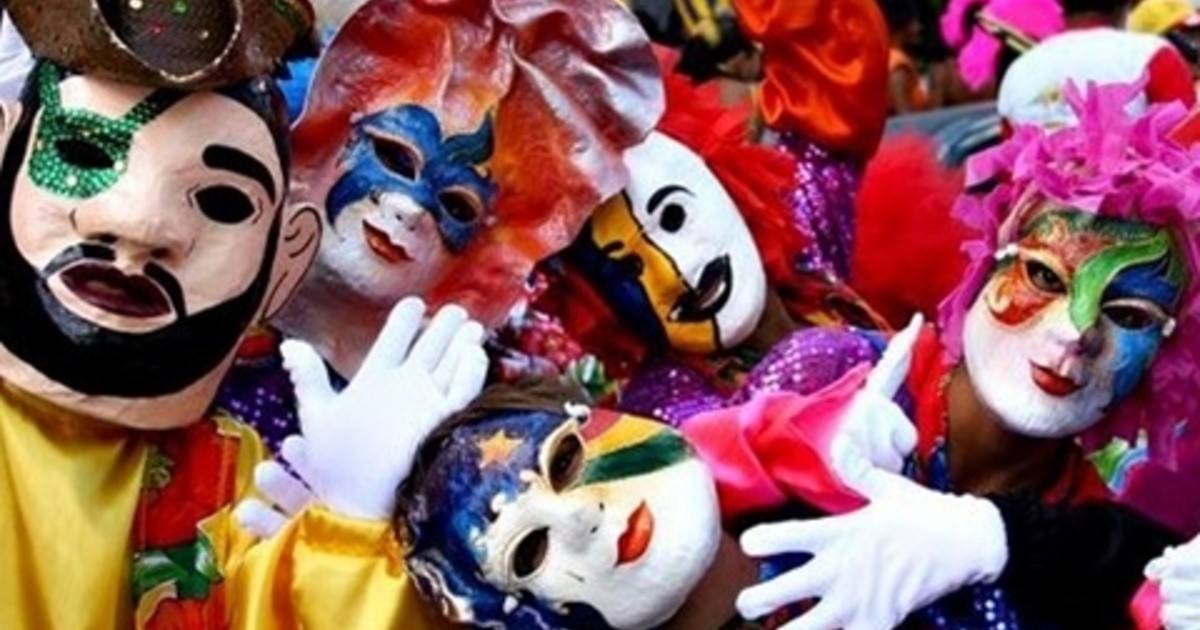
Gradually, the urban elite abandoned the toys of the Entrudo and turned their eyes to the carnivals of Europe’s most progressive cities, such as Nice, Paris, Naples, Rome and Venice, where the festivities were enlivened by balls, dances, music, illuminated halls, banquets, processions and parades of masks and luxurious costumes through the streets.

A sign of civilisation
These entertainments were seen as a sign of civilisation, progress, elegance and cultural progress. From the mid-19th century onwards, carnival societies, made up of members of the urban, socio-economic and cultural elite, emerged, whose members displayed their masks and paraded in floats of allegory and criticism.
Criticism and humour
Criticising customs, politics and social types through laughter and humour, without committing personal offences, was a highly valued practice. Salvador, Bahia, had the Bando Anunciador dos Festejos Carnavalescos, the Cavalheiros do Luar and the Cavalheiros da Noite, whose members were young men from the trades and some clerks.
The black clubs
In the 1890s the Black Clubs appeared, parading in luxurious cars of criticism and ideas, accompanied by a charanga of African instruments. Their names recalled Africa: African Embassy, Pândegos d’África, African Arrival and Guerreiros d’África. These large black clubs were a particular feature of Salvador’s Carnival.
Carnival in Recife
In Recife, the carnival of masks, criticism and allegory was represented by the carnival societies Asmodeu, Garibaldina, Comuna Carnavalesca, Azucrins, Os Philomomos, Cavalheiros da Época, Fantoches do Recife, Clube Cara Dura, Seis e Meia do Arraial and others.

The Francisquinha Club
In 1883, the Francisquinha Club was the centrepiece of the street carnival in São Luís do Maranhão. From the 1870s, the allegorical and critical clubs had a strong presence in Momo‘s festivities, but they declined in the early years of the 20th century.
The working classes
The popular classes, on the other hand, continued to occupy the streets with their toys and amusements, and were the target of scorn from the elites, criticism from the press and repression from the police – sections of the population who saw them as a sign of ignorance and socioeconomic backwardness, as well as a potential threat to public order.
Popular entertainment
In Recife, in addition to entrudo, the populacho indulged in sambas, maracatus and cambindas, and amused themselves with the King of the Congo, fandangos and bumba-meu-boi.
In São Luís, at the end of the 19th century, there was a proliferation of baralhos – a group of black people painted white and carrying umbrellas – and strings of bears, fofões, bats, mortes, sujos and other animals such as guarás, rams and eagles.
Folia manifestations
In Salvador’s folia, the “caretas” appeared wrapped in catolé mats or with tree leaves covering their abadás; as well as the caricature of the Ioiô Mandu, a costume made of a petticoat, a sieve, a broomstick and an old jacket.
Repression
In 1905, in order to prevent the so-called Africanisation of the Salvadoran Carnival, repressive measures were taken against the popular street carnival celebrations, which included batuques, sambas and candomblés. Until the early 1930s, there were no known clubs or blocos that evoked Africa or performed batuques in the central streets of the Bahian capital.
The growth of organisations
In Recife, from the 1880s, the decade in which slavery was abolished and the Republic was proclaimed in Brazil, the number of popular carnival groups in the streets multiplied, made up of urban workers, craftsmen, artisans, labourers, clerks, market traders and domestic workers. When they performed in public, they attracted all sorts of people: tramps, vagrants, street kids, capoeiras.
Marches and Frevo
Among the pedestrian carnival clubs, there were mainly those accompanied by brass, bands or orchestras, who performed the lively carnival marches, later known as marchas pernambucanas and finally as frevo: Caiadores, Caninha Verde, Vassourinhas, Pás, Lenhadores, Vasculhadores, Espanadores, Ciscadores, Ferreiros, Empalhadores do Feitosa, Suineiros da Matinha, Engomadeiras, Midwives of São José, Cigarreiras Revoltosas, Verdureiros em Greve, among many others.
The birth of Frevo
The Frevo and the Pernambuco Step were born in the to and fro of clubs and troupes. At the beginning of the 21st century, it was agreed that frevo was born in 1907, the year in which the first record of the word “frevo” was found in a local newspaper, the Jornal Pequeno, in the issue of 9 February 1907.
Maracatus and tolerance
The Maracatus nations, with their loas and bombo tunes, were also considered by the elites to be dangerous, infectious and producers of “infernal noise”, were more or less tolerated by the Pernambuco elite from the 1920s and 1930s, perhaps because they were reminiscent of the traditional King of the Congo ceremony and because some of them were “beautifully organised”.
The search for space in the Folia
The Blacks, Mulattos and Caboclos also sought a place in the festivities organised in the Caboclinhos, groups that performed with music, dances and dresses reminiscent of the auto-hieratics used by the Jesuit missionaries to catechise the Indians: Canindés, Tribe (1897), Carijós (1899), Tupinambás (1906) and Taperaguases (1916).
The officialisation of Carnival
From 1930, the process of making Carnival official in Brazil began, and cultural manifestations originating from the lower classes were recognised as the great force and expression of Carnival.
In Recife, the Pernambuco Carnival Federation, founded in 1935, took over the organisation of the festivities and defined the categories of street carnival groups: frevo club, troça, bloco, maracatu nação or de baque vir ado and caboclinhos.
Excluded from the list were the popular bears and carnival oxen and the maracatus de baque solto. During this period, frevo was officially considered the symbol of Pernambuco’s cultural identity.
The renaissance of the turmas
In São Luís, the turmas de batucada or blocos appeared in 1929 to revive traditional local rhythms. In Salvador, the popular carnival was revived in 1949 with the creation of the Afoxé Filhos de Gandhi, a group formed by dockworkers and linked to Candomblé.
The organisation of the carnival
In the 1950s, the municipalities of Recife and São Luís took over the organisation of their respective carnivals and introduced official competitions between the different categories of carnival groups, with the intention of transforming carnival into a tourist product and a great open-air spectacle.
The appearance of the trio elétrico, which radically changed the structure and form of Salvadoran carnival celebrations, dates back to 1951.
Resistance during the dictatorship
In the 1980s, electric trios could be seen animating carnivals and micaremes, the so-called “off-season carnivals”, in various Brazilian cities.
During the years of the military dictatorship, the street carnivals of Recife, Salvador and São Luís almost disappeared. They began to regain strength and energy with the first signs of political openness, from 1975 onwards.
In Pernambuco, the celebrations exploded in the streets of Olinda, where carnival clubs performed among the people, without parades, catwalks and official competitions.
The Galo da Madrugada
In 1978, Recife saw the birth of the O Galo da Madrugada Mask Club, which was to become the largest carnival organisation in the world, according to the Guinness Book of Records, at the turn of the 20th and 21st centuries.
In São Luís, driven by the growth of the Black Movement, the first Afro-Brazilian cultural blocks appeared around 1984, and since the 1990s Carnival has shown its vitality through cultural expressions with local roots.
Cultural identity in Bahia
In the city of Salvador, the Filhos de Gandhi and the Ilê Aiyê, created in 1974, have established themselves as important expressions of blackness and have contributed to the process of strengthening and valuing the ethnic and cultural identity of people of African descent, giving a positive meaning to the so-called re-Africanisation of Carnival in Bahia.
The party and the trade
Afoxés and blocos de negros now share the avenues and the attention of the public and the mass media with the trios elétricos and the blocos with their abadás and cordões de isolamento.
By the end of the 20th century, the Bahian festival had become a profitable commercial enterprise subject to the logic of the market, although many still go simply to laugh, have fun and play.
The influence of Jorge Amado
When he wrote the first lines of the novel “Gabriela, Cravo e Canela” at the end of the 1950s, the writer Jorge Amado had no idea that this character of airy beauty and skill in the arts of seduction and cooking would become one of the main cultural icons of the city of Ilhéus, located 405 kilometres from Salvador.
The legacy of Ilhéus
Walking through the streets of this quiet town, bordered by the sea and a vast expanse of Atlantic Forest, you can get a sense of what Ilhéus was like in the 1920s, as Amado tells it so well.
In the centre of town, commerce flourishes and the houses still retain the luxury and scale of the golden age of the cacao plantation, which succumbed to the plague of witches’ broom at the end of the 1980s.
Symbols of wealth
From the time of the Colonels and the Abundance, when cocoa was used as a bargaining chip in large financial transactions and the amount of land and property represented power and a sign of wealth, some symbols have survived and are still active today.
One of these is the centuries-old Vesuvio Bar, which in the novel belonged to the Turkish Nacib, a character who has a passionate affair with Gabriela.
The Bataclan
The other is the Bataclan, a famous brothel owned by cafetina Maria Machadão, where the cocoa barons used to go to have fun or drown their sorrows, Today it is a restaurant open from Monday to Saturday for lunch, dinner and musical and cultural programmes.
The Avenue of the Millionaires
The extravagance of the powerful is also reflected in Rua Antonio Lavigne de Lemos, which provides access between the city’s two main churches: the Cathedral of São Sebastião and the Church of São Jorge, its patron saint.
Several dozen metres of the street are paved with cobalt stones, a paving sponsored by the millionaire Misael Tavares, after whom a palace is now named.
Carnival related articles
- History and Chronology of the Carnival of Salvador de Bahia
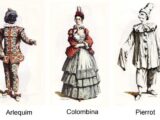
- King Momo, Pierrô, Harlequin and Colombina – Carnival characters
- Rural Maracatu at the Nazaré da Mata carnival in Pernambuco
- Barreiras has the Micareta, an off-season carnival that attracts young people.
- Salvador Carnival is the biggest popular event in the world.
- History of Salvador Carnival
- Origin and history of Carnival in Brazil
- The 7 Northeastern rhythms and musical styles that thrive in Brazil
History of Carnival in the Northeast of Brazil

Publicações Relacionadas
Monte Santo in Bahia: History and Religious Tourism
European architecture - chronology, styles and characteristics
The culture of Northeastern Brazil: how it originated, influenced and flourished

Musical styles, rhythms, singers and composers of northeastern Brazil

Extreme sports in the Northeast of Brazil: Destinations not to be missed

Influences and main dishes of northeastern cuisine
Brazil's historic moments illustrated in great works
Biography of Victor Meirelles and analysis of the work "The First Mass in Brazil"
Jean-Baptiste Debret: biography and works in Brazil
History of Baroque Architecture in the Northeast and Minas Gerais
Popular Art from the Northeast of Brazil

History, biography and paintings of Frans Post in Dutch Brazil
History and Chronology of the Portuguese Tile Industry
Franciscans in Brazil: Urban, architectural and artistic heritage
Colours of houses and buildings in the colonial architecture of the northeast
King Momo, Pierro, Harlequin and Colombina - Carnival characters

History and Chronology of the Carnival of Salvador de Bahia
History of the introduction of Portuguese tiles in Brazil

Maranhão's handicrafts have more than 400 years of tradition
The influence of Arab architecture on the buildings of Pernambuco
Historic Towns in the Northeast: Explore the Past

Northeastern Brazilian Rhythms: 7 Main Musical Styles
Rural Maracatu: A carnival tradition in the interior of Pernambuco
Woodcuts and Cordel Literature in Northeastern Brazil

Brazil's northeastern subsoil has emeralds and archaeology
History of the 8-bass accordion and its influence on forró
June festivals: Tradition and Culture in the Northeast of Brazil

Bobbin lace and embroidery: predominant handicrafts in Ceará

Diógenes Rebouças and His Architectural Legacy
Turban is Religion, Fashion and Culture in Brazil and the World
Casa Grande & Senzala: The Work of Gilberto Freyre
São Jorge dos Erasmos Sugar Mill: A Landmark in Brazil
Graciliano Ramos: The life and work of the Brazilian writer
Lampião and Cangaço: Between history and mythology
Lampião and the Cangaço: Between History and Mythology

José Américo de Almeida: A Brazilian Literary Icon
This post is also on:
 Português
  English
  Deutsch
  Español
  Français