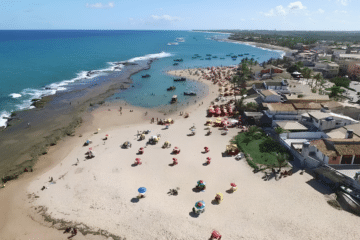
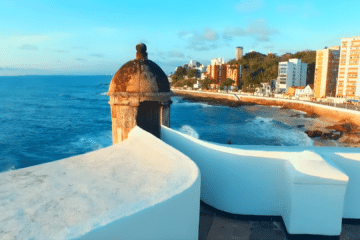
Salvador Carnival: Brazil’s largest popular festival
Celebrating Carnival in Salvador is a unique experience. The Salvador Carnival is one of the biggest popular festivals in Brazil, very well organised and attracting more than 2.5 million revellers to the streets of Salvador.

The joy of Bahia
“Ah! Imagine, what a crazy mixture. Joy, joy is the state we call Bahia.
Of all the saints, charms and axé. Sacred and profane, the Bahian is: Carnival…“. The greatest anthem of Bahia Carnival, the song “Chame Gente” by Morais Moreira, perfectly sums up not only the democratic spirit, beauty and incomparable joy of the city of Salvador, but above all the frenzy that is felt here every February during the biggest open-air party on the planet.
The evolution of carnival
From the simple “fubica” of Dodô and Osmar to today’s colossal electric trios, Carnival has gained status, infrastructure, new artists and finally won over the millions of hearts that have already celebrated here.
Transcendental experiences
Inside the Trio Blocks, in the Pipoca amidst the crowds, or on the newly created and super-luxurious Camarotes, revellers will have transcendental experiences that will raise their adrenaline and satisfaction to unprecedented levels.
Music and fun
For six days of virtually non-stop festivities, the biggest names in Brazilian music will converge on the city’s 26 kilometres of streets and avenues, aboard their trios and surrounded by their blocos, setting the wheels in motion of this immense dream factory.
Opportunities across the state
In the interior of the state, there are more peaceful but no less interesting options, such as “Carnaoeste”, held in the city of Barreiras; the Carnival in the paradise of Canavieiras, in the south of the state; and the “folia roots” in Palmeiras, in the heart of the Chapada Diamantina.
The Porto Seguro Festival
Finally, the highlight is the Porto Seguro Festival, which begins a week after the official calendar to revive the euphoria silenced by the capital’s hangover.
Carnival record-breakers
The Salvador Carnival breaks records with around 2,700,000 revelers in six days of festivities in three main districts: Dodô (Barra-Ondina), Osmar (Campo Grande-Avenida Sete) and Batatinha (Historic Centre). Celebrating Carnival in Salvador is undoubtedly an unforgettable experience that enchants everyone who visits the city. (Campo Grande-Avenida Sete) and Batatinha (Historic Centre). Celebrating Carnival in Salvador is undoubtedly an unforgettable experience that enchants everyone.
See also History of the Carnival in Salvador.
Video about Carnival in Salvador, Bahia

CARNAVAL SALVADOR DE BAHÍA, BRASIL03:05
CARNAVAL DE SALVADOR 202524:37

Ivete na Segunda de Carnaval - Salvador BA - 03/03/202545:40
Find out how to celebrate Carnival in Salvador
1. Salvador Carnival Routes
Salvador’s Carnival is divided into circuits, which are spread out over different areas of the city and divide the crowds into those who prefer a quieter atmosphere and those who prefer more excitement.
The main circuits of the Salvador Carnival are
- Dodô (Barra/Ondina),
- Osmar (Campo Grande)
- Batatinha (Pelourinho)
These are the most famous circuits, popular with people of all ages, styles and tastes.

But there are also other circuits, such as
- Riachão Circuit,
- Orlando Tapajós Circuit
- Mestre Bimba Circuit
- Sérgio Bezerra Circuit
They are also very lively and guaranteed fun.
The Batatinha circuit is best for families who want to enjoy the carnival with older, nostalgic marchinhas.
The Osmar and Dodô circuits are recommended for more energetic revellers, with the Osmar circuit taking seven hours to return to the starting point.
The vast majority of carnival blocks in Salvador are paid and you will receive an abadá (a T-shirt with the colours that symbolise the block).
This allows you to enjoy the party closer to the electric trios, all within a cordoned-off area.
During the carnival, several famous artists perform, drawing the crowds to the festivities with lively music and a relaxed atmosphere.
The most popular musical rhythm played on the floats is axé, but there are other styles of music as well. One example is the rock stage, which attracts many people who like this style of music.
2. Salvador Carnival Box Seats
For those who want to enjoy the Salvador Carnival in style and with more comfort, the ideal option is to choose the parties that take place in the Salvador Carnival boxes.
They offer a unique setting with air-conditioned bathrooms, a buffet, open bar, DJs, famous artists and other perks. This party is a little more expensive and tickets are in high demand, but it’s definitely worth checking out.
The price of tickets for the Salvador Carnival boxes depends on the day of the party, the gender of the partygoer and the route chosen.
3. Economical option: Salvador Carnival
A great way to experience Salvador’s carnival without spending too much is to enjoy the carnival in Pipoca. This party is also known as “blocos sem cordas” (blocks without ropes) because there are no barriers to separate the crowds, making it completely free. The party is very lively and has a variety of attractions.
4. Pre-Carnival in Salvador
We cannot forget the pre-Carnival celebrations in Salvador, known to the public as “Fuzuê” and “Furdunço”.
These are parties attended by famous artists, with lots of entertainment, music and joy, giving a taste of what Carnival in Salvador will be like that year.
Related articles
- History and Chronology of the Carnival in Salvador, Bahia
- King Momo, Pierrot, Harlequin and Columbine – Carnival characters
Bahia.ws is the biggest tourist guide for Bahia and Salvador.

Publicações Relacionadas
The War of Canudos: Rescuing historical memory
Trekking - Route through the Chapada Diamantina in 7 days
Trekking in the Pati Valley in Chapada Diamantina
Garcez Beach: Discover Paradise in Jaguaripe
Taipu de Fora: Discovering Natural Pools
Orchids of the Chapada Diamantina in Bahia
Humpback whales in Brazil — characteristics, migration and sanctuaries (Abrolhos)
Things to Do in Nova Viçosa (Bahia): Beaches, Islands and Abrolhos
Mining in the Chapada Diamantina History Explained
Iraquara is also known as the "city of caves"
Monte Pascoal National Park: Pataxó culture and Brazilian history
Barra do Cahy: Brazil's first beach - history and nature
Alameda do Sol — Vila da Praia do Forte (BA) | Things to do
Church and Convent of Santa Clara do Desterro and its History in Salvador
Rafting in Taboquinhas: The Ultimate Adventure Guide
History and Heritage of Itaparica Island — Bay of Todos os Santos
Camamu Bay — A Hidden Paradise in Bahia
Ecological tourism in Morro do Chapéu
Guarajuba Beach: A Paradise on the North Coast of Bahia
Things to do in Lençóis in the Chapada Diamantina — 15 attractions
Arembepe: beaches (Piruí, Praia do Canto), Hippie Village and the Tamar Project
Churches of Salvador: Architectural and Historical Treasures
Discover the São Francisco River Valley Region - Tourist Guide
Cachoeira (BA) — National Monument and Historical Trail
7-day itinerary in Salvador and the surrounding area: Pelourinho, the islands and Praia do Forte
Barreiras: An Ecological Paradise in Bahia
What to do on Boipeba Island - Tourist Guide - videos
Main islands of Todos os Santos Bay | Visitor’s Guide
Dive Sites of Chapada Diamantina: A Guide
Andaraí is the second largest town in the Chapada Diamantina
Caraíva: A rustic and unspoilt paradise in the south of Bahia
Iguaí: A Guide to Waterfalls and Relaxation
Discovery Route in Bahia: History, Culture and Tourism
City of Camamu: Rich History by the Bay
Tourist attractions for children in Salvador: Fun and learning
Discover the Magnificence Fort of Nossa Senhora de Monte Serrat
This post is also on:
 Português
  English
  Deutsch
  Español
  Français