How to get there

Main options:
- Ferry + road: crossing from Salvador to Itaparica Island (Bom Despacho Terminal) and a road journey to Nazaré, continuing on to Jaguaripe.
- By road: routes via the BR‑324/BR‑101 and state roads; check road conditions and alternative routes.
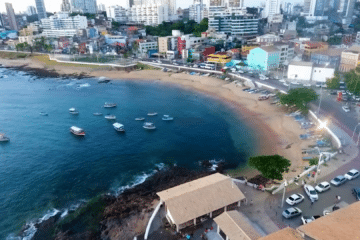
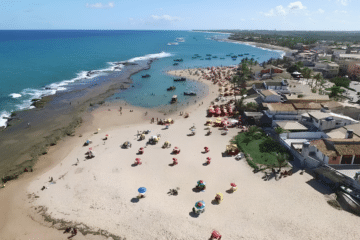
- Speedboat: trips depart frequently from Cacha-Prego Beach (Itaparica Island), a popular spot for boat hire.
Attractions and activities
The highlight is the system of mangroves, with channels, secluded beaches and streams. Recommended activities: boat trips, birdwatching, landscape photography and recreational fishing.
Fauna
The mangroves and surrounding areas are home to coastal birds, armadillos, anteaters, pacas and other mammals; they also serve as a marine nursery for various species of fish.
Vegetation
- Red mangrove (Rhizophora mangle)
- Black mangrove (Avicennia spp.)
- White mangrove (Laguncularia racemosa)
- Button mangrove (Conocarpus erectus)
Fishing and shellfish
The region is popular with fishermen as it is home to species such as whiting, mullet, sea bass and snapper. Shellfish and oysters are commonly found along the estuarine shores.
Video about the Bahian Pantanal and the town of Jaguaripe, BA

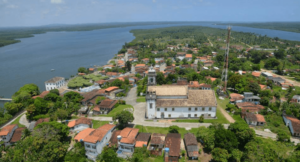


Jaguaripe — A brief history and tourist attractions
A brief history: Jaguaripe is a historic municipality in the Recôncavo Baiano region, with roots in the colonial era linked to estuarine navigation and the cultivation of sugar cane. The town preserves architectural and cultural features that reflect indigenous, African and European influences.


Tourist attractions
- The quay and riverfront of the River Jaguaripe — ideal for riverside strolls and boarding boats to explore the canals.
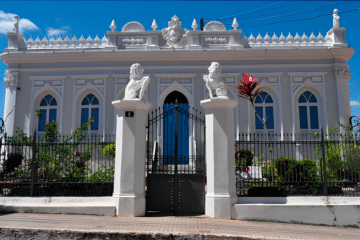
- The Main Church and colonial mansions — historical and architectural heritage.
- The Bahia Pantanal / mangroves — access to waterways, beaches and nature trails.
- Beaches and coves — accessible by boat on local tours.
- Religious and cultural festivals — folk events and local celebrations.
- Regional cuisine — restaurants serving fish and seafood dishes.
Practical tips
- Book tours with accredited local guides and boat operators.
- Check ferry timetables and road conditions before travelling.
- Bring insect repellent, sun cream and water; light clothing and suitable footwear for hiking and boat trips.
- Respect the environment: do not litter, do not collect flora or fauna, and follow local guidelines.
Note
The term ‘Bahian Pantanal’ refers to the complex of mangroves and estuaries in the Recôncavo and along the coast of Bahia, and is distinct from the Central –West Pantanal and the floodplains of the Chapada Diamantina (such as the Pantanal dos Marimbus), which are different ecosystems.

Publicações Relacionadas
Coast of Discovery: Bahia's Historical Treasures
The 15 Most Visited and Well-Known Beaches in Bahia
Barreiras: An Ecological Paradise in Bahia
Church and Convent of Nossa Senhora da Palma in Salvador, Bahia
Abseiling Sites in Bahia: Top Locations to Explore
Discover the São Francisco River Valley Region - Tourist Guide
Jandaíra: Discover the charm of Mangue Seco
Solar do Unhão & MAM-BA — History, Architecture and a Visit
Origin and History of Capoeira in Brazil Explained
Trekking in the Pati Valley in Chapada Diamantina
Cocoa farms attract tourists to Bahia - Chocolate Road
Mining in the Chapada Diamantina History Explained
Porto Seguro's nightlife: Where to have fun
Maraú Peninsula: A Coastal Paradise in Bahia
Prado (BA) — Beaches, Cliffs and Whale Watching | Whale Coast
Lauro de Freitas — A comprehensive guide to beaches, culture and leisure
Church of Nossa Senhora dos Mares (Salvador) — History and Architecture
Cairu Archipelago: A Guide to Its Enchantment
Imbassaí Beach: Discover the Best of Bahia
Subaúma Beach: The Perfect Escape in Bahia
The best places to visit on the Cocoa Coast in Bahia
Places of interest in Salvador — A comprehensive guide
Cachoeira (BA) — National Monument and Historical Trail
The Coconut Coast and its tourism heritage
Iguaí: A Guide to Waterfalls and Relaxation
10 Interesting Facts About Rio de Contas That You Didn’t Know
Main caves in the municipality of Iraquara in Chapada Diamantina
South Coast of Bahia: Discover Stunning Beaches
Waterfalls and trails in the Capão Valley: Complete Guide
Iraquara is also known as the "city of caves"
Andaraí is the second largest town in the Chapada Diamantina
Municipality of Una: A Beach Paradise Awaits
Tourism in São Francisco do Conde (BA) — Tips and Attractions
History and Heritage of Itaparica Island — Bay of Todos os Santos
Serra Grande: Your Guide to Bahia's Paradise
Whale Coast (BA) — Complete guide: Abrolhos, beaches and whale-watching
This post is also on:
 Português
  English
  Deutsch
  Español
  Français