Gravatá: The charm of the interior of Pernambuco and its attractions not to be missed
Gravatá, located in the interior of Pernambuco, is 80 km from Recife, on the BR-232 highway, which connects Recife to Caruaru.
With a altitude of 447 metres above sea level and a pleasant climate with an average temperature of 16 degrees, Gravatá stands out for the centuries-old architecture of its houses, a solid hotel chain and furniture and handicrafts shops.

1. Tourism in Gravatá
Tourism in Gravatá is characterised by nature, with trails, farms, waterfalls and stud farms. The town also offers a rich gastronomic, historical and cultural trail, with squares, the Furniture Centre and restaurants that attract many tourists.
2. Main attractions
The most visited places in Gravatá are the Public Market, the Alto do Cruzeiro, the Santana Mother Church, the Chucre Mussa Zarzar Events Centre and the Furniture Centre.
The local gastronomy is diverse, ranging from exquisite Italian and Swiss restaurants to traditional pub food.
Video about the tourist attractions of Gravatá PE


3. Gravatá’s Tourist Attractions
1. Alto do Cruzeiro
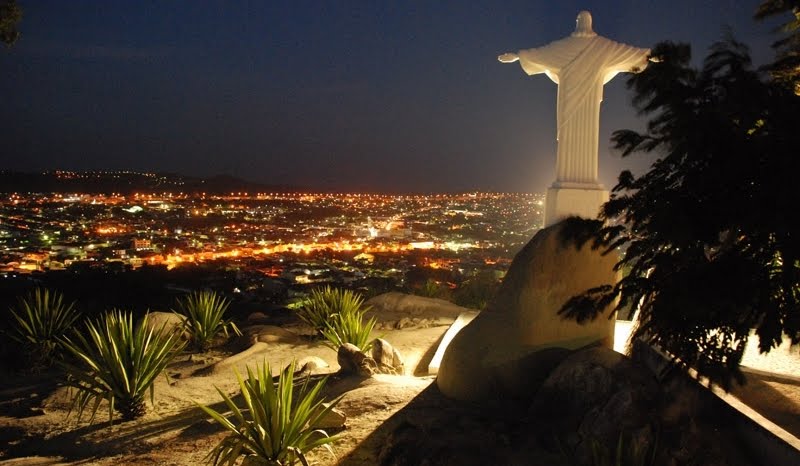
Alto do Cruzeiro is home to the statue of Christ the Redeemer and is accessible via 365 steps known as the Staircase of Happiness. There you can sample the local cuisine in the restaurants while enjoying the sunset.
At an altitude of 600 metres, Alto do Cruzeiro is a natural elevation in the city centre, where you’ll find rocky outcrops and bromeliads (also known as gravatá). From here you can see the urban area, the Serra do Maroto and the Serra Negra, which belongs to the Bezerros municipality.
Here you will find the image of Christ the Redeemer, the Chapel of Cristo Rei, the Cruzeiro, the Escadaria da Felicidade, and bars and restaurants.
Address: Alto do Cruzeiro, via Rua 07 de Setembro or Rua Régis Velho.
2. Furniture Centre
The Gravatá Furniture Centre sells rustic furniture made from solid wood such as maçaranduba and angelim. Located at the entrance to the city, the centre is the main outlet for handmade production.
Solid wood furniture in a rustic style is the most popular, complemented by decorative and functional pieces in aluminium, bronze and vine. There are also cafes, chocolate shops, snack bars and convenience stores.
Address: Rua Duarte Coelho.
3. Monsenhor Cremildo Batista de Oliveira Park
This 37,000 m² park offers leisure facilities for locals and tourists. It has a 1,100 m jogging track, a 2,200 m² cycling track, a 500 m² skateboard track, a water mirror, an amphitheatre with seating for 1,500 people, an arts square, a library, a nurses’ station, shops and a 140-space car park.
4. Artisan’s Station
The Artisan’s Station is located in the old railway station, next to the Chucre Mussa Zarzar Events Patio, where local artisans sell their wares.
5. Cultural Market
Built in 1911, the former “Charque Market”, now known as the Cultural Market, offers a varied gastronomic and cultural experience.

The architecture of the place has been preserved and the stalls sell spices and typical dishes of the Agreste, as well as a space for cultural performances.
Address: Rua Sérgio Loreto, s/n, Centre.
6. Gravatá Memorial
The Gravatá Memorial, located on the site of the old public prison, was built in 1911 and is an example of early 20th century military architecture. The site was the scene of revolutionary struggles in the 1920s, including the Tenants’ Movement.

In 1985, the old prison was transformed into the Pastor Rosalino da Costa Lima House of Culture, and in 2002 into the Memorial, which keeps alive the memory of the city’s inhabitants.
Address: Rua Tenente Cleto Campelo, s/n, Centre.
7. Palmeira Waterfall
The Palmeira Waterfall, located 15 kilometres from the city, is commercially exploited and is one of the region’s natural attractions.

8. Historical architecture
Gravatá is rich in buildings from past centuries, such as the City Hall (1908), the Matriz de Sant’Ana Church (1810), the houses on Joaquim Didier Avenue and the Capela do Cruzeiro, which give the city a special charm.

9. Cascavel Bridge
The Cascavel Bridge, located at the level of the Serra das Russas, near km 82 of the BR-232, is about 48 metres high and was built by the English at the beginning of the 19th century to support the old railway that connected Recife to the Sertão. Today, the bridge is a destination for adventure seekers, including abseiling.

10. Off-road trails
The people of Gravatá have a real passion for off-road trails and 4×4 vehicles, using their cars to explore the diverse landscapes around the city.
11. Horse riding
Gravatá is known as the Land of the Horse, with more than 400 stud farms spread throughout the municipality. The town also organises horse breeding events.
12. Flower Route
Gravatá is famous for being the largest producer of tropical flowers in the north and northeast, and for its unique perfume.
13. Mother Church of St. Anne
The Igreja Matriz de Sant’Ana, patron saint of Gravatá, had its foundation stone laid on 19 October 1983. The church was built on the site of an old chapel that was demolished in 1940.
In November of the same year, the new parish church was consecrated, with a chapel, choir, sacristy and a 35-metre side bell tower.
Address: Rua Rui Barbosa, s/n, Centre.
14. Cultural events
Walking and abseiling activities are organised every weekend along the old railway lines and bridges. The most popular activities are the 6 km walk along the abandoned tracks and the 50 metre negative abseil, organised by various private companies.
There are monthly Catholic events organised by the Canção Nova de Gravatá, located on the BR 232, km 81 (local road), which include talks, training and concerts.

Publicações Relacionadas

Ricardo Brennand Institute — Castle Museum, Armory, and Art Gallery
Sights in Recife: 5 must-see attractions
The history of the Golden Chapel and the Third Order of Recife

Boa Viagem Beach (Recife) — A Complete Guide for Visitors
The best beaches in Pernambuco — a 5-day itinerary
Praia dos Carneiros voted one of the most beautiful beaches in the Northeast
7-Day Itinerary in Pernambuco with Historical Highlights

History and architecture of the Palácio do Campo das Princesas in Recife

Giant Puppets and Their Role in Olinda Carnival
Graça Church and Olinda Seminary Historical Significance
Monastery of São Bento de Olinda: A Historic Landmark
Olinda Cathedral: A Historical Landmark in Brazil
Franciscan Monastery of Olinda: A Historic Landmark
Igarassu: Discover the historic city of Pernambuco

Sugar mills on the outskirts of Porto de Galinhas PE

The oldest churches in Pernambuco and the first church in Brazil
Goiana: A Historical Treasure in Pernambuco
Main historical landmarks of Pernambuco and Recife

Main Tourist Attractions in Recife You Must Visit

Pernambuco's best beaches and their attractions
Vale do Catimbau National Park: Your Guide to Ecotourism
Santo Aleixo Island: A tourist paradise in Pernambuco
Interior of Pernambuco: Nature, Wine, and Tradition
Tracunhaém and Its Rich Clay Handicraft Tradition

Basilica of Our Lady of Penha: A Historical Overview
Church of Santa Teresa D'Ávila da Terceira Ordem do Carmo History
Kahal Zur Israel Synagogue — Jewish Museum and Cultural Centre (Recife)
Church of Nossa Senhora da Boa Viagem History
History of the Basilica of Our Lady of Mount Carmel in Recife
History of the Church of Our Lady of the Rosary of the Black Men
Golden Chapel: A Jewel of Brazilian Baroque
Sacred Recife and Religious Tourism in Recife, Pernambuco
Carne de Vaca Beach: A Hidden Gem in Pernambuco
Maria Farinha Beach: Activities and Attractions
Triunfo, Pernambuco: attractions, climate and things to do
Serra Talhada: A Journey Through Pernambuco's Culture
This post is also on:
 Português
 English
 Deutsch
 Español
 Français