History and Architecture of the Basilica of Our Lady of Penha
The Basilica of Our Lady of Penha is one of the most important religious temples in Recife, Pernambuco.
Located in the São José district, the church is known for its rich history as well as its impressive architecture.

Video about the architecture and history of the Basilica of Our Lady of Penha
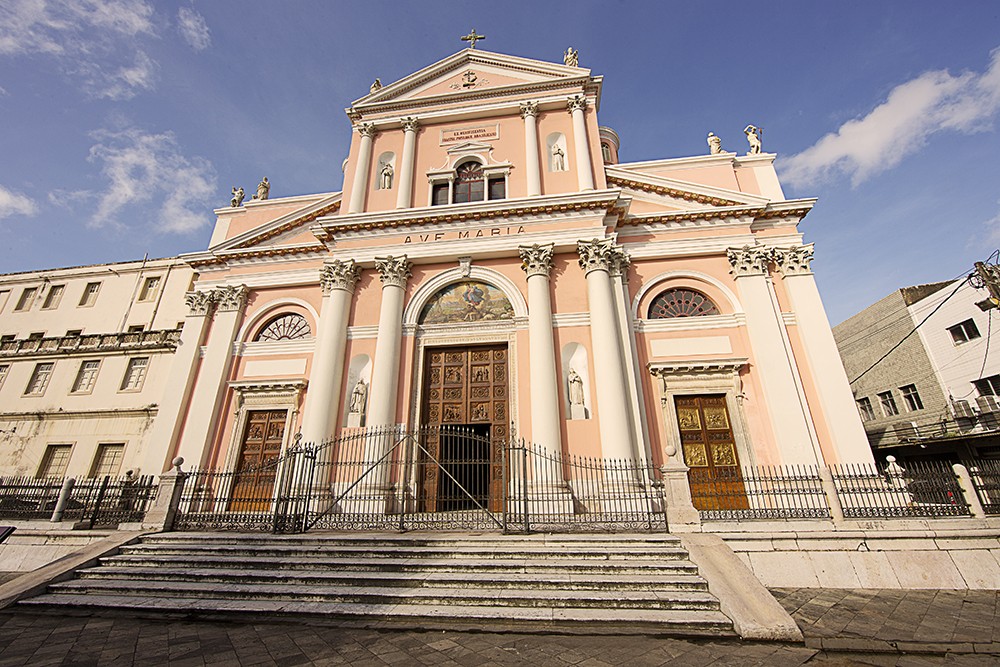
Basílica Nossa Senhora da Penha em Recife
1. The history
The Church of Our Lady of Penha, located in the heart of Recife’s commercial centre, dates back to the time of the Hereditary Captains, when the Dutch Count Maurício de Nassau, then governor, welcomed the first French Capuchin missionaries to Pernambuco in 1642.
Later, the Capuchins were given a large tract of land and built a hospice and a church.
In 1870, Capuchins from Veneto (Italy) demolished the old church of Penha and built the imposing Basilica of Penha, which was completed in 1882 under the direction of the skilled Capuchin architect, Brother Francesco Maria Di Vicenza.

The monk architect was inspired by the Venetian basilica of San Giorggio Maggiore, in neoclassical style.
The Basilica of Our Lady of Penha is a landmark in the history of Pernambuco architecture and an example in Brazil of the beginnings of neoclassicism in Pernambuco.
Unlike the Baroque style used in most of Recife’s churches, the Basílica da Penha is Neo-Renaissance and is an architectural masterpiece with a vast artistic ensemble both inside and out.
Most of the works have no documentation to indicate their authorship, leaving a gap in the historical record of the building.
Among the few works whose authorship is known, we find the figures of Saint Francis and Saint Anthony, carved in marble in bas-relief on the high altar by Valentino Besarel. However, there are indications that several works are by the same sculptor. There are also frescoes by Murillo La Greca on the high altar.
In 1964, Dom Hélder Câmara, Archbishop of Olinda and Recife, created the Parish of Our Lady of Penha and chose the Basilica of Penha as its main church.
Traditionally, the Basilica of Our Lady of Penha receives a large influx of devotees on Fridays, when the blessing of St Felix is given throughout the day by the Capuchins.

2. Neoclassical architecture
The architecture of the Basilica of Our Lady of Penha is an impressive example of the neoclassical style, which was popular in Brazil in the 19th century. The façade of the church is characterised by its columns and triangular pediment, typical elements of this architectural style.

The main entrance is majestic, with large carved wooden doors giving access to the interior of the temple.
The interior of the basilica is grandiose and ornate, with a wide, high central nave. The walls and ceiling are decorated with sacred paintings and reliefs depicting scenes from the life of Our Lady and the saints of the Catholic Church. The main altar is the focal point of the interior, richly decorated with marble and gold, and houses the image of Our Lady of Penha, carved in wood.
The side chapels are dedicated to other saints and are also decorated with paintings and statues. Natural light enters through the colourful stained glass windows, imported from Europe, depicting biblical passages and religious figures.

3. Cultural and Religious Importance
The Basilica of Our Lady of Penha is an important centre of worship in Recife. The festival in honour of Our Lady of Penha, celebrated in November, is one of the most important religious events in the city, attracting thousands of worshippers. During the festivities, the Basilica becomes the meeting point for processions, masses and other religious activities.
In addition to its religious role, the Basilica is also an important historical and architectural landmark in Recife. It represents the city’s rich cultural heritage and the influence of the Catholic Church on the social and cultural development of the region.
The Basilica is often visited by tourists who come to admire its architecture and learn more about the religious history of Recife. It is a symbol of faith and perseverance, reflecting the long history of Catholicism in Brazil.

Tourist Guide to Recife, Pernambuco and the Northeast
Religious Tourism and Sacred Recife

Publicações Relacionadas
Maria Farinha Beach: Activities and Attractions
Tracunhaém and Its Rich Clay Handicraft Tradition
The history of the Golden Chapel and the Third Order of Recife
Gravatá: Your Guide to the Best Attractions
Sertão of Pernambuco: A Cultural Diversity Hub
Route of the Sugar Mills and Maracatus in Pernambuco
The Stage of the Passion of Christ in New Jerusalem: A Guide
History and architecture of the Palácio do Campo das Princesas in Recife
Porto de Galinhas: Your Guide to Perfect Beaches
São José da Coroa Grande: A Coastal Paradise
Petrolina: Exploring Its Wine and Tourism
Main historical landmarks of Pernambuco and Recife
Monastery of São Bento de Olinda: A Historic Landmark
Main Tourist Attractions in Recife You Must Visit
Kahal Zur Israel Synagogue — Jewish Museum and Cultural Centre (Recife)
Pernambuco's Rural Tourism Route: A Traveler's Guide
Mata Sul Region of Pernambuco: Waterfalls to Explore
Porto de Galinhas: beaches, natural pools and travel tips
Triunfo: The Oasis of the Sertão in Brazil
Olinda: A Journey Through Colonial Architecture
North coast of Pernambuco: beaches, history and attractions
Giant Puppets and Their Role in Olinda Carnival
Boa Viagem Beach (Recife) — A Complete Guide for Visitors
Recife: The Brazilian Venice and its Cultural Heritage
Santo Aleixo Island: A tourist paradise in Pernambuco
Vale do Catimbau National Park: Your Guide to Ecotourism
Olinda Cathedral: A Historical Landmark in Brazil
Sights in Recife: 5 must-see attractions
Dutch Recife and the Dutch Invasion of Brazil
History of the Church of Our Lady of the Rosary of the Black Men
The oldest churches in Pernambuco and the first church in Brazil
Beaches on the South Coast of Pernambuco: A Complete Guide
Tamandaré: Explore the Best of Pernambuco
Goiana: A Historical Treasure in Pernambuco
Pernambuco's best beaches and their attractions
Graça Church and Olinda Seminary Historical Significance
This post is also on:
 Português
  English
  Deutsch
  Español
  Français