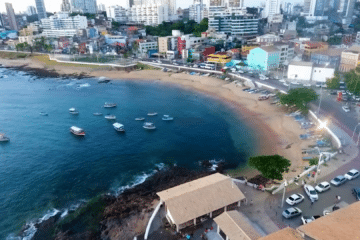
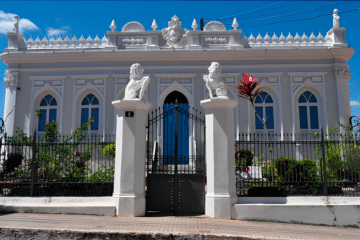
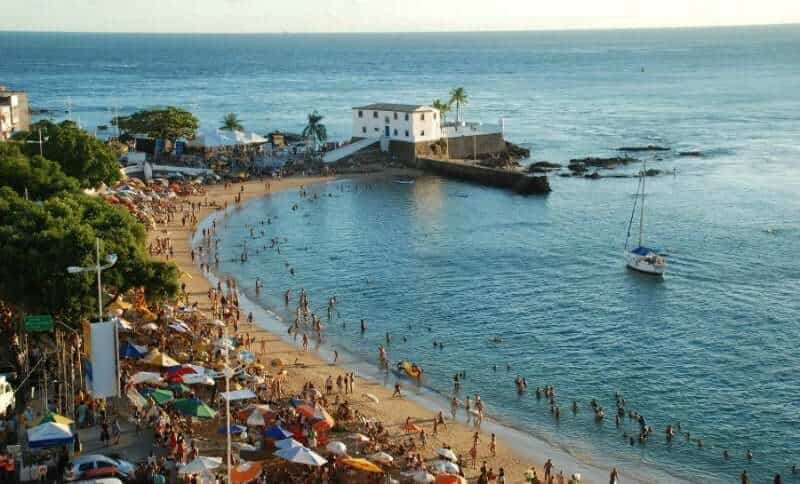
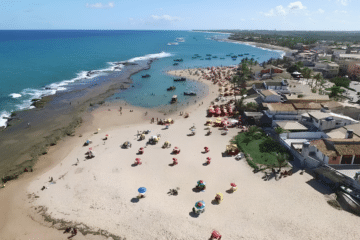
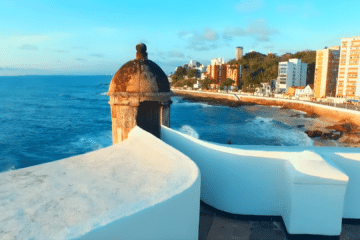
Tamandaré is a municipality located on the southern coast of Pernambuco, approximately 100 kilometres from the city of Recife. It is renowned for its clear-water beaches, coral reefs, remnants of the Atlantic Forest and historical heritage.
Why should you visit?
The municipality of Tamandaré boasts warm, clear beaches, natural pools formed by reefs, conservation areas, and historical attractions, making it an ideal destination for those seeking nature, tranquillity, and cultural experiences.
The main attractions of the municipality of Tamandaré:

Praia dos Carneiros em Pernambuco06:15

Praia dos Carneiros em Tamandaré04:46

Praia dos Carneiros - Tamandaré - Guia de Turístico04:53
Outros Pontos Turísticos de Tamandaré06:46
Praia das Campas em Tamandaré pE01:22:58
- The main beaches in the municipality of Tamandaré:
- Saltinho Biological Reserve
- Fort Saint Ignatius of Loyola
- religious heritage
1. The main beaches in the municipality of Tamandaré.
- Tamandaré Beach (on the coastline of the town centre).
- Carneiros Beach
- Campas Beach
- Boca da Barra: the mouth of the Mamucabas River.
- Lira Point
- There are smaller stretches and places known as Guaiamum, as well as other coastal coves.

1. Carneiros Beach
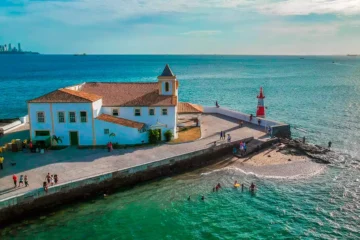
A postcard image of the municipality featuring coconut trees, clear waters and the famous little church by the sea. It is excellent for swimming in the natural pools and for photography.


2. Tamandaré Beach
This urban beach offers local services, restaurants and accommodation.


4. Praia da Boca da Barra
This is the quietest stretch of the municipal coastline, making it ideal for those seeking less crowded beaches and closer contact with nature.


5. Campas Beach
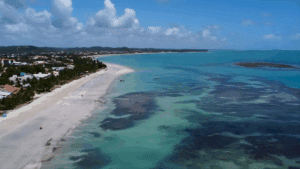
Praia das Campas, located in Tamandaré, is a tranquil stretch of white sand and coconut trees. It is situated between the city of Tamandaré’s beach, known as Praia de Tamandaré, and the renowned Praia dos Carneiros.

6. Pontal do Lira Beach
Pontal do Lira Beach is a stretch of coastline in the municipality of Tamandaré, situated to the north of the city’s waterfront. Characterised by a strip of sand, rock formations and coconut trees, the beach is surrounded by a headland that juts out into the sea, creating areas ideal for swimming and artisanal fishing.

2. Saltinho Biological Reserve
This federal conservation unit contains remnants of the Atlantic Forest and the Bulha waterfall, making it an ideal place for hiking and observing flora and fauna.
3. Fort of Saint Ignatius of Loyola
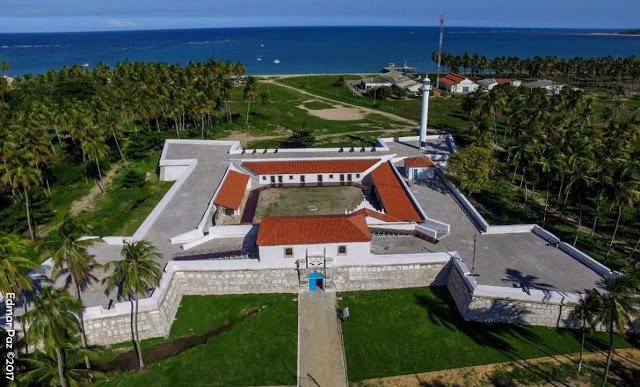
The Fort of Saint Ignatius of Loyola, also known as the Fort of Tamandaré, was built in the 17th century and renovated in the 18th and 19th centuries. However, it was abandoned in recent decades. Now, it is brand new and ready to be reopened to the public.
location and function
The historic building, located in Tamandaré on the southern coast of Pernambuco, has been restored and repurposed. Rather than defending the coast as it did in the past, Tamandaré Fort has been transformed into a tourist and cultural centre.
new facilities
The barracks, which once housed soldiers, will now be occupied by craft shops selling items produced in Tamandaré. The prisoners’ cells and guardhouse will be converted into a museum.
The first-floor commander’s house is being adapted to accommodate a restaurant or café, which will be chosen by tender.
historical remains
Traces of the ancient construction were visible throughout the fort, including windows, portals, walls and stone floors, as part of the building’s historical restoration.
Visitors to the commander’s house can see nails from that period in a doorway, as well as the mechanism used to lock doors and windows.
The gunpowder house remains in ruins, but has been consolidated within the restored fortification. A stone stove used by soldiers has been reconstructed in one of Tamandaré Fort’s rooms and is listed as a state monument.


4. Religious heritage
The Chapel of São Benedito and the Church of São Pedro are small heritage sites of historical and cultural significance.
1. The Chapel of Saint Benedict at Carneiros Beach
The small, charming Chapel of São Benedito was built in 1910. Painted white with green details, it stands out amid the immense coconut grove on the beach.
The simplicity of the architecture, combined with the beauty of the location, means that everyone leaves having taken at least one photograph as a souvenir. The coconut tree trunks stuck in the sand in front of the church serve to protect against the force of the high tide.

2. Church of Saint Peter, Campas Beach
Its Baroque architecture dates back to the 19th century. It features a bell tower and a front staircase which leads directly down to the beach.
When the tide is high, it is only possible to access the church from the rear, as the steps are flooded.
Although it was restored a few years ago, Masses are only held on special occasions. It is a very popular wedding venue, and guests are usually enchanted as soon as they arrive on a night when the church is illuminated by a full moon.


recommended activities
- Go swimming and snorkelling in the natural pools near the reefs.
- We offer boat trips and guided tours to the beautiful Praia dos Carneiros beach.
- Go on buggy rides along the coast and explore the nature trails.
- Go birdwatching and experience the Atlantic Forest at the Saltinho Reserve.
- Take a historical and cultural tour of the headquarters and fortified sites.
How to get there and where to stay.
The main access route is via the PE-076 state road. Tamandaré offers small and medium-sized inns and hotels, while Praia dos Carneiros offers accommodation geared towards seaside tourism. It is advisable to book in advance during the high season.

Publicações Relacionadas

Ricardo Brennand Institute — Castle Museum, Armory, and Art Gallery

Sights in Recife: 5 must-see attractions

The history of the Golden Chapel and the Third Order of Recife

Boa Viagem Beach (Recife) — A Complete Guide for Visitors
The best beaches in Pernambuco — a 5-day itinerary
Praia dos Carneiros voted one of the most beautiful beaches in the Northeast

7-Day Itinerary in Pernambuco with Historical Highlights

History and architecture of the Palácio do Campo das Princesas in Recife

Giant Puppets and Their Role in Olinda Carnival
Graça Church and Olinda Seminary Historical Significance

Monastery of São Bento de Olinda: A Historic Landmark
Olinda Cathedral: A Historical Landmark in Brazil
Franciscan Monastery of Olinda: A Historic Landmark
Igarassu: Discover the historic city of Pernambuco

Sugar mills on the outskirts of Porto de Galinhas PE

The oldest churches in Pernambuco and the first church in Brazil
Gravatá: Your Guide to the Best Attractions

Goiana: A Historical Treasure in Pernambuco
Main historical landmarks of Pernambuco and Recife

Main Tourist Attractions in Recife You Must Visit

Pernambuco's best beaches and their attractions
Vale do Catimbau National Park: Your Guide to Ecotourism
Santo Aleixo Island: A tourist paradise in Pernambuco
Interior of Pernambuco: Nature, Wine, and Tradition

Tracunhaém and Its Rich Clay Handicraft Tradition

Basilica of Our Lady of Penha: A Historical Overview
Church of Santa Teresa D'Ávila da Terceira Ordem do Carmo History
Kahal Zur Israel Synagogue — Jewish Museum and Cultural Centre (Recife)

Church of Nossa Senhora da Boa Viagem History

History of the Basilica of Our Lady of Mount Carmel in Recife
History of the Church of Our Lady of the Rosary of the Black Men

Golden Chapel: A Jewel of Brazilian Baroque

Sacred Recife and Religious Tourism in Recife, Pernambuco
Carne de Vaca Beach: A Hidden Gem in Pernambuco
Maria Farinha Beach: Activities and Attractions
Triunfo, Pernambuco: attractions, climate and things to do
This post is also on:
 Português
  English
  Deutsch
  Español
  Français