Porto de Galinhas: complete guide to beaches, natural pools and travel tips
Porto de Galinhas is the main beach destination in Pernambuco and one of the most famous in Brazil. More precisely, it lies in the municipality of Ipojuca, on the state’s southern coast, about 60 km from Recife. In addition, it combines crystal-clear water, reefs that form natural pools, the Galés, and a charming village full of restaurants and shops.
- Where it is: Ipojuca, on the southern coast of Pernambuco, about 60 km from Recife (1 hour by car).
- Highlight: the natural pools of the Galés, visited by jangada at low tide.
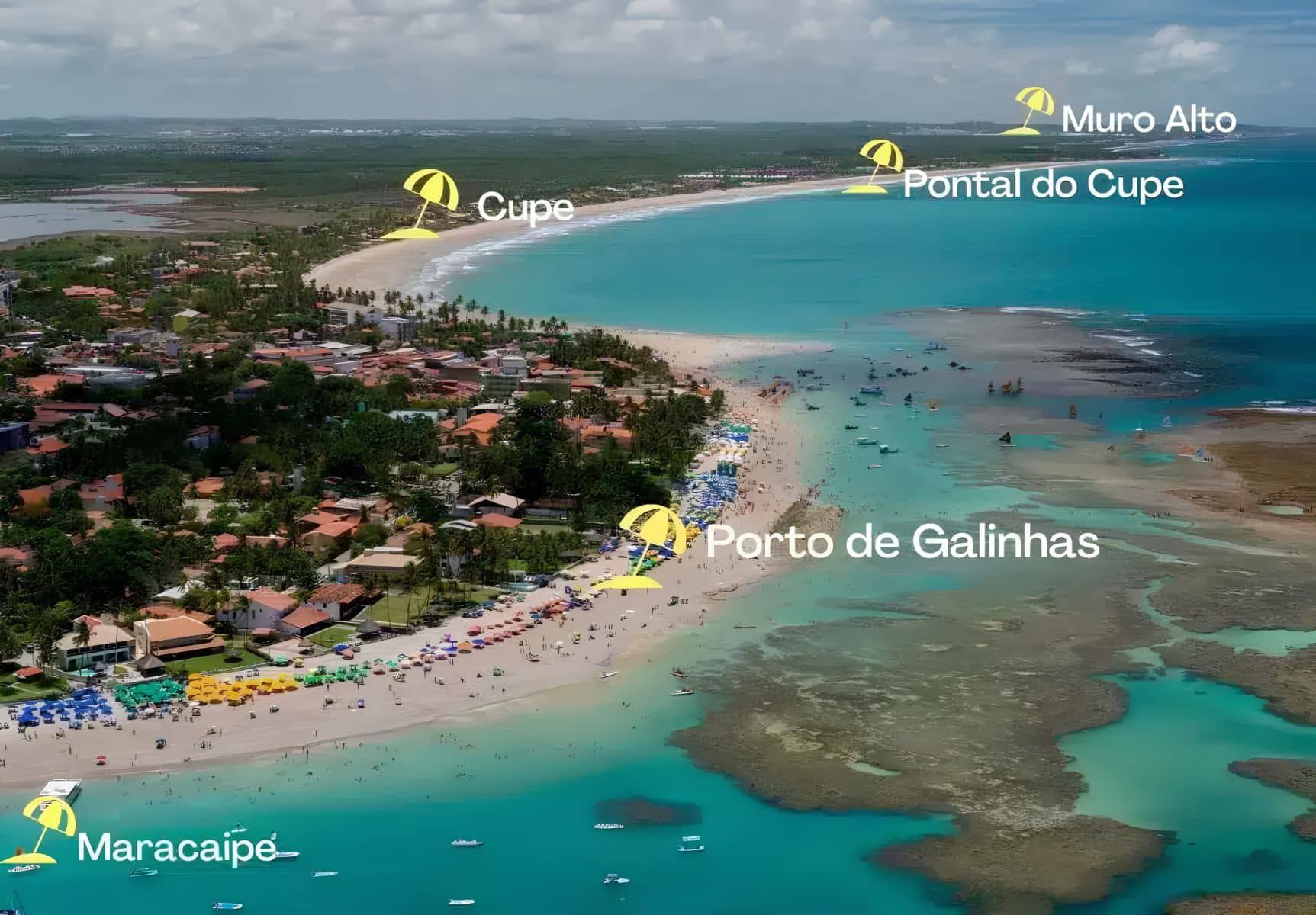
- Beaches: Muro Alto, Cupe, Porto de Galinhas (Vila), Maracaípe, Pontal de Maracaípe, Serrambi and Camboa.
- Tours: jangada, buggy, seahorses at Pontal de Maracaípe, Ilha de Santo Aleixo and Praia dos Carneiros.
- Best time: from September to March, with less rain.


Why visit Porto de Galinhas
- Natural pools: at low tide, the reefs form pools of warm, clear water, full of colourful fish.
- Beaches for every taste: there is everything from calm coves, ideal for children, to strong waves for surfing.
- Activities: besides swimming in the sea, there is snorkelling, jangada and buggy tours, stand-up paddle and kayaking.
- Lively village: the village has restaurants, bars, handicrafts and the famous chicken sculptures.
- Infrastructure: finally, there are accommodation options for every budget, from guesthouses to large resorts.
The origin of the name
In the past, in fact, the place was called Porto Rico. According to tradition, after the slave trade was banned in 1850, Africans continued to arrive there in secret, hidden among crates of guinea fowl. For this reason, the password “tem galinha nova no porto” (“there are new hens in the port”) is said to have given rise to the name Porto de Galinhas.

Videos about Porto de Galinhas

Praia da Vila de Porto de Galinhas PE02:53

Praia da Vila em Porto de Galinhas PE03:17

Praia de Maracaípe em Porto de Galinhas PE03:46

Pontal de Maracaípe em Porto de Galinhas PE09:51

Pontal de Maracaípe em Pernambuco01:50

Praia de Muro Alto em Porto de Galinhas PE02:52

Pontal do Cupe em Porto de Galinhas PE04:10

Praia Portal do Cupe em Pernambuco03:24

Porto de Galinhas - Guia08:11

Porto de Galinhas - Drone

Principais atrações de Porto de Galinhas21:41
The beaches of Porto de Galinhas
The beaches of Porto de Galinhas stretch from Muro Alto, in the north, to Maracaípe, in the south. Thus, since there are no major barriers between them, you can walk from one beach to the next along the sand.

Porto de Galinhas Beach (Vila)
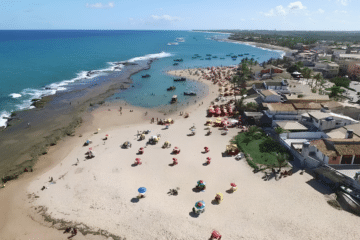
First of all, this is the beach in front of the Vila, the village centre, and the departure point for the jangadas to the natural pools. Moreover, it has shallow water at low tide, good for swimming and for watching fish.

Galés: the natural pools
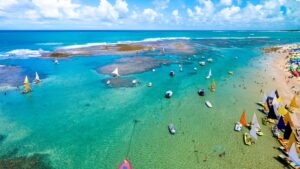
Without a doubt, the Galés are the postcard image of Porto de Galinhas. Formed by the reefs, they appear at low tide, just a few minutes from the beach by jangada, the traditional raft. So, there you can snorkel, swim among the fish and take photos.
To preserve the reefs, however, do not step on the corals and do not feed the fish. Also, use biodegradable sunscreen.


Muro Alto Beach
Further north, on the other hand, Muro Alto has a long reef barrier that forms a huge natural pool of calm water. That is why it is ideal for children, stand-up paddle and kayaking. It also has many large resorts and good beach huts.


Praia do Cupe and Pontal do Cupe
Next, between Muro Alto and the Vila, Praia do Cupe is long and has stretches with waves, good for surfing and bodyboarding. Pontal do Cupe, by contrast, has more sheltered areas and natural pools at low tide, a good option for families.

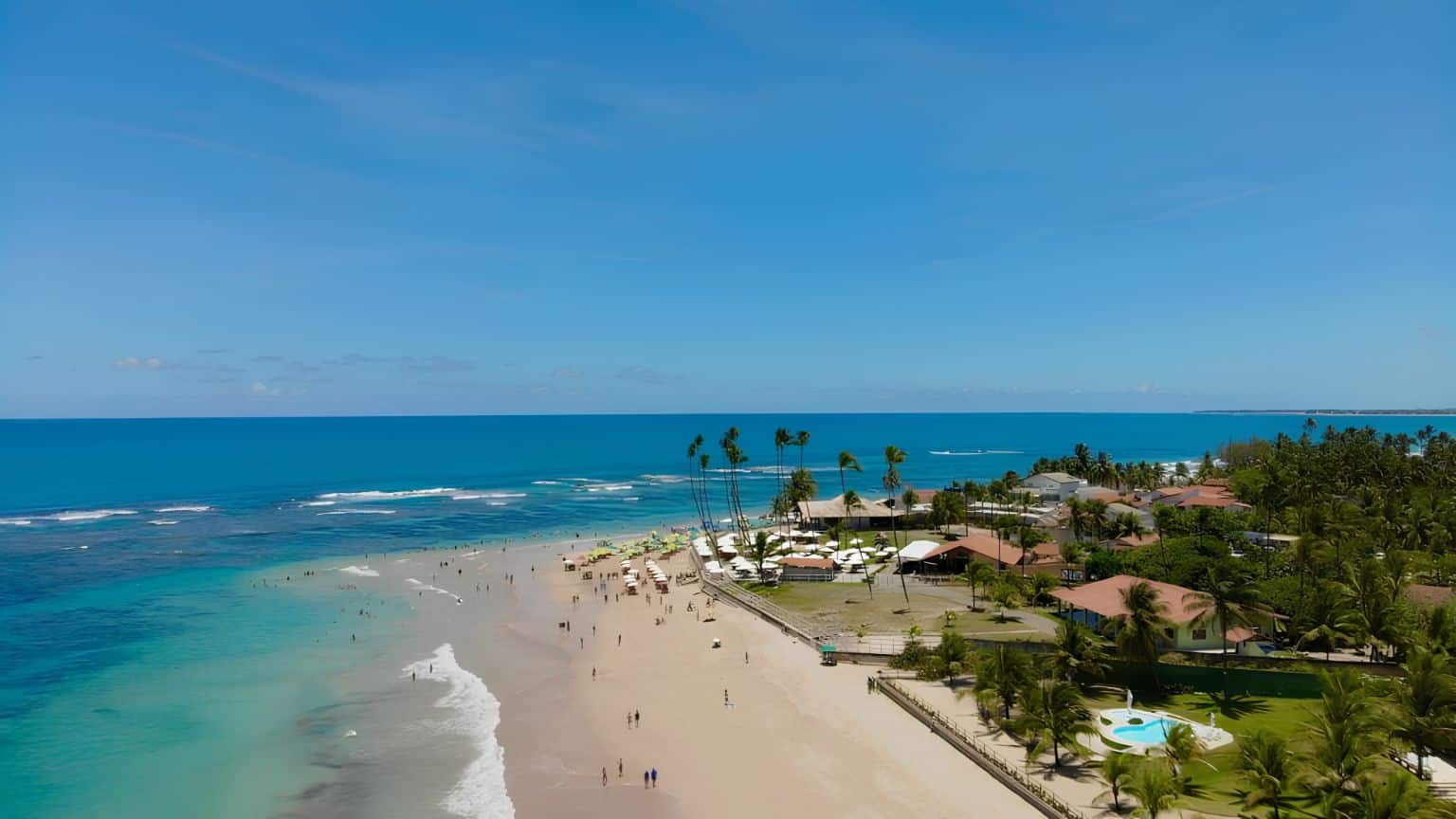
Maracaípe Beach
South of the Vila, meanwhile, Maracaípe is the surfers’ favourite beach, with strong waves and a more rustic feel. Therefore, watch out for currents before going into the sea.


Pontal de Maracaípe
At the mouth of the Maracaípe River, the Pontal is a peaceful spot surrounded by mangroves. In addition, jangada tours leave from here through the mangrove to see seahorses. What is more, the sunset at the Pontal is one of the most beautiful in the region.

Serrambi and Camboa
Further south, still in Ipojuca, there are quieter beaches. For example, Serrambi has beautiful scenery and is good for diving. Camboa, on the other hand, sees few visitors and is almost deserted, ideal for those seeking peace and quiet.


Tours in Porto de Galinhas
- Jangada to the Galés: the most famous tour, done at low tide, starting from the Vila beach.
- Seahorses: a jangada tour through the mangrove at Pontal de Maracaípe.
- Buggy: routes that cover the beaches, from Muro Alto to Maracaípe.
- Sports: surfing in Maracaípe and Cupe; stand-up paddle and kayaking in Muro Alto.
- Sugar mills: finally, it is worth visiting the sugar mills around Porto de Galinhas.
Ilha de Santo Aleixo and Praia dos Carneiros
Another popular tour, moreover, goes to the small Ilha de Santo Aleixo, which already belongs to Sirinhaém. In general, the boat leaves in the morning and, after about an hour on the island, with a walk and snorkelling in the natural pools, continues to Praia dos Carneiros, in Tamandaré, with a stop for lunch and a swim. However, since schedules change, check with the agencies.

How to get to Porto de Galinhas
- By car: from Recife, take the BR-101 south, then the PE-060 and the access roads to Porto de Galinhas. In total, the route is about 60 km and takes about 1 hour.
- From the airport: Recife International Airport is the closest. From there, in turn, there are taxis, ride-hailing apps and transfers.
- By bus: there are also regular buses from Recife to Porto de Galinhas.


See the map of the southern coast of Pernambuco
Where to stay
In general, the region has accommodation for every budget. The Vila has most of the guesthouses, restaurants and nightlife; therefore, it is the best option for those who want to do everything on foot. Muro Alto and Cupe, on the other hand, are home to the large resorts. Finally, Maracaípe has simpler guesthouses and a surf vibe.
Best time to visit
- September to March: the driest and sunniest period. The high season, however, runs from December to February.
- April to July: in contrast, this is the rainiest period, peaking in May and June.
- Temperature: generally between 25 °C and 30 °C all year round.
At any time of year, check the tide table: the Galés only appear at low tide, preferably below 0.5 m.
Practical tips
- Choose accredited jangadas, identified by the raftsmen’s association.
- Bring a mask and snorkel and, above all, do not step on the reefs.
- In addition, use biodegradable sunscreen.
- Find out about the currents, especially in Maracaípe and Cupe.
- Finally, in high season, book accommodation and tours in advance.
Suggested itineraries
- 1 day: the Vila and natural pools in the morning, and sunset at Pontal de Maracaípe.
- 3 days: first day at the Galés and the Vila; second in Maracaípe and the Pontal; third in Muro Alto.
- 7 days: in addition, include the historic sugar mills, Ilha de Santo Aleixo and Praia dos Carneiros.
Nearby destinations
- Recife: the state capital, with history, culture and urban beaches.
- Olinda: a historic town next to Recife, famous for its carnival and colonial architecture.
- Praia dos Carneiros: in Tamandaré, about 1 hour to the south.
Frequently asked questions about Porto de Galinhas
Where is Porto de Galinhas?
In short, Porto de Galinhas is in Ipojuca, on the southern coast of Pernambuco, about 60 km from Recife.
So, by car, the journey takes about 1 hour.
When should you go to the natural pools?
Always at low tide, preferably below 0.5 m.
For this reason, check the tide table before you go.
What is the best beach in Porto de Galinhas for children?
Above all, Muro Alto, because of its calm water protected by the reefs.
In addition, Pontal do Cupe and the Vila beach at low tide are also good options.
Where can you see seahorses?
Mainly at Pontal de Maracaípe, on jangada tours through the mangrove.
What is the best time to visit Porto de Galinhas?
From September to March, when it rains less.
However, December to February is high season, with more crowds and higher prices.
Why is the place called Porto de Galinhas?
According to tradition, the name dates back to the time of the clandestine slave trade, after 1850.
At the time, Africans arrived hidden among crates of guinea fowl.

Publicações Relacionadas

Ricardo Brennand Institute — Castle Museum, Armory, and Art Gallery
Sights in Recife: 5 must-see attractions

The history of the Golden Chapel and the Third Order of Recife
Boa Viagem Beach (Recife) — A Complete Guide for Visitors
The best beaches in Pernambuco — a 5-day itinerary
Praia dos Carneiros voted one of the most beautiful beaches in the Northeast

7-Day Itinerary in Pernambuco with Historical Highlights

History and architecture of the Palácio do Campo das Princesas in Recife

Giant Puppets and Their Role in Olinda Carnival
Graça Church and Olinda Seminary Historical Significance

Monastery of São Bento de Olinda: A Historic Landmark
Olinda Cathedral: A Historical Landmark in Brazil
Franciscan Monastery of Olinda: A Historic Landmark
Igarassu: Discover the historic city of Pernambuco

Sugar mills on the outskirts of Porto de Galinhas PE

The oldest churches in Pernambuco and the first church in Brazil
Gravatá: Your Guide to the Best Attractions

Goiana: A Historical Treasure in Pernambuco
Main historical landmarks of Pernambuco and Recife

Main Tourist Attractions in Recife You Must Visit

Pernambuco's best beaches and their attractions
Vale do Catimbau National Park: Your Guide to Ecotourism
Santo Aleixo Island: A tourist paradise in Pernambuco
Interior of Pernambuco: Nature, Wine, and Tradition
Tracunhaém and Its Rich Clay Handicraft Tradition

Basilica of Our Lady of Penha: A Historical Overview

Church of Santa Teresa D'Ávila da Terceira Ordem do Carmo History
Kahal Zur Israel Synagogue — Jewish Museum and Cultural Centre (Recife)

Church of Nossa Senhora da Boa Viagem History

History of the Basilica of Our Lady of Mount Carmel in Recife
History of the Church of Our Lady of the Rosary of the Black Men

Golden Chapel: A Jewel of Brazilian Baroque

Sacred Recife and Religious Tourism in Recife, Pernambuco
Carne de Vaca Beach: A Hidden Gem in Pernambuco
Maria Farinha Beach: Activities and Attractions
Triunfo, Pernambuco: attractions, climate and things to do
This post is also on:
 Português
 English
 Deutsch
 Español
 Français