Cabo de Santo Agostinho is a city in the state of Pernambuco, Brazil.
Known for its beautiful beaches, natural landscapes and rich history, the city is an attractive tourist destination for visitors from all over the world.

Location
Cabo de Santo Agostinho is the easternmost geographical landmark in Pernambuco (the easternmost point is Ponta do Seixas, in Paraíba, but the Cape is historically significant) and is situated approximately 40 kilometres from Recife.
It is a region that stands out for its geographical features and the diversity of its natural beauty.
The Beaches and Their Attractions
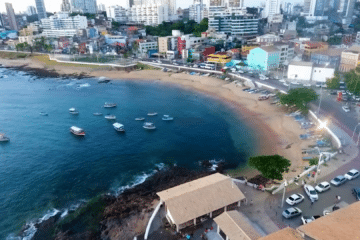
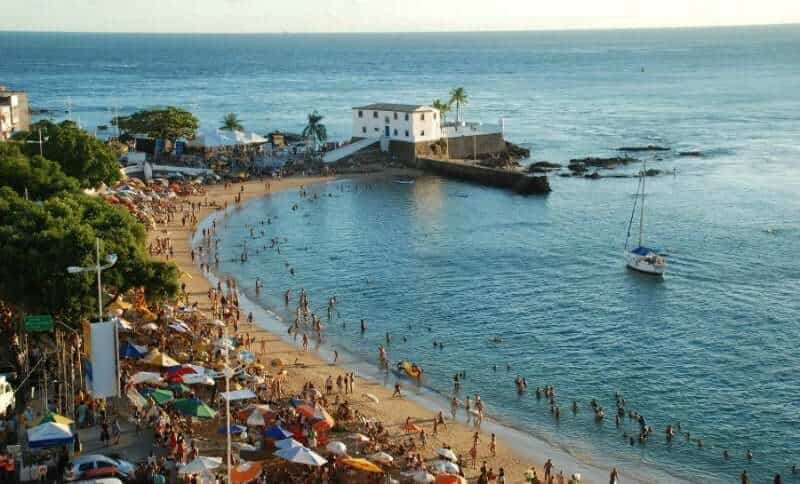
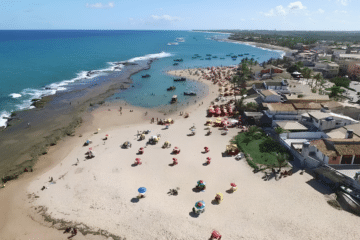
Cabo de Santo Agostinho is home to nine beaches spread across an area of approximately 445 square kilometres, with crystal-clear waters, white sands, sandstone reefs, volcanic rocks, natural pools, mangrove swamps, and coconut groves.
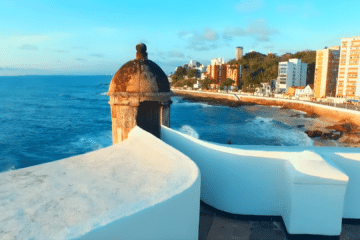
The town also boasts churches and historic ruins dating back to the 17th century, as well as viewpoints and cliffs.
Water Sports and Extreme Sports
The beaches at Cabo de Santo Agostinho are ideal for water sports, such as diving and fishing, as well as more extreme activities, such as abseiling, trekking and paragliding.
One of the most popular activities in the town is the buggy tour, which allows visitors to explore the beaches, viewpoints and the village of Nazaré, home to historic ruins and the famous clay, known for its beauty benefits.
Costa dos Arrecifes
Known as Costa dos Arrecifes, this stretch of coastline comprises the beaches of southern Pernambuco, extending from Cabo de Santo Agostinho to Tamandaré, near Alagoas.
The main access route is via the PE-060. The best beaches in the region include Gaibu, Calhetas, Pedra do Xaréu and Camboa, all of which have unique features that attract tourists.

Historical Aspects
The former Arraial do Cabo, now known as Cabo de Santo Agostinho, grew up around the sugar cane industry.
Several sugar mills can still be seen in the region, including the Massangana Sugar Mill, which is a listed building by IPHAN and is home to the Massangana Metropolitan Park, where the abolitionist Joaquim Nabuco spent part of his childhood.

The ruins of military buildings on the beaches highlight the strategic importance of the area during the colonial era, when conflicts took place between Indians, Portuguese and Dutch.

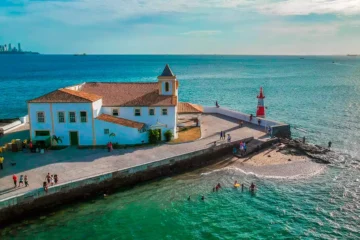
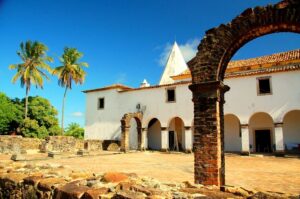
The Church of Nossa Senhora de Nazaré, dating from the 16th century, and the ruins of a 17th-century Carmelite convent, both located in the village of Nazaré, are tourist attractions well worth a visit.
Videos – Tourist attractions in Cabo de Santo Agostinho

O QUE CONHECER EM CABO DE SANTO AGOSTINHO?09:05

Cabo de Santo Agostinho em Pernambuco08:22

Cabo de Santo Agostinho em Pernambuco10:30

Ruinas da Igreja Vila Nazaré em Pernambuco

Praia do Paiva01:44

Calhetas em Pernambuco01:26
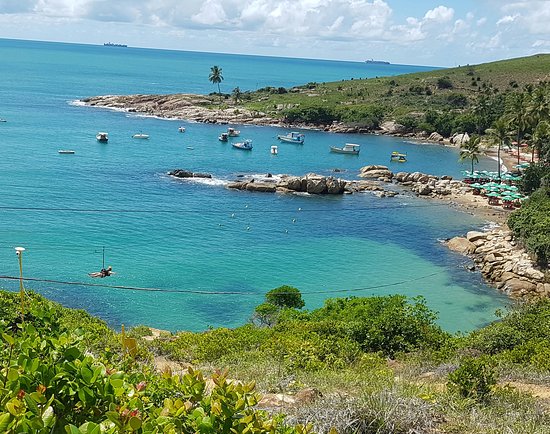
Praia de Calhetas - Cabo de Santo Agostinho02:36
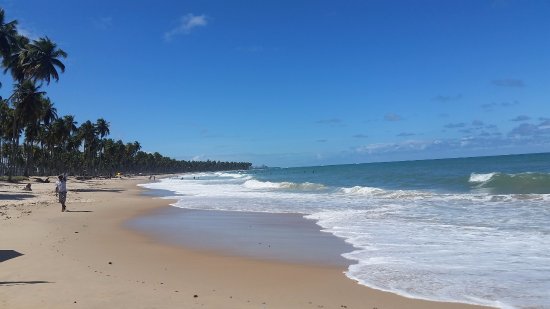
Praia do Paiva - Cabo de Santo Agostinho01:44
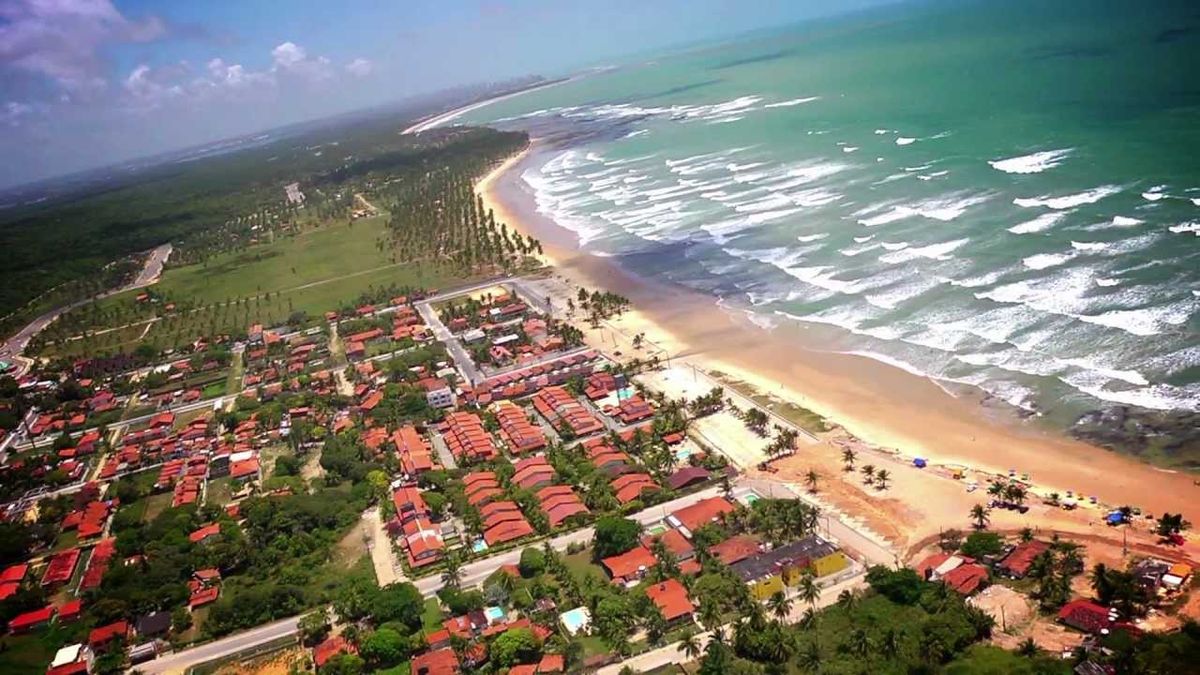
Praia de Itapuama em Pernambuco04:57
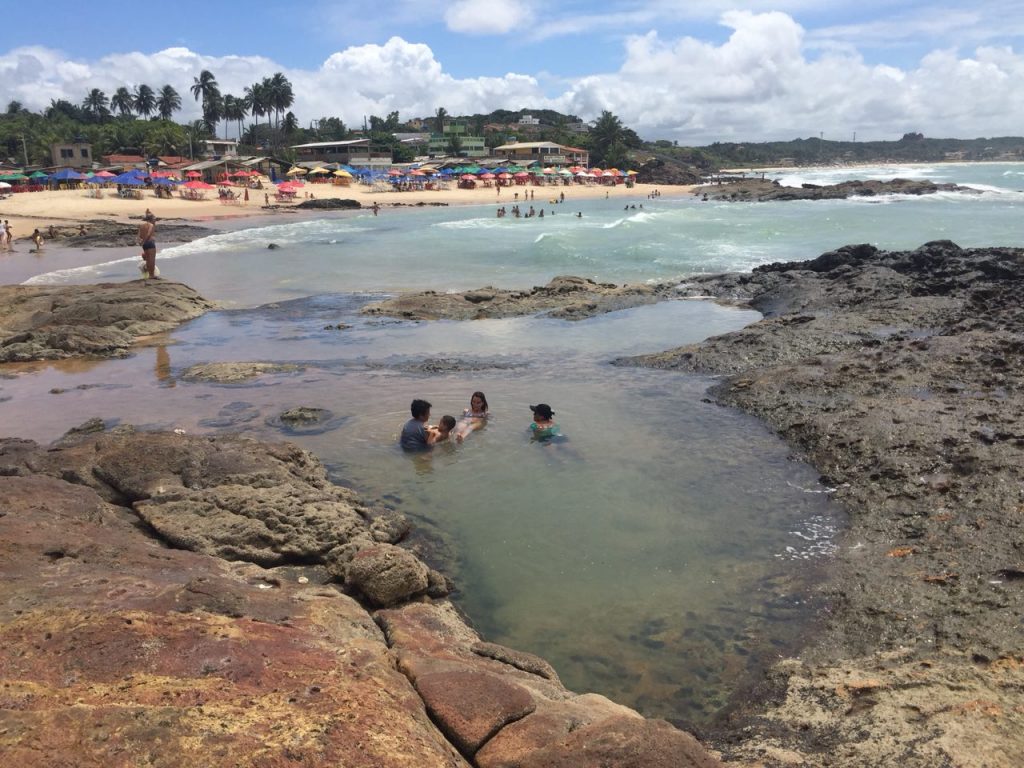
Pedra do Xaréu - Cabo de Santo Agostinho08:58
Top Tourist Attractions
Beaches
- Suape Beach: Known for its natural pools formed by sandstone reefs, it is ideal for swimming and water sports.
- Praia do Paraíso: The smallest beach in the region, it is a peaceful spot, ideal for those seeking tranquillity.
- Praia do Cabo: The beach offers a beautiful and peaceful setting, making it ideal for swimming and leisure activities.
- Calhetas Beach: A perfect bay for diving and fishing, surrounded by lush natural scenery.
- Paiva Beach: It is renowned for its white sandy beaches and dense coconut groves.
- Gaibu Beach: Ideal for surfers, renowned for its beautiful views and tourist facilities.
- Enseada dos Corais: With its enchanting natural pools, it’s perfect for swimming.
- Itapuama Beach: Known for its good waves, it is popular with surfers.
- Pedra do Xaréu Beach: Famous for its natural pools that form at low tide.


See the map of the southern coast of Pernambuco
Historical and Cultural Sites
- Ruins of the Carmelite Convent: A 17th-century convent that offers an insight into the region’s religious history.
- Church of Our Lady of Nazareth: A colonial church that preserves the local cultural heritage.
- Forte Castelo do Mar: Also known as Forte do Pontal de Nazaré, it is a historic fortification dating from the 17th century, which was used for the strategic defence of the coast.
Outdoor Activities
- Trails and Walks: A number of trails through the Atlantic Forest, such as the Trilha do Paraíso, offer the chance to explore the local flora and fauna.
- Diving and snorkelling: The crystal-clear waters and rich marine life make the region ideal for these activities.
Ecotourism
- Armando de Holanda Cavalcanti Metropolitan Park: A nature reserve offering walking trails and opportunities for birdwatching.
- Morro das Pedras: A spot offering a panoramic view of the beaches and the port of Suape.
Practical Tips
- Best Time to Visit: The dry season, from September to March, is the ideal time to enjoy the beaches and outdoor activities.
- Accessibility: The city is approximately 40 km from Recife, making it easy to reach by public transport or car.
History of Cabo de Santo Agostinho
The history of Cabo de Santo Agostinho began well before the Portuguese arrived in Brazil. Like much of the Brazilian territory, the Cabo was inhabited by indigenous people of the Caeté ethnic group.
The first settlements known as Arraial do Cabo were established in the second half of the 16th century.
Comprising the parish churches of St Anthony, St Amaro and Our Lady of Livramento, as well as the former Rosário dos Pretos Chapel (now Théo Silva Square), and a sparse cluster of old buildings along Rua da Matriz (Rua Vigário João Batista) and Rua Dr Antonio de Souza Leão.
The façades are protected by local by-laws, yet most of them have lost their original character.
As early as 1560, João Paes Barreto had already established the Morgado of Nossa Senhora da Madre de Deus do Cabo de Santo Agostinho, linking it to the Madre de Deus sugar mill, later known as the Engenho Velho. The deed was drawn up on 28 October 1580.
According to Sebastião de Vasconcelos Galvão, author of the *Iconographic, Historical and Statistical Dictionary of Pernambuco*, the town that serves as the municipal seat dates back to 1618; prior to that date, it consisted of a few scattered houses, situated some distance apart from one another.
It was more than two hundred years after the settlement of São Agostinho had been elevated to the status of a parish that the town of Cabo de São Agostinho was established, pursuant to the charter of 27 July 1811 and the Royal Decree of 15 February 1812, sent to the then governor of the province, General Caetano Pinto de Miranda Montenegro.
It was, however, inaugurated on 18 February 1812 by the magistrate and inspector-general of the District of Recife, Dr Clemente Ferreira de França.
The settlement then known as Vila do Cabo de Santo Agostinho was granted town status on 9 July 1877, under Provincial Law No. 1,269, and renamed the Town of Santo Agostinho do Cabo.
From 1570 onwards, the economy of Cabo centred on the development of sugarcane monoculture, following the granting of land grants along the Pirapama River.
After João Paes had taken possession of the lands granted to him in 1571, south of the River Araçuagipe (Pirapama), he founded the first bangüê sugar mill, which he named Madre de Deus (now Engenho Velho), the oldest sugar-producing centre in the region.
Later, with the establishment of new sugar mills, Cabo came to symbolise the economic might of the Province of Pernambuco, at a time when sugar cane was the driving force behind the country’s growth.
Frequently Asked Questions about Cabo de Santo Agostinho
How many days does it take to explore Cabo de Santo Agostinho?
To visit the main beaches, the historic centre and the Massangana Sugar Mill at a leisurely pace, 2 to 3 days is ideal. Anyone wishing to include buggy tours around the village of Nazaré and walks in the Atlantic Forest should set aside an extra day.
Which is the best beach in Cabo de Santo Agostinho for families?
Praia do Cabo and Enseada dos Corais are good options for families, as they have calmer waters and natural pools. Gaibu and Itapuama, with stronger waves, are better suited to surfers.
How do you get to Cabo de Santo Agostinho from Recife?
The town is about 40 km from Recife, and the main route there is via the PE-060 motorway. The journey can be made by car, bus or tourist shuttle.
Is the Massangana Sugar Mill worth a visit?
Yes, especially for anyone interested in the history of colonial Brazil and the abolitionist movement — this is where Joaquim Nabuco spent part of his childhood, and today it is home to a historic park offering cultural activities.
When is the best time to visit Cabo de Santo Agostinho?
The dry season, from September to March, is the best time to enjoy the beaches and outdoor activities, as there is less chance of rain.
Tourist Guide to Cabo de Santo Agostinho in Pernambuco

Publicações Relacionadas

Ricardo Brennand Institute — Castle Museum, Armory, and Art Gallery

Sights in Recife: 5 must-see attractions

The history of the Golden Chapel and the Third Order of Recife
Boa Viagem Beach (Recife) — A Complete Guide for Visitors
The best beaches in Pernambuco — a 5-day itinerary
Praia dos Carneiros voted one of the most beautiful beaches in the Northeast

7-Day Itinerary in Pernambuco with Historical Highlights

History and architecture of the Palácio do Campo das Princesas in Recife

Giant Puppets and Their Role in Olinda Carnival
Graça Church and Olinda Seminary Historical Significance

Monastery of São Bento de Olinda: A Historic Landmark
Olinda Cathedral: A Historical Landmark in Brazil
Franciscan Monastery of Olinda: A Historic Landmark
Igarassu: Discover the historic city of Pernambuco

Sugar mills on the outskirts of Porto de Galinhas PE

The oldest churches in Pernambuco and the first church in Brazil
Gravatá: Your Guide to the Best Attractions
Goiana: A Historical Treasure in Pernambuco
Main historical landmarks of Pernambuco and Recife

Main Tourist Attractions in Recife You Must Visit

Pernambuco's best beaches and their attractions
Vale do Catimbau National Park: Your Guide to Ecotourism
Santo Aleixo Island: A tourist paradise in Pernambuco
Interior of Pernambuco: Nature, Wine, and Tradition
Tracunhaém and Its Rich Clay Handicraft Tradition

Basilica of Our Lady of Penha: A Historical Overview

Church of Santa Teresa D'Ávila da Terceira Ordem do Carmo History
Kahal Zur Israel Synagogue — Jewish Museum and Cultural Centre (Recife)

Church of Nossa Senhora da Boa Viagem History

History of the Basilica of Our Lady of Mount Carmel in Recife
History of the Church of Our Lady of the Rosary of the Black Men
Golden Chapel: A Jewel of Brazilian Baroque
Sacred Recife and Religious Tourism in Recife, Pernambuco
Carne de Vaca Beach: A Hidden Gem in Pernambuco
Maria Farinha Beach: Activities and Attractions
Triunfo, Pernambuco: attractions, climate and things to do
This post is also on:
 Português
  English
  Deutsch
  Español
  Français