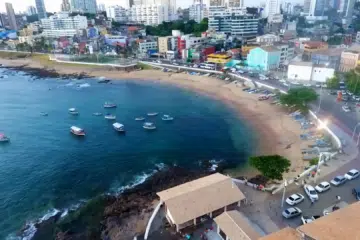
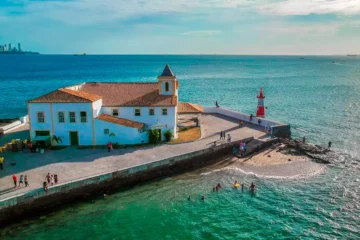
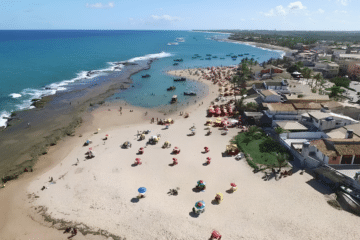
The Route of the Sugar Mills and Maracatus takes visitors on a tour of the rural Zona da Mata Norte of Pernambuco, an area rich in engenhos and maracatus. Journey to the origins Travelling along the Route of the Sugar Mills and Maracatus in the Zona da Mata of Pernambuco […]
Pernambuco Travel Guide
Tourism in Pernambuco: Culture, History and Natural Beauty
The state of Pernambuco is one of Brazil’s most important tourist centres, offering a wide range of activities from paradisiacal beaches and historic cities to cultural events of national and international importance.
1. Historical and Cultural Heritage
Pernambuco has one of the oldest churches in Brazil, located in Igarassu, in the metropolitan region of Recife. The Church of São Cosme e Damião, dating from 1535, is part of a Historical Centre listed by the National Institute of Historical and Artistic Heritage (IPHAN).
The capital of Pernambuco, Recife, is home to Recife Antigo, a traditional neighbourhood with strong tourist appeal, where you’ll find Marco Zero, Rua do Bom Jesus and the Kahal Zur Israel Synagogue, the first in the Americas.
Also noteworthy are the Ricardo Brennand Institute, a national reference in artistic and historical collections, and the Casa da Cultura, a former prison that has been transformed into an arts and crafts centre.
In Olinda, the Historic Site, declared a World Heritage Site Site by UNESCO, is one of the most important colonial architectural complexes in Brazil. The city is the stage for the Olinda Carnival, famous for its giant puppets and frevo and maracatu rhythms.
2. Sun and beach tourism
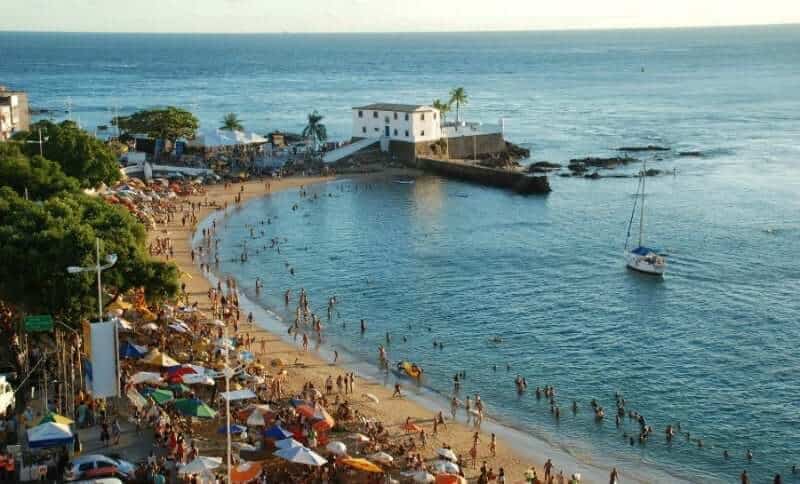
Pernambuco’s 187-kilometre-long coastline is one of the state’s biggest tourist attractions. The main beaches include
- Port de Galinhas: famous for its natural pools and marine life.
- Muro Alto: Calm waters protected by reefs.
- Maracaípe: Ideal for surfing and kitesurfing.
- Boa Viagem: Recife’s urban beach with excellent infrastructure.
The Fernando de Noronha Archipelago, also recognised by UNESCO as a World Natural Heritage Site, is an ecological sanctuary, with the Sancho Bay and the Bay of Pigs being ideal for diving.
3. Agreste and Sertão: Ecotourism and festivities
In the Agreste region of Pernambuco, the town of Bonito stands out for its waterfalls and adventure tourism activities such as abseiling, trekking and tree climbing. In Gravatá, at an altitude of 447 metres, the mild climate and rural traditions attract tourists during the months of June and July.
In Garanhuns, the Winter Festival, which has been running for over 20 years, offers a varied programme of music, theatre and dance. In the Sertão, the city of Triunfo, the highest in the state, hosts the Student Theatre and Dance Festival and the Film Festival in the historic Cine Teatro Guarany.
4. Popular culture and traditional events
- Caruaru Fair: the largest open-air fair in the world, recognised by IPHAN as a Brazilian Intangible Heritage.
- Saint John’s Festival in Caruaru: one of the largest celebrations in the country in June.
- New Jerusalem Theatre: Considered the largest open-air theatre in the world, famous for its production of the Passion of the Christ.
- Festival Pernambuco Nação Cultural: Promoted by the state government, it tours different regions, bringing art and culture.
- Festival Virtuosi, Festival Janeiro de Grandes Espetáculos and Rec-Beat: consolidate the state as a centre of contemporary musical and artistic production.
5. Nature and Wine Tourism
The Catimbau National Park, located between Agreste and Sertão, impresses with its rock formations, gorges and archaeological sites. In Bezerros, Serra Negra has a cold climate and landscapes of rare beauty.
In the São Francisco Valley, wine production stands out, with wineries open to visitors in towns such as Petrolina and Lagoa Grande, which offer wine tourism routes along the banks of the São Francisco River.
Cais do Sertão Museum: Discover Sertanejo Culture
The Cais do Sertão Museum, located in Recife, is a cultural space dedicated to the appreciation and preservation of Sertanejo culture, especially the life and work of Luiz Gonzaga, the King of Baião. Opened in 2014, the Cais do Sertão Museum is one of the most modern and interactive in […]
Pernambuco’s Rural Tourism Route: A Traveler’s Guide
The Pernambuco’s Rural Tourism Route is a journey through bucolic and enchanting landscapes, abundant gastronomy and the whole universe of the interior of the State. This guide has been created especially for domestic and foreign tourists arriving in Pernambuco, who are interested in discovering different tourist options. Cultural and natural […]
Mata Sul Region of Pernambuco: Waterfalls to Explore
Natural beauties of the Mata Sul region of Pernambuco The Mata Sul region of Pernambuco is an area rich in natural beauties, including several waterfalls that attract visitors looking for leisure and contact with nature. Beaches and waterfalls The beaches along Pernambuco’s 187 kilometres of coast are popular with tourists. […]
Beaches on the South Coast of Pernambuco: A Complete Guide
The beaches along the southern coast of Pernambuco are one of Brazil’s most popular tourist destinations, renowned for their idyllic beaches, crystal-clear waters and natural beauty. The 110 kilometres of Pernambuco’s southern coastline, stretching from Cabo de Santo Agostinho to São José da Coroa Grande, are home to one gem […]
São José da Coroa Grande: natural pools and beaches
São José da Coroa Grande (PE): natural pools, beaches and things to do São José da Coroa Grande is the last town on the southern coast of Pernambuco, on the border with Alagoas, about 120 km from Recife. Because it is quiet and has no large resorts, it is famous […]
Ilha de Itamaracá (PE): beaches, Forte Orange and things to do
Ilha de Itamaracá lies on the north coast of Pernambuco, about 45 km from Recife. It has calm-water beaches, natural pools, coconut groves and sandbanks, such as the famous Coroa do Avião. In addition, it is home to Forte Orange, built by the Dutch in 1631, and to Vila Velha, […]
Dutch Recife and the Dutch Invasion of Brazil
Recife dos Holandeses began with the Dutch invasion, which was part of the Dutch project to occupy and administer the north-east of Brazil through the Dutch West India Company. By 1624, the Dutch had already established the West India Company and were planning to expand their overseas territories in Africa […]
Sertão of Pernambuco: A Cultural Diversity Hub
Sertão of Pernambuco has many tourist and cultural attractions The Sertão occupies most of Pernambuco’s territory, 70 per cent of the state. Division of the Sertão The Sertão is divided into six micro-regions: Araripina, Salgueiro, Pajeú, Moxotó, Petrolina and Itaparica (see below). In general, its economy is based on animal […]
Tourist Attractions in Agreste de Pernambuco
Towns and Culture in Agreste de Pernambuco: Traditions, festivals and natural beauty The Agreste is an intermediate region in the interior of Pernambuco, located between the Mata and the Sertão. The Agreste is characterised by a diversified economy, growing crops such as corn, beans and cassava, as well as livestock, both […]
Main tourist towns in Pernambuco’s Zona da Mata
Towns in Pernambuco’s Zona da Mata: Traditions and cultural identity The cities of Pernambuco’s Zona da Mata were born around the large sugar cane mills and factories, and grew by structuring themselves to provide the products and services required by the sugar-alcohol complex. The Zona da Mata is a region […]
North coast of Pernambuco: beaches, history and attractions
Discover the north coast of Pernambuco. The North Coast of Pernambuco is home to one of the region’s most important historical sites. The northern coast of Pernambuco is more densely populated than the southern coast, with urbanisation extending from the Recife Metropolitan Area to the border with Paraíba. The North […]
Tamandaré: Explore the Best of Pernambuco
Tamandaré is a municipality located on the southern coast of Pernambuco, approximately 100 kilometres from the city of Recife. It is renowned for its clear-water beaches, coral reefs, remnants of the Atlantic Forest and historical heritage. Why should you visit? The municipality of Tamandaré boasts warm, clear beaches, natural pools […]
Porto de Galinhas: Beaches, Natural Pools and Tips
Porto de Galinhas: complete guide to beaches, natural pools and travel tips Porto de Galinhas is the main beach destination in Pernambuco and one of the most famous in Brazil. More precisely, it lies in the municipality of Ipojuca, on the state’s southern coast, about 60 km from Recife. In […]
Cabo de Santo Agostinho: A Complete Tourist Guide
Cabo de Santo Agostinho is a city in the state of Pernambuco, Brazil. Known for its beautiful beaches, natural landscapes and rich history, the city is an attractive tourist destination for visitors from all over the world. Location Cabo de Santo Agostinho is the easternmost geographical landmark in Pernambuco (the […]
Olinda: A Journey Through Colonial Architecture
Olinda: Historical and Cultural Heritage Olinda has precious colonial houses, architecture, history and carnival. Historical importance Olinda, in the state of Pernambuco, is one of Brazil’s most important historic cities, boasting rich colonial houses and one of the country’s liveliest Carnival celebrations. Culture and Local Life It is a city […]
Recife: The Brazilian Venice and its Cultural Heritage
Discover Recife: history, culture and natural beauty The city of Recife was founded in a region where the coast was marked by coral reefs that protected the bay and provided a safe natural harbour. This geographical configuration was crucial to the city’s development as an important commercial and shipping centre, […]
Pernambuco: History and must-see attractions
Pernambuco: Discover the cultural and natural riches of Northeast Brazil Pernambuco is a vibrant and diverse state in the northeast of Brazil, known for its stunning beaches, rich cultural history and impressive natural landscapes. This article looks at the uniqueness of the state, its history and culture, and highlights its […]