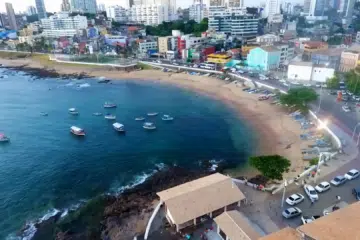
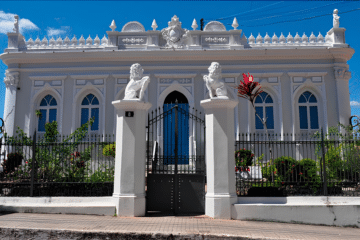
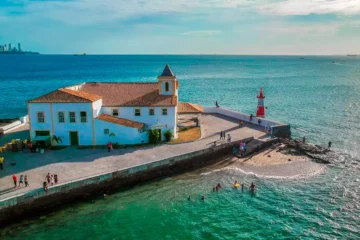
Modern buildings mix with colonial relics in São João del Rei, whose history begins at the end of the 17th century. In 1713, the village founded by bandeirantes on the banks of the River Mortes was elevated to the status of a town with its current name, in honour of […]
History of Brazil
History of Brazil: Overview
The history of Brazil is marked by a long and complex process of struggles over various national projects, passing through moments of significant political, social and economic instability.
Although there is no universally defined starting point, the arrival of the Portuguese, led by Pedro Álvares Cabral, on the southern coast of what is now Bahia on 22 April 1500 is generally regarded as the beginning of the European presence in the territory. This event is traditionally known as the Discovery of Brazil.
However, it is important to emphasise that this was a discovery from a European point of view. Various indigenous peoples had inhabited Brazilian territory for thousands of years, with their own cultures, languages and social organisations.
Brazil is the historical result of several different projects that took place within a specific geographical delimitation. Initially, it was a project of conquest; later, a project of colonisation; in the 19th century, a project of empire and the constitution of a nation-state; and finally, a project of Republica Brasileira, which we are still trying to maintain today.
Main periods of Brazilian history
1. Pre-Cabral period (until 1500)
Refers to the period before the arrival of the Portuguese, characterised by the presence of various indigenous peoples in Brazilian territory, which marked a diversity of cultures, languages and social practices.
2. Pre-colonial period (1500-1530)
It began with the arrival of Cabral and lasted until the beginning of actual colonisation. During this period, the first contacts between colonists and indigenous peoples took place, with cultural exchanges, conflicts and exploratory activities standing out.
3. Colonial period (1530-1822)
Covers the period when Brazil was a colony of the Kingdom of Portugal. It is characterised by economic exploitation, especially through agriculture and mining, and by the establishment of colonial administrative structures.
4. Imperial period (1822-1889)
It began with the independence of Brazil in 1822 and lasted until the proclamation of the Republic in 1889. This period was marked by the consolidation of the Brazilian state, internal conflicts and the abolition of slavery in 1888.
5. Republican period (1889-present)
Divided into several phases:
- First Republic (1889-1930): also known as the Old Republic, characterised by politics dominated by state oligarchies.
- Vargas Era (1930-1945): a period of centralisation of power and implementation of labour policies.
- Populist Republic (1945-1964): characterised by political instability and economic growth.
- Military dictatorship (1964-1985): Authoritarian regime established after a military coup.
- New Republic (1985-present): a period of redemocratisation and consolidation of democratic institutions.
These periods show how Brazilian history is made up of ruptures and continuities, always centred on the search for a national identity and more stable forms of political and social organisation.
History and Monuments of Tiradentes MG
With its colonial charm and unspoilt atmosphere, Tiradentes, in Minas Gerais, is one of Brazil’s most charming destinations. Founded at the height of the gold rush, the city combines historical wealth with cultural and gastronomic attractions. Among the main tourist attractions are the Igreja Matriz de Santo Antônio, with its […]
Little Church of Pampulha MG: history, architecture and religious importance
The famous Igrejinha da Pampulha in Belo Horizonte is also known by other names, such as Igreja de São Francisco de Assis or Capela Curial de São Francisco de Assis. History and Architecture of the Little Church of Pampulha Little Church of Pampulha or Curial Chapel of St Francis of […]
Church of Saint Francis of Assisi, Ouro Preto: Guide
The Church of Saint Francis of Assisi in Ouro Preto, in Ouro Preto, Minas Gerais, is considered one of the masterpieces of Brazilian Baroque. After all, it brings together in a single church the design and sculptures of Aleijadinho and the paintings of Mestre Ataíde, the two greatest artists of […]
Aleijadinho: Biography and works that shaped the Brazilian Baroque
Aleijadinho is considered the greatest representative of the Minas Gerais Baroque style, known for his soapstone sculptures, wood carvings, altars and churches. Biography of Antônio Francisco Lisboa or Aleijadinho Antônio Francisco Lisboa (1738-1814), better known by his nickname Aleijadinho, was born in Ouro Preto, the capital of colonial Minas Gerais. […]
Sanctuary of Bom Jesus de Matozinhos – History and Architecture
The Sanctuary of Bom Jesus de Matosinhos, one of the most valuable monuments in the world, is located in the city of Congonhas, in the central region of Minas Gerais. Geniuses such as Aleijadinho and Mestre Ataíde not only created true masterpieces, but also promoted a remarkable fusion of the […]
Mariana: A journey through time to colonial Brazil
The city of Mariana, in Minas Gerais, is one of the most important historical cities on the Gold Route. Together with its districts, it contains valuable relicts from the colonial period, which marked the beginning of the construction of the state’s history. Mariana was the first capital of Minas Gerais, […]
Ouro Preto: Historic City of Tourist and Cultural Interest
Ouro Preto, a World Heritage Site, is one of the most important tourist destinations in Brazil. With its baroque churches, colonial mansions and rich cultural life, the city attracts visitors interested in history, art and nature. Ouro Preto: From gold to World Heritage The city of Ouro Preto, formerly Vila […]
Engenhos de Pernambuco: História do Início ao Fim
Engenhos de Pernambuco em resumo Início: a produção de açúcar começou com a capitania de Pernambuco, entregue a Duarte Coelho em 1534, e Pernambuco tornou-se a capitania mais próspera do Brasil. Onde ficavam: sobretudo na Zona da Mata, perto do porto do Recife, de rios e de matas para lenha. […]
Shipwreck of the Galeão Sacramento in Salvador: Learn the story
Learn about the history of the Galeão Sacramento shipwreck in Salvador and its relationship to the famous Barra lighthouse. The Shipwreck of the Galeão Sacramento occurred in 1668 off the coast of Salvador, Bahia and is one of the most famous nautical events in the maritime history of colonial Brazil. […]
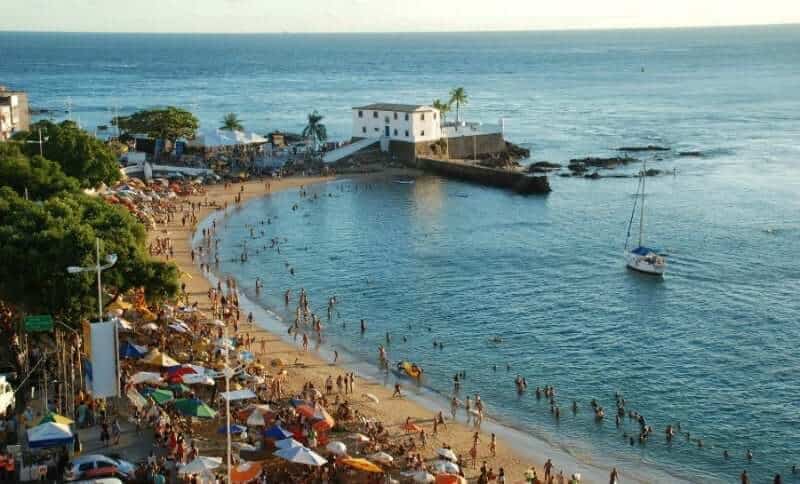
Defences of Porto da Barra – Fortifications of Santa Maria and São Diogo
The defences of the Porto da Barra: The forts of Santa Maria and São Diogo in the history of Salvador The Defences of the Porto da Barra represent an important historical and cultural heritage of the city of Salvador, Bahia. Built during the colonial period, these fortifications were designed to […]
History of the Captaincy of Todos os Santos Bay between 1500 and 1697
The Captaincy of Todos os Santos Bay was one of the most important hereditary captaincies established by the Kingdom of Portugal at the beginning of the colonisation of Brazil in 1534. Granted to the grantee Francisco Pereira Coutinho, it occupied a strategic position on the Brazilian coast, centred on the […]
History of the Fortresses and Defences of Salvador de Bahia
The history of the fortifications and defence of Salvador da Bahia reflects the evolution of defensive strategies and the military and colonial context of Brazil. Since its foundation in the 16th century, Salvador has established itself as a crucial strategic point for the defence of the Portuguese Empire in the […]
Dutch Invasion of Salvador in 1624: Overview
The Dutch invasion of Salvador in 1624 Historical context In the late 16th and early 17th centuries, Brazil, still under the rule of the Portuguese Crown, became the target of foreign interests due to its strategic and economic importance. In particular, the Bay of All Saints became a vital point […]
The history of sugar cane in the colonisation of Brazil
Discover the fascinating history of sugar cane, from its origins in Papua New Guinea, its introduction to the Algarve and its expansion to Madeira and Brazil. Learn how sugar cultivation fuelled the colonial development and economy of Pernambuco in the 16th century. Sugar cane, which originated in Papua New Guinea, […]
Sugar Mill in Colonial Brazil: History and Structure
The sugar mill in colonial Brazil at a glance Origin of sugarcane: it originated in New Guinea and then passed through India, the Arabs and the Portuguese Atlantic islands before finally reaching Brazil. First mills: first in São Vicente, with Martim Afonso de Sousa (from 1532), and then in Pernambuco, […]
History of the Discovery Coast in Bahia – History of Brazil
The story of the Costa do Descobrimento begins on 22 April 1500, when Pedro Álvares Cabral‘s squadron spotted a rounded hill, Mount Pascoal, to the south of Bahia. In search of a safe place to dock, the thirteen ships sailed north along the coast and, at dusk on April 24, […]
History of Bahia: Colonial, Imperial and Republican Eras
The history of Bahia began with the arrival of the Portuguese in the region of Porto Seguro and then continued through colonization, the Empire and the Republic. The official history of Brazil also began in Bahia. After all, it was on the southern coast of Bahia, in the area where […]