European interest in and conflict over Brazilwood in the 16th and 17th centuries.
This chapter examines the exploitation and trade of Brazilwood along the Brazilian coast during the early years of colonisation. It highlights the commercial practices of the Portuguese, the significant involvement of French shipowners, and the repressive measures taken by Portugal.
It covers the establishment of trading posts, relations with indigenous peoples, French smuggling and the coastguard fleets organised to protect the Portuguese monopoly. It also discusses the diplomatic and military response of the Portuguese Crown.
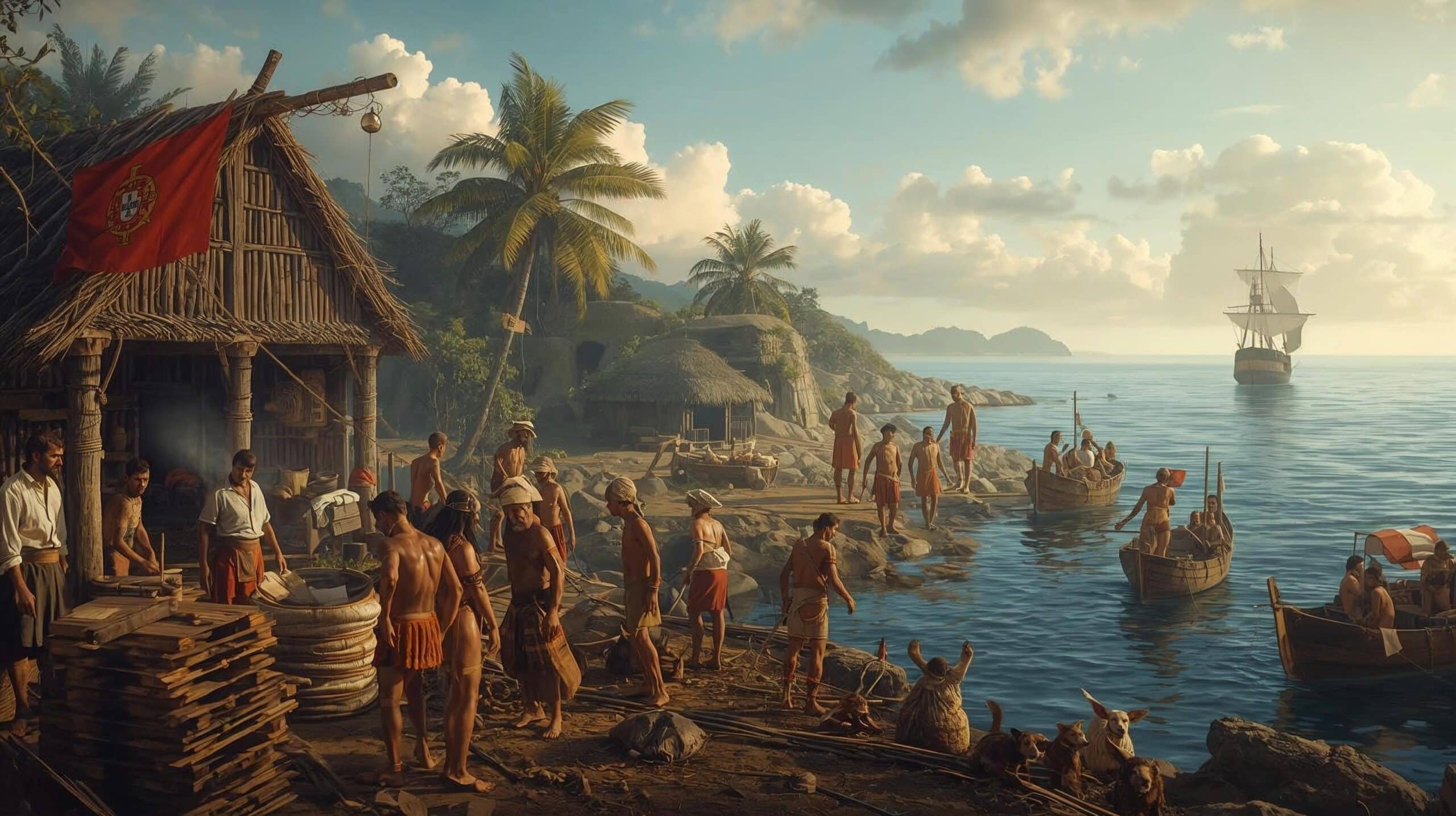
1. How frequently the Portuguese visited the Brazilian coast.
Tráfico do pau‑brasil e presença europeia no litoral brasileiro
As previously mentioned, the exploitation of brazilwood in Portuguese territories in America was leased to a group of merchants from Lisbon in 1502. Among them was Fernão de Noronha, a New Christian.
These buyers agreed to send fleets of six ships each year to explore up to three hundred leagues of the coast of the new land. They also agreed to build and maintain fortified trading posts in suitable regions for three years.
According to the narrative attributed to Amerigo Vespucci, it seems that this regime was observed by the ships of the second exploratory expedition, which loaded timber at Cabo Frio.
Several documents demonstrate that this trafficking continued from Brazil to the Kingdom in subsequent years.
Coastal trading posts were established in Rio de Janeiro, Pernambuco and Cabo Frio, as well as perhaps in Santa Cruz (Porto Seguro) and on the island of Santo Aleixo.
These trading posts made it easier to trade with the indigenous peoples, which led to the sparse settlement of the extensive coastline.
We have reports of ships dedicated solely to this trade. For example, the Bretoa came to load timber in Cabo Frio in 1511, also taking enslaved indigenous people, birds and small animals.
From the first decade of the 16th century onwards, various Portuguese fleets bound for the East also began to frequent the Brazilian coast, in addition to these merchant ships.
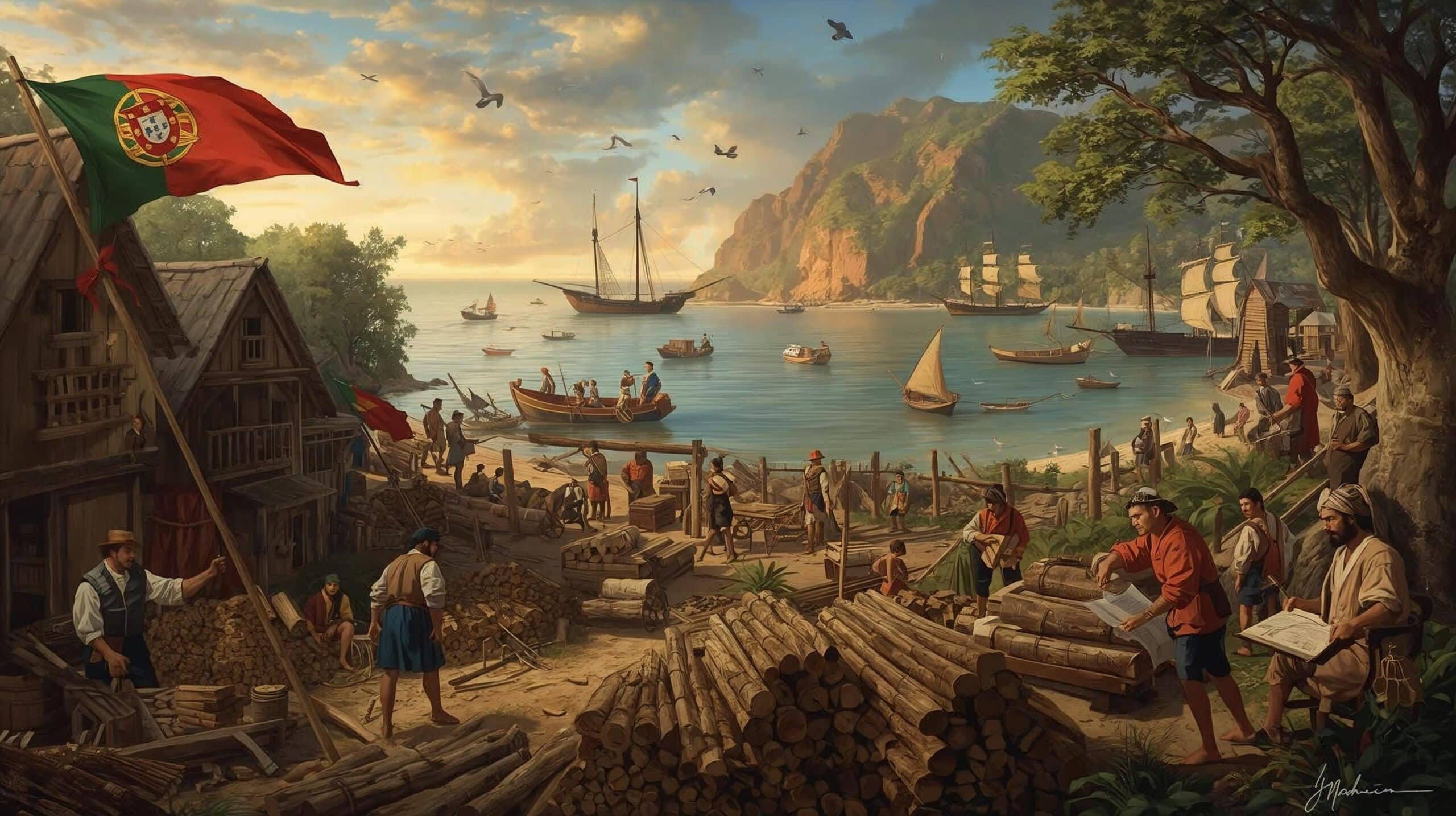
2. By the French.
Once news spread throughout Europe that the land of Santa Cruz had wood that was useful for the paint industry at the time, French ships started to visit the coast and trade secretly with the indigenous people.
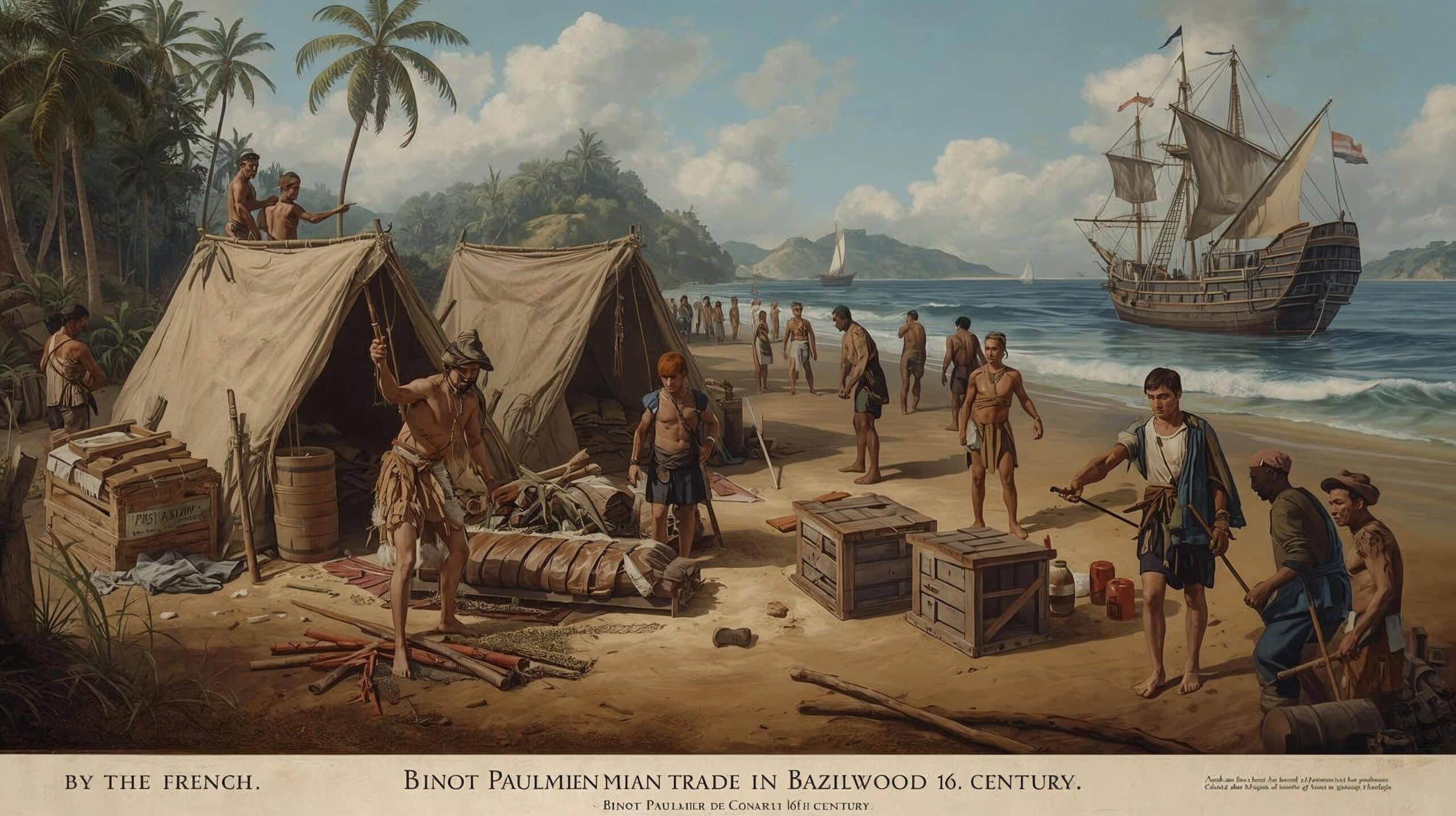
As early as 1504, Binot Paulmier de Gonneville had visited the island of São Francisco and two other locations between there and Bahia.
Other references confirm that shipments were sent from warehouses in Dieppe, Honfleur, Saint-Malo and Rouen, as well as from other French ports. These shipments were sent to destinations including Bahia and Pernambuco.
The French made so many trips to Brazil that the indigenous people soon learned to distinguish them from the Portuguese. They called the French ‘mair’, meaning ‘the transformers’, and the Portuguese ‘peró’, meaning ‘sharks’ or ‘those who come by sea’.
The French also called them ‘ayurujuba’, meaning ‘yellow parrot’, because they were usually blonde, red-haired or talkative.
I complained to the governments of Louis XII and Francis I about this frequency.
His successor, Dom João III, tried to do the same, but was also unsuccessful.
The French sovereigns did not recognise the commercial monopoly that the Portuguese believed belonged solely to their Crown, and they were unwilling to abandon a lucrative trade.
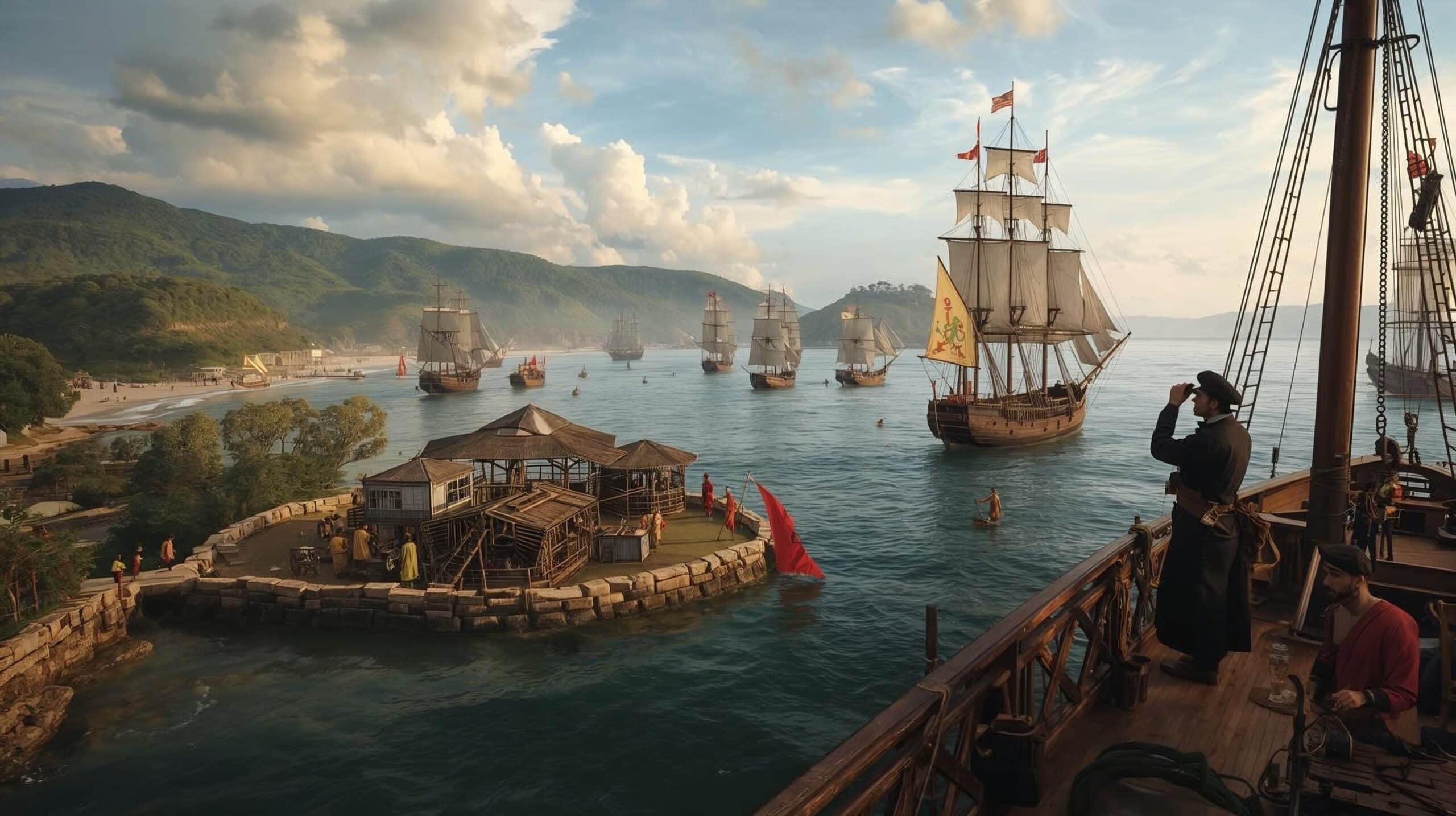
3. The Portuguese coastguard fleet
Realising that complaining to France was futile, the Portuguese kings decided to take decisive action. They organised armed coastguard forces to combat smugglers in Brazil and prevent illicit trafficking from continuing.
Cristóvão Jacques distinguished himself in command, serving here from 1516 to 1519 and again from 1526 to 1528. He sailed between Pernambuco and the River Plate, fighting and capturing numerous French trading posts.
It is possible that at least one other Portuguese coastguard expedition came to Brazil between 1521 and 1528, in addition to these voyages.
Despite vigorous repression, the French continued to smuggle goods along the coast. This prompted new diplomatic and military measures by Dom João III, as discussed in the chapter on the Brazilwood Cycle, as well as measures entrusted to the important expedition of Martim Afonso de Sousa, which is also covered in a separate section.
This post is also on:
 Português
  English
  Deutsch
  Español
  Français