The expedition of Martim Afonso de Sousa: towards the colonisation of Brazil.
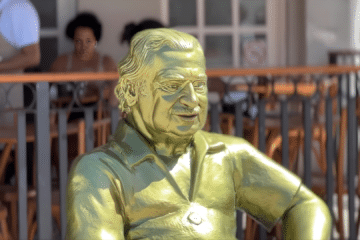
Martim Afonso de Sousa came from one of the most notable families in Portugal.
He was a descendant of Dom Afonso III through illegitimacy — meaning he had a blood tie to the royal family through an ancestor born outside of a legitimate marriage and without full dynastic rights.
Martim Afonso de Sousa’s father was Lopo de Sousa, who served the House of Bragança. Martim Afonso de Sousa later entered the service of Prince Dom João (later King Dom João III), who entrusted him with this mission upon ascending the throne.

1. Composition of the ship fleet

In order to carry out the expedition, he set sail from Lisbon at the head of a fleet of five ships.
Martim Afonso de Sousa commanded the 150-tonne flagship, while his brother Pero Lopes de Sousa, the expedition’s chronicler, recorded the journey in the precious Navigation Diary. This document was discovered in Portugal by the Brazilian historian Francisco Adolfo de Varnhagen, Viscount of Porto Seguro.
Another ship, the 125-ton São Miguel, was commanded by Heitor de Sousa, while the São Vicente, a galleon of the same tonnage, was entrusted to Pero Lobo Pinheiro. Diogo Leite and Baltasar Gonçalves commanded two caravels, the Rosa and the Princesa, respectively.

2. Crew and future settlers
Some of the four hundred crew members and passengers aboard the fleet deserve mention, including Pero de Góis, who would later be granted São Tomé and become captain-major of the coast, and his brothers, Luís and Gabriel. Others include Rui and Francisco Pinto, Domingos Leitão, Jorge Pires and Father Gonçalo Monteiro.
Enrique Montes, Pero Capico and Diogo Leite, a former companion of Cristóvão Jacques, were familiar with the new land and undoubtedly provided information about it. Vicente Lourenço was the chief pilot, while Pedro Anes served as a linguist and interpreter for the Brazilian indigenous peoples, as well as acting as a pilot.
Given the expedition’s objective of colonising Brazil, he brought seeds, plants and domestic animals with him.


This post is also on:
 Português
  English
  Deutsch
  Español
  Français