Hereditary Captaincies in the 16th Century: Background to their Creation
Despite being a small country with limited resources, Portugal distinguished itself through its great voyages and explorations in the 15th century.
In the following century, he was tasked with colonising territories in Asia and America, in addition to the work already carried out in Africa. This exceeded his financial capacity.
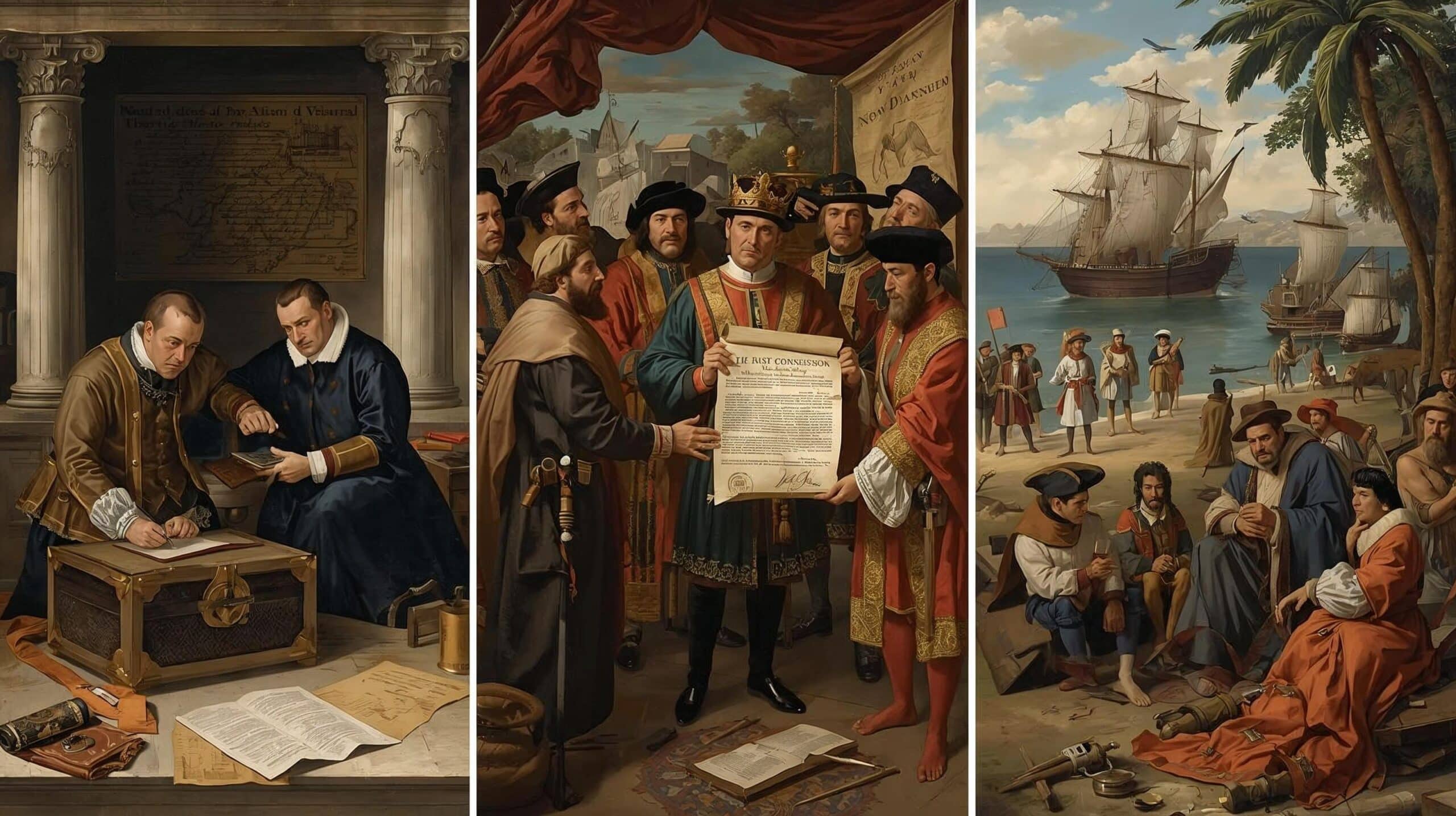
As the royal treasury did not have the funds to cover the high costs of colonisation, the system of hereditary captaincies was introduced in Brazil. This involved granting land to private individuals who would cover the costs of occupation and assume the associated risks.
1. Reasons for granting concessions to private individuals

Capitanias Hereditárias no Século XVI - Antecedentes da criação das Capitanias hereditárias
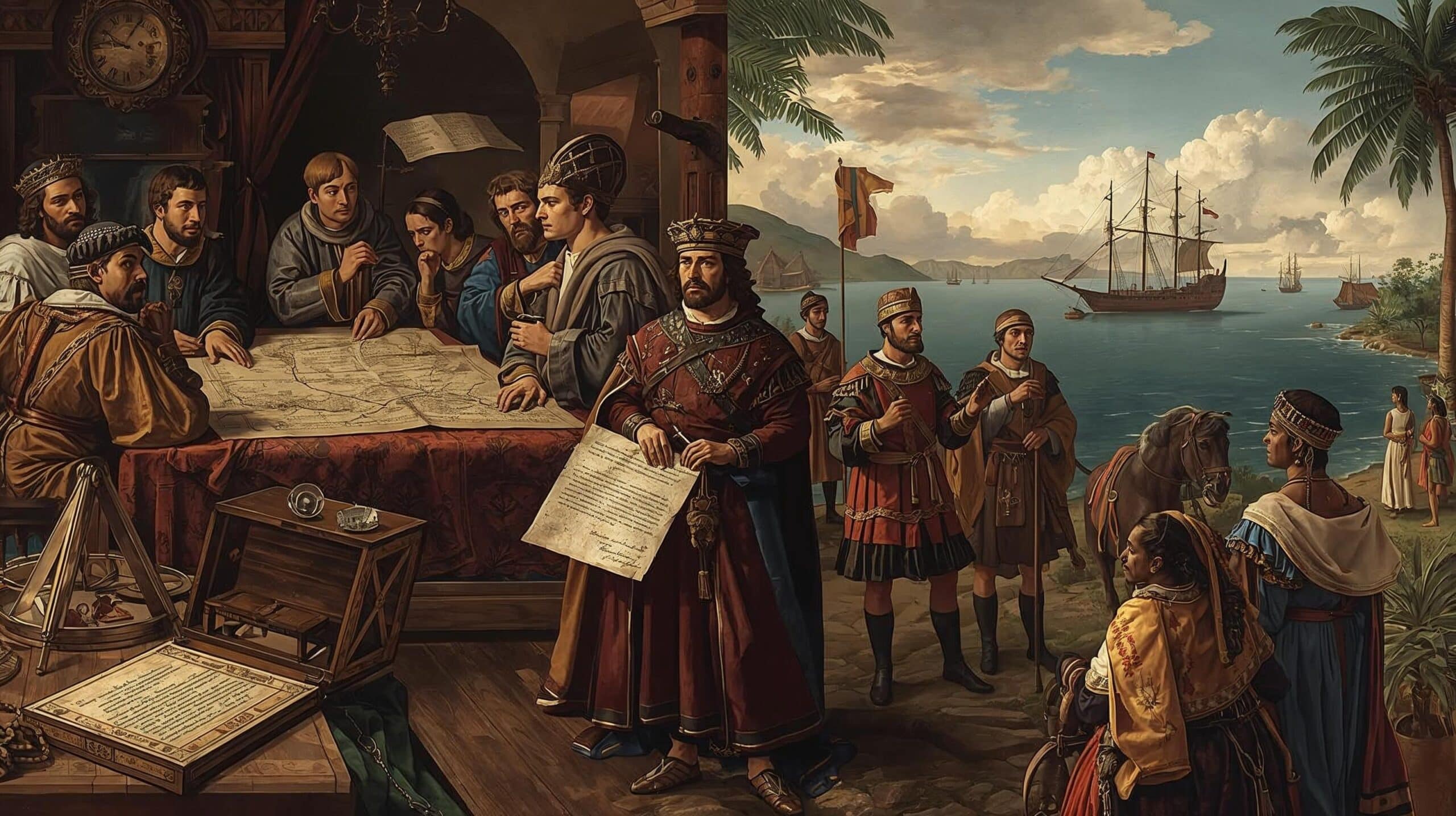
In order to prevent other interested powers from taking control of the newly acquired lands, the Portuguese government opted to rely on private initiative.
He granted captaincies to individuals with experience in the military, sailing or administration, as well as noblemen, who agreed to assume the risks and costs of colonisation.
By transferring this responsibility, the state was able to save public resources while encouraging individual investment and efforts to populate and defend the territory.
2. Insular background and system adaptation
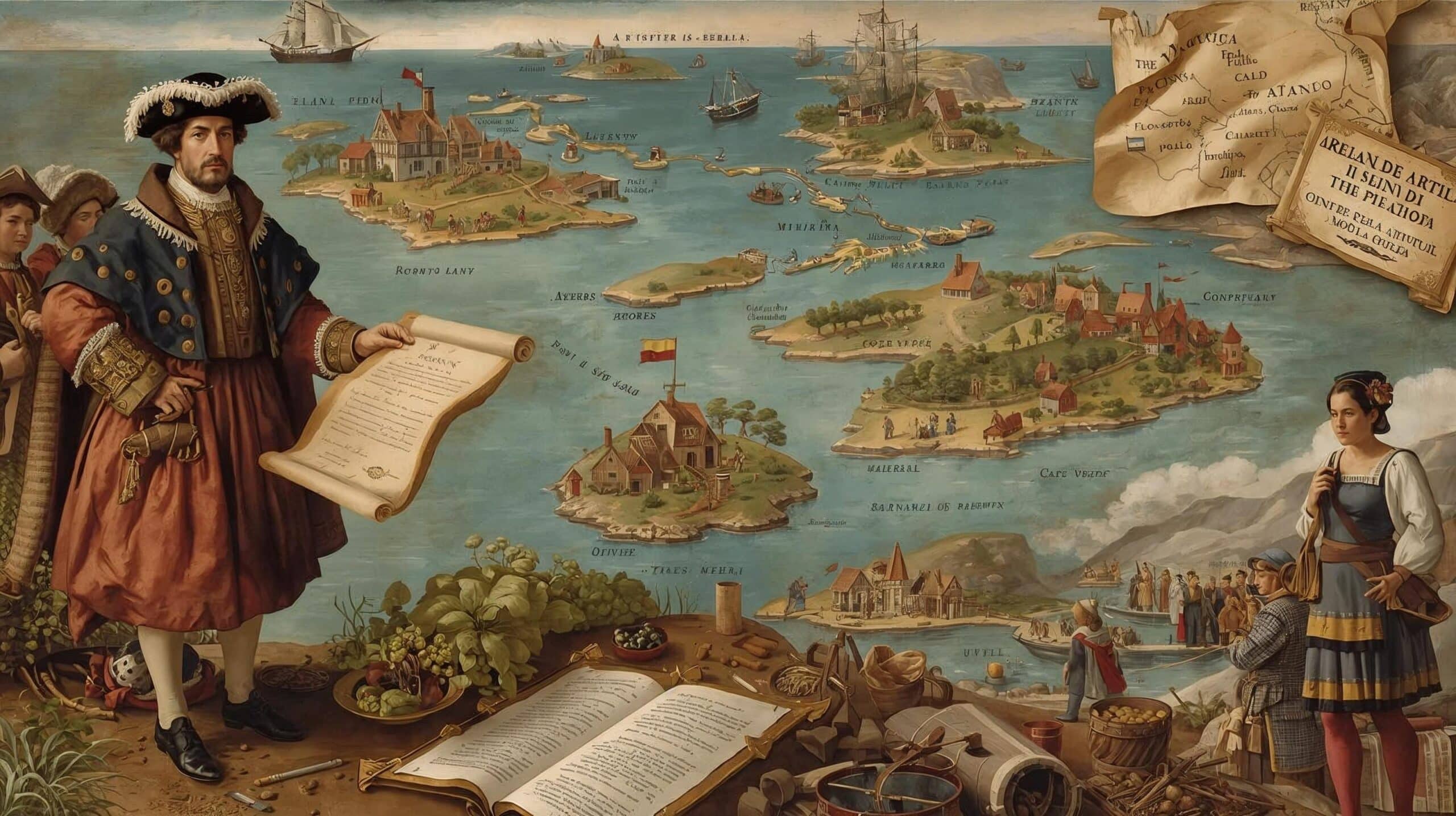
The introduction of hereditary captaincies in Brazil was not a completely new concept in Portugal.
A similar system had been in use on the Atlantic islands since the 15th century: the Crown donated land to private individuals to encourage settlement and strengthen the territory.
Exemplos incluem a Madeira, o Porto Santo, os Açores, Cabo Verde, São Tomé e Príncipe.
In 1504, King Manuel I established the captaincy of the island of São João, now known as Fernando de Noronha.
The discoverers themselves often became the first grantees, followed by members of the royal family, noblemen and ordinary settlers — a model that was transferred and expanded to the American continent.
3. Suggestions from individuals and support from the authorities.
In addition to experiments with captaincies on islands such as Fernando de Noronha, private individuals proposed applying the same system in Brazil.
Cristóvão Jacques, the former commander of the Coast Guard Squadrons, and João de Melo da Câmara, whose family were among the colonists who settled in Madeira, the Azores and São Tomé, offered their services to Dom João III, proposing that they bring settlers to the territory of Brazil.
The idea also received support from influential Portuguese figures abroad, such as the scholars Diogo de Gouveia in France and Simão Afonso in Seville, who were aware of the risks involved in Portuguese possession.
Internally, the proposal was also favoured by figures such as the Secretary of State, Pero de Alcáçova Carneiro, and Dom António de Ataíde, the Count of Castanheira. Based on these practical and political recommendations, the decision was made to dispatch Martim Afonso de Sousa’s expedition to Brazil.

4. The final decision to implement the system on the mainland.
As the fleets sent in 1530–1532 were insufficient to populate the entire Brazilian coast, the King decided to extend the hereditary captaincy system, which had already been successfully implemented in the Atlantic islands, to the continent that year.

This post is also on:
 Português
  English
  Deutsch
  Español
  Français