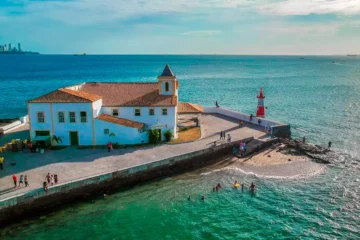
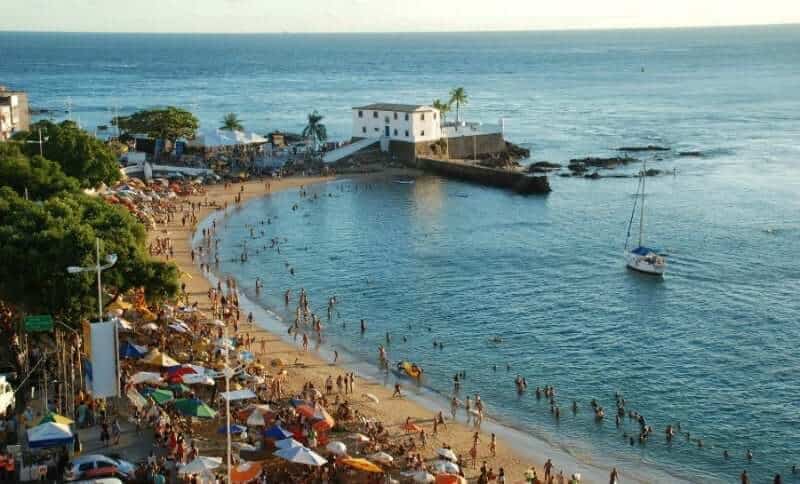
Discover the 12 most important historic cities in the Northeast of Brazil, built during the colonial period and still preserving a large part of their houses. The history of Brazil The history of Brazil is rich, extensive and full of contradictions. Developing a narrative that covers the details of the […]
Culture, history and religion of the Brazilian Northeast
Brazil’s Northeast is one of the country’s most culturally rich regions, the result of a mixture of indigenous, African and European influences. This diversity is reflected in the religion, architecture, cuisine, music, dance and handicrafts of the nine states that make up the region.
Religion and syncretism
Religion is strong and syncretic. In Bahia, Candomblé has a strong presence, while Maranhão stands out for its Tambor de Mina. Religious festivals, pilgrimages and popular Catholicism are common throughout the Northeast, mixing faith and tradition.
History and architecture
The historical heritage is preserved in centres such as Pelourinho (BA), Olinda (PE) and São Luís (MA), which have been recognised by UNESCO. Baroque churches, adobe houses and colonial buildings tell the story of the region from Brazil’s earliest days.
The cuisine
The cuisine of the Northeast reflects its cultural diversity. Acarajé, vatapá, moqueca, baião de dois, bolo de rolo, arroz de cuxá and buchada de bode are typical dishes that combine local ingredients with Afro-Indian and European traditions.
Music and dance
The Northeast is home to rhythms such as forró, frevo, maracatu, axé, samba de roda and bumba-meu-boi. Music and dance are strong expressions of northeastern cultural identity and resistance.
Handicrafts
Each state has its own speciality: lace and embroidery (CE), caruaru clay (PE), buriti (MA), wood and ceramics (BA) and sand bottles (RN). Handicrafts reveal the talents and stories of the people of the Northeast.
A symbol of resistance, faith and creativity, the Northeast is essential to understanding the cultural and historical formation of Brazil.
Northeastern Brazilian Rhythms: 7 Main Musical Styles
Northeastern Brazilian rhythms at a glance Rhythm Where it was born Main hallmark Axé Salvador (BA), 1980s Bahia’s Carnival and trios elétricos (sound trucks) Baião Northeastern sertão (backlands), 1940s Luiz Gonzaga and “Asa Branca” Forró Interior of the Northeast Accordion, zabumba and triangle; São João Frevo Recife (PE), late 19th […]
Rural Maracatu: A carnival tradition in the interior of Pernambuco
Maracatu Rural is a traditional cultural manifestation that stands out in the city of Nazaré da Mata, located in the state of Pernambuco, Brazil. Originating from the rural region of Pernambuco, Maracatu Rural is a variation of Maracatu, a form of popular culture and Afro-Brazilian music and dance. Unlike Maracatu […]
Woodcuts and Cordel Literature in Northeastern Brazil
Woodcut and Cordel Literature: The Art and Popular Tradition of the Northeast In the Northeast of Brazil, both cordel literature and woodcut play significant cultural roles and are deeply rooted in regional traditions. This symbiotic relationship between woodcut and cordel literature not only beautifies the pamphlets but also amplifies the […]
Brazil’s northeastern subsoil has emeralds and archaeology
The underground of the northeastern hinterlands holds many treasures. Among them are emeralds, mined from depths of up to 150 metres. There are also natural caves, where researchers have found fossils of prehistoric animals and traces of Brazil’s ancient inhabitants. The subterranean labyrinths of the Sertões stretch for hundreds of […]
History of the 8-bass accordion and its influence on forró
The history of the 8-bass accordion and its influence on Forró Nordestino The accordion, including models like the 8-bass accordion, is an aerophone musical instrument of German origin. Composed of a bellows, free reeds and two wooden harmonic boxes, the 8-bass accordion is fundamental to the forró, which marks the […]
June festivals: Tradition and Culture in the Northeast of Brazil
Although the June Festivals are celebrated in all four corners of Brazil, it is in the Northeast that the festivities take on their greatest expression. The June Festivals in the Northeast of Brazil are one of the country’s most traditional and eagerly awaited celebrations, deeply rooted in the region’s popular culture. […]
Bobbin lace and embroidery: predominant handicrafts in Ceará
Bobbin lace and embroidery: Techniques and Stories Bobbin lace and embroidery are among the most traditional handicrafts in the Northeast of Brazil, especially in Ceará. Bobbin lace is not only a source of income, but also a form of entertainment and a link between the women who have marked the […]
Diógenes Rebouças and His Architectural Legacy
The Importance of Diógenes Rebouças in Bahian Architecture Diógenes Rebouças was undoubtedly the most renowned and influential architect in Bahia between the late 1940s and the early 1960s. Biography of Diógenes Rebouças Diógenes de Almeida Rebouças (Diógenes Rebouças) was born in 1914 on a farm in the Bahian municipality of […]
Turban is Religion, Fashion and Culture in Brazil and the World
For many, the turban is a symbol of blackness, culture and beauty, but this accessory, full of meanings and functions, is also widely used by people from the East. As well as being a symbol of identity and tradition for many African cultures, the turban has a strong presence in […]
Casa Grande & Senzala: The Work of Gilberto Freyre
Casa Grande & Senzala Casa Grande & Senzala was the work that made the Brazilian sociologist and writer Gilberto Freyre famous. This essay, published on 1 December 1933, deals with the formation and economic and social development of the Northeast during the colonial era. The importance of Casa Grande and […]
São Jorge dos Erasmos Sugar Mill: A Landmark in Brazil
The São Jorge dos Erasmos sugar mill was built in the newly founded town of São Vicente. The São Jorge dos Erasmos sugar mill was the third sugar mill to be built in Portuguese America, located in the centre of the town of São Vicente, now in the municipality of […]
Graciliano Ramos: The life and work of the Brazilian writer
Graciliano Ramos left his mark on Brazilian literature with works that portrayed the life of the man from the northeast of Brazil in the sertão. The writer belonged to the 2nd phase of modernism, whose main characteristic was regionalism. Raquel de Queiroz, Jorge Amado and José Lins do Rego were […]
Lampião and Cangaço: Between history and mythology
Lampião, the emblematic figure of the Cangaço, is often portrayed as a visionary, fearless and cunning warrior, but this heroic image has been increasingly challenged by contemporary historians. Virgulino Ferreira da Silva, the man behind the myth, not only orchestrated robberies and kidnappings, but also cultivated a scene of extreme […]
Lampião and the Cangaço: Between History and Mythology
Lampião, an iconic figure of the cangaço, is often portrayed as a visionary warrior, fearless and cunning, but this heroic image has increasingly been called into question by contemporary historians. Virgulino Ferreira da Silva, the man behind the legend, not only orchestrated robberies and kidnappings, but also fostered a climate […]
José Américo de Almeida: A Brazilian Literary Icon
José Américo de Almeida: A literary and political legacy of the Brazilian Northeast José Américo de Almeida (1887-1980) was a Brazilian writer and politician. His work “A Bagaceira” launched the Northeast Regionalist Generation and is a social critique of the reality of rural workers in the region. He was elected […]
Rapadura: A Sweet Treat from Northeastern Brazil
Rapadura: a traditional and nutritious sweet from Brazil The name rapadura, a variation of “raspadura” (from the verb raspar), refers to the scraping of the thick layers of sugar that stick to the walls of the pots used to make it. Origin and characteristics It is typical of the northeastern […]
História e Evolução do Trio Elétrico no Carnaval
The Trio Elétrico of musicians Dodô and Osmar celebrated their 64th anniversary in 2015, while axé celebrated its 30th anniversary. Without this sound truck, the Bahian Carnival would definitely not be the same. Carnival, one of Brazil’s largest popular festivals, is a vibrant reflection of the country’s culture and diversity, […]
Jorge Amado’s Life and Literary Contributions
The life and work of Jorge Amado: a legacy in Brazilian literature Birth and childhood Jorge Amado was born on 10 August 1912 on the Auricídia farm in the district of Ferradas, in the municipality of Itabuna, in the south of the state of Bahia. The farm was of great […]
History of Carnival in Brazil: Origins and Traditions
History of Carnival in Brazil Carnival, a festival of ancient Catholic tradition originating in Europe, is celebrated annually during the three days before Lent. Introduced to Brazil by the Portuguese colonisers, it was known as the Entrudo during the first centuries of colonial life. During this period, it was customary […]