Travel guides for Bahia, Alagoas, Ceará and the whole of the North-East of Brazil: beaches, ready-made itineraries, culture and accommodation tips. Get inspired and plan your trip.
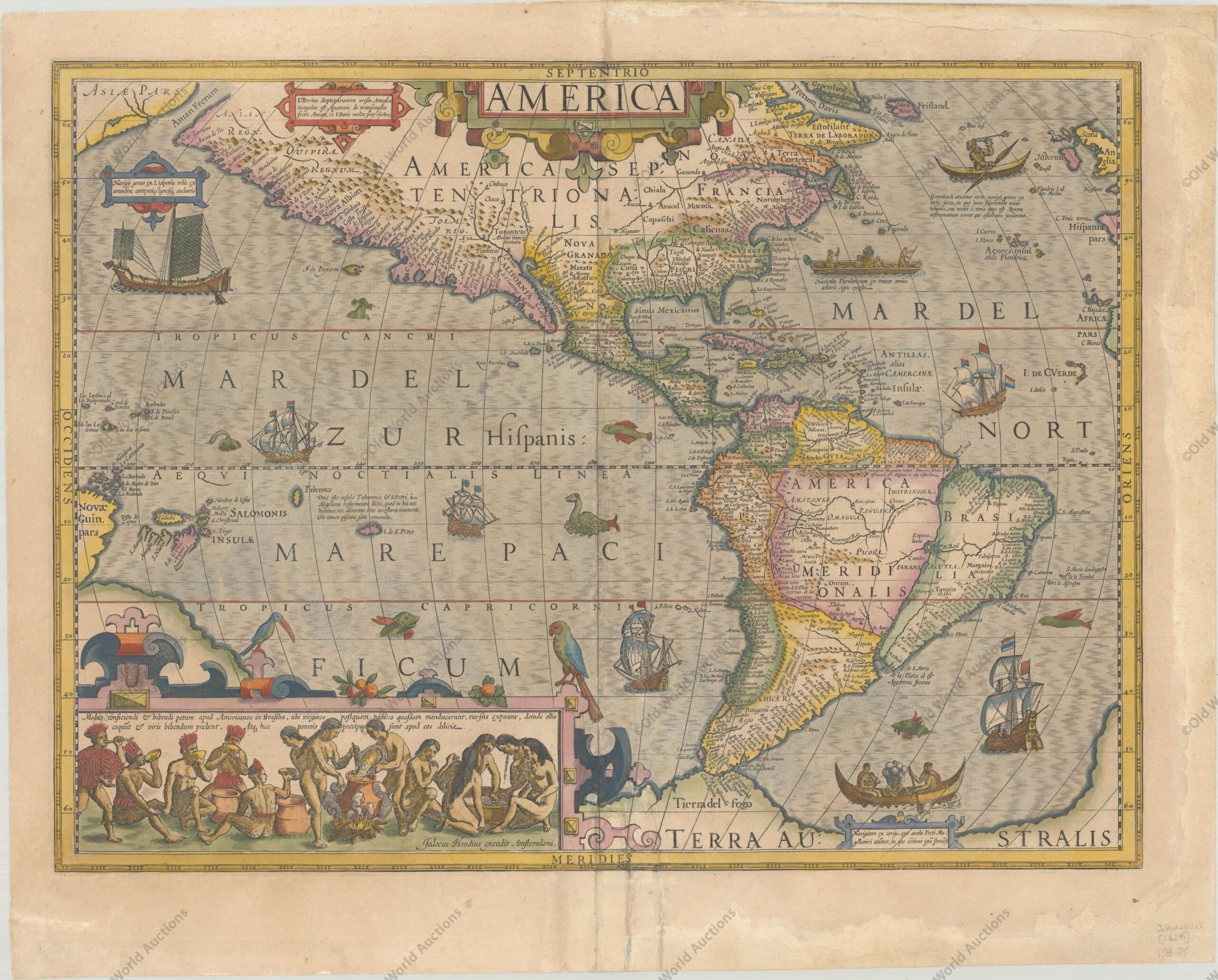
1628 Map of the Western Hemisphere – Historical Map
Map of the Western Hemisphere, 1628 – Jodocus Hondius’ map of America is one of the most elaborate examples of fine Dutch cartography. The decorations, including sea monsters, native birds, native canoes and sailing ships, were taken from De Bry’s Grand Voyages. Particularly noteworthy is the scene of the natives preparing an intoxicating drink made from manioc roots, derived from Hans Staden’s harrowing adventure in Brazil. The continents are shown in a stereographic projection, which became increasingly popular in the early 17th century. It shows a more accurate western coastline of South America and reduces the width of Mexico. However, North America is still very wide and Virginia has an exaggerated coastline. Newfoundland is based on Plancius. The coasts are fully engraved with place names. This is from the latest French edition of this important atlas.
Map of the Western Hemisphere, 1628
Jodocus Hondius’ map of the Americas is one of the most elaborate examples of fine Dutch cartography.
The decorations, including sea monsters, native birds, native canoes and sailing ships, were taken from De Bry’s Grand Voyages.
Particularly noteworthy is the scene of the natives preparing an intoxicating drink made from manioc roots, derived from Hans Staden’s harrowing adventure in Brazil. The continents are shown in a stereographic projection, which became increasingly popular in the early 17th century.
It shows a more accurate western coastline of South America and reduces the width of Mexico. However, North America is still very wide and Virginia has an exaggerated coastline. Newfoundland is based on Plancius.
The coasts are fully engraved with place names. This is from the latest French edition of this important atlas.
1628 Map of the Western Hemisphere – Historical Map
Written by Willy Sievert
Editor of Bahia.ws since its founding in 2009. Based in Salvador, he travels frequently across the Northeast and all of Brazil to keep the guides up to date. Learn more about Willy Sievert →