Map of Rio de Janeiro of 1764 – Historical Map

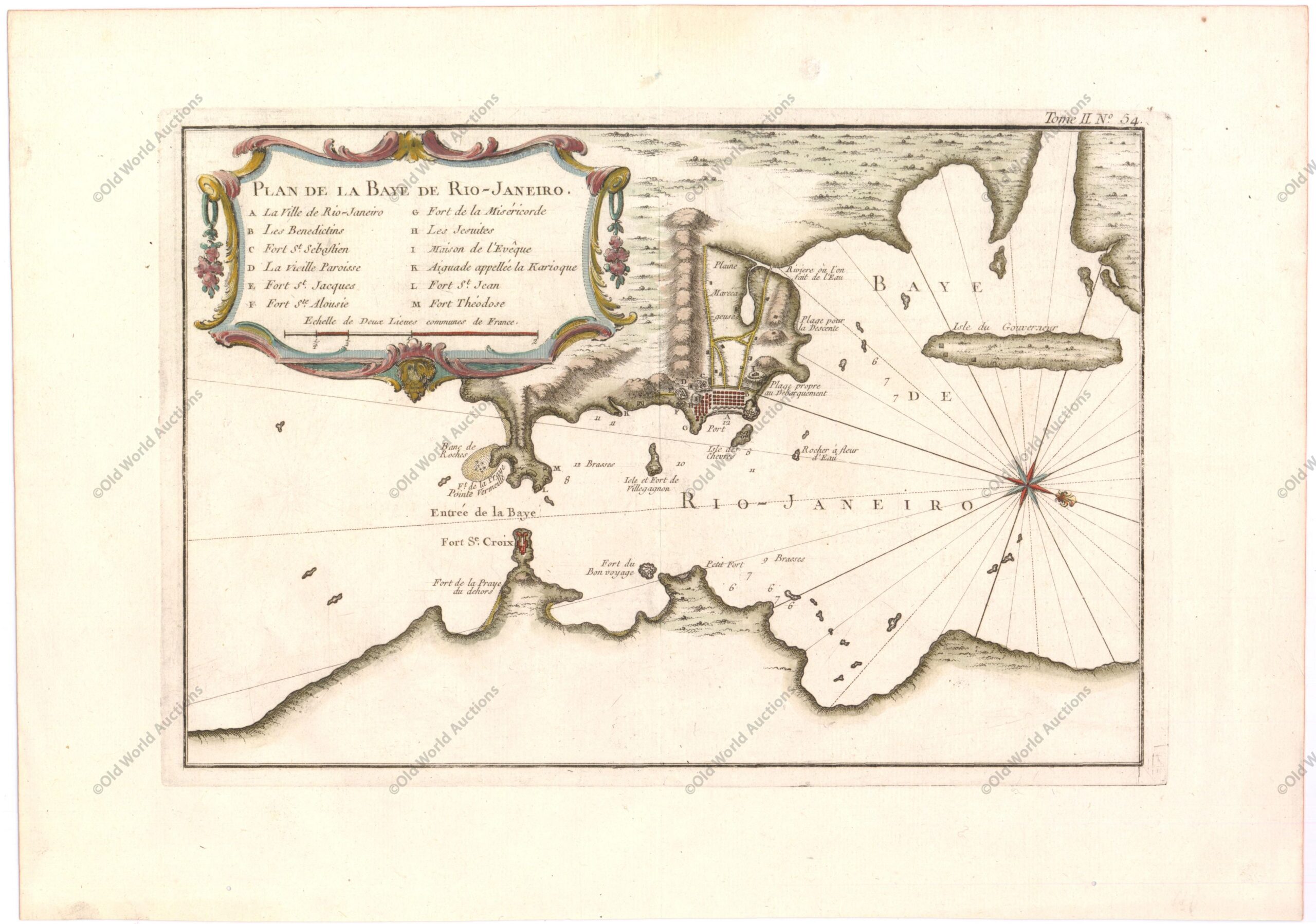
Mapa do Rio de Janeiro de 1764"Plan de la Baye de Rio-janeiro", Bellin, Jacques Nicolas Este belo mapa retrata a Baía de Guanabara com um plano de vista aérea do Rio de Janeiro. A cartela decorativa do título contém uma legenda com letras que identifica 12 locais em toda a baía, incluindo 6 fortes. A Baía de Guanabara foi descoberta pela primeira vez em 1 de janeiro de 1502 pelos exploradores portugueses Gaspar de Lemos e Gonçalo Coelho, que originalmente a chamaram de Rio de Janeiro. A cidade do Rio de Janeiro foi fundada pelos portugueses em 1565 e tornou-se um importante porto para o transporte das riquezas do Novo Mundo para a Europa. Mapa do Rio de Janeiro de 1764 - Mapa Histórico
Map of Rio de Janeiro, 1764 “Plan de la Baye de Rio-janeiro”, Bellin, Jacques Nicolas This beautiful map shows Guanabara Bay with an aerial view of Rio de Janeiro. The decorative title cartouche contains a lettered legend identifying 12 sites across the bay, including 6 forts. Guanabara Bay was first discovered on 1 January 1502 by the Portuguese explorers Gaspar de Lemos and Gonçalo Coelho, who originally named it Rio de Janeiro. The city of Rio de Janeiro was founded by the Portuguese in 1565 and became an important port for transporting wealth from the New World to Europe. Map of Rio de Janeiro from 1764 – Historical Map

Map of Rio de Janeiro of 1764

“Plan de la Baye de Rio-janeiro”, Bellin, Jacques Nicolas

This beautiful map shows the Guanabara Bay with an aerial view of Rio de Janeiro.

The decorative title cartouche contains a lettered legend identifying 12 locations in the bay, including 6 forts.

Guanabara Bay was first discovered on 1 January 1502 by the Portuguese explorers Gaspar de Lemos and Gonçalo Coelho, who originally named it Rio de Janeiro.

The city of Rio de Janeiro was founded by the Portuguese in 1565 and became an important port for transporting wealth from the New World to Europe.

Map of Rio de Janeiro, 1764 – Historical Map

Publicações Relacionadas

Map of the Brazilian coast from the Paraíba River to Cabo de Santo Agostinho

View of Rio de Janeiro in 1840: Beauty Captured

Map of the Captaincy of Paraíba and Rio Grande, 1720

Map of Paraíba from 1662: An Engraved Masterpiece

1579 Map of the Western Hemisphere - America - Historical Map

1719 Historical Map of the Western Hemisphere

1587 Historical Map of the Western Hemisphere

1714 Map of the Western Hemisphere - Historical Map

Map of the Western Hemisphere from 1700 - Historical Map

1832 Map of Brazil - Historical Map

1587 Map of the Western Hemisphere - Historical Map

1575 Map of Europe - Historical Map

Map of South America from 1619: A Historical Insight

Map of Brazil 1554 - Historical Maps of Brazil

1628 Historical Map of the Western Hemisphere

1757 Map of the Western Hemisphere

Painting of the Three Kings Fort in Natal from 1647

1677 Map of the Western Hemisphere - Historical Map

Map of Brazil from 1695: A Historical Overview

Map of Brazil from 1750 - Historical Map of Brazil

1643 Map of the Western Hemisphere - Historical Map

Copper Engraving of Salvador from 1748: History Explored

Map of Brazil from 1630: Cartography's Legacy

Engraving of the town of Olinda in 1633 - Historical Engraving

Map of Recife of 1764 - Historical Map

1609 Map of the Western Hemisphere - Historical Map

Map of Panama 1699 - Historical Map

Reis Magos Fort Engraving from 1690 - Engravings Stories

Map of Madeira and the Canary Islands from 1692

1623 Map of the Western Hemisphere - Historical Map

Engraving of Sirinhaém from 1671

Map of Rio de Janeiro of 1810 - Historical Map

Engraving of Salvador from 1671: A Historical Insight

Map of Brazil from 1798: Explore Historical Details

Engraving of Vila de Olinda in 1671 - Historical Engraving

1631 Map of the Western Hemisphere - Historical Map

This post is also on: Português English Deutsch Español Français