Travel guides for Bahia, Alagoas, Ceará and the whole of the North-East of Brazil: beaches, ready-made itineraries, culture and accommodation tips. Get inspired and plan your trip.
Bahia Travel Guide
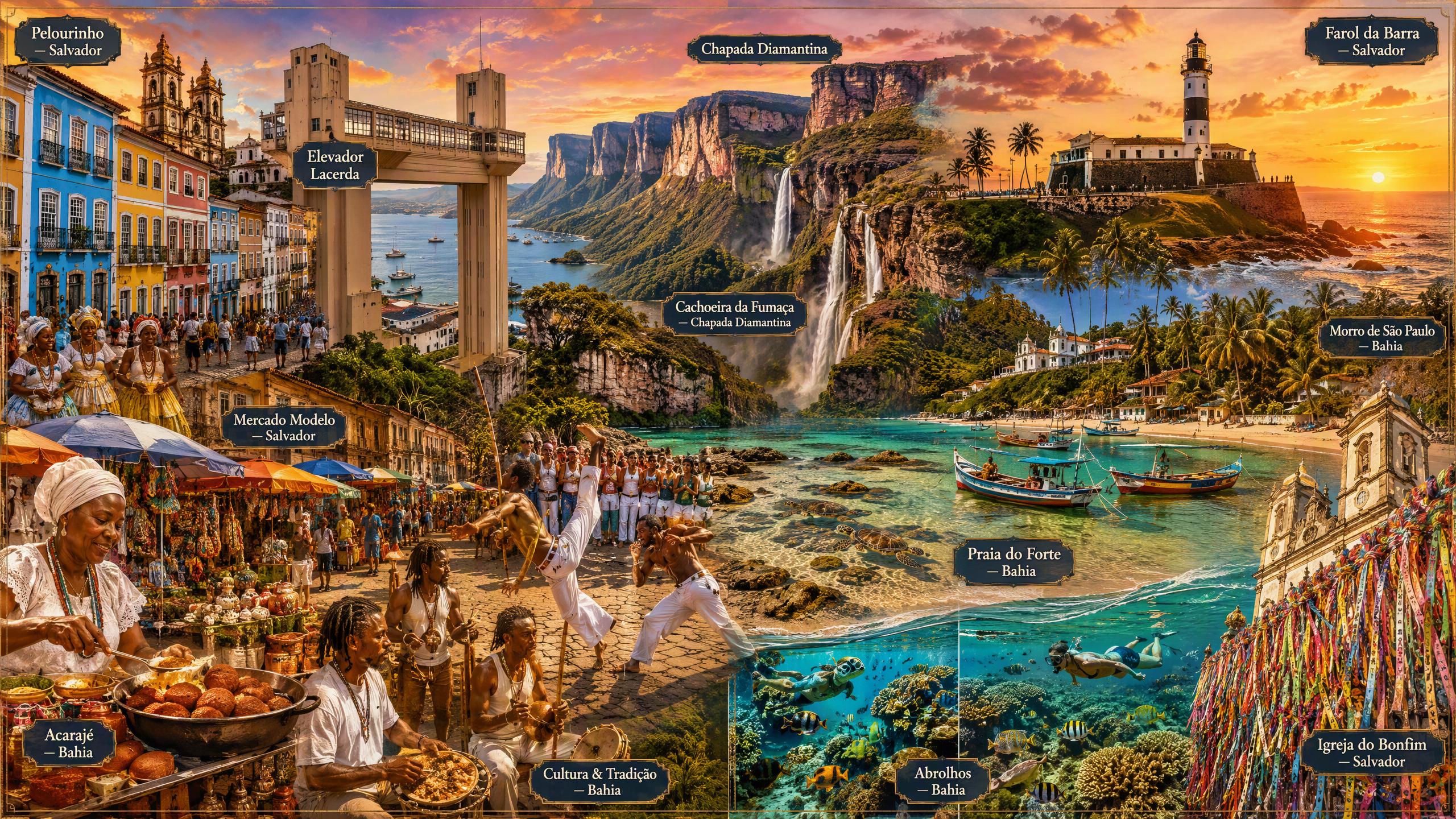
Bahia brings together, within a single state, a historic capital, one of Brazil’s longest coastlines, mountain ranges with waterfalls, and a distinctive Afro-Brazilian culture reflected in its music, dance and cuisine.
This Bahia travel guide organises the destinations by region so you can choose where to go and plan your itinerary according to the time you have available and your travel style.
Bahia Travel Guide
Salvador and the Bay of All Saints
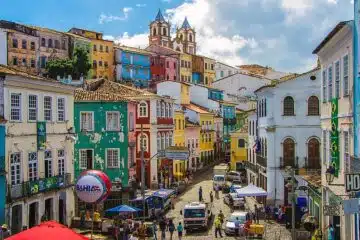
Salvador, the state capital, was Brazil’s first capital and is home to the Pelourinho, churches, museums, forts, beaches and one of the country’s best-known carnivals. Near the capital are Lauro de Freitas and Baía de Todos os Santos, with islands ideal for day trips.
The most popular destinations are Salvador, Porto Seguro, Trancoso, Arraial d’Ajuda, Morro de São Paulo, Itacaré, Praia do Forte and the Chapada Diamantina. Each region has its own distinct character, and the full list can be found under tourist attractions in Bahia.
When is the best time to visit Bahia?
It depends on the destination. The coast welcomes tourists all year round, with the highest numbers during the summer and at Carnival. Humpback whale watching on the Costa das Baleias and in Abrolhos takes place between July and November. For hiking in the Chapada Diamantina, it is worth checking the weather forecast, as rain can affect rivers and trails.
How many days do you need to explore Salvador?
Generally speaking, three to four days are enough to visit the Pelourinho, the churches, the museums, the forts and a few beaches. Take a look at the Salvador guide to plan your itinerary.
What are the best beaches in Bahia?
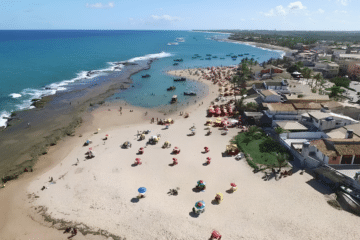
Bahia has beaches all along its coastline, from the North Coast to the southernmost tip. Take a look at the list of the best beaches in Bahia, featuring destinations for families, couples and those looking for quieter beaches.
What are the tourist regions in Bahia?
These include Todos os Santos Bay, the Costa dos Coqueiros, the Costa do Dendê, the Costa do Cacau, the Costa do Descobrimento, the Costa das Baleias, the Chapada Diamantina and the São Francisco Valley. See the map of tourist regions.
Where can you see whales in Bahia?
The Whale Coast and the Abrolhos Archipelago, at the southernmost tip of the state, are the best-known spots for spotting humpback whales between July and November. Find out more in the guide to the Whale Coast.
What is there to do in Chapada Diamantina?
The most common activities are hiking, swimming in waterfalls, visiting caves and day trips from Lençóis. Read the Chapada Diamantina guide to choose your excursions.
Was Salvador Brazil’s first capital?
Yes. Salvador was Brazil’s first capital, from 1549 to 1763, and as such it boasts one of the country’s most important collections of colonial architecture, as illustrated by the history of the Bay of All Saints.
The birds found in the Chapada Diamantina, in the heart of Bahia, attract birdwatchers from all over Brazil and abroad. Sighting lists for the region include hundreds of species, with some estimates putting the figure at over 400. Among them are birds found only here or in a few mountain […]
The Chapada Diamantina is not a town: it is a region in the center of Bahia, made up of several municipalities. Therefore, the towns of the Chapada Diamantina serve as bases for exploring the Chapada Diamantina National Park, which protects about 152,000 hectares of waterfalls, caves and archaeological sites. Thus, […]
Solar do Unhão is a colonial complex on the shore of the Bay of All Saints, in Salvador, that houses the Museum of Modern Art of Bahia (MAM-BA). In addition, it is one of the most beautiful places in the city to watch the sunset over the sea. In this […]
Gamboa, in Salvador, is a community on the shore of the Bay of All Saints, long inhabited by fishermen, close to the Historic Center. It lies between the Solar do Unhão and Campo Grande, below and above Avenida Contorno. So, in this guide, you will find Gamboa de Baixo, the […]
Avenida Contorno, in Salvador, links Campo Grande to the Lower City along the hillside, always facing the Bay of All Saints. In addition, its concrete arches are a landmark of modern Bahian architecture. That is why some of the most beautiful places in the city lie along it, such as […]
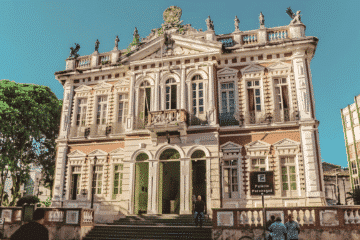
The palaces of Salvador tell almost five centuries of Brazilian history, from the seat of the first general government in 1549 to the residence of the governors of Bahia in the 20th century. Today, however, several of them are changing roles: one will become a hotel, another houses a new […]
The Basilica of Nossa Senhora da Conceição da Praia stands in the Comércio district, in Salvador’s Lower City, next to the Lacerda Elevator and the Mercado Modelo. Built from 1739 with lioz stone carved in Portugal, it holds one of the most beautiful painted ceilings in Brazil. In addition, it […]
The Desterro Convent, officially the Church and Convent of Santa Clara do Desterro, was the first convent for women in Brazil. Founded in 1677 by four Poor Clare nuns from Évora, Portugal, it stands in the Nazaré district, near Dique do Tororó. That is why this guide covers the story […]
The UFBA Museum of Sacred Art (Museu de Arte Sacra) occupies the former Convent of Santa Teresa, one of the most important 17th-century architectural ensembles in Brazil. It is on Rua do Sodré, in the Dois de Julho neighborhood, near the Pelourinho in Salvador. So, in this guide, you will […]
The Bahia Museum of Art (MAB) is considered the oldest museum in the state. Founded on 23 July 1918, it stands on the Corredor da Vitória in Salvador and holds more than 5,000 pieces from the 17th to the 20th century. That is why this guide covers the museum’s history, […]
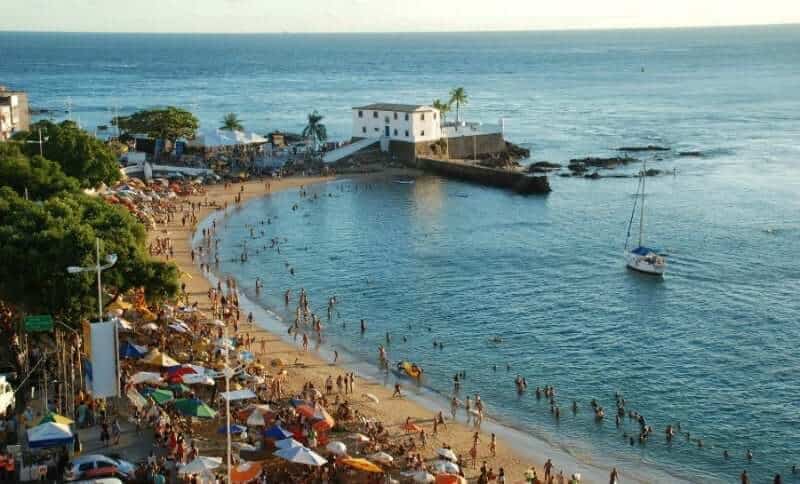
The beaches near Salvador are located mainly on the Litoral Norte (North Coast), along the Estrada do Coco and the Linha Verde (BA-099). In general, they combine natural pools, rivers, coconut groves and good facilities for families. So, in this guide, you will find 8 beaches from the closest to […]
The Lacerda Elevator is Salvador’s best-known landmark and links the Upper City to the Lower City in about 30 seconds. Opened on 8 December 1873, it was one of the first urban elevators in the world and, for that reason, it is a heritage site listed by Iphan. In this […]
Undoubtedly, the waterfalls and trails of the Vale do Capão make the village, also called Caeté-Açu, one of the best destinations in the Chapada Diamantina. The Capão is a district of Palmeiras and has waterfalls, swimming holes, viewpoints and trailheads for the Fumaça Waterfall and the Vale do Pati. For […]
The waterfalls of Chapada Diamantina, in Bahia, are amongst the region’s main attractions. They feature high falls, swimming pools and trails that wind through mountain ranges, canyons and rocky landscapes. In this guide, you’ll discover five outstanding waterfalls in four different towns, with details on their height, trails and access […]
The Fort of Monte Serrat (Forte de Monte Serrat), officially the Fort of Our Lady of Monte Serrat, stands on top of Ponta do Humaitá, on the Itapagipe Peninsula, in Salvador. In addition, it is one of the oldest and best-preserved forts in Brazil, with rounded turrets and a view […]
Without a doubt, the Barra Lighthouse is Salvador’s best-known landmark. In fact, the lighthouse stands inside the Santo Antônio da Barra Fort, the oldest fortification in the city, which now houses the Bahia Maritime Museum. That is why this guide covers the history of the fort and the lighthouse, the […]
The São Marcelo Fort (Forte de São Marcelo), also called Forte do Mar (Sea Fort), stands on a sandbank in the Bay of All Saints, about 300 meters off the coast, opposite the Mercado Modelo. In addition, it is the only fort with a circular plan in Brazil. So, in […]
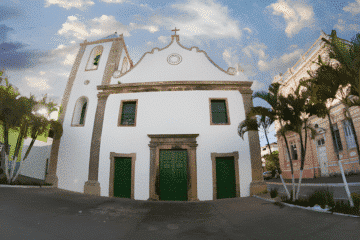
The Igreja dos Mares (Church of Our Lady of the Seas), officially Igreja de Nossa Senhora dos Mares e São Pedro Nolasco, is one of the most striking examples of neo-Gothic architecture in Salvador. It stands on Largo dos Mares, in the Calçada neighborhood of the Lower City. So, in […]
The Church of the Third Order of St Francis has the only Plateresque facade in Brazil, entirely carved in stone. In addition, built between 1702 and 1703 in Salvador’s Historic Centre, it lay hidden under plaster for more than a hundred years and was only rediscovered in 1932. That is […]
Subaúma (BA): where it is, what to do and where to stay Subaúma is a beach village in the municipality of Entre Rios, on the Litoral Norte (North Coast) of Bahia, about 110 km from the Salvador airport. On the Costa dos Coqueiros (Coconut Coast), just past Porto de Sauípe, […]