Travel guides for Bahia, Alagoas, Ceará and the whole of the North-East of Brazil: beaches, ready-made itineraries, culture and accommodation tips. Get inspired and plan your trip.
Bahia Travel Guide
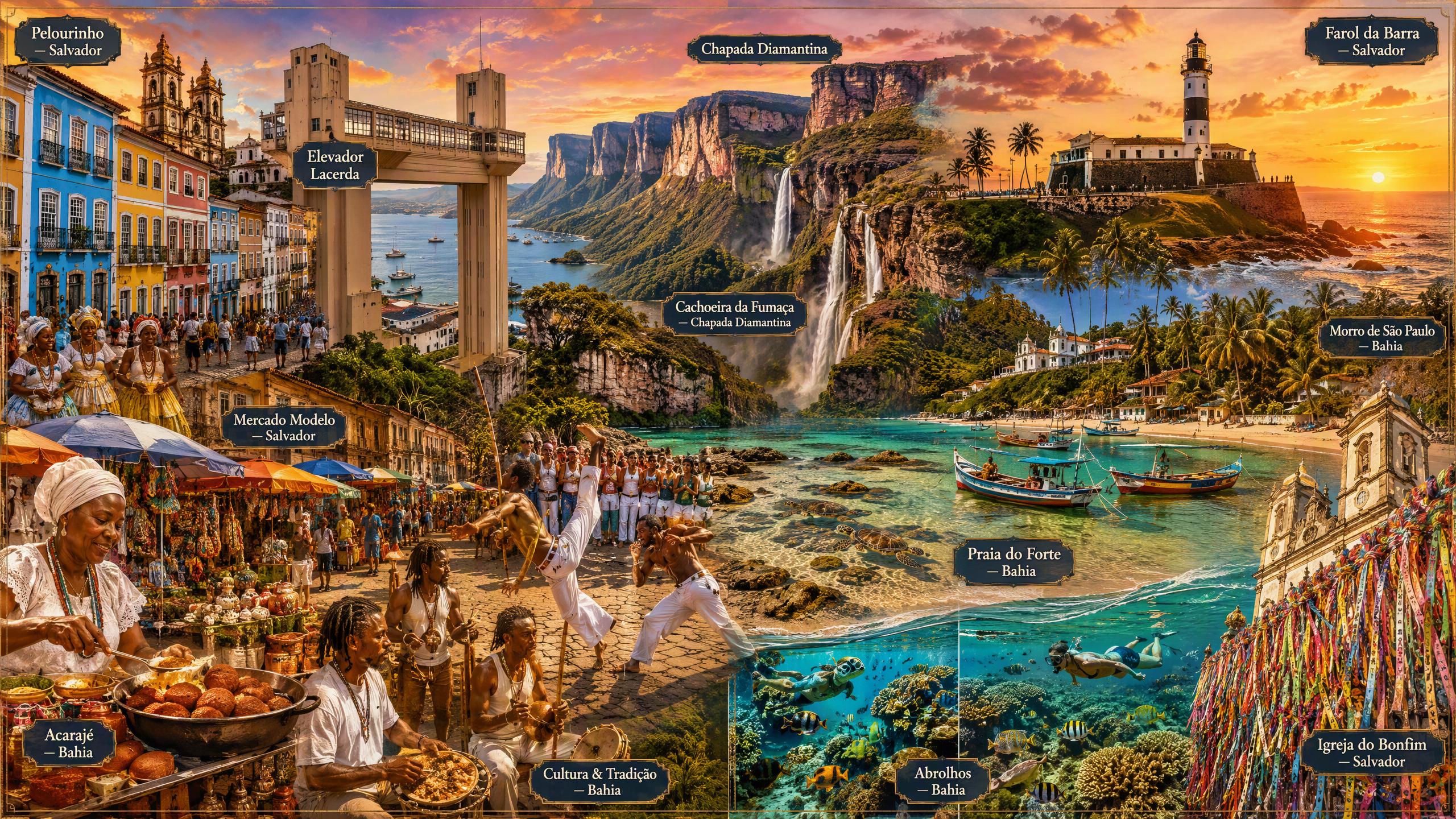
Bahia brings together, within a single state, a historic capital, one of Brazil’s longest coastlines, mountain ranges with waterfalls, and a distinctive Afro-Brazilian culture reflected in its music, dance and cuisine.
This Bahia travel guide organises the destinations by region so you can choose where to go and plan your itinerary according to the time you have available and your travel style.
Bahia Travel Guide
Salvador and the Bay of All Saints
Salvador, the state capital, was Brazil’s first capital and is home to the Pelourinho, churches, museums, forts, beaches and one of the country’s best-known carnivals. Near the capital are Lauro de Freitas and Baía de Todos os Santos, with islands ideal for day trips.
The most popular destinations are Salvador, Porto Seguro, Trancoso, Arraial d’Ajuda, Morro de São Paulo, Itacaré, Praia do Forte and the Chapada Diamantina. Each region has its own distinct character, and the full list can be found under tourist attractions in Bahia.
When is the best time to visit Bahia?
It depends on the destination. The coast welcomes tourists all year round, with the highest numbers during the summer and at Carnival. Humpback whale watching on the Costa das Baleias and in Abrolhos takes place between July and November. For hiking in the Chapada Diamantina, it is worth checking the weather forecast, as rain can affect rivers and trails.
How many days do you need to explore Salvador?
Generally speaking, three to four days are enough to visit the Pelourinho, the churches, the museums, the forts and a few beaches. Take a look at the Salvador guide to plan your itinerary.
What are the best beaches in Bahia?
Bahia has beaches all along its coastline, from the North Coast to the southernmost tip. Take a look at the list of the best beaches in Bahia, featuring destinations for families, couples and those looking for quieter beaches.
What are the tourist regions in Bahia?
These include Todos os Santos Bay, the Costa dos Coqueiros, the Costa do Dendê, the Costa do Cacau, the Costa do Descobrimento, the Costa das Baleias, the Chapada Diamantina and the São Francisco Valley. See the map of tourist regions.
Where can you see whales in Bahia?
The Whale Coast and the Abrolhos Archipelago, at the southernmost tip of the state, are the best-known spots for spotting humpback whales between July and November. Find out more in the guide to the Whale Coast.
What is there to do in Chapada Diamantina?
The most common activities are hiking, swimming in waterfalls, visiting caves and day trips from Lençóis. Read the Chapada Diamantina guide to choose your excursions.
Was Salvador Brazil’s first capital?
Yes. Salvador was Brazil’s first capital, from 1549 to 1763, and as such it boasts one of the country’s most important collections of colonial architecture, as illustrated by the history of the Bay of All Saints.
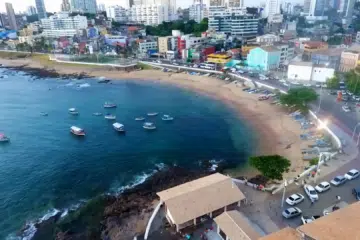
Rio Vermelho, in Salvador, is the city’s most famous bohemian and food neighborhood. By the sea, it brings together bars, acarajé stalls, small beaches, the Casa de Iemanjá and the house where Jorge Amado and Zélia Gattai lived. So, in this guide, you will find Largo de Santana, the beaches, […]
The history of Lençóis, in Bahia, begins with diamond mining. The origins of the town are linked to the discoveries made in 1844 in Mucugê and to the rush of prospectors who, the following year, climbed the mountains and founded the settlement. The Diamond Cycle brought wealth to the town, and the heritage that remains from […]
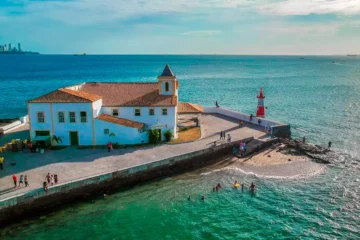
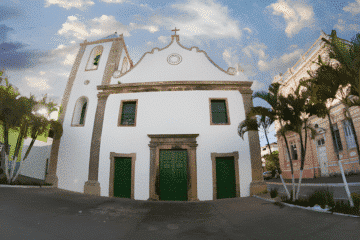
Ponta do Humaitá, also called Ponta de Humaitá, is on the Itapagipe Peninsula, in Salvador’s Lower City. There, a church, a monastery and a lighthouse form one of the most beautiful settings in the city, facing the Bay of All Saints. So, in this guide, you will find where it […]
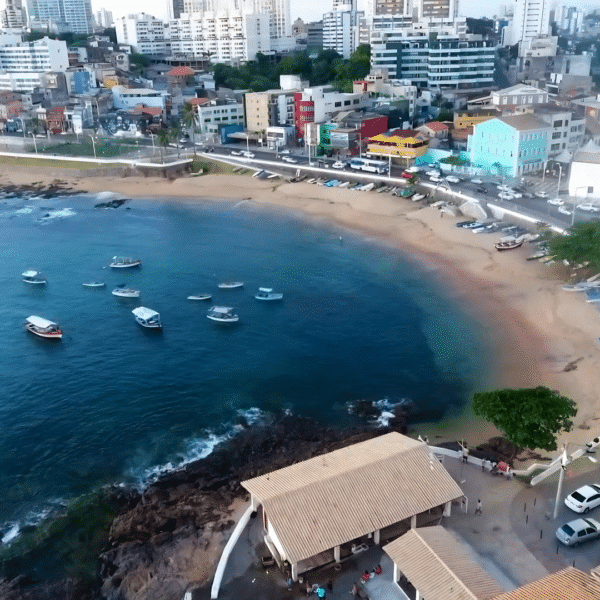
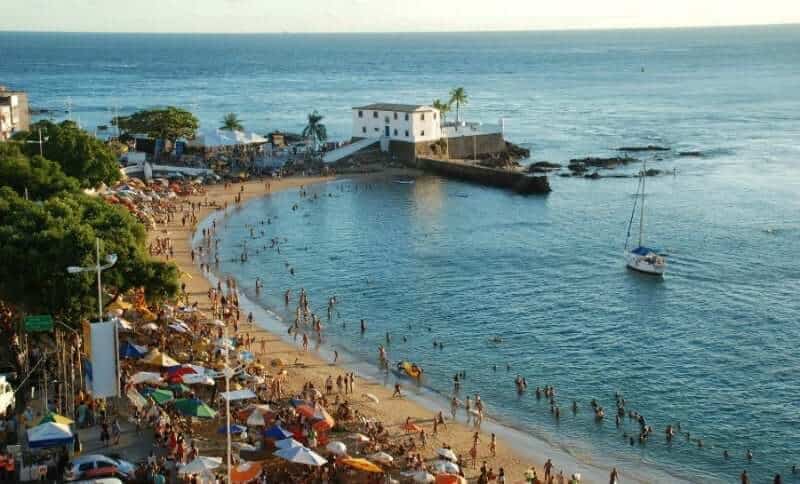
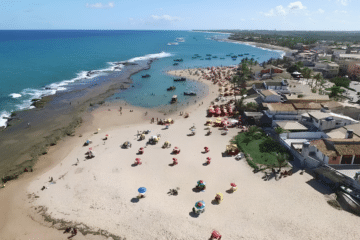
The beaches of Salvador stretch along about 50 km of coastline, between the Bay of All Saints and the open sea. That is why there are options for every taste: calm waters for families, reefs that form natural pools and waves for surfing. In addition, the seafront combines history, culture […]
Arembepe Beach lies in a former fishing village on the north coast of Bahia, in the municipality of Camaçari, about 40 km from Salvador. It is famous for its Hippie Village (Aldeia Hippie), for the Capivara River and for natural pools at low tide. So, in this guide, you will […]
This 7-day itinerary in Salvador and the surrounding area combines the Historic Centre, the Barra seafront, the islands of the Bay of All Saints and the north coast. In one week, you will therefore see the Baroque churches of Pelourinho, the museums, the sunset at the Barra Lighthouse, Ilha dos […]
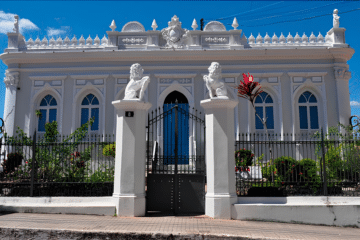
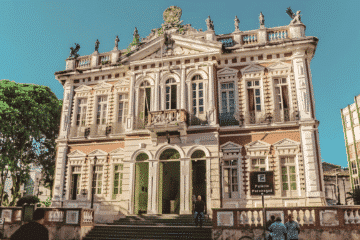
A listed neoclassical building in Ilhéus, a symbol of the heyday of the cocoa industry. Find out when it was built, what to see and how to organise your visit. Quick summary Style: Neoclassical Foundation stone: 20 January 1898 Opening: 22 December 1907 Current use: Town Hall / Museum (check opening times before […]
São Jorge Parish Church (Igreja Matriz de São Jorge) is one of the main historic monuments in downtown Ilhéus, in Bahia. According to IPAC (Instituto do Patrimônio Artístico e Cultural da Bahia), the current building dates from the late 17th century and shows Jesuit influences. In addition, this church in […]
The Piedade Church in Ilhéus (BA) is the Neo-Gothic chapel of the Instituto Nossa Senhora da Piedade, at the top of the Teresópolis neighborhood. Built in the late 1920s, it has colorful stained-glass windows, an altar with the image of Nossa Senhora da Piedade (Our Lady of Pity, or Pietà) […]
São Sebastião Cathedral, known as Ilhéus Cathedral, is the main landmark of the historic center of Ilhéus, in Bahia. Construction began in 1931 and, in 1967, the dome was inaugurated, standing about 47 meters tall. So, in this guide, you will find the history, the architecture and tips for visiting […]
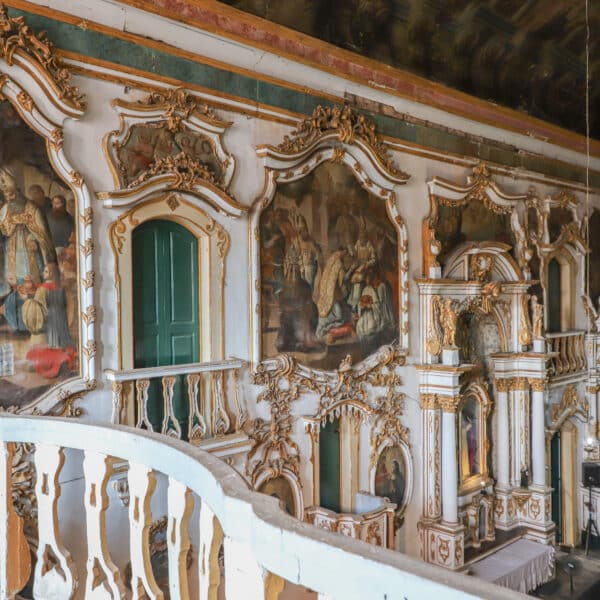
The Cathedral Basilica of Salvador (Catedral Basílica de Salvador), on Terreiro de Jesus, is the former Jesuit church and one of the most important religious buildings of colonial Brazil. In addition, it holds gilded woodcarving, 17th-century paintings, a monumental sacristy and silver relics. So, in this guide, you will find […]
Accommodation options in Salvador, Bahia When planning your stay in Salvador, choosing the right neighbourhood makes all the difference in getting the most out of the city. In this quick guide, you will discover which neighbourhoods are best suited to those seeking beaches, cultural immersion or nightlife — and you […]
The Church of Nossa Senhora da Palma is one of Salvador’s most intriguing colonial churches. It stands on Largo da Palma, in the city centre, and grew out of the devotion of a 17th-century Bahian family. Later, it passed to the Augustinian friars, gained a convent and received woodwork, paintings […]
Skydiving, paragliding and ballooning: check out the aerial sightseeing options in Bahia. For those who want to have fun alone or with the family, we’ve listed some of the most radical tours in Bahia. Skydiving, paragliding and ballooning: check out the aerial sightseeing options in Bahia Have you ever thought […]
Of the towns listed in the Northeast, 11 are in Bahia and represent the process of occupation of the Bahian territory until the end of the 19th century. The listed towns of Cachoeira, Itaparica, Porto Seguro and Santa Cruz de Cabrália represent this period, when sugar cane, and later tobacco, […]
The architectural style of the Chapada Diamantina, in Bahia, has its roots in mining. In the region’s historic towns, such as Lençóis, Mucugê and Rio de Contas, the colonial buildings feature simple, colourful façades, wooden window frames, adobe or stone walls, and churches with Baroque and Neoclassical features. Rio de […]
The history of the settlement of the Chapada Diamantina, in central Bahia, is the story of a region that was settled late and gradually, always in step with its natural resources: cattle on the outskirts, gold in the 18th century, diamonds and carbonado from 1844 onwards, and, since the 1970s, […]
The southern coast of Bahia also offers some high-end experiences, but is mainly made up of more rustic destinations, with villages that are a hit with holidaymakers. The famous Costa do Descobrimento (Discovery Coast) is located in this part of Bahia, with successful destinations such as Arraial D’Ajuda, Caraíva, Trancoso […]
Art History, also known as Art Historiography, is the historical study of the visual arts. Art History is concerned with the identification, classification, description, evaluation, interpretation and understanding of artistic works and the historical development of various forms of expression, such as painting, sculpture, architecture, decorative arts, drawing, engraving, photography, […]
The tourist attractions in Bahia range from the Pelourinho, in Salvador, to the coastal beaches and the waterfalls of the Chapada Diamantina. After all, the state has the longest coastline in Brazil, at about 932 km, as well as colonial towns and famous festivals. So, in this guide, you will […]