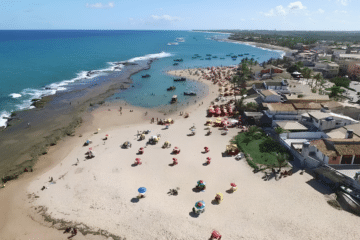
The tourist destinations and attractions of north-eastern Brazil stand out for their remarkable natural and cultural diversity, offering a unique combination of idyllic coastlines, lush landscapes and a rich heritage. This travel guide brings together the main destinations, itineraries and points of interest to help you plan your next trip to the region.

When to go and how to plan your trip to the North-East
The warm, sunny weather practically all year round makes the North-East a great beach destination at any time of year — but some periods are worth planning for separately:
- Beaches and sunshine: any time of year is fine; the rainy season is usually between April and July on the east coast (Salvador, Recife) and between January and May on the west coast (Ceará, Maranhão).
- Carnival: February or March, with Salvador and Recife/Olinda being the main highlights — book your accommodation well in advance.
- São João: June is a month not to be missed in cities such as Caruaru (PE) and Campina Grande (PB), which host the world’s biggest June festivals.
- Humpback whales: from July to October, off the Costa das Baleias (Bahia) and in the Abrolhos.
- Fernando de Noronha: requires payment of an environmental conservation fee on a daily basis and, depending on the route, an entry fee for the Marine National Park — it is worth booking months in advance, as the number of visitors is limited.
Northeastern Culture
The culture of the North-East is one of the richest and most diverse in the country, the result of the convergence of Indigenous, African and European traditions.
This diversity is strikingly evident in folk traditions, cuisine, music and popular festivals, which reflect not only the historical identity but also the socio-cultural resilience of local communities.

Cultural Expressions and Festivals
Cultural expressions such as forró, frevo, maracatu and xaxado are recognised as part of the country’s symbolic heritage, whilst traditional celebrations, such as São João and the Olinda Carnival, play a central role in the region’s tourism sector, attracting visitors from various parts of Brazil and abroad.


Natural Resources of the North-East
As well as its cultural appeal, the North-East has established itself as one of the country’s main tourist destinations thanks to its natural riches.
Among the most iconic destinations are the beaches of Fernando de Noronha, Porto de Galinhas and Jericoacoara, as well as inland landscapes of great ecological value, such as those of Chapada Diamantina, renowned for their geological formations and monumental waterfalls.

The hinterland of the North-East, characterised by its semi-arid climate, is also of great scenic and cultural significance, showcasing unique aspects of rural life and contributing to an understanding of the region’s socio-environmental dynamics.
Historic Heritage
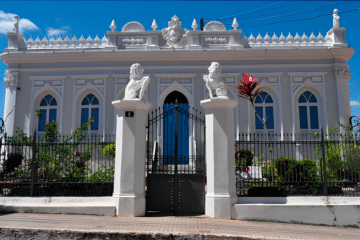
With regard to historical heritage, cities such as Olinda, São Luís and Salvador are home to significant examples of colonial architecture, religious art and historic urban planning, making them key centres for the study of Brazil’s historical development.
The Baroque churches, centuries-old mansions and stone-paved streets are tangible reminders of the colonial and imperial past, which, combined with the hospitality of the people of the North-East, create a tourist experience that brings together memory, identity and a sense of belonging.
As such, the Brazilian Northeast has established itself as a region of great tourist and cultural significance, where history, nature and popular culture are interwoven in a complex and fascinating way.
Video – Top Tourist Destinations in the North-East
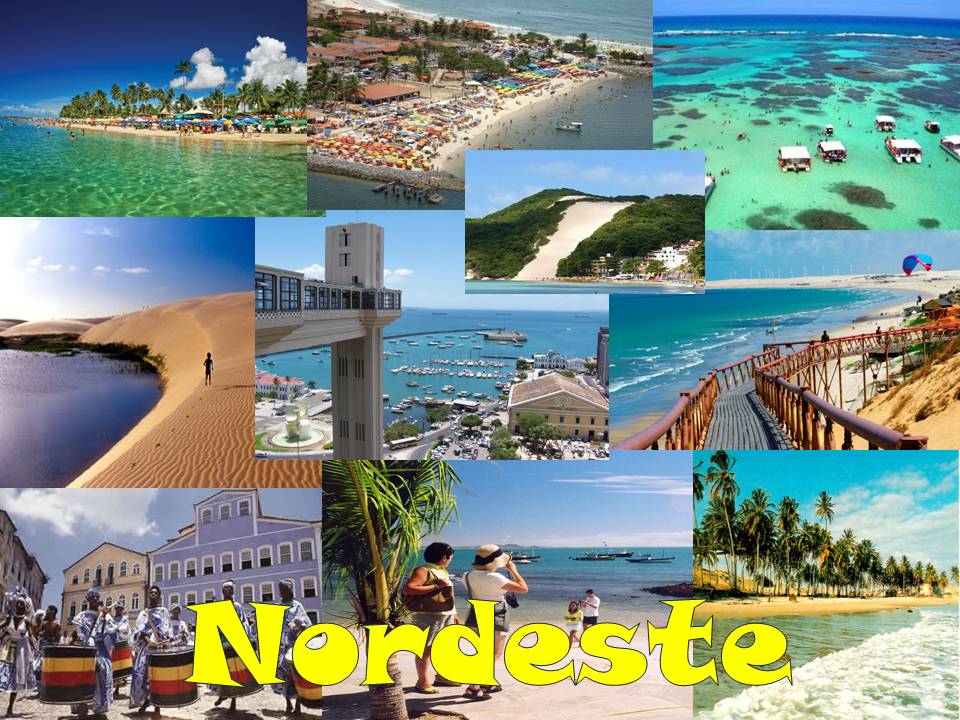
Principais Pontos Turísticos do Nordeste
Destinations and Tourist Attractions in the North-East Region of Brazil
Most popular beaches
The region’s most popular beaches include a range of destinations and tourist attractions, such as:
- Arraial d’Ajuda and Morro de São Paulo in Bahia
- Atalaia and Pirambu in Sergipe
- Pajuçara and Maragogi in Alagoas
- Porto de Galinhas and Itamaracá in Pernambuco
- Cabedelo and Tambaba in Paraíba
- Genipabu and Pipa in Rio Grande do Norte
- Jericoacoara and Canoa Quebrada in Ceará
- Coqueiro and Pedra do Sal in Piauí
- Curupu and Atins in Maranhão


Tambaba Beach, situated on the coast of Paraíba, was the first beach in the North-East to be officially designated as a naturist beach.
All the states in the North-East have their own distinct folklore and traditions
- Olinda, in Pernambuco, with traces of Dutch Brazil.
- São Luís, in Maranhão, with those from França Equinocial.
- São Cristóvão, in Sergipe, and its Praça de São Francisco, surrounded by imposing historic buildings.
- Salvador, in Bahia, along with those of the political and administrative capital of Colonial Brazil.
- Porto Seguro and Santa Cruz de Cabrália, also in Bahia, bear the historical marks of the arrival of the fleets involved in the discovery of Brazil.
These are some of the region’s main historical and cultural attractions, with the first four having been designated UNESCO World Heritage Sites.
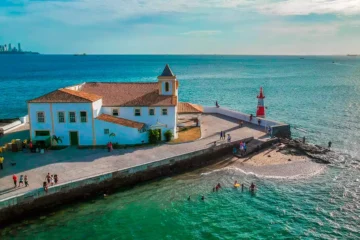
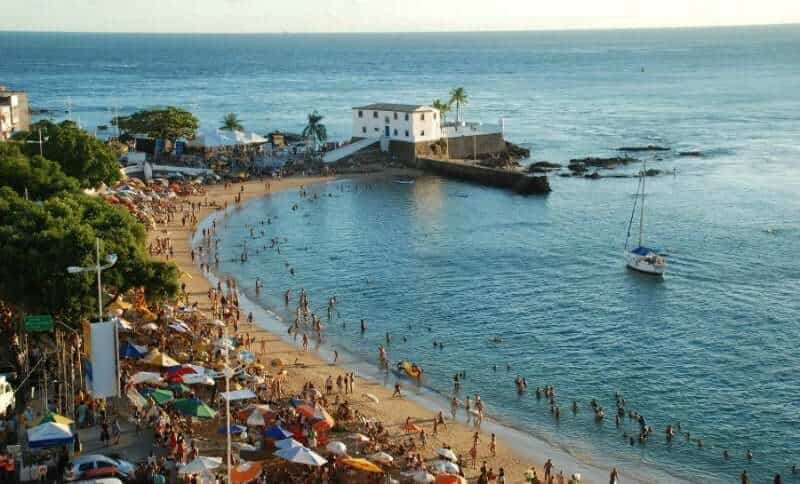
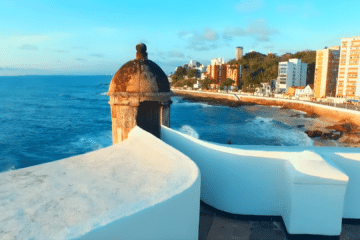
In the Barra neighbourhood of Salvador (BA) stands the Barra Lighthouse, one of Brazil’s most famous landmarks and the most famous landmark in the North-East.
The Barra Lighthouse in Salvador occupies a unique geographical location on the planet, from where it is possible to see both the sunrise and the sunset over the sea, as it stands at the tip of the peninsula on which the city is situated.

Cultural Attractions and Festivals
Culture in the North-East is also a major draw for tourists, with distinctive festivals and traditions in every state.
Olinda, São Luís and the Pelourinho in Salvador are recognised as UNESCO World Heritage Sites.
Carnival in the North-East is one of the biggest attractions, particularly in Salvador and Recife.
The Salvador Carnival is one of the biggest popular festivals in the world, bringing together millions of revellers for six days of celebration. During this period, dozens of renowned singers, such as Ivete Sangalo, Daniela Mercury and Cláudia Leitte, perform on the floats.
The Recife Carnival is renowned for its cultural diversity, featuring giant puppets, frevo and maracatu, as well as boasting the world’s largest carnival parade, the Galo da Madrugada. This carnival is considered one of the most democratic, as revellers do not have to pay to join in the festivities on the streets.

Ecotourism and Nature
The Fernando de Noronha archipelago has been gaining national and international recognition, famed for sightings of spinner dolphins and its crystal-clear waters.
Another highlight is the Lençóis Maranhenses National Park, a landscape comprising dunes, rivers, lagoons and mangroves.
Bahia is home to the Costa do Sauípe, one of Brazil’s largest tourist resorts, and the Abrolhos Archipelago, which offers an excellent spot for diving and attractions such as the humpback whale season, which usually begins in July.
Piauí is home to the national parks Sete Cidades, Serra das Confusões and Serra da Capivara, known for their rock formations and cave paintings, as well as its coastline, which includes the Parnaíba Delta.

Bahia’s coastline
Bahia has the longest stretch of coastline in Brazil: depending on the measurement method used, estimates range from around 932 km (12.4 per cent of the country’s coastline) to over 1,100 km, taking into account inlets and bays.
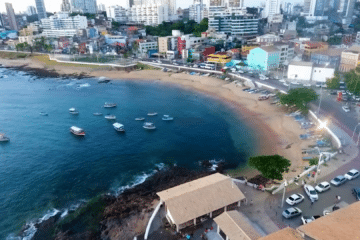
On the coast of Bahia, the Baía de Todos os Santos stands out as Brazil’s largest bay, covering an area of 1,052 km² and reaching depths of up to 42 metres, with diving visibility of between 10 and 20 metres.
Another highlight is Aratu Bay, a vast inlet that is home to the Port of Aratu, a shipyard, two of the most luxurious marinas in Latin America (Aratu Yacht Club and Marina Aratu) and the Aratu Naval Base.
Another highlight is Camamu Bay, the third-largest bay in Brazil, which is home to historic and tourist destinations such as Barra Grande, Camamu and Maraú.

Gastronomy and Cuisine
The region’s cuisine is one of the main attractions for tourists in the North-East.
Bahian cuisine, the most famous in Brazil, is rich in spices, with dishes such as acarajé, abará, caruru and vatapá.
Paraíba’s cuisine is also widely renowned, with specialities made from cassava and sugar cane, such as tapioca, rice pudding and sweet chorizo.
Frequently Asked Questions about Tourism in the North-East
When is the best time to visit the North-East?
It depends on the destination: for beaches and sunshine, any time of year is a good option, as the weather is predominantly warm; for Carnival, February or March; for São João, June is a must, especially in towns such as Caruaru (PE) and Campina Grande (PB).
Which states make up the Brazilian Northeast?
There are nine states: Bahia, Sergipe, Alagoas, Pernambuco, Paraíba, Rio Grande do Norte, Ceará, Piauí and Maranhão — the region with the highest number of coastal states in the country.
Which cities in the North-East are designated as UNESCO World Heritage Sites?
Olinda (PE) and the Historic Centre of São Luís (MA) hold this title, as does the Pelourinho district in Salvador (BA) — all recognised for the richness of their preserved colonial architecture.
Which is the best-known naturist beach in the North-East?
Tambaba Beach, on the coast of Paraíba, was the first beach in the region to be officially designated as a naturist beach.
Which state has the longest coastline in the North-East and in Brazil?
Bahia, which has the country’s longest coastline — estimates range from approximately 932 km to over 1,100 km, depending on the methodology used to measure inlets and bays.
Conclusion
Northeast Brazil is a destination that offers a rich blend of culture, history and nature, attracting tourists from all over the world.
With its wide range of festivals, natural beauty and unique cuisine, the region has established itself as one of the country’s leading tourist destinations, brimming with places to visit and attractions that delight everyone. Use this guide as a starting point and explore the links for each destination to plan your trip in more detail.

Publicações Relacionadas
Best places to visit in the Northeast of Brazil
5 exotic destinations in the North-East for your next trip
Musical styles, rhythms, singers and composers of northeastern Brazil
The culture of Northeastern Brazil: how it originated, influenced and flourished
Best Beaches in the Northeast: A Complete Guide
Influences and main dishes of northeastern cuisine
History of Baroque Architecture in the Northeast and Minas Gerais
Tourist Attractions in Bahia: main attractions, beaches and cities
Tour of the Brazilian Northeast Coast: 10 Unforgettable Days
Route of the Discovery of Brazil: A Real Story
5 Chapadas of Brazil for Adventure Seekers
Extreme sports in the Northeast of Brazil: Destinations not to be missed
Top Destinations in the North-East for Travel in 2026
The main tourist destinations in northeast Brazil
Discover the nudist beaches of the Northeast and Brazil
Natural Pools in Northeastern Brazil: A Guide
The three best beaches in the northeast for a relaxing time
This post is also on:
 Português
  English
  Deutsch
  Español
  Français