Discover the fascinating Sete Cidades National Park: Nature, history and adventure in Piauí
Sete Cidades National Park, located in the state of Piauí, Brazil, is a fascinating tourist destination that combines natural beauty with unique geological formations and a rich historical and cultural heritage.

Location and Attractions
The Sete Cidades National Park in Piracuruca, about 200 kilometres from Teresina in Piauí, is home to some 500 cave paintings on one of the large rock faces, dating from 6 to 10 thousand years old and preserved.
Size and natural wealth
Created in 1961, Sete Cidades National Park covers more than 6,000 hectares and is home to an extraordinary wealth of rock formations, rock art, fauna and flora.
The Sete Cidades National Park covers an area of 6221 hectares, where you will find impressive geological monuments and a rare archaeological heritage, amidst the fauna and flora of the transition area between the Cerrado and the Catinga, as well as 22 springs and many small watercourses.

Second City viewpoint
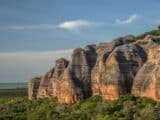
The general landscape can be seen from the Second City Viewpoint: There, to the traveller’s amazement, one can see shapes resembling roofs, chimneys, castles, fortresses, houses, as well as figures of animals and people, especially mysterious at dusk when the rocks reflect golden tones in a play of light and shadow.
Rock carvings
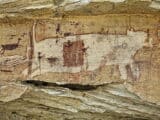
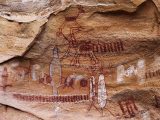
In addition to their impressive shapes, the rocks contain rock carvings that are between 5 and 10 thousand years old: they mix shades of red and yellow and represent geometric symbols and animals, underlining the cultural and historical relevance of these artistic expressions.

Vegetation and climate
The vegetation, green from January to July, turns yellow during the dry season from August to November.
Exploring the park
It’s possible to explore the entire park by car, covering its 12 kilometres in three hours, including breaks for small trails.
However, walking around Sete Cidades in three to six hours can be quite an adventure. Another option is to rent a bicycle in the park itself.
Why the name Sete Cidades National Park?
The name “Sete Cidades” (Seven Cities) National Park comes from the layout and shapes of its impressive rock formations, which resemble the ruins of ancient cities.
When the site was first explored, these formations were divided into seven groups or ‘cities’, each with its own characteristics, as if they were districts or areas of a real city. This division is an interpretation by the explorers and not an official classification.
The “cities” are actually large groups of rocks formed over millions of years by erosion and the natural elements.
These formations have been given specific names based on their shapes, which resemble human figures, animals and other structures, and have captured the imagination of visitors and explorers who have given them names.
The division into seven ‘cities’ was a way of organising and categorising these formations to make them easier for visitors to explore and identify. Each of the seven “cities” has its own peculiarities and offers a variety of landscapes and attractions within the park.
Video about “Sete Cidades” and “Pedro II

Sete Cidades no Piauí05:12

Parque Nacional das Sete Cidades02:20

Pedro II - A Cidade das Opalas03:12
Parque Nacional das Sete Cidades - Reportagem
Tourist Attractions of Sete Cidades National Park
1. Rock Formations
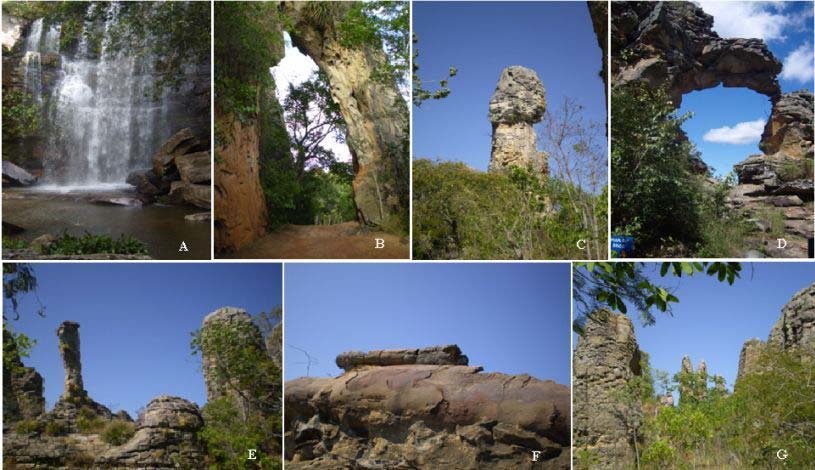
The park is famous for its impressive rock formations that resemble ancient cities, hence the name ‘Seven Cities’. These formations are the result of millions of years of erosion and resemble human figures, animals and buildings, capturing the imagination of visitors.
- First town: This is where the Riachão waterfall is located, with a drop of 21 metres. The rocks look like twisted cannons.
- Second city: Richest in rock inscriptions. Here you’ll find the 18 metre high rock called Arco do Triunfo (or Triumphal Arch) and a 45 metre high viewpoint.
- Third City: Here you’ll find the map of Brazil, the head of Dom Pedro I and the entrance to the Solsticial Hole Trail, where the winter sun (in June) has a special effect.
- Fourth City: The rocks include the one that resembles two lizards kissing and the one that looks like the map of Brazil.
- Fifth City: Rich in cave inscriptions and rock monuments, it includes the Furna do índio and the Stones of the Camel and the Emperor.
- Sixth City: The main attraction is the perfect polygons that make up the Tortoise Stone; it also contains the Dog Stone and the Elephant Stone with its calf.
- Seventh City: This is where the rock carvings are clearest, most of them in red. Among the most impressive formations are the Casario and the Pajé caves.
2. Trails and outdoor activities
The park has several trails that allow you to explore the rock formations, cave paintings and local flora and fauna. The trails vary in difficulty and are suitable for both beginners and experienced hikers. In addition to the trails, visitors can enjoy swimming in waterfalls and crystal clear rivers.
3. Rock paintings
In Sete Cidades National Park, there are a large number of rock paintings dating back thousands of years, leaving an important legacy of the prehistoric cultures that inhabited the region. These paintings are an unmissable attraction and can be seen in different areas of the park.
4. Flora and fauna
The biodiversity of the park is another highlight. The park is home to a wide variety of species from the caatinga and cerrado, allowing you to see birds, reptiles, small mammals and even endangered species. The flora is made up of trees typical of these regions, such as aroeiras and cacti.
5. Guided Tours.
To get the most out of your visit, we recommend you hire a local guide. They offer valuable insights into the rock formations, the history of the cave paintings and the biodiversity of the park. The guides can also tailor the tour to the interests of the group.
6. Best time to visit
The best time to visit Sete Cidades National Park is during the dry season, from May to September, when trails are more accessible and temperatures are more comfortable. During the rainy season (December to March), some areas of the park can be difficult to access.
How to get there
The park is located about 190 kilometres from Teresina, the capital of Piauí. It can be reached by car, and there are bus services from Teresina and other nearby towns. The nearest airport is in Teresina.
Park Infrastructure
Although the park is relatively remote, there is some basic infrastructure for visitors, such as rest areas, toilets and a small souvenir shop. There are simple inns and restaurants around the park that offer overnight accommodation and meals for tourists.
A visit to the Sete Cidades National Park is an opportunity to get in touch with nature and learn about Brazil’s geological and cultural history in a setting that seems to come straight out of a fantasy story.
See also Pedro II is a city full of history, precious stones and archaeological sites.
Sete Cidades National Park Tourist Guide

Publicações Relacionadas
Main Tourist Attractions in Piauí You Must Visit
Explore the Archaeological Marvels of São Raimundo Nonato
Discover Pedro II: the enchanted Switzerland of Piauí
Piauí: A Guide to Its Stunning Attractions
Serra das Confusões National Park Travel Guide
Luís Correia: Explore the Best Beaches in Piauí

Kitesurfing in Barra Grande: The Ultimate Guide

Canary Islands: Ecotourism in the Parnaíba Delta
Poti River Canyon: Your Ultimate Ecotourism Guide

Parnaíba Delta: Biodiversity and Ecotourism Hub
Serra da Capivara National Park: A Historical Journey

Oeiras: Discover the Rich Historical Heritage
Teresina: Explore Its Unique Geographic Location
Piauí: Discover Unique Tourism Experiences
This post is also on:
 Português
  English
  Deutsch
  Español
  Français